

Britain is deepening its nuclear relationships with the United States, France and Australia, with the Northwood Declaration recognising that there is no extreme threat to Europe which would not prompt a response by both Britain and France, according to the annual update to Parliament published this week.
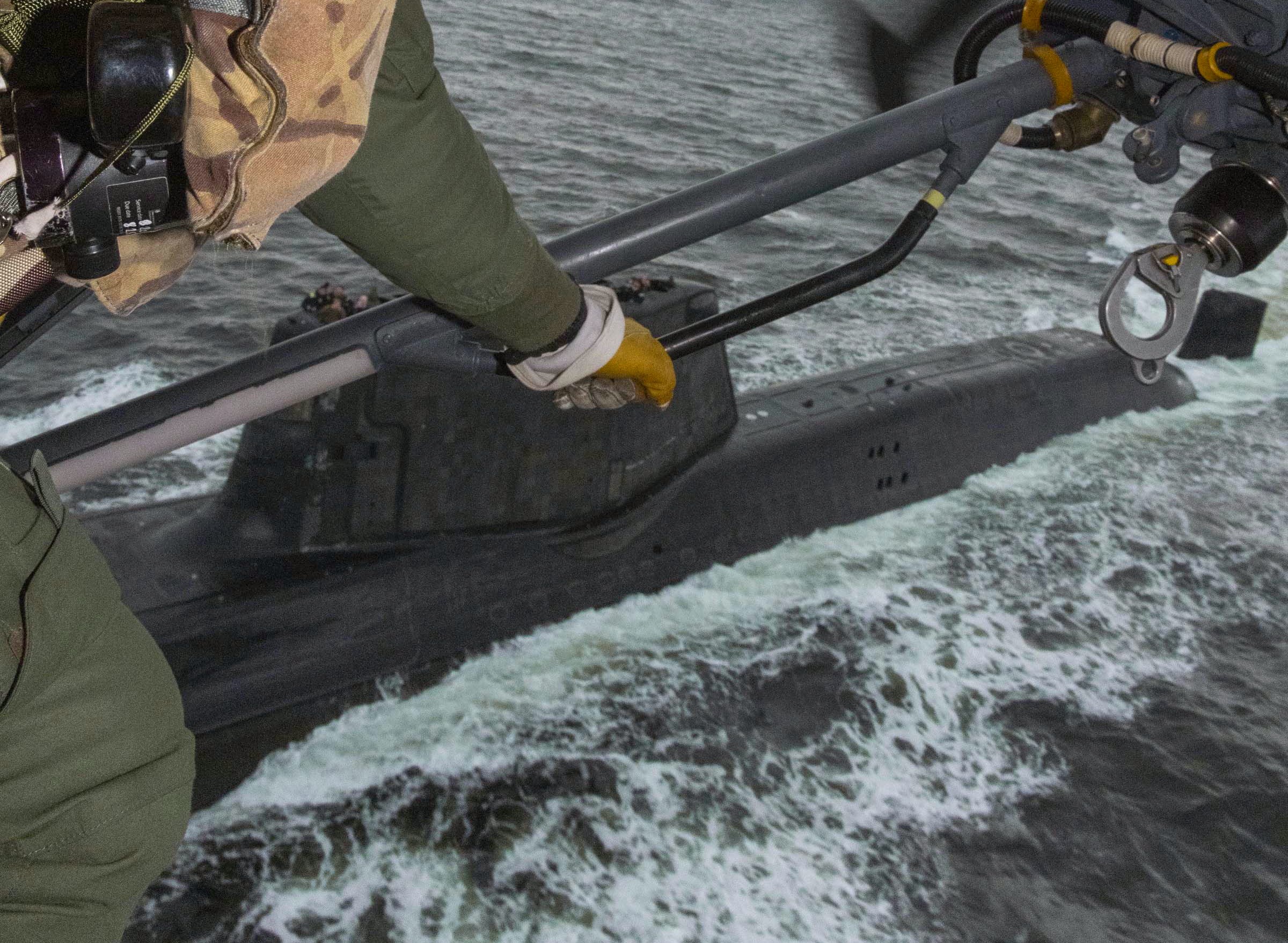
The declaration, agreed in July 2025, reaffirmed and strengthened what the update describes as longstanding nuclear cooperation between the two countries. On the AUKUS partnership, the update records an important development in February this year when HMS Anson docked at HMAS Stirling near Perth.
The United States is described as Britain’s closest defence ally, with the relationship underpinned by long-standing cooperation on all nuclear matters including policy, operations and technology.
The practical expression of that relationship runs through the missile system, since Trident and its supporting systems fitted to the Vanguard class are manufactured in the United States, with Britain having bought title to a number of missiles drawn from a shared pool of assets under the 1963 Polaris Sales Agreement as amended for Trident in 1982. The system is operated independently by both the Royal Navy and the United States Navy.
The warhead fitted to those missiles is sovereign to Britain, with the Mk4A design maintained by AWE at Aldermaston, which also leads development of the replacement warhead, Astraea. Wes Streeting writes that the increase in investment across the enterprise “sends a clear signal of our commitment to global security, and to our Allies”, with the deterrent remaining declared to the defence of NATO.
The update states that nuclear deterrence is the cornerstone of NATO security and that the independent strategic nuclear forces of the United Kingdom contribute significantly to the overall security of the alliance, a declaration maintained since 1962.



We really need to see some more concrete measures on British and French nuclear cooperation. Harmonisation of SSBN patrols should be a priority, with an 8 boat fleets between both countries it should not be too difficult to maintain having three boats at sea (not on patrol) at all times.
Totally agree such cooperation can only increase the deterrent against Russia. Together we have a potent deterrent force even if Putin doubts US loyalties. A misstep on his part would be disastrous for us all after all so best he doesn’t imagine an opportunity.
Agree, together Britain and France have the third most capable nuclear force on the planet
I totally agree Jim, that would make a huge amount of sense.
Certainly when the Dreadnought Class arrive in service anyway. The old Vanguards cant be reliability run to anyone’s timetable unfortunately.
Its a bloody miracle we can maintain the deterrent at the moment!
In the meantime, we should prioritise an order ( or perhaps lease) of F35A and actually purchase B61’s from the US. to maintain a credible national deterrent.
No need to purchase or lease F35As and/or B61 bombs from the USA. Cheaper and easier to come to an agreement with France to allow for the modification of the Typhoon to carry and launch the French ASMP-A (ASMPA-R being the latest iteration) nuclear tipped cruise missile. UK needs to be smart in its armament procurement. Buying from an unreliable USA partner expensive systems that they totally control makes no sense. IF RAF wants to have F35A for training pilots then the UK should partner the Canadians and Germans who are being forced to purchase the aircraft for NATO nuclear deterrence role of carrying the B61. RAF should contribute to a joint fleet of Canadian and Germany F35As (24 German and the 17 or so the Canadians are obligated to take under their current contract with Lockheed) by offering to pay part of the operational costs of the joint fleet and contribute pilots and maintainers to the joint fleet.
The deterrent right now is extremely suspect…
F35As and their TACTICAL use is totally pointless… The use around them are massive..would you use a tactical weapon first use..? If so under What conditions and how whould the Enemy Respond Tactically or go MAD.!?
Seems unlikely Enemy would Go first due to Superior Conventional forces but it would certainly go ultimately MAD..!
Glad to ear these comments and articles! France is working hard on the missile force lately, so that they stay relevant in the 2030’s, because a state in the east does not stand iddle. S500 is a considerable threat to the security architecture. Each of our countries have a strike force limited in depth due to submarine operations. This means missile will have to go through whatever the defense put against them. ASN4G and évolutions of M51 should make the difference. The number of operational warheads is increasing to accommodate the 4th nuclear airbase, though additional F5 Rafales are not to come in operations before 2035. The density of the salvo is much stronger with our British allies. I have heard UK to be in a ramp-up.
Along with the advanced deterence posture, the credibility of an air raid is much stronger in our side.
Vive la France 🫡🇫🇷
Thanks from the French 😉
Personally I think the UK and France should jointly fund the M51.4 as well as ASN4G.. if both of these could carry the Astraea A21 warhead and the ASN4G could then be cleared for the Tempest.
Tempest and ASN4G would be a sub strategic strike package Russia could do nothing about once it’s in the air.. and with Tempest having a combat range of over 2500kms and ASN4G.. that would allow a 3500km range strike without tankering.. with a tanker it could essentially strike 3000kms into Russia.
I think a joint UK/French nuclear strike squadron with ASN4G and tempest would be problematic for Russia.. I think this issue is with the F5s is are they realistically going to be able to penetrate heavily contested airspace.. so the nuclear launch will be from further back, limiting the target list to probably within 700 km of the border.
Having M51.4 able to carry Astraea gives the UK a route away from US trident missiles if things really go south.
Yep we cannot share warhead tec, but we can share booster/missile technology and costs.
We could also then share out some possibly duel keyed warheads to Germany, Italy and Poland.. maybe the UK covers Italy and any scandi countries that want a duel key weapon and France covers Germany and Poland.. because in the end their needs to be a bit of risk sharing.. even if we cannot share warhead tec with other European nations.
Great suggestion but unfortunatly far beyond my reach 😄
What I can suppose is that missile programs are most likely under development allready. For ASN4G, the idea of having it in a Tempest looks extremely promissing in terms of capabilities. In terms of technology transfert and sovereignty, it does raise political questions. I am very aware of Rafale F5 limitations. Let say the targets reacheable cover Moscow and St Petersbourg. It is allready not nothing for Russia. Targets beyond that are mostly out of range or reach due to Air defense density. For the deployement, allied involvement is limited to airbase and air space opening. It is conceivable that squadrons could be deployed in allied countries, but as far as technology sharing is involved, we would then have to remove any US presence of Europe, which is highly unlikely. Otherways, the 360 dissuasion does not exists. I don’t see this happening tomorow. If you consider Tempest as a flying platform for France, how do you make sure that nobody else can interfere with the requirement of 100% availability which is a requirement of the credibility of deterrent? So…
For ASN4G, it is unfortunatly a matter of design. UK submarines fleet has tubes of smaller diameter. Either submarines are redesigned to accommodate M51-4, either missile itself must be redesigned. So in the short term… It is possible, but it will require a strong design effort and a lot of manufacturing. So I have limited expectations on system, but strong ones on political cooperation.
Does France consider operating Silo based missiles again..?
I am not aware of this. Silos have big advantages and big drawbacks. They increase the dimension of the salvo in a big and affordable way but also draw a big target on your soil and have predictible range and capabilities. You must protect them quite a lot, and at the moment, it is out of our capabilities. Range is of great importance, since it is telling who you want to shoot.
These inconvenient are lessened with air and submarine options. But S-500 and augmented detection capabilities of submarines may lead us to have no alternative than to do so.
If you’re already operating a submarine based nuclear deterrent, land based missiles in silos don’t really make you any more at risk of attack in my mind. But they do give you more options to retaliate.
Say you just have a submarine based deterrent – your adversary knows you have it, but doesn’t know where the subs are once they are out on patrol and under the water (you hope).
So, your adversary has two options – nuke random sections of the ocean (potentially causing themselves lots of problems), hoping to get a hit, or, far easier, target your land / country.
So, in the UK, you can probably be sure that, e.g. Russia already has nukes marked for London, Manchester, Liverpool, Birmingham, Leeds, Newcastle, Glasgow, Edinburgh (as the largest population hubs / capital cities / tech/finance hubs) as well as Coulport, Faslane, Brize, Devonport, Portsmouth, Lakenheath, Lossie, Waddington, Coningsby and Catterick (as the major military sites / bases).
To be honest, with big enough bombs, you could probably do the job with just 3 – one for London, one for the Leeds area and one for halfway between Edinburgh / Glasgow, with say 1 more for Lossie “for luck”.
Siting land based nuclear weapons next to any of those sites isn’t going to make them any more of a target than they already are. Obviously you’d face outcry from the locals if you actually tried to do it (see e.g. Greenham Common), and saying “but you’re already a massive target just by living in this area” won’t make a difference…
Point is, directing your nuclear weapons to targets you already know the location of, and which are not going to move, rather than trying to play whack a mole in the oceans is a far more efficient use of your nukes. And, it means the subs have nothing to return to.
This would make complete sense.. if Russia knows it’s going to get hit by 3 boat loads of SLBMs and around 300 warheads, it’s going to know it will be utterly destroyed matter what it does…
Yeah… 300 warheads really not from the UK
Umm did I say 300 warheads from the UK… no I said from the UK and France..
Pity it isn’t possible to work with France on a common system including both missiles and warheads… and I fully believe both the UK and France should have 500 warheads each including air launched and/or land launched… We need to decrease dependence on the US as much as possible.
I agree Rob, however I think by developing an MMRB like PSM/dark eagle which can triple pack into trident missile tubes we can develop an effective potential alternative to Trident D5 without the massive risk and cost of developing a solo SLBM.
We can stock pile the missiles for conventional strike missions using hypersonic glide vehicles and develop a sub strategic nuclear weapon as well. Then if we need a rapid Trident D5 replacement we can put these on the Dreadnaught’s. Each of our SSBN’s currently sails with atleast one Trident missile carrying just a single warhead for a tactical capability so we would simply swap that for three of these then all British submarines would sail with a mixed load of D5 and an MRBM carrying a sub strategic nuclear capability.
You Brits live in some cloud cuckoo fantasy land. The UK doesn’t have the financing but, more importantly, it doesn’t have the will.
Dream all you want, it ain’t gonna happen.
Do feel free to do one.
No, sorry – we don’t live in America which is the only actual Cloud Cuckoo Land I know of on the plane.
Not warheads, but there is nothing to stop any collaboration on delivery systems.
Yes, and this is the problem with military programmes which involve France. Lovely country, great food, nice people. Wouldn’t trust their government an inch though. They probably feel the same about “Perfidious Albion”.
But, on an objective look, military co-operation between France and the UK, or France and other countries, always seems to fall apart. Tornado, Typhoon, FCAS (as Germany found out).
France just doesn’t want to share. It wants to be in charge, in control, or get allocated the lion’s share of the industrial work.
This even played out in the Brexit negotiations – the EU spokesman was a Frenchman, and adopted a classic French approach (i.e. no compromise), something that other EU countries did not necessarily agree with. This isn’t a re-opening of the Brexit debate, just an observation on how France does things and behaves. It would have been interesting to see if the EU negotiator during Brexit had not been a Frenchman, but someone from say Italy, or Germany, who was perhaps less fixated on a “punishment beating” approach, but with a more “this is regrettable, but how can we still be friends and work together” type of approach.
On one level, it’s admirable national self interest from the French and I’d love for UK politicians to have the same attitude (I mean, fancy putting your own country first!!), but on another level, it makes co-operating with France on anything a losing proposition.
There is no way France is co-operating on nuclear weapons technology or sharing their secrets.
I agree that France is usually a ‘bad’ and fickle partner, and I agree it would be unlikely – separate UK systems with some German input and funding more likely. It’s just that, if possible, it would be a much better option financially than having two separate systems. However, t is worth noting that the last time France actually joined with another country to build a successful military aircraft it was wth the UK – and the Jaguar is still in service with India, so very successful. It’s just that it was a long time ago.
Well, not reopening a debate but from a continental standpoint, barnier only applied the mandate council and ep gave him. He validated every steps and always had all member states support. The idea it was a « punishment » is a story from tabloid: EU is bureaucracy and as any bureaucracy, it applies the rules without feelings.
Why don’t we just do away with any naval deterrent or strategic defence and use inflatables to send our navy around the world? According to the UK guidelines it seems that as long as you only send a few hundred twenty something males at a time and call them civilians instead of soldiers, well, then they’ll be received with open arms, safe passage, a prepaid credit card and a mobile phone!
I am sorry but this article is very thin.