


The Ministry of Defence is seeking ideas from industry on a ground-based means of testing air defence radars. It could offer an alternative to the flying checks used now. The approach is set out in a market engagement notice published on 5 June 2026, the UK Defence Journal understands.
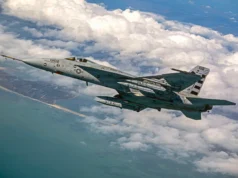
The notice is a request for information from the Air Defence and Maritime Radar Delivery Team, part of the National Armaments Director Group. It explains how the radars are currently tested. “The method used by the Ministry of Defence (MOD) to evaluate the detection and accuracy of Air Defence (AD) Radars is through flight checking,” the notice states. “A ground-based alternative is being considered to replicate the flight check and improve scientific and engineering rigour around the results obtained.”
The request is an early step, not a procurement; the notice makes that explicit, describing the exercise as one that is “NOT part of any procurement procedure”. Responses will instead shape the department’s thinking. They will inform elements of the strategy such as the commercial model, requirement writing, budget and the approach to intellectual property.
Taking part carries no guarantee of work. “Any participation in this market engagement phase and any response to this RFI is entirely at the participant’s cost and risk,” the notice says. It adds that the department “is under no obligation to proceed with a formal procurement or in any other way proceed with the procurement”.
Any resulting contract is some way off. The notice gives estimated dates running from September 2027 to March 2029, about 18 months of work. The deadline for responses is 17:00 on 18 August 2026. They are to be submitted through the Defence Sourcing Portal. The requirement is flagged as potentially suitable for small and medium-sized enterprises, and the responsible team is based at RAF Henlow in Bedfordshire.
The aim behind it is practical, flight checking confirms a radar’s performance by flying an aircraft against it. But it needs aircraft, flying time and the right conditions. A repeatable ground-based method could allow radars to be assessed more consistently, with tighter control over the variables. That is the rigour the notice refers to.
The work sits under the National Armaments Director Group, the part of the department created to lead procurement and bring it closer to industry. Its Air Defence and Maritime Radar Delivery Team handles the radars that underpin the detection of air and maritime threats. A request for information is where the department gathers industry views before deciding whether to take a requirement forward. Whether a contract follows at all remains to be settled.











So they want something to point radars at to test them without needing an actual aircraft? This sounds fun.
Kites? Might not be able to make them move fast enough and they have a lower limit on wind.
Aerostats are the same but with an upper limit on wind.
Rockets probably don’t hang around for long enough and parachute rockets have the same problem of not being fast enough.
Rocket sled? Probably too close to the ground.
Car with tall composite pole on top? Might not be fast enough but would be suitably silly.
In other RFI news today there’s an RFI out on the quiet about getting our own VLS which is light on maintenance for unmanned vessels.
Just had a read of the document, I think they’re actually talking about an electronics based option which simulates targets based on the waveform. These people have no sense of joy.
I’ve gained $17,240 only within four weeks by comfortably working part-time from home. Immediately when I had lost my last business, I was very troubled and thankfully I’ve located this project now in this way I’m in a position to receive thousand USD directly from home. Each individual certainly can do this easy work & make more greenbacks online by visiting
following website—.,.,.,.,.—>>> JobatHome1.Com
Use one of the testbeds for Radar Cross sections, they’re on tall poles!
“NOT part of any procurement procedure”
Perish the thought! Indeed, HMG seem almost petrified in that regard.
“the part of the department created to lead procurement and bring it closer to industry.”
Hmmm, created to add another level of bureaucracy, rebranded an existing, take your pick. The MoD love their “new” organisations that have existed in one form or another for decades.
Maybe there will not be enough planes in the future. Test a radar with an airborne target, it cannot be hard and proves the whole chain. BIT can only go so far.
If it still exists move the seventh trial Samson could it moved north to wittering or scampton( yes I know it’s closed) but living locally it wouldn’t take much to to recommission. Upgrade it to the latest standard and ABM software. Couple it to fylindales and the wider search radar system to provide targeting for batteries, combining SAMP/T launchers with CAAM, CAAM-ER, & CAAM-MR launchers. Then park a T45 in the Rosyth area to protect Faslame , Coalport and the ship and submarine construction areas
I think the T45s might be needed more to protect the carriers and RFAs. Might need them to protect the other ports too! Hopefully the T31s will also have some area air defense capabilities with CAMM/ER/MR and complement any GBAD network.