

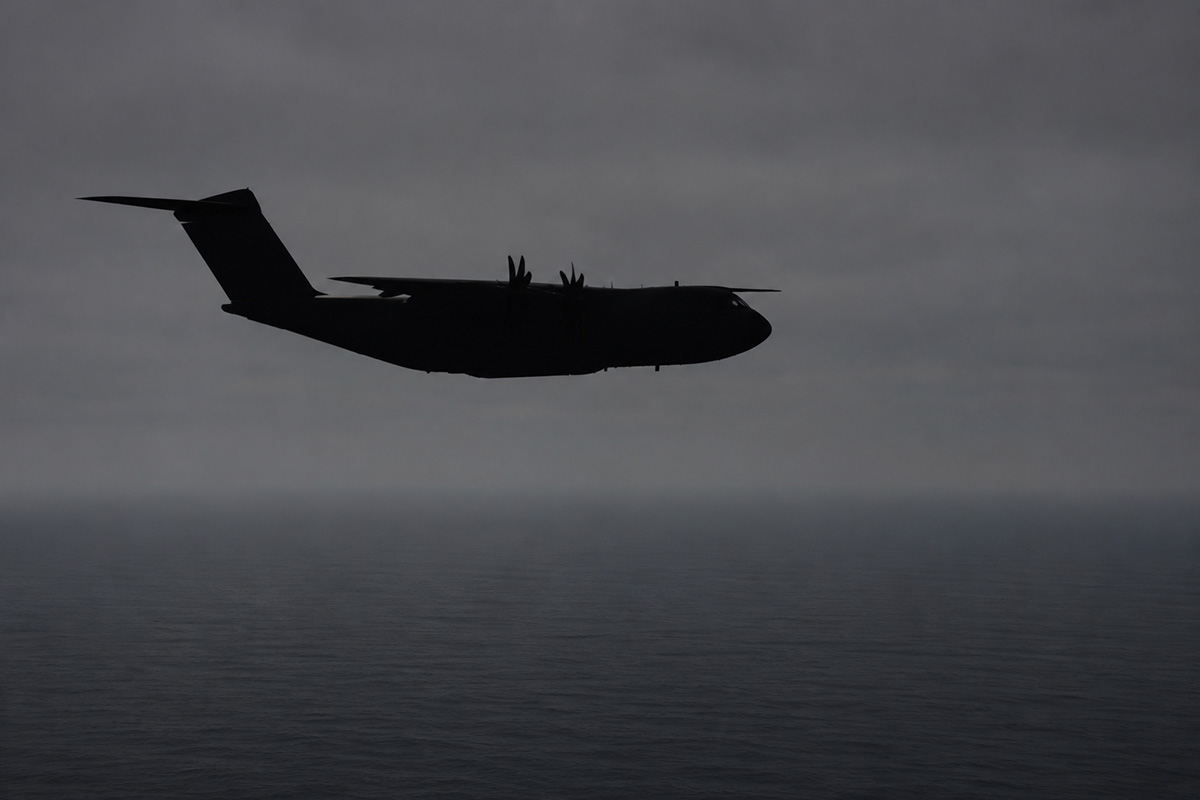
The United Kingdom played a central role in transporting highly enriched uranium from Venezuela to the United States as part of a trilateral nuclear security operation completed in early May, the UK Defence Journal understands.
The operation, led by the U.S. State Department’s Bureau of Arms Control and Nonproliferation and the Department of Energy’s National Nuclear Security Administration, removed excess HEU from Venezuela’s shuttered RV-1 research reactor.
The material was packaged and prepared for transportation in late April before being transported by the United Kingdom to the Savannah River Site in Aiken, South Carolina, where it arrived in early May for disposition. According to the State Department, the mission was completed “more than two years faster than originally planned.”
The RV-1 was Venezuela’s first and only nuclear reactor, originally constructed for peaceful scientific research under the United States’ historic Atoms for Peace programme before being repurposed for what the State Department describes as “gamma-ray sterilization of medical supplies, food, and other materials.” The highly enriched uranium removed had originally been supplied to Venezuela as part of that programme.
The International Atomic Energy Agency provided technical expertise throughout and served as observers during the removal process, a role the State Department said continues to support “the IAEA’s proven track record of working with the United States and other member states to reduce nuclear risks globally.” To date, the NNSA states it has successfully removed or confirmed the disposition of more than 7,340 kilograms of weapons-usable nuclear material worldwide.
The State Department described the operation in broader terms, stating that “by leading the removal of dangerous nuclear material from Venezuela, the United States is safer and has strengthened nuclear security worldwide.”
The removal of HEU from states that no longer require it for civilian research purposes is a long-standing priority for U.S. nuclear non-proliferation policy. Highly enriched uranium, if diverted, could potentially be used in the construction of a nuclear device, making its removal from civilian stockpiles a key element of global nuclear security efforts. Venezuela’s political and economic instability in recent years had made the secure management of the material at the RV-1 site a concern for non-proliferation specialists, the U.S. added.







Maybe we can do something similar for Iran
Seems the UK has become a trusted neutral now 😀
Not by Iran however.
I’ve gained $17,240 only within four weeks by comfortably working part-time from home. Immediately when I had lost my last business, I was very troubled and thankfully I’ve located this project now in this way I’m in a position to receive thousand USD directly from home. Each individual certainly can do this easy work & make more greenbacks online by visiting
following website—.,.,.,.,.—>>> JobatHome1.Com
Didn’t Iran recently issue threats to the UK and French navies ?
I seem that they issued threats to all navies.
Can’t the Yanks do anything on their own ?
They never win any wars without the UK showing them how.
Can’t even attack Iran without having to use UK assets.
Can’t keep a tiny stretch of sea protected either.
Move over Yanks, let the Brits show you how to do it. 😎
Or maybe someone thought it would not be a great idea to have American military planes fly into the Venezuelan capital?
The UKs Office for Nuclear Regulations oversaw the project utilising a carrier vessel provided by NTS Nuclear Transportation Services.
Been at it many years and have undertaken many projects for the US. A good earner hopefully.
Is it still James Fisher in Barrow that operate that service? I wonder if CNC provided protection.
Not sure anymore. Seem to have become more international now but wouldn’t be surprised