

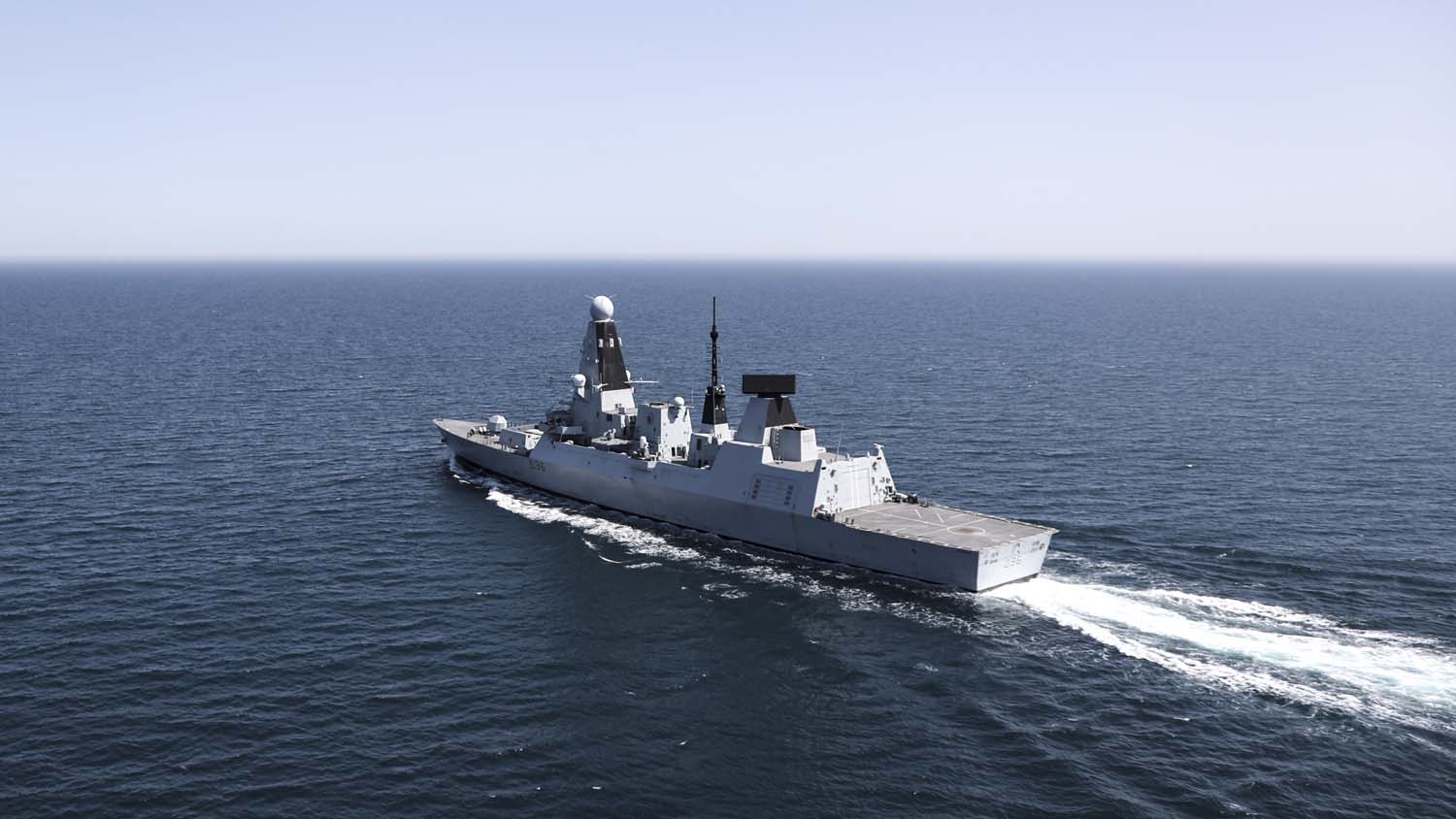
The government should prepare options for a British state-owned vessel to transit the Northern Sea Route in support of international freedom of navigation rights, according to a report by the Defence Committee.
The committee, chaired by Tan Dhesi, the Labour member for Slough, sets out concern that Russia may seek to turn its control of the route into a de facto monopoly as it becomes more accessible.
Dhesi said: “The High North poses a major strategic challenge for the UK’s security. This is a demanding, hostile environment, and one that our greatest adversary, Russia, is seeking to dominate for military advantage.”
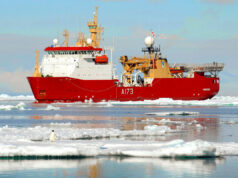
Its recommendation states: “The government should prepare options for a UK state-owned vessel to transit the Northern Sea Route in support of international freedom of navigation rights, including an assessment of the legal basis, operational risks and potential Russian response.”
The conclusion preceding it states: “As the Northern Sea Route becomes more accessible, Russia may seek to turn its control of the route into a de facto monopoly. A transit by a UK state-owned vessel through international waters could help uphold freedom of navigation rights under the United Nations Convention on the Law of the Sea, but this action would need to be carefully assessed against the operational and escalatory risks.”
The Northern Sea Route is a roughly 5,600 kilometre shipping lane running along Russia’s Arctic coast from the Kara Sea to the Bering Strait. Dr Marc De Vore, senior lecturer in international relations at the University of St Andrews, told the committee: “If we do not act to contest Russia’s illegal efforts to territorialise the northern sea route—these are their laws of 2012, 2018 and 2022—we will find after 2030, when the northern sea route becomes navigable all year long, that the Russians have set up a de facto monopoly on transit. They will make money off that, but they could also use it as a form of leverage—for example, if they do not like the level of support that Denmark is providing to Ukraine, they can cut off Maersk ships from sailing the northern sea route. Failing to contest that through freedom of navigation operations will give Russia a tremendous amount of both wealth and geopolitical leverage.”
The report records that in September 2018 the French Navy’s offshore support and assistance vessel Rhône transited the route from Tromsø in Norway to Dutch Harbor in Alaska without informing the Russian authorities. Russia subsequently stated that all foreign naval vessels would have to provide details of any proposed voyage at least forty-five days in advance and carry a Russian maritime pilot, and warned that if a voyage did not comply with Russian regulations it reserved the “right to take extraordinary measures including its forced halt, arrest and in extreme cases elimination.”
Freedom of navigation operations are actions taken by a country to sail or fly through contested international waters and airspaces to challenge maritime claims that break international law. The United States has conducted them in the Gulf of Sirte and the South China Sea, and Britain has done so near the Sea of Azov.
The committee notes such operations carry inherent risks, and in 2021 the Type 45 destroyer HMS Defender exercised its right of innocent passage through Ukrainian territorial waters off Crimea, which Russia had annexed in 2014, and Russia claims to have fired warning shots and dropped bombs near the vessel.
China is focused on using the route, with the sailing distance between Shanghai and Rotterdam approximately 25,500 kilometres via the Cape of Good Hope, 19,500 kilometres via the Suez Canal and 14,900 kilometres via the Northern Sea Route.






As the Northern Sea Route becomes more accessible…after 2030, when the northern sea route becomes navigable all year long…
Nope. ‘First-year sea ice history in the Arctic Ocean inferred from ancient DNA of Polarella glacialis over the past 50,000 years’ (KMJ Mayers et al. Mar. 2026)
Good idea, but linking it to climate change doesn’t stack up…but a good idea anyway…
Arctic extent is more about wind direction, intensity and duration controlled by cyclical ocean currents and the Jetstream, not climate change.
‘New research utilizing the DNA of dinoflagellate (Polarella glacialis) indicates that, 14,000 years ago, when the atmospheric CO2 concentration is thought to have been 230 ppm, the studied Arctic region (Yermak Plateau) was sea ice-free year-round…Today, at 430 ppm CO2, Arctic sea ice is increasingly first-year, but a “multi-year environment” persists. Multi-year sea ice has survived at least one summer melt season, and it continues to thicken over multiple years. The current phase is similar to the sea ice conditions that predominated ~16,000 years ago, or during the last glacial.
If the Arctic can be sea ice-free year-round when CO2 is 230 ppm, but dominated by multi-year ice when the CO2 concentration is 430 ppm, this does not support the alarmist claims that high CO2 concentrations are responsible for enhanced Arctic sea ice melt’