

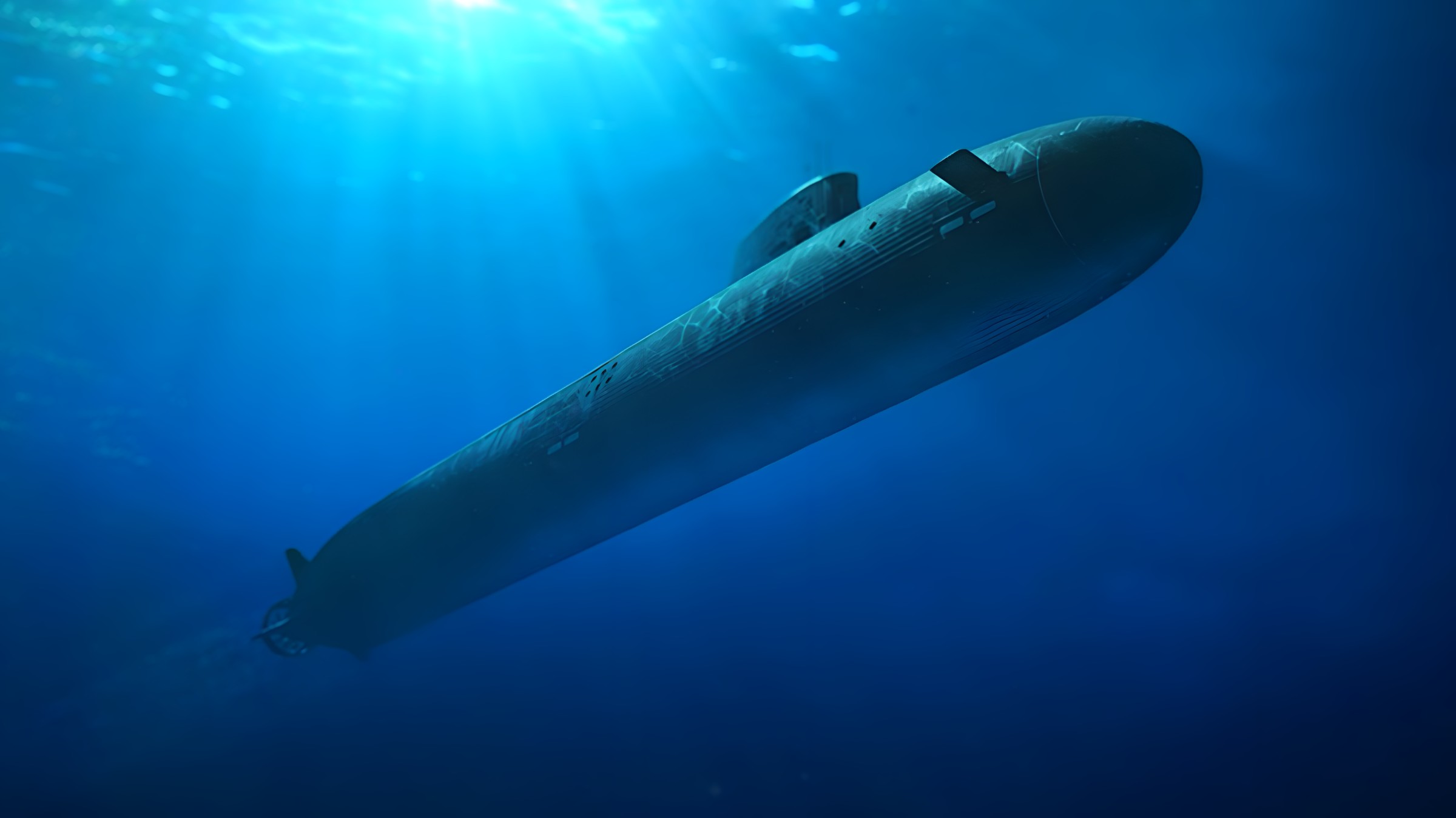
Sir Stephen Lovegrove has told MPs that the UK’s ability to deliver AUKUS submarines at the scale and tempo set out by ministers depends on sustained political commitment, long term investment in Barrow, and a more disciplined approach to major nuclear projects across Government.
Giving evidence to the Defence Committee, he said the UK has a record of building advanced nuclear capabilities but failing to preserve the skills base required to keep them viable over decades.
Asked whether Barrow needed a more deliberate skills pipeline to avoid the stop start pattern seen in the civil and defence nuclear sectors, he agreed that the challenge is structural. “Nuclear is a very extreme example… we have built extraordinary capabilities over the years and have found ourselves… not maintaining the skills, the people and the capabilities around them,” he told MPs. He added that the United States faces similar problems, citing under investment in its submarine industrial base since the end of the Cold War.
Lovegrove linked this directly to the Government’s aspiration to acquire up to twelve AUKUS boats. First of class vessels always carry higher costs, he said, but efficiencies emerge only if production is sustained across a batch. “The ambition to say ‘up to 12’ in its own right is incredibly important,” he told the Committee, because it forces ministers to underwrite the second functional production line needed in Barrow. Without that investment, he warned, the figure would be “a deeply hollow claim.”
Committee members pressed him on whether political decisions were being taken quickly enough to meet the programme’s compressed timelines. Lovegrove said the pace had accelerated over the past year. “The pace of investment is definitely picking up… but that will need to be maintained for the next 20 years at a minimum,” he said. The main risk, in his view, is ensuring that Barrow’s infrastructure plans are properly scoped and designed so that funds can be released on time. “We need to make absolutely certain that there is no excuse for delay.”
On the wider AUKUS review he conducted for the Prime Minister, Lovegrove said he had been given complete freedom to assess progress across both submarine construction and advanced capabilities. He found that the UK must move more quickly to build two effective submarine production lines in Barrow if it is to deliver the first British boat in the late 2030s. He also said the UK and Australia will need tighter integration of their industrial systems, given Australia’s parallel requirement to operate and maintain US built Virginia class submarines.
Lovegrove told MPs that AUKUS pillar 2, which covers technologies such as hypersonics, AI, quantum and cyber, had become too diffuse. His recommendation was to reduce the number of trilateral projects so that personnel and funding could be concentrated on the most credible options. Final decisions remain with the United States, he said, but progress is expected once Washington completes its own review.
On governance, he said AUKUS could not be treated as a routine defence procurement programme and required sustained attention from the centre of Government. Changes of administration in all three partner nations had created gaps in leadership and continuity. He recommended stronger central coordination and more active strategic communication to maintain public support and counter misinformation campaigns by states opposed to AUKUS.
Lovegrove also stressed that AUKUS is not limited to the Indo Pacific. “It radically improves and enlarges our deterrent capability in our own backyard, the Euro Atlantic,” he said, arguing that the initiative has a strategic signalling effect that adversaries dislike.
Committee members raised the civil infrastructure demands that Barrow faces as it attempts to expand its workforce. Lovegrove said current commitments were only a foundation. “The social infrastructure… around Barrow needs a radical improvement to be able to sustain the kind of workforce that the submarine enterprise will require,” he told MPs.



What could possibly go wrong !!!!!
Expand BiF? They can’t get enough people to work there now, so where are they getting the extra people from? The pay isn’t particularly good for permanent staff. Location and local housing poor.
As a long term strategy it would probably be better to start building nuclear boats at another ship yard.
Local housing is cheap outside Barrow.
I agree that yard pay is quite poor but relocation packages could help with that. As could renovation grants for houses. Given that the rented housing sector is a dead duck that and soft employee loans are the way forwards. Problem is HMT and its approach to BiK. Solution create regeneration zones where BiK is suspended on those benefits for X years.
That drives the investment required into Barrow.
There is always a solution.
Local housing is also poor quality
Lol, What all of them ? 🫡😁
There is nice cheap housing outside of Barrow as well.
My point being that with a tiny bit of thinking and not a huge amount of cash Barrow can regenerate.
SB,
Sorry, significant aspects of this issue don’t quite compute for observers at a distance. Fundamentally, problems identified soluble by appropriate application of resources over time? Therefore, an eminently relevant test case for the 1.5% of UK GDP/PA, already formally pledged to NATO to resolve defence infrastructure issues? Am obviously not addressing specific details, but isn’t first level assessment correct? 🤔
Let’s start at the beginning….
Is rural broadband a defence priority?
The 1.5% is a nonsense as it is mostly spent on roads, rail, bridges & broadband.
I worked in Barrow starting as a Vickers apprentice and worked there for 48 yrs retiring in 2019.I was trained to have a can do attitude.I think part of the problem today is that when a problem occurs a meeting has to be called where it is endlessly discussed before a decision is made.I worked on guns,submarines,diesel engines and surface ships so had quite a varied knowledge.We were taught to.think on our feet and I think that is missing today.Between 1980 and1990 we helped to build the whole Trafalgar Class.Between 1998 and 2004 we built three capital ships Wave Knight ,Albion and Bulwark.After that I was sent to Canada to help reactivate the Upholder Class submarines.That is what is missing today the willingness to tackle difficult problems and come up with solutions.
I agree it is part of the issue.
The other side of it is the toxic combination of lack of skills and obsessive attention to paper trails which don’t allow for decisions on the fly. There always has to be a way of proving whom is to blame….except if they a desk officer…
Ahhh. . understood. On this side of the Pond it is known as pork barrel political spending. Actually, occasionally, US military related infrastructure issues are addressed by Congress, despite political intrigue. 🤔👍😉
So if we start now we might have the first “AUKUS” boat operational in about twenty years. Meanwhile emerging tehcnology will have surpassed the need ? I don’t know but given our recent record of not being able to do anything on time and on budget it is extremely worrying to say the least.
Heading as ever for a big fail. This nation is an utter disgrace…..
Posted in despair as it could be so different.
What did Starmer Grandstand again? 12 SSN! Lovely. In whose lifetime.
Always with the big headline to detract from the cuts and lack of money, and the MSM fall for it every time.
I’ve been educated several times by ABC on what expansion is taking place at Raynesway, at Barrow, and elsewhere, and how long lead items are ordered.
Yet, we have this. Doubt.
I agree the grand standing is cover for more cuts – but hen we need mass in many areas.
The scrutiny is poooooor too.
Barrow is a small town in the middle of no where. It is daft to centre submarine production there. They should have used the vast sums of money to reinstate Cammel Laird. Even back in the 60’s when we had a vastly more capable submarine industry and the boats were far simpler we used two yards to build them.
If SSN A can be built in an Australian yard with little ship building experience on the other side or the world then it can be done in a major city region with an existing facility that is only a couple of hours away from Barrow and workers can be easily exchanged.
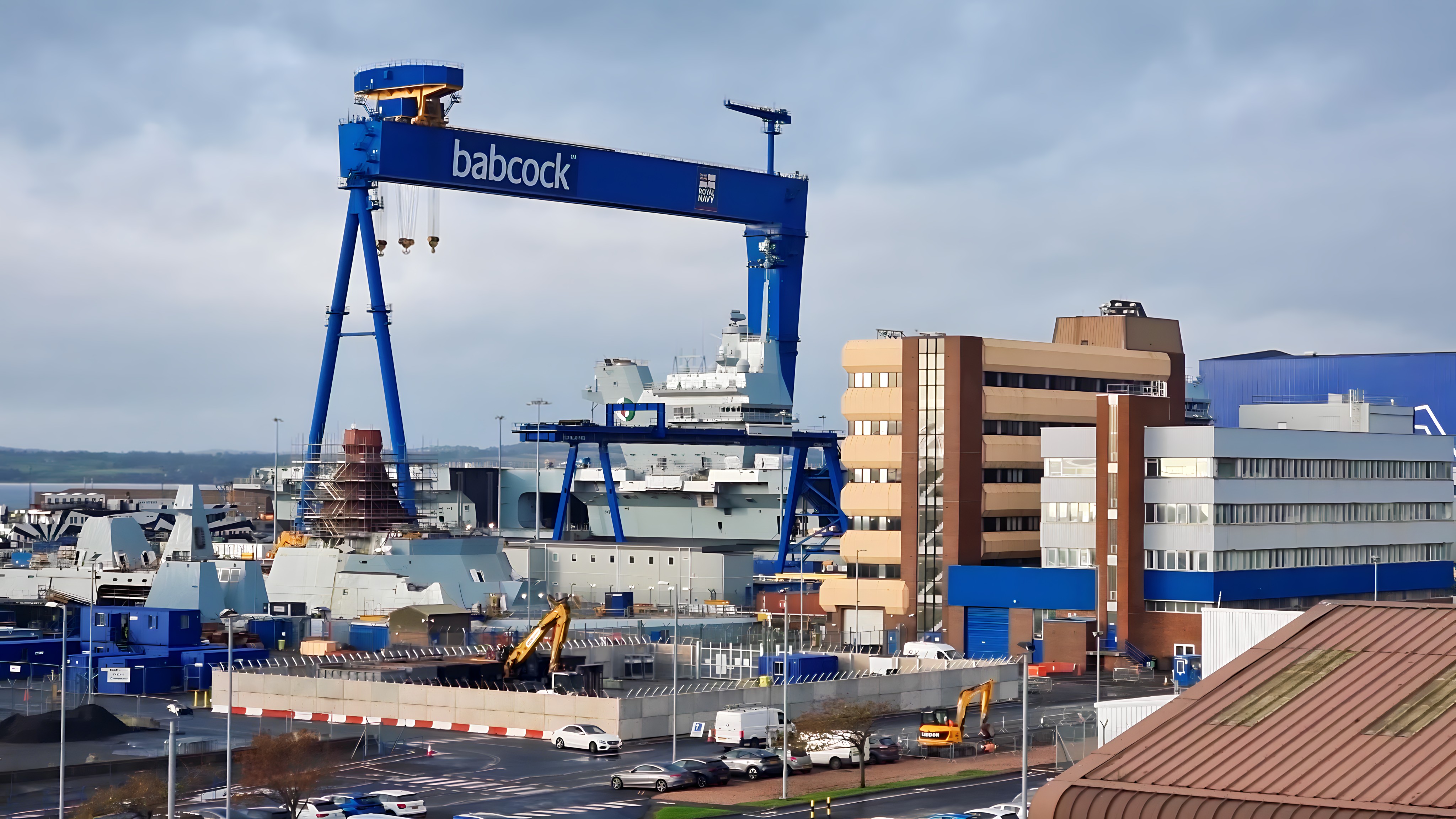
We managed this in central Scotland with the aircraft carrier alliance between Babcock and BAE no reason the same could not have been done with Cammel Laird and BAE.
What vast sums of money exactly, and what submarines expierience did CL have
According to their build history, it says they built 3 nuclear submarines hms conqueror, hms renown, hms revenge. It says it built 69 submarines since 1915 and 1992, but skeptical how it’s defined as built, including sections manufacturing, because recently they have manufactured “block-build units for boats four, five, six, and seven of the Astute”. Either way, alot knowledge and skill would be long gone for a full submarine if that. Oh, and the need for welders.
What is the history? Who actually chose Barrow and not a city to build ships and then subs?
In those days, would you have built nuclear in the middle of a city?
I know they did in Liverpool, look at what that did.
Interesting question, I took a little tour around Barrow and It’s various parts including the “Ship” building areas and the museum, It’s probably an age old ship building area that escaped all the cuts that virtually all other “English” yards have had inflicted and when you get to specialise in one particular area, you get to remain.
That’s just my particular silly thoughts !!!
Could we not re-open Chatham ? they were the first to build Sinky Boats.
Well I’m still hoping Thames Ironworks might get re-instated.
I did have to smile at a Committee coming to the conclusion that there are too many delays in the process of attaining new military capabilities. Did it suggest the reduction in the number of Committees might help I wonder.💭
Chatham is so far gone you would struggle to build a rowing boat. My toddler loved running around HMS Gannet a few weeks ago, that’s about as Naval as it gets nowadays.
I was just joking !
We did not escape the cuts.Our workforce was reduced from 12500 to 3500 in two years in the 90s under Options for Change under the Conservatives when Greg Knott was defence minister.
That decision devastated Barrow and caused a lot of the delays in the Astute program because the government put the design out to tender.When the design came to VSEL in Barrow it had to be totally redesigned as basic errors had been made.
Barrow already had a design ready to go based on an improved larger Trafalgar class.As a result the government caused major delays in the submarine programme.a lit of which are still being felt today
This was after Barrow delivered a Trafalgar class submarine every 9 months.
We actually won the tender to build the Type 42 frigates,but the Labour government transferred this order to Scotland as there was an election forthcoming and we got a second wave of redundancies.
So as you can see a lit of the delays in the current submarine programme were caused by government interference from both parties.
To have a successful defence programme in submarines you have to have a long term plan that is supported no matter which government is in power.
One of largest steel works and a port for Coal export
This is the problem maintaining an SSN capability is its comes with a massive level of ongoing commitment that essentially requires a nation to take on consensus planning over many many decades, infact hundreds of years, If it’s chop and changed over political expediency your in trouble.. lose a couple of SSNs or delay a program for in year savings and you have reduced your capabilities for decades. Don’t plan out and fund the disposal as part of the through life costs and your sending an unpaid debt through the generations.. SSN capability most be planned and implemented meticulously around a highly sustainable program, from building through to managing the HLNW for many decades before it’s to the point you can then burying it in a GDF a 1000feet underground in a unit designed to survive for 100,000 years… the last decades of the Cold War essentially saw a burst of none substantial growth, followed by a massively unsustainable retrenchment of investment following the end of the Cold War..
SSNs are such potent strategic weapons as nothing else can simply set off travel the globe unseen at 500 miles a day for 2 months then sink 20-30 ships or rain down 30 cruise missiles on any nation and return home for another go, linked to the fact it takes so long to change trajectory on numbers, says something. This means maintenance of a fleet and which way it’s going is a massive red flag to a nation’s intentions. The UK and the U.S. essentially gutted their abilities to maintain their fleet sizes and the reality is even though the US mains a need for 60+ SSNs as soon as the LA class crisis has run through ( early 2030s) its industrial capacity means it will only likely be able to maintain a fleet in the low to mid 30s and even with all the talk of the UK having 12 boats it still only has the capability to replace its present fleet on time and expanding will not come until the late 2040s.
The reality is for both nations this essentially has waved a flag of strategic withdrawal to its competitors, the voices may be loud, but the stick is 30-40% smaller.
Then we go to china.and it’s massive red flags it’s waving all over the place ( rabid communists love red flags) . if we have said SSN production needs to be finally balanced what message is the Chinese SSN programme tell us.. well for most of the time SSNs have existed china was not much into them.. first it saw production as a point of national pride..and so invested heavily to get essentially a token force of the worst SSNs in the world, then as it’s started the program its relationship with the USSR crumbled and by 1969 was at a state of essentially Cold War. So it pushed forward to essentially try and have an SSN force that could compete with the USSR in the north west pacific and develop a second strike nuclear capability that could hit Russia…that was its driving force essentially till the end of the Cold War… this lead to a cold war force of 1 type 092 SSBN and 5 type 091 SSNs.. that was all it build from laying down its first SSN in 1968 to 1990… its then started drifting even more.. building only 2 SSNs in 1990 to 2000. It then decided it needed a peer level second strike capability and between 2000-2006 laid down 4 SSBNs..it then had a nuclear submarine crisis and by 2007-2010 was seriously contemplating getting out of the nuclear submarine building business as it was essentially focused on engaging with the world and not really focusing on geostrategic competition beyond the china seas and the potential enemy that was Russia was becoming a friend.. this all changed direction dramatically in 2012 when xi become leader and we had the first red flag.. that Xi had a less than friendly plan, immediately on Xi becoming leader china started building the type 093A program, this was not a cogent class but essentially a set of SSNs testing and developing stolen and purchased tec ( stolen from the UK and purchased from the Russians). The first was laid down in 2012 and the of the 4 last was commissioned in 2018. So the moment xi came to power he ordered and launched 4 SSNs within 6 years.. now he did that with essentially very little capacity the Bohai yard had 4 slips for SSN and SSBN building.. but sill they build 4 in 6 years. As the last of the type 093As was launched ( with pump jet propulsion, full tiles and good if not full deck rafted acoustic rafting ) the next huge red flag occurred.. the nuclear boat facility at Bohai literally exploded and they build an SSN mega factory.. with a new 12 slip SSN shed, a 8 slip SSBM shed, tilling shed, supported by huge major and minor component factories and a fueling facility.. red flag 3 is the fact they then immediately laid down 12 new SSNs ( type 093B) and have launched about 3 a year from 2022… red flag 4 is that they then moved straight to a new SSN the 095 ( this it is believed will have everything a modern peer SSN has and it’s safe to assume will be a close peer or peer to present product SSNs) and red flag 5 is that they have build what is believed to be yet another SSN construction hall for a possible another 8-12 SSN bays.. so in less than a decade moving from 4 bays and a possible 4 SSN/SSBN every 6 years to up to 32-36 bays and about 8 SSN/SSBNs a year.. for true red flag context that is simply a completely unsustainable level of SSN building as no nation can possibly sustain a growth of around 6 SSNs a year for more than a few years, before it has a huge number hanging around, if this was a facility for sustained maintenance of a fleet it could keep a fleet of about 120-180 SSNs going long term. That’s an impossible number to maintain so this whole massive investment is not a sustained investment at all but a crash programme in which the massive investment in infrastructure will then be cast aside… why, when you think about it there is only one answer.. a sudden SSN production surge to match the USN in the mid 2030s and then eclipse it by the late 3030s.. ready for ? ( because no nation spends essentially possibly 100s billions in a could of decades for just bragging rights and to then close down the largest SSN/SSBN production site ever created ( for scale its larger than the rest of the world put together)
Interesting read, thanks
Maybe the Chinese, as they have plenty of space, realise that building aggressively in cramped facilities isn’t very efficient as it depends of a ridiculous level of planning and choreography with baked in inefficiency if one thing goes slightly wrong.
Whereas they can build and line up segments in bay and build in a more relaxed but ultimately more efficient manner.
It is really worth thinking about the extent to which we over manage complex processes not trusting skills and knowledge but totally relying on process to the exclusion of all else.
The trouble is you need real knowledge to create a proper process which is where this all falls over.
Indeed, and that is why the system of small component factor, large component factory to assembly bay, to tiling facilities works really well.. what is really telling is the amount of final assembly bays they have built.. 12 that can build SSNs and SSBNs then 20-24 focuses pure SSN bays concurrent assembly of 30-36 nuclear submarines is a bit mind blowing.. they have also massive extended their fitting our docks as well so although Chine never tells anyone about its SSN launches, estimates are that from 22 it’s launched up to 8 093B with possible up to four commissioned or on final trials and 4 fitting out… at present their fitting out is the bottleneck… I and believe their is a lot of work going in to extend that…
The key question really is not so much their ability to build SSNs it’s their ability to train the crews at the rate they can build.. their is some evidence they have not expanded their electric boat production and so I would imagine they will retire the last 3 type 91 and 2 type 93s for crews ( old rubbish SSNs ) and they have 27 electric boats that are 20-25 years old so I would imagine they will be diverted those crews as a a core for the new SSN force.
One thing China doesn’t lack is people.
Whether they are competent or not is a whole other question. SSN work requires skill, tact and nous. Not blindly following orders.
Yes men and nuclear don’t good bedfellows make.
Yep.. I suspect we will see china working it’s SSNs harder for longer soon.. the 091s and 093s were not competent boats for long deployments.. but the 12 093bs will give them a boat they can really cut their teath on properly ( although we tend to forget china has been running nuclear boats for 50 years now.
What I think needs to be watched is if china starts building SSNs for Russia.. essentially they are now peers on knowledge of SSN construction so there is very little to hide.. but china would love Russias latest generation of reactors… and china could bang out 12 SSNs for Russia in 5-6 years….
I wouldn’t say China was quite on a par with Russia on SSNs.
However, if the nightmare scenario of China making subs for Russia were to take place the few raining Russian secrets would come across.
Russia doesn’t have a lot to impress China with now that most its weapons are so obviously lacking.
So Putin may have to throw the sub tech dice to get what he needs.
Take a Google Map tour of Murmansk and in particular, Saida-Guba, you can see a nice selection of neatly parked containers and space for an equall amount yet to be salvaged.
That’s someone else’s problem to deal with, just like our own and so many other countries.
“Up to”
Sigh
Ah but “Up to 12” is 50% better than “Up to 6”. So any Increase is good news !!!
I’m liking your style halfy.
Oh good, for a while there I thought I was playing with myself again. 😁
Don’t do that, you’ll go blind
Went blind decades ago, Brail works just fine. 💪☺️
Lessons? Politicians are short term grifters. Reality is Barrow cannot cope with the present builds. Location, salaries and lack of clear investment all contribute to an ineffective strategy. Then the skills shortage….
Well you could say It’s all rather Sub Standard.
🙂
Barrow is one of the worst places to live in the UK – there’s the problem right there.
the economy will take care of this. Its just a dream it will never come to fruition.