

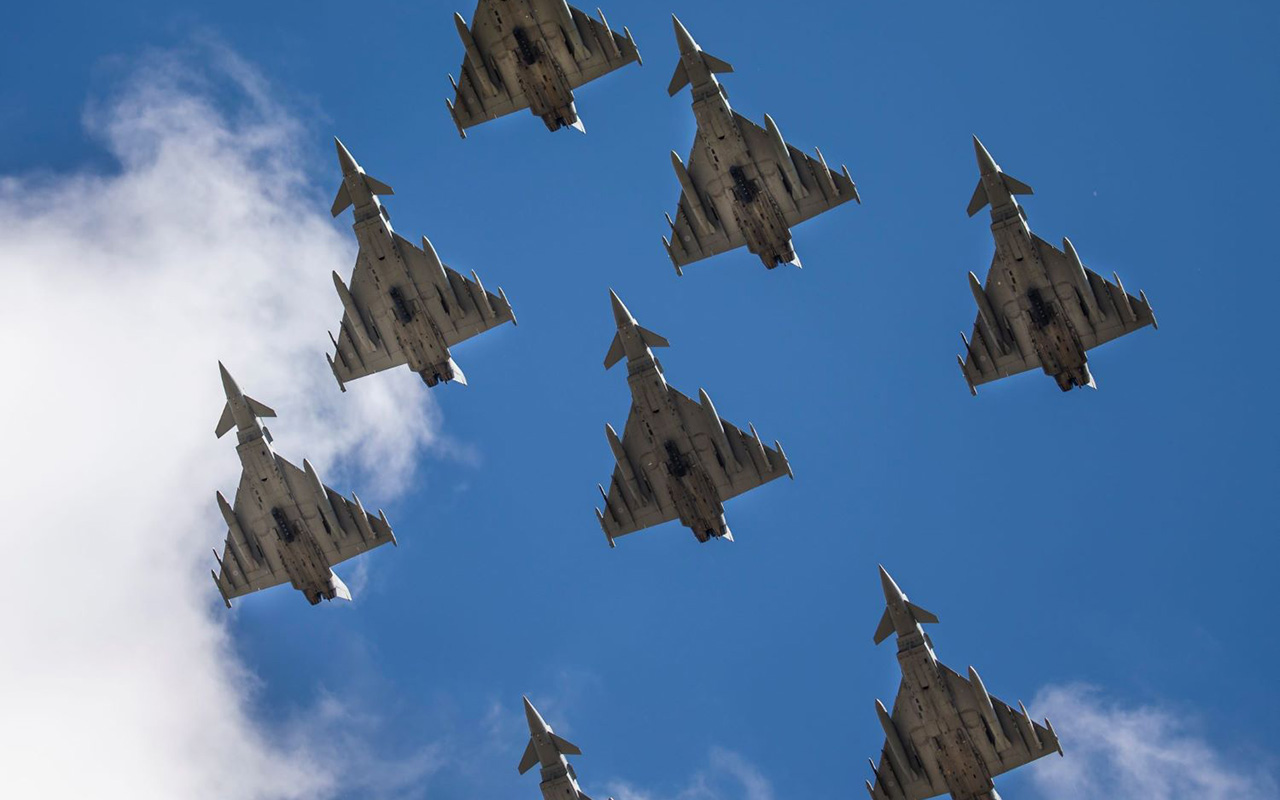
The Ministry of Defence’s failure to publish its Defence Investment Plan has seriously undermined efforts to modernise the armed forces and is weakening the country’s defence industrial base, the Public Accounts Committee has warned.
In its report on the department’s 2024-25 accounts, the committee said the continuing lack of a deliverable long-term plan was “seriously undermining the Department’s efforts to modernise the Armed Forces and achieve value for money for the taxpayer”. Three years had passed since the 2023-2033 Equipment Plan, which the department has said it will replace with a more holistic Defence Investment Plan, and which followed the first zero-based review of its budgets in 18 years. The new plan remained unpublished, the committee said, because the department had not decided which capabilities, infrastructure and people it needs to make the armed forces ready for warfighting within the available budget, nor secured the cross-government agreement the plan requires.
As a result, the committee said, the department had “been unable to move quickly and assuredly to provide a stronger deterrent to our adversaries and to equip our Armed Forces for the modern battlefield”, a battlefield it noted had changed enormously over four years of war in Ukraine and conflict in the Middle East. It warned that delay carried a direct financial cost. “Time is money in procurement, and suppliers are increasing their prices to take account of the international situation’s continued deterioration,” the report said.
The committee was particularly concerned about the effect on industry, warning that the delay “risks weakening the UK’s defence industrial base”. The department spends 85 per cent of its budget in the UK, a share it hopes to maintain or grow as spending rises, and the committee said that scale of expenditure could provide a considerable stimulus to the wider economy through infrastructure and skilled jobs, as well as positioning British firms to benefit from a growing export market. The UK’s support for Ukraine, it added, had shown the speed and innovation of the domestic defence industry, particularly among small and medium-sized enterprises.
The investment plan had been intended to give industry certainty and a clear demand signal, encouraging firms to invest for the long term in their capacity and capabilities, the committee said. Its continued absence undermined those aims, “with smaller companies suffering more than their larger counterparts”.
Sir Geoffrey Clifton-Brown, the committee’s chair, said the issue went well beyond the recent delay. “The nation has now in fact gone years without a credible plan for UK military capability,” he said, dismissing the argument that the department was simply taking time to get the details right. “Whatever the content of the DIP when it eventually does appear, the damage from its absence has been done – to the nation’s credibility, to its safety, to its Armed Forces, and to certainty within its entire defence industrial base.”
He said the plan had become “the most anticipated document in my entire political career”, and that any minister seeking to explain away the delay should instead consider the message it had sent to the public, allies and adversaries, “and simply apologise”.
The committee made two recommendations flowing from the delay. In the first, it said that once the department has published the plan, it should write to the committee within three months “setting out how it will use the Plan flexibly to take account of the changing international context when making ongoing decisions about expenditure and capabilities”. In the second, it set a far tighter deadline, calling on the department to write “urgently, within two weeks of this report, to explain how it is mitigating the impact on suppliers of the delayed publication of its investment plan”.






I think Starmer and this government have damaged credibility.
He says we might be at war by 2030, in his weak, robotic sounding voice, the charisma of a wet rag. And then quibbles over a few billions, 12, 15, 18, which everyone knows in itself is insufficient, while dithering since the autumn to publish a plan??
Hello? Is anyone there?
UK credibility was severely damaged in the streets of Basra in 2007 and has never recovered. UK credibility isn’t damaged in 2026, it’s non-existent. The US called in 2026 and no one was there.
The standard Buford put down, hope your tissues are nearby.
2026. The US called, and had no right to.
Your attack on Iran was your’s and Israels, not NATOs.
Are we meant to be a an extension of your foreign policy and wars of choice then?
2007, Basra, yes, the Army was stretched and limited in what it could do. We shouldn’t have been there either.
The only time we were right to follow your wars was in 2001, and that should have been special forces only into Adghanistan, no more.
You talk of credibility, you think the US has credibility!!??? 😳 You have military credibility, you lost the rest by your own behaviour towards friends and allies.
So we are in good company.
So off you go, but do take all your bases with you, wont you? ( which you won’t, as you need them )
Just shows how ungrateful the Americans are.
Yes. The help they gave us in WW2, not gifted, had to be paid for.
They came to Europe and lost many men, that sacrifice is acknowledged.
While Hollywood ignores the fact they were late, again, and that actually it was the Soviet Union that was chiefly responsible for defeating Germany, aided by supplies from the western allies.
The difference is, it’s accepted and acknowledged the part the US played by most Europeans. Here, how many of us Brits are going onto US Dwfence websites out of insecurity, spite, or malice, and displaying the behaviour exhibited by PKCasimir on this website over several years.
You’ve got “issues”…..”mate.”
I meant “in the wake of 9/11” but I must have deleted it in the rework of the message.
I’ve long maintained that the Britain held the line long-enough for the US to get its act together. Had Britain fallen in summer of ’40. Then no, North Africa, No Greek/Balkans diversion; Germany would have attacked Russia “on-schedule” with more force as no Western or Southern fronts to consider. No bases for US to operate from apart from Iceland. So by summer of ’42, you have the whole of Europe under 3rd Reich, North Africa a non-issue and probably Russia all the way to Urals under 3rd Reich. Then no Britain is Burma and India, Japan could focus more on US. By ’43 it doesn’t look good, US & Canada would be standing alone. No bombing campaigns of Germany, 3rd Reich would have developed nukes, missile subs and long range jet bombers unhindered.
Quite possible, I have read several interesting “what ifs” on the subject. Still had Hitler at the helm and ambitious commanders like Guderian and Manstien pushing on ignoring logistics and their flanks, but that months delay of Barbarossa when the Werhmacht went into the Balkans was a costly loss of prime campaigning weather.
Possibly no supplies sent to Russia by an isolationist US either. Certainly no space program, handed to the US on a plate.
I’ve gained $17,240 only within four weeks by comfortably working part-time from home. Immediately when I had lost my last business, I was very troubled and thankfully I’ve located this project now in this way I’m in a position to receive thousand USD directly from home. Each individual certainly can do this easy work & make more greenbacks online by visiting
following website—.,.,.,.,.—>>> JobatHome1.Com
Has Anyone Really Considered the Implications of What Would Happen if IRAN Was to Build and Test a Nuclear Weapon…??
Western Media theatrics of TRUMPS WAR Now I Suspect Will be a Drop in The Ocean to What Would Happen in the Middle East if that were to Happen..!
OIL at +$400 a Barrel..?
Ouch🤣🤣👍
I have been involved in defence and foreign affairs for fifty years and all I see is an inexorable slide into a morass of underfunding, incompitence and government ineptitude, one after the other. Unless action is taken NOW, and who is expecting Starmer to do that, we are going to slide finally into oblivion.
Bloody hell I always agree with you Geoff, have a good Sunday my friend 👌
Thank you Lee. You too. 😊
Would Suggest Oblivion is Allready upon us….!.
Difficult to look At our Current Armed Forces and See little More Than a Local Defence Force Capable of Holding the Line for A Very Short Time…!
Felt Somewhat Sorry for STARMER and indeed back to BOJO..!.The Rot Set in long Before their time ..!.
However the 9Mths DIP Delay With Dithering STARMER is Unforgivable..!
Doubt he Now has the Political Power to Push through What’s Required..
As you say, the problem has been around for a long time. It’s ironic that BOJO might just have been the one to do something, but Covid and Ukarine well and truly srewed that. Starmer is toast depending (maybe) on the bi-election. Burnham is more left than Starmer so I’m not holding my breath.
A clear signal that publication of DIP is getting near is the sudden proliferation of leaks over the last few days of what may not get funded and likely cuts, e.g.:
* Upgrades to sub-standard married quarters and military accommodation – multi-year delays
* Purchase of 12 F-35A strike fighters – cancelled
* GCAP [Tempest] programme – ISD delayed by 3-5 years and oversight to move from the MOD to the Treasury(!!)
* Challenger 3 – order reduced or cancelled, the UK will instead join a European tank project
* Boxer – order reduced
* Land Mobility Programme (LMP) – delayed and batch’s reduced in quantity
* Authorised size of regular British Army cut by up to 10,000, replaced by new reserve units specialising in drone and anti-drone warfare
* RN aircraft carrier availability “reduced”, with one ship mothballed or sold
* Planned order for three Multi-Role Strike Ships (MRSS) – cancelled
Some of the above is undoubtedly kite flying but the general downward direction is undoubtedly correct when even the serving CDS tries to express his serious concerns without openly criticising the government.