

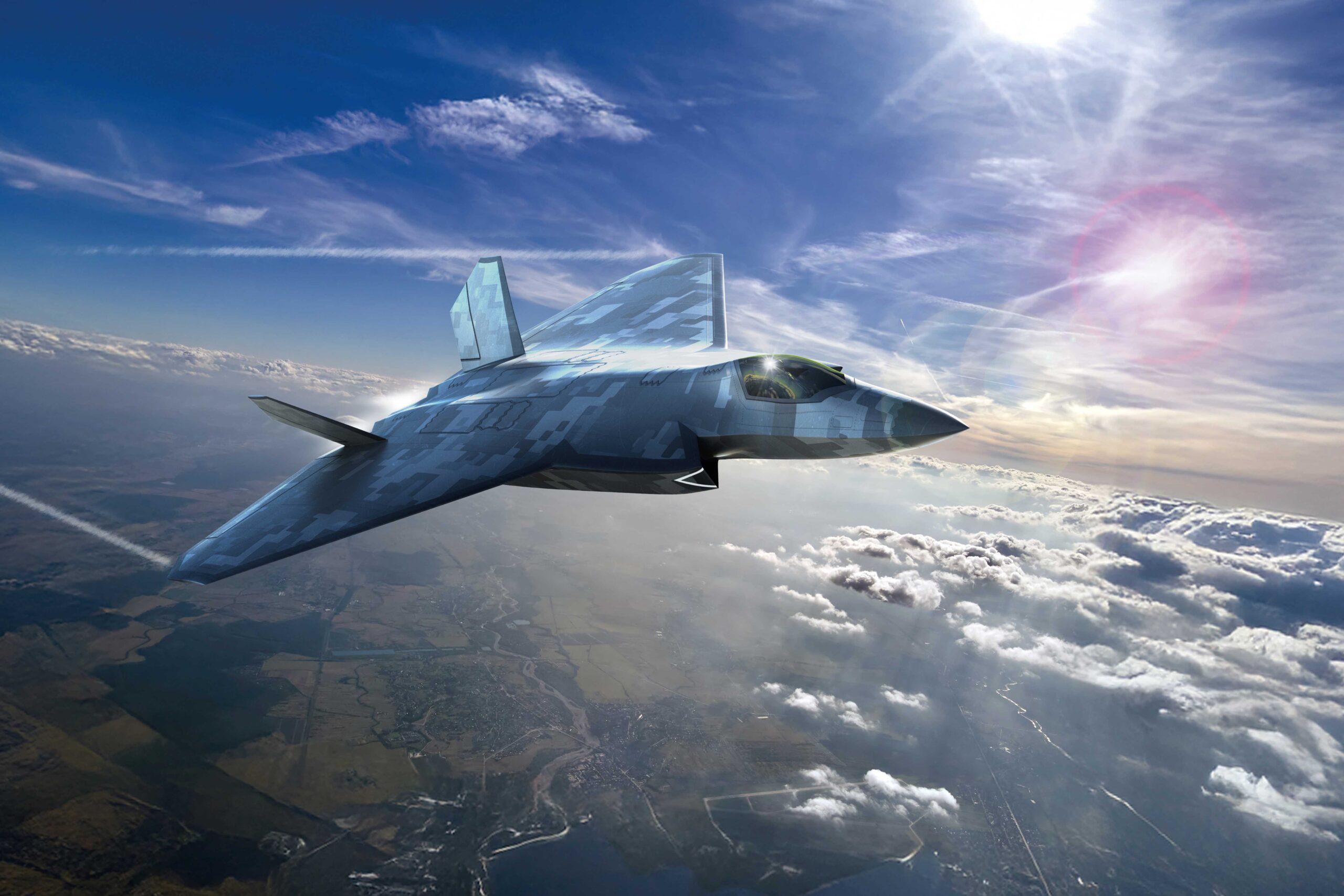
The Global Combat Air Programme (GCAP) has awarded its first joint international contract as an integrated trilateral programme.
The £686 million contract has been placed with Edgewing, the joint venture formed by BAE Systems, Leonardo and Japan Aircraft Industrial Enhancement Co. Ltd., to lead the design and development of the next-generation combat aircraft, according to the programme.
The award covers key design and engineering work and is intended to accelerate delivery as the UK, Italy and Japan deepen cooperation under GCAP, which aims to field a future stealth fighter.
Masami Oka, Chief Executive of the GCAP Agency, said: “This contract is an important moment for GCAP, as activities previously conducted under three nations’ contracts will now be carried out as part of a fully-fledged international programme.”
Marco Zoff, Chief Executive of Edgewing, added: “The pace at which Edgewing and the GCAP Agency have ramped up… has been made possible through our shared purpose and strength of collaboration.”
The contract, awarded on 1 April, runs until 30 June 2026 and reflects the growing role of the GCAP Agency, established to manage and coordinate the programme on behalf of the three partner nations.
Edgewing, headquartered in the UK, will act as the design authority for the aircraft, overseeing engineering, airworthiness and certification across all phases of development.
GCAP, launched in 2022, is intended to deliver a next-generation combat air system to replace current fast jet fleets and sustain sovereign industrial capability across the partner nations.





Sorry, who’s giving money to whom?
The GIGO, an agency of the British, Italian and Japanese governments, is paying Edgewing, a joint venture owned by BAE, Leo and JAIEC (essentially Mitsubishi).
Is this the contract that the Japanese and Italians were getting irate about the UK government dithering over?
Japanese media is reporting that Canada is about to join GCAP as an observer. It’s interesting that the US has now moved the time line in F47 to the middle of the 2030’s but more likely the end.
ĞCAP has a real chance to be the worlds first 6th generation fighter and if we can stick the landing a major commercial export success.
I do have concerns with the Japanese’s approach however, they are said to be very cool on the idea of collaborative aircraft and drones, the aircraft may also end up being very large to deal with a war over the pacific when, what’s needs is something smaller and cheaper designed to fight over Russia.
There is a danger that we end up going TSR2, building something ground breaking that no one else needs or can afford.
I think the RAF, MoD and the rest know what’s needed, Jim.
It was reported long ago that it’s going to be big.
TSR2 was killed before we found out if anyone else wanted or could afford.
The stated extreme long range to negate the need for tanker support will always drive the aircraft to be bigger. Whether this is the right approach and perhaps stealthier tankers is a better option is open to debate. The dawn of very long range air to air missile is definitely impacting design.
The RAF also wanted it big, they essentially wanted a 2400km combat radius.. essentially an aircraft that could launch a cruise missile attack at Moscow without tanker support. Japan is far closer to its enemy than we are to Russia.
I did read a really interest article that essentially was explaining why small was simply no longer the way combat aircraft need to go as the larger aircraft has better sensors, more power for processing and can carry more and larger effectors.
Yes, but big will be expensive and that will limit export potential and the number we can buy.
That’s not necessarily an issue with ACP/CCA type platforms accompanying it though. It’s also possible if Japan is not big in the drone side that countries like Canada and Poland can be offered places working in those in exchange for buying the manned aircraft.
Indeed there will be three parts to this
1) the crewed aircraft
2) drone companions
3) effectors ( stratus, meteor etc)
I can see your concerns Jim but at least at this stage, everything seems to point the advantages of a large aircraft that can fly long distances and stay on station, be it the Pacific or Atlantic or attack Eastern front lines from British bases without refuelling (or limiting it as far as possible), carry both individually large and equally large amounts of ordinance and deliver it from great distance. The upsides seem far greater than any presently obvious downsides for both Britain and Japan and even for the Italians when considering their position in the central Mediterranean. For Germany and central powers and France due to their carrier requirement, it’s a somewhat different set of priorities. But for Countries like Canada and Australia they have similar requirements over vast areas that GCAP offers a solution to. This, especially so now that operations as part of direct US operations and thus infrastructure is far less a secure option than it was even a few years ago, means longer range and capability is surely very attractive. The only real downside is dogfighting but in recent decades that has clearly become a far less crucial characteristic, indeed arguably almost irrelevant to modern aerial warfare, indeed it’s only going to be a factor if almost everything else has gone wrong in any mission or perhaps an ‘escort’ response to a routine encroachment through a misstep suddenly turns hot.
The concern about collaborative aircraft and drones, seems odd if it’s true but so far this has seemingly taken a rather lower priority in the programme overall than that of FCAS or the F-47 at least outside of the core platform itself. To be honest as long as it doesn’t seriously effect the ability of Tempest to act with such capabilities as the project progresses I don’t immediately have concerns as long as developing independent ‘loyal wingman’ projects can be part of the solution when Tempest becomes operational and because that sort of technology is still somewhat fluid. Having seen how the US found it impossible to co develop the F-35 and new carriers with their electro magnetic launch systems so they could work together (and gave up till both matured) I can’t say I would be confident trying to predict and develop specific support platforms for Tempest already on a tight timeline and budget while trying to gold plate each’s cooperative systems wouldn’t introduce considerable delays and cost overruns, potential disagreement between the contributors and no guarantee it all works seamlessly anyway. Working with others developing such systems so that you don’t actually block technical cooperative capabilities seems more sensible, certainly at this stage.
bae Replica was a large aircraft , and big bays to dictate 2 storm shadow sized weapons means well over 20,000kg empty. That’s the weight of an F22 and that has a problem with range, so much so they are adding stealth fuel tanks.
Superhornet is a big aircraft compared to Typhoon and there is no way the USN 6th gen will be smaller.
I don’t think Tempest will look huge compared to it’s potential peers and both the RAF and Japan want range.
Shorter range will mean more tankers and tankers are increasingly vulnerable, as evidence by Stratus Rapid having a capacity to take out high value targets
It needs to be large not just for range but to fit a full weapons load internally. F35 is a prime example of limitations imposed by a small internal weapons bay.
£686m for a contract that runs till the end of June?
Either we’re on the bleeding edge of it all or it’s horribly mismanaged like Concorde, with everything being translated three times, etc… But If this is being used properly, then this Plane is going to much more capable than we’re ever let on to know.
That £686 million does not long, June 2026!
Really need to accelerate this program with what’s happening around the world. Less talk and more action, let’s see some flying prototypes.
Geez you are a hard task master considering a flying prototype (even before the actual design has been agreed) is, if all goes well to fly within 18 to 24 months. That is almost crazy to imagine how quickly things have progressed for such a complex programme. The Japanese are working on their own prototype of course that equally was inspired by pre collaboration design, though I don’t know when that’s due to fly. I think keeping everything on track is the vital priority rather than speeding it up, as nice as that would be.
It will be interesting to see where the US is in flying a representative prototype, it’s difficult to know what exactly they have flown so far in reality as Trump claimed they had flown a prototype in his first Presidency and was almost ready to go, despite the actual competition not even being concluded till a year ago. He will probably be insisting upon a gold plated bathroom in case he wants a lift.
One of the reasons for HPC being a priority for defence is that we are now at the point where we can literally prototype a virtual airframe and have high confidence that the simulation will match the real-world performance.
Very good news. GCAP is probably the most important of all programmes we are involved in. Full steam (?) ahead as they use to say.
I was looking at the list of countries that there is work on to potentially develop exports
Saudi Arabia
India
Poland
Australia
Canada
Germany
If they can get that to work it’s massive..
There’s additional pressure on this programme if America goes through with its withdrawal from NATO. Additional RAF Typhoons can’t be ruled out either if their fields of duties are broadened to include long-term joint protection of Gulf states in addition to Ukraine border and homeland patrols. The speed-up of Tempest would favour all international partners as all face increased defence expenditure in the light of rapidly rising tensions. If through the use of advanced technology (AI, and robotics) and additional money a sizable reduction in development time might be achieved, this would be to everyone’s benefit.
On another issue, Starmer’s refusal to allow UK airbases to the US at the commencement of Epic Fury has possibly cost an additional 60-80 fighter jets stationed on UK soil. So, not only has he failed to secure the DIP on time, but he has possibly triggered a withdrawal of US warplanes from the defence of Britain, as they are part of NATO’s air wing.
So you think Starmer should have broken the law and joined that daftest military operation in history to keep four squadrons of US jets which have no role in the defence of the UK.
Actually worth pointing out that those planes have nothing to do with NATO and the US has not indicated they are being removed. Where do you think the US would even put them? They don’t have an abundance of empty bases anywhere.
I’m not sure if you noticed with Trump but giving him what he wants never results in him doing anything positive, it results in him wanting more. He thought he had a hold over the UK but Starmar out him in his place and did so in a professional and diplomatic manner.
Starmer has played this exactly right.
Just as with the UK leading the free world in the response to Ukraine the UK is now leading the response to the straits of Hormuz crisis.
With “super powers” melting away the UK is resuming its role as leader of the middle powers.
Spot on Jim 👍. Those aircraft and the bases are vital to any support the US wants to give to Israel especially as others have deprived him of alternatives and as the US is now joined at the hip to Israel it’s highly unlikely he would risk losing those facilities. No matter how much we helped Trump and thus make ourselves a bigger target to all manner of enemies I have on the evidence little confidence that those fighters would do anything other than scuttle off if an real threat to Britain de eloped. We got the message from Trump when Salisbury happened after all when only when sensible advisors pushed him did he even mildly criticise Putin. There are no sensible advisors anymore that he listens to.
His talk of escorting ships through the Strait of Hormuz evaporated rather quickly, so presumably at some point some sensible advisers managed to make him understand that trying to do so would likely result in him losing high-value escorts. Also suggests that his demand for other NATO powers to do so is just bluster aimed at a domestic audience.