

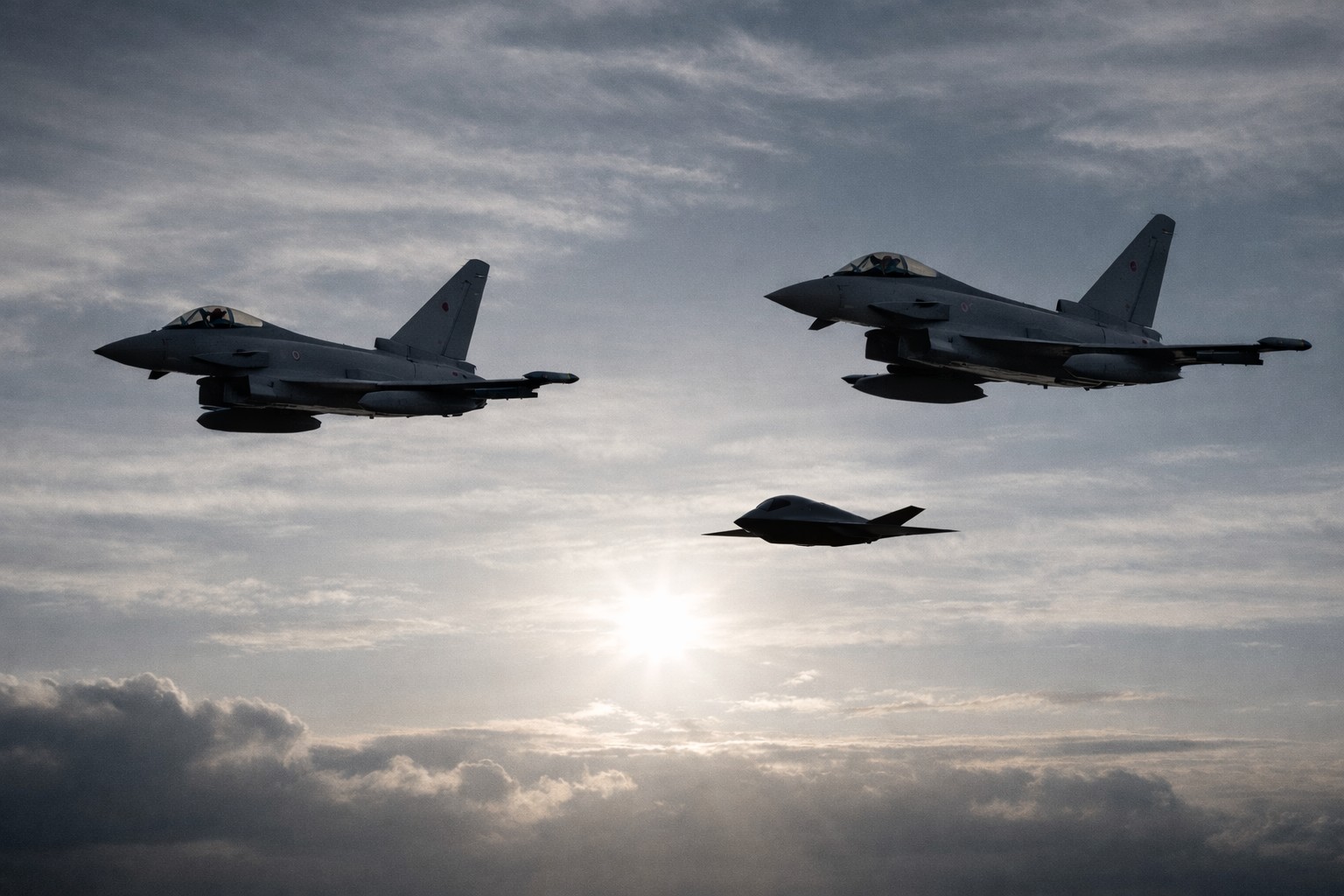
Uncrewed Collaborative Combat Aircraft are expected to play a key role in the air and missile defence of the United Kingdom through the 2030s, augmenting the crewed fighters that form the core of the mission, the Ministry of Defence has said.
The detail came in a written parliamentary answer from Minister for Defence Readiness and Industry Luke Pollard on 10 July, responding to Ben Obese-Jecty, the Conservative MP for Huntingdon, who asked what assessment had been made of the potential impact of CCAs on integrated air and missile defence into the 2030s, referencing the Defence Investment Plan.
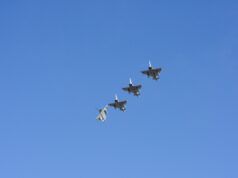
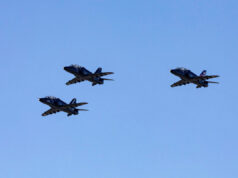
Pollard set out where the weight of the mission currently sits. “The RAF combat air force provides the core of UK IAMD capability, with Typhoon and F-35 defending UK and NATO skies against air and cruise missile attack, supported by Voyager tankers and Wedgetail early warning aircraft,” the minister said. “Through the 2030s, Collaborative Combat Aircrafts are expected to also play a key role in IAMD as they augment combat air platforms.”
The answer said the plan’s £790 million of additional homeland IAMD investment “prioritises the sustainment of critical foundational capabilities while enhancing Command and Control and sensing functions to maximise the effectiveness of existing air defence systems and effectors,” with the investments collectively aiming to provide a more resilient and integrated architecture, greater redundancy, and stronger decision-making through improved situational awareness, ensuring the UK is better able to detect, assess and respond to evolving threats while establishing the foundations for future capability growth.
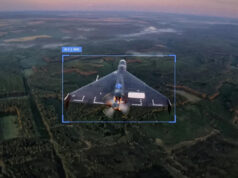
The answer connects two programmes the plan funds separately, the CCA effort, backed by £300 million and drawing on technologies and manufacturing techniques from GCAP, is intended to produce a concept demonstrator flying by at least 2030, with the department seeking to accelerate an operational capability as soon as possible thereafter, and the confirmation that the aircraft are expected to contribute to homeland air defence adds a mission to the loyal wingman roles usually discussed, in which the drones extend the sensors and magazines of crewed fighters.
Adding uncrewed aircraft to the air defence force would increase the number of platforms available to meet the kind of mass drone and cruise missile raids demonstrated in Ukraine and the Middle East, threats against which the number of available fighters, and the missiles they carry, sets the ceiling on what can be intercepted.



Wasn’t Mosquito meant to be that? Then we cancelled it? Just endless circle of nonsense.
Apparently much was learned from Mosquito.
… and now we are getting its little brother the gnat.
Calling the QRA an IAMD capability is ‘a bit’ of a stretch… 👀
Flying CCA alongside AWACS is probably the best solution for UK QRA long term. If we want to bulk up the RAF and we want to add an export product that can be shipped to Allie’s on mass then CCA is portably the way to go.
It’s the loyal wingman concept I’m not convinced on. Flying a less stealthy slower cheaper drone along side a very expensive 6th generation manned platform just seems like a way to limit the 6th gen manned platform. Giving a pilot access to more than 6X multi million dollar air to air missiles so he can fire them off in rapid succession seems like a really good way to run out of missiles in the first week or a war. If you can’t do the job with 6 meteor or AMRAMM then hed back to base and have another go. Don’t fire tens of millions of dollars of very expensive missile in the first engagement.
Having an AWACS over the UK controlling dozens of drones seems like a much more cost effective solution. More like a flying air defence system.
Can’t we just use radio controlled M346s or T7s?
Just because you have loyal wingmen doesn’t mean you have to use them every time Tempest flies. It’s also unlikely to look like the CGI images where they’re flying wingtip to wingtip with a manned fighter.
The missile point is actually one of the reasons the concept exists. Modern air combat is increasingly about finding, targeting and surviving, not simply how many missiles a fighter can carry. A CCA should provide additional sensors, electronic warfare or targeting data, allowing the manned platform to engage from a safer position.
If we imagine the UK taking part in an operation like Rising Lion with Tempest and a non stealthy CCA, you’d initially use Tempest with stand off weapons to degrade the enemy’s IAMD. Once enough of the threat had been reduced, you could switch to stand in weapons and bring the CCAs in carrying additional ordnance.
Yes but then you don’t really save any money or add mass to the force that way. If CCA are just about day one of a major war then they become more like cruise missiles or simple target drones.
Australia and the US have already been trailing E7 with MQ28.
I think you’ve missed my point. I wasn’t talking about using CCAs on day one, although that depends on who we’re fighting and what capabilities they have.
I’m saying that if they aren’t stealthy enough for the opening SEAD/DEAD campaign, you initially use Tempest/F-35 with stand off weapons to degrade the enemy’s IAMD. Once enough of the threat has been reduced, you switch to stand in weapons and bring the CCAs in to add mass in the strike role by carrying additional weapons.
That’s only one role though. CCAs will also provide ISR, EW, decoys and communications relay, depending on the mission.
Using them in the QRA role to augment manned fighters also makes sense to me.
At the end of the day, every major air force capable of doing this is heading in the loyal wingman direction.
I can only see the sense of using CCA in QRA if launching to identify multiple unknown objects during peacetime. During a lone Tu142 Bear flight, what is the point? You always send two manned aircraft, in case one of the pilots becomes incapcipated.
Because it means one Tempest could engage more targets than 3+ Typhoons while only putting one pilot in potential harms way. While being much more survivable. Loyal wingman will be stealthy
CCAs are unlikely to match the stealthy RCS of a 6th Gen or 5th Gen fighter (precisely because they have been designed to be low cost – at least relative to a crewed fighter). However I’d respectfully suggest that a Block 3 MQ28 Ghost Bat (with internal weapons carriage) would have as good if not better RCS than any 4th Gen fighter with external stores including the Typhoon. 4th Gen fighters will still be providing combat mass for most air forces well into the 2040s and CCAs will be a badly needed force multiplier.
The operational tactics for CCAs are still in the early stages of development, however, given the effectiveness and relatively long range of modern precision weapons, AI driven autonomous attritable platforms (whether air, land or sea) are increasingly likely to be at the forward edge of the battle. The mantra ‘bots before boots’ which is being played out in Ukraine is likely to become a quasi doctrine for 21st century combat.
What we are likely to see is a manned fighter or AWACs controlling large numbers of CCAs and pushing them forward to engage with an enemy, complicate their radar targeting picture and soak up valuable missile magazines while feeding back information from their sensors.
I agree, however it’s worth pointing out that since 1982 in the Bekaa valley most large air operations have been proceeded by target drones and cruise missiles.
The imagined CCA battle space with cheapish drones soaking up missiles is not all that different to how we normally fight an air campaign against an A2AD bubble today.
It is almost unheard of today to have more than a pair of Typhoons doing anything, I have a hard time envisioning this world where tempest jets fly around all the time surrounded by drones carrying very expensive additional sensors and missiles in significantly less survivable airframes.
The logistic of launch all this sounds like a nightmare. Sure it’s the kind of thing you will do on day one of a prepared SEAD operation, just as we do today but are these CCA going to fly QRA alongside Tempest? Probably not. If they are not doing QRA and air policing they are likely to never be used.
If there only mission then becomes SEAD/DEAD are we then not better off with just thousands of cruise missiles, radar satellites for ELINT and hundreds of target drones like Vampire to spoof the air defences.
Unlike cruise missiles or one-way kamikaze drones used in past operations, CCAs are far more versatile and although potentially attritable, they are designed to be reusable for multiple missions. They are a next generation capability for the next war not the last.
Saying it’s almost unheard of for more than a pair of Typhoons doing anything, exactly makes the case for the need for CCAs to add combat mass and increase sortie rates in any peer state conflict. The USAF has over 1,700 aircraft in inventory yet they are planning to acquire between 1,000 to 2,000 CCAs while the RAAF is planning 300 Ghost Bats (3 to 1 ratio of CCAs to fast jets).
Launch logistics for CCAs are just like any other airframe. Right now a Ghost Bat is being integrated into a large scale exercise Valiant Shield in Guam alongside USAF F15EX.
CCAs are designed for combat (it’s in the name on the tin) not QRA but they could theoretically perform that mission too (albeit significantly slower to climb and intercept than a Typhoon). Actually escorting a Tupolev Bear through UK airspace and potentially shooting it down is something a Ghost Bat is already capable of. In fact it has a much longer range and on station time than any manned aircraft and it can act either autonomously or be controlled from AWACs or ground controllers.
Europe might not be the best case use for CCAs but over the vast distances of the Australian continent, the SCS and the Pacific theatre more broadly, they will form an integral and necessary part of any future air war with China. Just because you can’t imagine it does not mean it is not already happening.
As Churchill wrote in his book The Gathering Storm “It is a joke in Britain that the War Office is always preparing for the last war”.
Well you get rid of the nose shaping to accommodate a pilot so the front RCS will be better.
Angling ducts etc is a done deal…
Composite wings etc likewise.
Arguably for itself as well.
Until an enemy targets your AWACS.
Stormshroud seems to be a low cost way of reducing threats to manned aircraft. Fly it ahead of the planned sortie to jam radars rather than have the manned aircraft carry Britecloud.
Not convinced that the loyal wingman idea makes sense. It won’t have full autonomy and if controlled from the manned combat aircraft will impose excessive workload on the single pilot. It won’t be cheap either.
Assuming there is suitable land controlled by allies to fly Stormshroud from.
Or an all singing,all dancing droneship nearby?
Thought Stornshrouds range was quite limited?
So the ship would be a sitting duck close to the enrmy coast?
If it was itself fired from an attacking aircraft, it’s fired from the ground. That limits what situations it can be used.
Example. The 2,000 mile flights to Yemen, Tornado Strikes on Libya.
Seems an eastern Europe asset only.
Advertised as having a 1,000 mile range and up to 20 hours endurance.
Sorry, but I cannot see how the prop driven Stormshroud can be operationally useful, regardless of how effective the Brightcloud jamming might be. Stormshroud has a cruise speed of 46 knots (versus 460 knots for an F35) and a ceiling of just 12,000 feet. At that speed and height I don’t think you’ll be fooling any adversary radar operators that they are looking at a fast jet. It has to ground launched too. Any F35 would over fly it in seconds at cruise speed. To be effective at spoofing an enemy radar it needs to be traveling a speed that simulates a fast jet similar to the US MALD decoys.
Storm shrouds gives off fake radar emissions to spoof the enemy radar. It does not matter how fast it is moving as it projects the radar picture to another location instead of making the enemy radar think it is the target aircraft like Brite cloud does.
”is intended to produce a concept demonstrator flying by at least 2030, with the department seeking to accelerate an operational capability as soon as possible thereafter”
So at the pace that the MOD works at, it might be operational by the 2040s.
Agree that CCAs are needed for air forces in the 21st century to create combat mass and generate needed sortie rates (also solves some of the pilot recruitment, retention and training shortfalls). However, it doesn’t seem to make sense for the UK to begin to develop its own CCA, particularly given the competing priorities for its defence budget and the existing CCA programs elsewhere that are already advanced and entering operations.
Understand the reluctance to buy into US CCA programs, but Australia as an AUKUS partner already has arguably the most advanced CCA program with the MQ28 (only the second nation after Turkey to publicly demonstrate an air-to air BVR kill). It has been developed independently by Boeing Australia to be ITAR free meaning that the Australian Government controls the IP and it is free of US export controls.
The latest Block 3 Ghost Bat has internal weapons carriage (two AMRAAMS or 4 Stormbreaker standoff glide bombs – potentially 4 Brimstone) and can perform either autonomous combat missions or be controlled from manned fighters or E7 AWACS. It’s already demonstrated taking target tracks from RAAF Super Hornets for BVR engagements with one currently deployed internationally in a large scale air exercise Valiant Shield in Guam working with USAF F15EX.
AUKUS isn’t just about submarines and technology transfer can be a two-way street.
I’m pretty certain that we will buy into someone else’s programme. I don’t think I’ve seen any suggestion that we would be starting from scratch. Still holds true that if we bought something off the shelf, we’d then spend a decade making changes before it became operational, by which time the world will have moved on.
Righty ho. More pie in the sky then, literally in this case.
£300m over four years doesn’t exactly scream ambition for a programme like this.
Remember these things are suppose to be cheap. Tarranis which was very high end cost £185 million.
If they can’t knockout a CCA prototype for £300 million then probably best not to bother.
They’ll be relatively cheap compared with manned fighters, but how capable they are depends on how much funding we put into them.
We already know CCAs will be part of the discussion when Tempest numbers are debated in the coming years, so I hope we end up with something fairly high up the capability ladder: range, payload, sensors, etc.
Hi suggest a mix of high and low end CCA’s is what we will do
For the cost of nearly 8 f35b. Maybe the future of course.
“….Aircrafts are …..”
No they wont! More guff from the DIP, which is a vague plan, amounting to only 80 pages, with minimum funding and no real support from the labour party.
Labour just kicked out a PM over the DiP debacle and the first major announcement from the incoming PM is on reaching 3.5% of GDP faster.
We will see Jim! Burnham needs to deal with the PLP whose main concern is keeping their core voter base happy, certainly when you see those Labour MPs with such small majorities. Defence is far down the list no matter what they claim in public. (and Starmer wasn’t kicked out over the DiP, more to do with his general unpopularity and his u turns over the last two years) Cheers.
Labour kicked their leader out because he was useless. They had to parachute a non MP in because their other 400 had nobody suitable among them. Lets see how long the new guy lasts.
Spot on, he was like a zombie roaming aimlessly around a graveyard of buried ideas none of which were fit for resurrection while promising that Burke and Hare would provide the answer.
He was kicked out over the DIP debacle, geez heard everything now. It was at most a very small proportion of the shitshow that caused his eventual downfall. But I guess it’s a useful misdirection so as to provide room for a sideswipe at a PM who hasn’t even entered office yet.
Its hilarious how much the Left are relying on Burnham. He was widely known as a dreadful minister while in Browns government, and lost two leadership elections to Jeremy Corbyn amd Ed Milliband!!! 400 odd MPs and nobody to choose from as a leader. Roll on the next few years.
Bring back the Hurricane and Spitfires 😏🇬🇧
Its time this so called Government started looking at defending UK skies in the 2020s not make bold statements about what might be in the 2030s which of course includes 2039 so Nirvana may be some way away and meanwhile we are defenceless.