

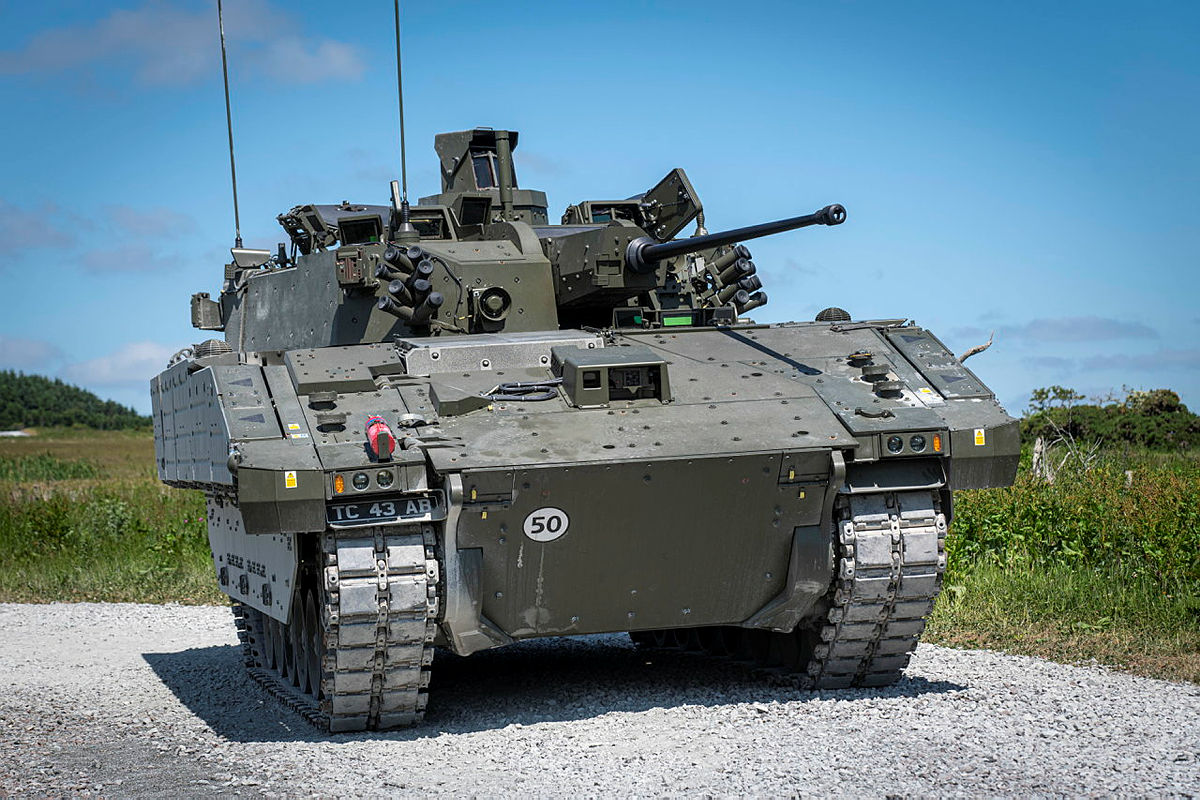
The Ministry of Defence has confirmed it has received the final Army safety investigation report into the Ajax armoured vehicle programme, with ministers set to update Parliament on next steps after the Easter recess.
In response to written questions, Defence Minister Luke Pollard said “we have received the final Army safety investigation report, and work is ongoing to agree next steps,” adding that the department continues to engage with manufacturer General Dynamics.
Pollard said engagement with the company has been ongoing since Exercise TITAN STORM, with discussions now focused on determining the programme’s next phase. “The department continues to engage with General Dynamics on the report and next steps,” he said. No timeline has been provided for when remaining work will conclude, and ministers have not yet set out what decisions may follow from the report.
Pollard said he would “update the House after Easter recess to outline next steps,” indicating that further clarity on the future of Ajax is expected in the coming weeks.
The programme has faced a series of safety-related setbacks. In late 2025, training activity was halted after reports of soldiers experiencing illness linked to noise and vibration during exercises, prompting a temporary pause in use while investigations were carried out. Subsequent incidents, including a further case during ongoing trials in December, led to additional scrutiny, with multiple vehicles withdrawn from activity and subjected to detailed inspections and assessment.
These issues formed part of wider investigations involving both Army-led inquiries and an independent review, with testing activity curtailed while data was gathered. The programme’s Initial Operating Capability status was later withdrawn in early 2026, reflecting the continued uncertainty surrounding the platform’s safety and readiness.




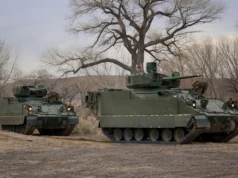



According to a French article, the production is carried out by resolving the noise and vibration issues, but it won’t continue with operational service until further notice.
As Easter is early this year not long to wait then(as if they don’t know the outcome already)!
In fairness, after Easter could mean Christmas, so don’t hold your breath…..
Mmm now there’s a thought😂
Which Easter?
I’m crossing my fingers and toes that Ajax can be fixed, it will be an amazing capability uplift and a successful introduction will clear the way to complete the modernisation of the Army.
However given how long it has taken to get to this point I just can’t see how it can be fixed. Everything seems to show it needs an entire redesign of the suspension system. If we end up with one more bodged fix of new chairs and ear plugs the vehicle will never live down its bad reputation and crews will quite rightly think before serving in them.
Even if it does turn out to be fine the psychological damage it will do and the reputational damage should not be underestimated.
Ajax was first sent back due to excessive noise in November of 2020 and was “updated” and returned to testing in October of 2022. Whereupon it failed again. And since the middle of 2022 there has been 2.5 years of further developments at GD UK.
It is remotely possible that some sort of upgrade is possible.
But I have my doubts.
One of the interesting things here is that they already have 100+ of them that they will need to retrofit any “fixes” on to. Then supposedly they will move forward with production using the “fixes”.
“Everything seems to show it needs an entire redesign of the suspension system”
Incorrect.
Will also be a big negative for recruitement. Who will want to join these Ajax units knowing the vehicles make you sick and will probably only be able to a ridiculously slow speed when using them .
Corrected statement: production would carry on due to the noise and issue being resolved. Damn autocorrect. I hope the edit button comes back.
I read your original comment and couldn’t make sense of it. I thought you might be French and English was your second language 🤣
Yeah, damn autocorrect.
Too much invested for this not to be ‘fixed’.
Pack the Dramamine and Earplugs.
Fingers crossed a fix can happen the Army need the vehicles capabilities, waiting another 5 10 years isn’t an option.
It being fixed would be the ideal solution but it seems hard to believe that there is a simple fix considering how little effort has been made so far to do so since issues first arose in 2020, extra ear protectors and vibration dampers for seats isn’t exactly a proper fix for a brand new vehicle that hasn’t entered service, but was accepted. I hope this isn’t just another ignore the problem and hope it goes away solution that leaves us still looking for alternatives and retiring it early in the next decade.
Obviously if it can be fixed properly then great, that way if there are any additional funds for AFVs that it gets spent on a tracked IFV (off the shelf) for 3 Div rather than replacing a capability the Army should already have and has been paid for in terms of AJAX.
Just seen a clip online on BFBN, from a Lt Gen in DE&S.
Says if Ajax operated within its specifications it’s safe.
Cat amongst the pigeons time, it’s the poor soldiers fault according to upstairs!
I thought the same after seeing it, just back to blaming those who will be impacted as that’s the cheapest option, but it also indicates there is no fix so the issues will likely persist until it’s unpopular enough it gets cancelled if no one wants to use it.
In theory with the age of the army’s tracked vehicle fleets, the army should be used to naturally higher maintenance needs as vehicles age and are generally more worn out, yet they can’t handle a brand new modern vehicle ? A vehicle that should be more highly engineered with modern technology. There is just no logic to it, hard to take that result seriously.
It’s probably a situation where neither the army or GDUK are willing to spend what it’ll cost to actually fix it, I’ve seen speculation from new re-engineered hulls to replacing the full suspension set up.
Perhaps the Government can’t go after GDUK due to performance of the MOD/Army with all the changes, approvals at stages that shouldn’t have been given and ofcourse declaring IOC so they’ll see how long they can keep AJAX going until they can pull it from service at a less sensitive time when there aren’t multiple major wars going on, as right now what is there to replace it with ?
With how much bad press labour are getting right now in general on defence it seems this would be another massive hit to them and the mystical DIP they just can’t afford.
As we’re the original issues with the SA80.
I was part of those trials. We told them about stoppages, cracks in stocks and a few other things. We were ignored and later proved right 🙂
Another report on BFBS YouTube channel floating Ajax 2,so there actually might be some light at the end of the tunnel🤞
My question on that, is Ajax 2 just MoD speak for an updated Drop version of the existing Ajax order, with future fixes, or is Ajax 2 their description of possuble future orders of the Ares type for the Armoured Infantry?
Good question indeed but if rubber tracks etc helps so be it! All versions at any military exhibition ie Blackjax and the IFV version have all got rubber instead of metal fitted,if the track tolerances are so tight and the crew have to adjust them every five minutes ( from the outside) then they not going far or very quickly!🤔
While potentially under fire, or even in CBRN conditions. Great!
When I studied engineering (admittedly many moons ago), one of my professors said of safety – always design in a well calculated safety margin. Then double it just to be safe. Then double it again to account for all the idiots out there.
I suspect in this case, they didn’t even manage the “well calculated safety margin”.
In combat, safety margins are for those not being shot at.
Tests done are laughable. So much I’ve heard that is just beyond belief
This program just like the “Defence Investment Plan” is a complete and utter farce.
3, 2, 1, ….. incoming whitewash!!!
According to Forces News, a high ranking army officers stated it has been established the current noise and vibration issues are caused by lack of maintenance associated with keeping the track tension correct ie loose tracks significantly increases the level of noise/vibration.
Surely not, track tension is one of the most basic fundamentals of maintenance of tracked vehicles!
Sounds odd but it could be true. If the tolerance between acceptable and not is insanely thin, then they could be getting marginally loose, what would be considered fine for other vehicles and causing issues. It would however cause questions on their suitability for sustained deployment.
Rubber tracks?? If metal tracks can’t be kept in the operating tensions surely they are worth a try!
All photos of blackjax and the IFV variant are fitted with them!
Seems rubber tracks are part of the Ajax 2 program, so you were right.
If the margins you are talking about are so thin in this vehicle, then the
vehicle itself is no longer combat capable.
Reading between the lines of the various announcements it does raise a serious question on that yeah. Sounds like they are fine as long as they are stationary on tarmac. Last part is a joke.
That and after 5 years since the issues initially started the army still hasn’t managed to improve maintenance ? Seems hard to believe when they operate the rest of their tracked vehicle fleet well.
Doesn’t sound like a cancellation if still talking with general dynamics.
Maintenance issues wouldn’t surprise me if this was the cause. Speaking from experience as an ex-gunner. Serving wholly on armoured vehicles in BAOR, from my first days as a sprog on the gun park, we constantly maintained the vehicles. In my case the FV436. Road wheel nuts, track pins etc were checked after every move. It was drilled into us the importance of keeping vehicles ready to go at all times. As a young gunner, your role was track and wheel maintenence, regardless of your actual trade. As a signaller, you also looked after the radio batteries. Admittedly in those days, you got a whack and or a bollocking if you forgot a check. But it was nonetheless an essential part of being a soldier in an armoured force, you worked alongside the REME fitter section, and learnt how to do pack lifts, transmission changes etc through them. Track bashing was a way of life as anyone in BAOR will remember. It was literally one of the most important skills to learn.
When I transferred back to the UK, my regiment was part of a mechanised brigade. Lots of wheeled vehicles, with the odd CVRT in each battery. (SULTANS mainly)…and a complete lack of knowledge of how to track bash within most Regiments. Consequently, any bods coming from Germany would find themselves the only H class driver in a whole gun battery, along with the skills to maintain such vehicles.
When we switched roles to become an AS90 regiment, we took on Warrior OPV. As usual with the army, no-one was trained up prior to this. I was shoved on a hurried conversion course, while other lads had to be virtually retrained. It was no surprise that on our first exercise, our 3 OPVs pulled up to a BCs O group, with one of the vehicles missing its rearmost offside trackwheel and suspension arm.
The reason? Simply down to a lack of knowledge and experience in maintaining complex tracked vehicles. The lads were used to the easy maintenence of wheeled vehicles, and the general feeling was Warriors were indestructible.
I’d drilled my crew into the BAOR school of maintenence, although my driver was also recently arrived from Germany so had the same schooling as I had.
We were the lucky ones and could pass this experience onto the other crews, including how to track bash. Something they’d never done.
The point is, the army of today has probably lost the skills necessary to look after vehicles like Ajax due to both the loss of experienced JNCOS with years of track bashing in their blood. Its a reflection of the changing nature of warfare in recent years.
Our lads learnt how to look after warrior the hard way, just as today’s young soldiers will learn how to look after Ajax eventually…
Best out come is a proper fix and vehicle enters service as there is kit its meant to have replaced being gapped and no money to start again plus time to re trail a new vehicle and set up production. Its a sound good vehicle just not very well made If we have buy some thing new then some thing else will suffer to pay for it and that in its self will have a knock on.
We are totally short of up to date kit and Ajax working will help a lot, more so if other variants of it are up to standard and use the same parts, ie the IFV variant and may be an over watch verson that in its self may solve other kit shortages. And could be in service quicker than a completely new type or vehicle and ease spares/ammo .
Does anyone know how the tracks are adjusted I e. are they hydraulically adjusted by the driver in the cab or by a spanner as with Chieftain?
PLAN A: We fixed it, down to user error, ready in 2030, fitted for but not with, etc
Plan B: We have decided to scrap it and stop fannying about
So we are screwed either way 🤔
Hate to say it but on Ajax bin it .Buy of the shelf CV90, Lynx, Puma . I’m sure CV90 is used by a NATO member in the Armed Reconnaissance roll. We don’t have time to waste or the the money.
Andrew, If you bin Ajax, you bin most of the £5.5bn assigned to the programme. Then you have to find another £5.5bn to buy something else. HMT would not agree to it. I disagree that your solution would be quick.
Norway for one has recce CV90.
Hi Graham to be honest I’m not sure what the answer is but have recently heard after some more modification possibility of Ajax been renamed Ajax 2 .Some how I don’t think this is going to work either , yes it’ll be expensive to buy of the shelf but which choice is the biggest money pit. ?
How about digging emplacements for them along the south coast in case the Ayatollahs decide to invade?
How about digging emplacements for them along the south coast in case anyone decides to invade?
The “blame game” between General Dynamics Land Systems UK (GDLS-UK) and the Ministry of Defence (MoD) is essentially a £6.2 billion version of “he said, she said.” However, looking at the internal reports and the 2026 fallout, we can pinpoint where GDLS-UK’s specific failures lie versus where the MoD “poisoned its own well.”
Under the 2014 contract, GDLS-UK is legally responsible for delivering a vehicle that is Safe by Design. Reports from the National Audit Office and the 21/26’ safety reviews highlight several areas where the contractor dropped the ball.
Namely, the manufacturing quality control, A significant portion of the vibration issues stemmed from inconsistent build quality. Some hulls delivered from Spain were reportedly “out of true” i.e. warped, meaning the internal components didn’t align perfectly, creating a shudder that worsened as the vehicle moved.
GDLS-UK accepted a requirement to pack 42 tonnes of kit onto a chassis originally designed for 28 tonnes. While the MoD asked for the kit, GDLS-UK, as the expert engineers, assured the government that the physics would work. They were wrong; the extra weight turned the hull into a massive ‘tuning fork’ for engine and track noise.
Between 21/24’, GDLS-UK claimed they had fixed the issue with better seats and headsets. The fact that 35 soldiers fell ill in November 25’ proves that their “fixes” were merely band-aids on a fundamental mechanical flaw.
Where it is the MoD’s Fault … Governance failures.
If GDLS-UK had built a bad car, the MoD is the customer who kept paying for it despite the wheels falling off during the test drive.
The Fixed-Price Trap, the MoD signed a £5.5bn fixed price contract, while this sounds good i.e. capping the cost, it actually incentivised GDLS-UK to keep the production line moving to hit payment milestones rather than stopping to fix the vibration.
Optimism bias led to the suppression of warnings, we now know, thanks to the Senior Responsible Owner (SRO) Chris Bowbrick, who was effectively sacked (removed from his post) in Jan 26’ that internal experts at Dstl) warned as early as 18’ that the vibration was dangerous and that high-ranking MoD officials ignored or “downplayed” these warnings to keep the project’s optics looking good for Parliament.
The nasty twist being the MoD insisted on using their own Bowman headsets. However, it turns out these headsets actually amplified certain frequencies of the engine noise, directly contributing to the hearing damage. In this case GDLS-UK argued, correctly, that they shouldn’t be blamed for how the MoD’s own electronics performed.
… and sitting right on the banks of the beautiful River Avon in Bath is Horstman Defence Systems, a world leading “Active Track Tension” systems company. Horstman engineers have as of March 26’ have been working on a “Drop-In” version of the ATT that fits into the exact same footprint as the manual one. This would allow the MoD to fix the 589 vehicles without having to cut new holes in the armoured hulls.
–
Is this a case of ‘acting against the interests of the state’ … the case has shifted from “incompetence” to whether the level of deception involved in the Ajax program actually crosses into criminal misconduct.
Rough legal definition: “Interests of the State” under UK law, “prejudicing the safety or interests of the United Kingdom” is a specific threshold.
The National Security Act 2023 law was designed to catch spies, but it also covers ‘Information Operations’ and ‘Interference.’ If an official knowingly provides false data to a Minister that results in the degradation of the UK’s armoured capability or the injury of 300+ soldiers, a lawyer could argue they have prejudiced the “safety and interests” of the realm.
– Usually, this language is reserved for people selling secrets to Russia or China. However, critics are now asking – If a civil servant knowingly lets a £6 billion “hole” develop in our frontline defences, is the damage to the state any different than if a foreign power had sabotaged it?
– Misconduct in Public Office, this is the arrow in the prosecutor’s quiver for this case. It is a common law offence that carries a maximum sentence of life imprisonment.
In general terms, to prove it, you need to show that if a public officer; General, Civil Servant, or Minister, acting as such and wilfully neglects to perform their duty and/or wilfully misconducts themselves, to such a degree as to amount to an abuse of the public’s trust.
The “lying” to Luke Pollard is the ‘smoking gun’ here. If it can be proven that officials knew the “Initial Operating Capability” (IOC) was a lie and they pushed it through anyway to unlock a payment to General Dynamics … that is a textbook “Abuse of Public Trust.”
The “institutional sabotage” argument, acting against the state’s interest is bolstered by three facts emerging in early 2026.
1/ The UK NATO obligations is currently unable to provide its promised “Heavy Brigade” to NATO because Ajax is broken. This weakens the entire alliance.
2/ Financial Haemorrhage as £4 billion has been spent with almost nothing to show for it. In a time of ‘Austerity 2.0,’ this is seen as a direct hit to the national economy.
3/ The Human Cost: If you knowingly put soldiers into a vehicle that causes permanent nerve damage and hearing loss, you are effectively sabotaging your own fighting force.
More heads need to roll … Chop, chop!
magenta, our NATO commitment is to supply both 1 Div and 3 Div to ARRC, as well as the Corps Commander, HQ and most Corps Troops support units…..not just one “Heavy Brigade”.
i heard it was going to get rubber tracks to reduce vibration and this will make the vehicle lighter . Also it will get a auto track tensioner . As the problems was not with all vehicles just some , so this will make some sense.
Michael, I think you have just heard speculative gossip from ‘watchers’ like us, not a statement from MoD.
There is report on BFBS YouTube about Ajax 2? The general on there did mention rubber tracks!whether this will be actually implemented who can tell! To all intents and purposes she did imply Ajax IS going ahead.
i heard it was going to get rubber tracks to reduce vibration and this will make the vehicle lighter . Also it will get a auto track tensioner . As the problems was not with all vehicles just some , so this will make some sense. i hope this is the case.
Graham you are correct, the UK’s promise is for an entire warfighting corps. But because a Corps is only as good as its heaviest hitters, the failure to deliver that “Heavy Brigade” makes the rest of the commitment look significantly more fragile on the global stage. My use of quotation marks around “Heavy Brigade” serves a couple of specific purposes; it isn’t meant to highlight its status as a specific, formal designation that currently carries some, shall we say … baggage.
Heavy Brigade i a formal NATO term/parlance, it is also a specific technical requirement. It must possess a certain amount of mass, meaning a specific number of main battle tanks; Challenger 3 and armoured fighting vehicles like the Ajax.
I was using quotes marks to distinguish the specific ‘Heavy’ designation from ‘Light’ infantry-focused or ‘Deep Reconnaissance’ brigades. I was trying to identify it as a defined role the UK has promised to fill. It’s also a cynical reflection, there is a debate about whether a brigade can truly be called a “Heavy Brigade” if its primary armoured vehicle, the Ajax, isn’t fully operational.
Without the Ajax performing its reconnaissance and shielding roles, the brigade lacks the ‘eyes and ears’ necessary to function as a heavy-hitting force and is an operational capability gap.
So my quote marks acknowledges that while the UK lists this unit on NATO’s books, it currently lacks the full equipment to actually deploy it as a ‘Heavy’ force. The “Heavy Brigade” is a sovereign promise. When the UK signed its latest NATO readiness agreements, it committed to providing this specific type of force. Using quotation marks draws attention to the fact that this is a benchmark the UK is currently struggling to hit, making it a point of political and military contention.
A brigade without its armoured vehicles is essentially just a very large group of people waiting for a ride. I suppose my quote marks reflect that the “Heavy” part of the name is currently more of an aspiration than a frontline reality.
Yes, the UK’s actual commitment to the Allied Rapid Reaction Corps (ARRC) is far more substantial than a single brigade. It is a massive top-to-bottom pledge that effectively commits the BULK of the British Army’s fighting power to NATO.
The UK is currently the framework nation for the ARRC, which means we provide the spine of the organisation. We …
Provide the leadership. Corps Commander, a 3-star Lieutenant General and the permanent headquarters, based at Imjin Barracks, Gloucester.
Provide 3rd (UK) Division. ‘Iron Division’, intended to be the heavy, armoured warfighting force.
Provide 1st (UK) Division. ‘Expeditionary Division’, focused on light-mechanised and agile operations.
Provide Corps Troops, this includes the specialised enablers that allow a Corps to actually function in a high-intensity war; signals, logistics, engineers, and intelligence.
The reason the “Heavy Brigade” within the 3rd Division is specifically the focus of so much criticism is that it is the benchmark of credibility. NATO looks to the UK to provide heavy, tracked armour that can stand in the way of a peer adversary (like Russia). While the 1st Division is useful, it lacks the punch for a high-end tank battle.
The 3rd Division’s ability to operate as a cohesive Warfighting Division depends on its brigades having their reconnaissance (Ajax), their tanks (Challenger 3), and their transport (Boxer) … and for sometime Ajax has been a bottleneck.
The UK seems to be all ‘mouth and no trousers’. As of March 26’ while the UK has promised two divisions, yet, defence analysts frequently point out that the 3rd Division is deprived of elements that enable it to function properly, especially as a result of having been under-resourced and acts of criminal negligence of key equipment … specifically; Ajax.
Ajax has faced constant safety pauses and readiness issues due to negligence, whether it’s culpable, criminal, gross or wicked is for the courts to determine, we need to put a stop to these deceitful and ultimately mendacious acts, there needs to be a profound precedent laid down to convey that the consequences will be unwelcome and unpleasant. (is that likely to happen … not fscking likely at all, ‘business as usual’ will continue ad infinitum.)
Not trying to sound overly defensive re my “Heavy Brigade”, just trying to explain my frustration with the whole Ajax debacle and how it gets worse by the minute, every time I look into it, it’s very depressing.
BAE’s CV90 MkIV “Recce” seems to be a better bet, it’s ready to go, it’s in the ‘field’. its updated mast gives a multi-spectral sensor suite integrated into a retractable mast It has a long-range laser rangefinder effective out to 30km and high-definition thermal/daylight sensors that can identify targets at 20km+. It’s rated for Category 1 TLE (Target Location Error), which is the highest NATO standard. This means it can find a target and give its exact coordinates with enough accuracy to guide a GPS-guided artillery shell or a drone strike instantly.
While the British Army insisted that Ajax had a 20Gbit/s pipe line “requirement” so the vehicle could handle future sensors that don’t even exist yet. The reality is that in 26’, we don’t have sensors that can actually fill a 20Gbit/s pipe, so it’s like having a 10Gbps fibre-optic internet connection … but only using it to check your email. The CV90 uses a modern, open-architecture system that allows you to plug and play new sensors. If a better camera or a new drone-jamming mast comes out in 2027, it’s more likely that you can bolt it onto a CV90 in weeks. But because the Ajax is so bespoke, any change requires years of re-testing to make sure the vibration doesn’t break the new sensor.
The “Recce” is also testing integrated drone swarms controlled directly from the vehicle’s “iFighting” interface, effectively ‘extending its mast’ into the sky. Just this month it was reported that a single CV90 crew launched and managed a multi-drone swarm simultaneously. The crew simply tap an area on the digital map. The iFighting system tells the swarm … “Go there and find anything with a heat signature.” The Result, the drones fly a coordinated pattern. If one is shot down, the others automatically adjust to cover the gap. All the data is stitched into a single 3D view for the crew.
Ajax was sold to the British Army as the “Digital Scout” that would revolutionise the battlefield with its sensors. However, Ajax has spent 15 years struggling with its basic mechanical suspension and vibration, it’s possibly too far behind the eight ball, to catch up that any financially sense.
The 3rd Division is still described by many as a “Division in waiting.” Without the Ajax fully operational, the UK is essentially providing the HQ and the Infantry, but the armoured reconnaissance, the all important eyes and ears are still in the workshop … tinkering.
The UK tried to escape BAE by going to the Americans for the Ajax. It failed so badly that BAE are looking like ‘saints’. … maybe a flipped about SA80 scenario. BAE don’t have to be complicit in the Ajax’s downfall; they just had to sit back and watch the MoD trip over its own shoelaces.
looking, snooping and poking around the web, I believe we will see a modded Ajax 2 announced after Easter, rubber tracks, ATT amongst other items including seating CC&S, electricals, defensive aids etc.