

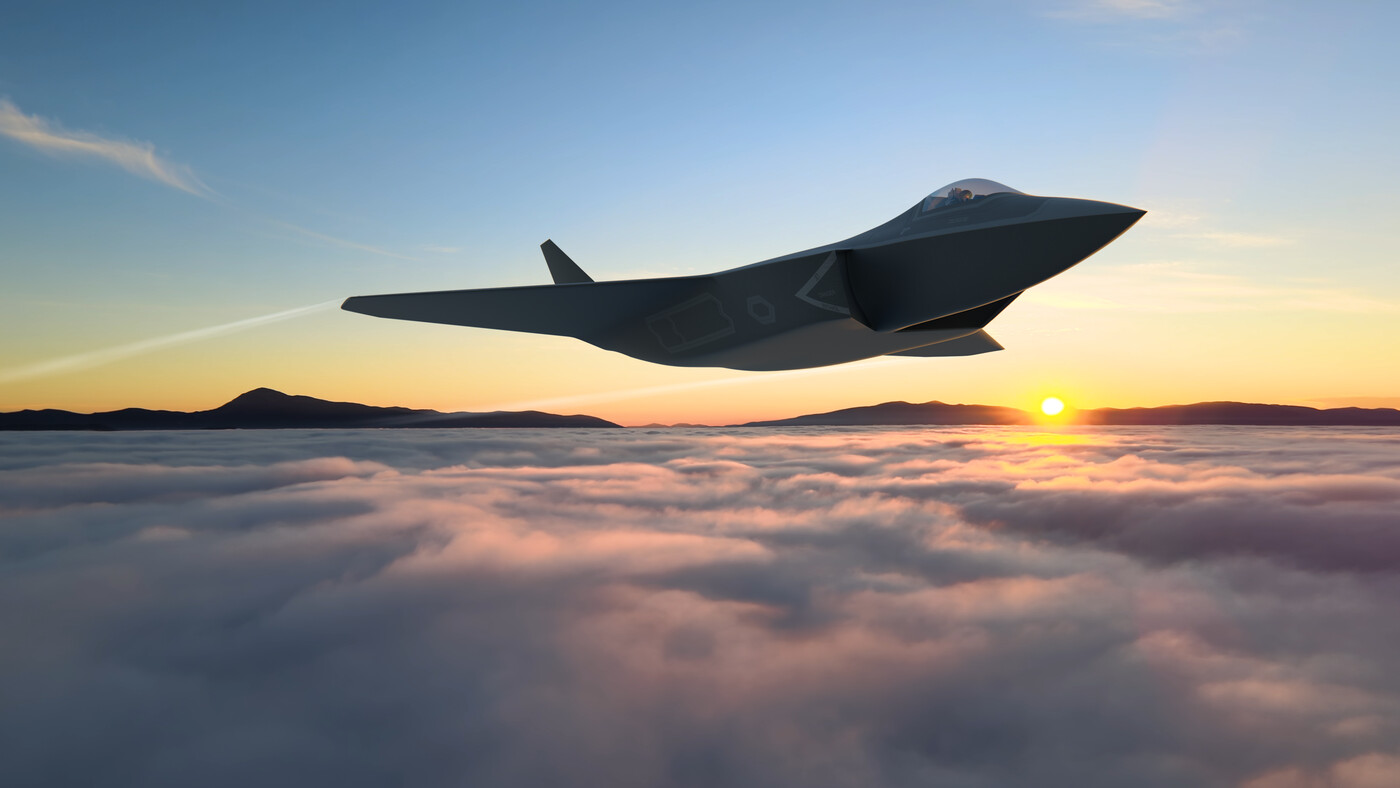
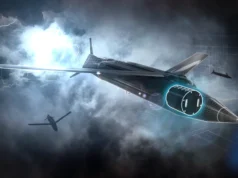
The Ministry of Defence has awarded BAE Systems a contract extension worth £708 million to progress the development of sovereign sixth-generation combat air technologies underpinning the UK’s role in the Global Combat Air Programme, the company stated.
Under the contract, BAE Systems, as the UK’s lead system integrator on GCAP, will deliver and integrate UK technology and develop capability including software, digital networks, digital engineering and physical infrastructure, working with Team Tempest partners and the wider supply chain. The company will also develop national capability beyond the core sixth-generation aircraft, known in the UK as Tempest, through operational analysis and concept development of the broader Future Combat Air System, which spans the integration of uncrewed air systems, advanced networks and the latest weapon technologies.
“This £708 million investment demonstrates the UK’s continued commitment to maintaining a world-leading combat air capability and a freedom of action which ensures our Armed Forces remain equipped to meet future threats,” said Richard Berthon, Director Future Combat Air at the Ministry of Defence, as quoted in the press release.
“Our contract builds on the strong progress already achieved across the UK’s defence ecosystem, bringing together industry and academic partners to accelerate next-generation technologies,” said Declan Holland, Future Combat Air Systems Managing Director at BAE Systems’ Air sector, as quoted in the release. “Through this work, we’re delivering tangible outcomes for the Global Combat Air Programme by strengthening UK capability, supporting high-value innovation and contributing to long-term economic growth.”
The award continues the work Team Tempest partners, BAE Systems, Leonardo UK, MBDA UK, Rolls-Royce and the MoD, have carried out since 2018, with some 4,500 people researching and developing future combat air capabilities, a workforce that the company says includes 3,000 apprentices and graduates recruited since 2022 and sits atop a supply chain of around 600 UK firms. The funding is driving investment in advanced digital techniques including model-based systems engineering, open architectures, digital twins and virtual environments, approaches intended to let the next generation of combat air systems be delivered more rapidly and cost-effectively than previous programmes.
The contract lands during a significant week for GCAP, following confirmation on Monday that Canada has joined the tri-national programme as its first Observer Nation and the £8.6 billion committed to the effort over four years in the Defence Investment Plan, and builds on the £4.6 billion contract finalised earlier this month with Edgewing, the joint venture between BAE Systems, Leonardo and Japan Aircraft Industrial Enhancement, to advance the aircraft’s design.
The distinction the £708 million marks is national rather than joint, funding the specifically UK-sovereign technologies and the wider Future Combat Air System around the aircraft, the uncrewed adjuncts and networks that will fly with Tempest, complementing the international design work carried forward under Edgewing as the programme moves towards a jet the partners intend to enter service in 2035.






I will be at Farnborough near the Swan pub later, wonder what announcement the DS has to make regards the CCA, Storm Fighter?
On that and GCAP, is it even known yet if Tempest will back to 2 crew? So one can oversee the CCA’s accompanying?.
Or are they so autonomous they require no oversight whatsoever?
All sources say single pilot only. There won’t even be a 2 seat trainers variant.
I thought the Japanese where very keen on a two seat version?
Given some of the other parameters that Tempest is working to (long range, larger aircraft, large weapons bays for longer ranged weapons, better all-aspect stealth), you’d think that a two-seater makes sense and wouldn’t impact the airframe significantly. That’s before you get to controlling multiple CCAs, the advanced EW/EA suite to defeat air and ground threats, it adds up.
I’m struggling to follow the various announcements on funding for GCAP and what that actually buys. The three partner nations seem to report funding commitments in different ways so trying to work out what has been spent to date and what that spend has achieved is all but impossible.
The Edgewing website has little detail and the fact that some funding tranches, like this one, fall outside the tri national structure, adds to the opaqueness.
I guess as there is jointly developed technology with much or some transfer of IP or jointly owned and as it seems in this case UK national technology where IP won’t be transferred (or very limited) and may not in some cases be used in the other partner’s versions or may be exclusive to the Tempest experimental aircraft hopefully to be flown in 18 mths or so but only partly reflects the eventual larger GCAP production aircraft there is going to be quite a complex framework for contracts being issued either jointly or separately by the partners.
If it feels different it’s probably a good thing in a way as if everything was issued by a single monolithic joint set up only after all matters were agreed by all partners in a committee like format (probably more how present and past joint programmes laboriously progressed I reckon) any hold up shudders through most or all aspects of programme progress. This feels a bit more flexible. That’s purely my speculation mind.
My understanding is the UK and Japan are sharing significant high end IP – Japan having developed a flying LO demonstrator, exsquit materials technology and of course their peerless electronics industry – need a batch of unique very high end component’s? They can do it – while Italy doesn’t get as much, causing moodies.
I understand Germany is now eager to join the project.
And block any exports to countries it does not like; such as Eurofighter to Saudi Arabia.
Hopefully, Germany will only join at a similar level to Canada. Otherwise, they’re just going to get in thecway of what’s already been agreed and achieved.
The Germans added 5 years of delay and £Billions to the Typhoon programme with theur endless messing about