

Labour MP Graeme Downie has argued that NATO’s consensus-based decision-making needs reform, warning that the pace of modern crises is outstripping the Alliance’s ability to respond.
Writing in PoliticsHome, Downie said: “Crises in Europe now develop faster than political structures respond. Decisions that could once take days are now needed in hours.” While describing NATO as “the most successful military alliance in history”, he argued its strength is also a vulnerability, writing: “Its greatest asset, 31 democracies acting together, is also its strategic Achilles heel.”
He warned that unanimity creates operational risk: “Unanimity binds allies politically, yet slows them operationally. Vladimir Putin believes he can exploit that gap.” Downie proposed what he called a “neighbourhood” model, where allies closest to a theatre are empowered to respond rapidly, stating NATO should embrace “regional leadership, a ‘neighbourhood’ model where the allies best placed to act in specific theatres are empowered to do so quickly.”
He argued the UK is well placed to lead this shift, writing: “This approach is already emerging organically. Nato now needs to formalise it, and the UK should be leading.” Highlighting the High North, he said: “The Greenland, Iceland, UK gap is once again central to Nato’s ability to track and deter Russian submarines.” He cited British anti-submarine capabilities including Astute-class submarines and RAF Poseidon aircraft, noting: “British P-8s have flown joint missions with US and Norwegian aircraft to shadow Russian submarines.”
He also raised concerns over NATO’s ability to respond quickly in the Baltic, asking: “How long could Nato take to respond to Russia seeking to occupy an uninhabited island in the Baltic…?” and warning: “The fait accompli would be that Russian troops now occupied Nato territory.” Downie suggested a smaller grouping response could prevent delay, writing: “What if there were a ‘neighbourhood’ response through a grouping such as JEF or just a small group of Nato members?”
He concluded that NATO must adapt to ensure deterrence remains credible, arguing: “If Nato wants to deter effectively in the decade ahead, it needs to embrace regional leadership, accelerate its decision-making, and turn speed into its advantage rather than its vulnerability.”








Is he just saying that countries should act independently and take action for incidents near their border? So pretty sure that’s been a thing since for centuries. UK should take the lead with asset we have very little of. Am I reading this correctly?
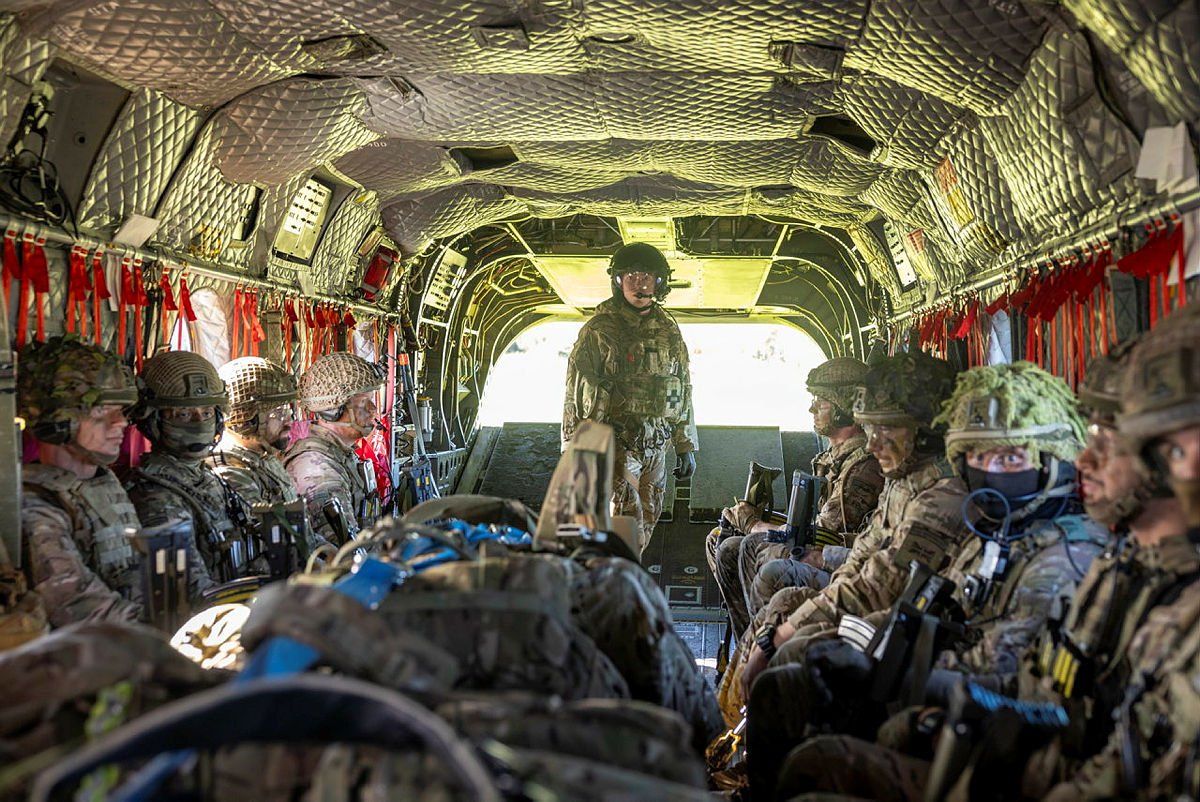
No it’s about a collective response.. but at a lower level of decision making than there is at present.. for NATO forces to do anything there needs to be a consensus from every nation at the NAC.. so for that NATO multinational battle group in Estonia to act on anything a concensus of all nations much be agreed . when really there should be a tight decision by the Estonian government as host UK government as leader of the battle group and Belgium, Denmark, France, Iceland and U.S. as nations that provide component of the battle group.
I think the United Scandinavian alliance including Britain is a good example of this. Any attack on a Scandinavian Country would and should n love us all without having to immediately discuss some bigger picture with others before a response occurs. As Poland knows and changed its policies accordingly if you give the Russians a fait accompli they will immediately say if you respond we will nuke you, there needs to be an immediate response by the forces of the willing in that zone to prevent any such opportunity while greater forces and support are mobilises. This is effectively the plan Poland has introduced on their front, an immediate response fight over every inch rather than falling back and waiting for reinforcements to win land back later.
It’s true that NATO political decisions are taken by consensus at the North Atlantic Council, with each member state represented, and that unanimity is fundamental to how NATO functions. Where I’d slightly differ is on the Estonia example. The battlegroup in Estonia operates under pre‑agreed NATO plans, rules of engagement and command arrangements. It does not need 32 ambassadors to convene before it can defend itself or respond tactically to an incident, because commanders are empowered to make such decisions under standing NATO authority once the mission framework is established. Estonia as the host nation also retains sovereign control of its own forces. What does require NAC consensus is escalation beyond immediate self‑defence, reinforcement at scale, formal invocation of Article 5, or widening the conflict beyond that initial tactical level. Baltic air policing scrambles are a good example of how this works in practice — NATO aircraft intercept without waiting for a fresh vote from 32 ambassadors, because these actions are conducted under pre‑approved NATO authority. Immediate action at the tactical level is delegated; escalation beyond that is political.
A labour politician generally knows the square root of . Nothing about defence and should simply shut up
It’s not a completely mad suggestion… NATO forces do need to be able to react quickly and awaiting for NAC consensus may be be the difference between deterrence and none deterrence..
Generally, I’ve got little time for Labour politicians but this one has a good idea. An attack on the European theatre needs an immediate European response. SACEUR could be empowered to launch that response in as quick a time as possible, without the need for 32 talking heads to get involved.
But then SACEUR is American – and who’s his boss at present…?
There has to be a lot more flexibility or it encourages Russia to make a misstep that could race us all into WW3. They need to know the reaction will be immediate and not waiting for complete unanimity that may not even come and mean a combination of the willing would need to be separately organised. Russian propagandists have long suggested the special forces invasion of Gotland and dare Sweden to try and get it back. Now that Sweden is in NATO that is far less an option along with Sweden moving forces there.
But doesn’t the British led JEF, the German led FNC and the French led EI2 already do this? 🤔