

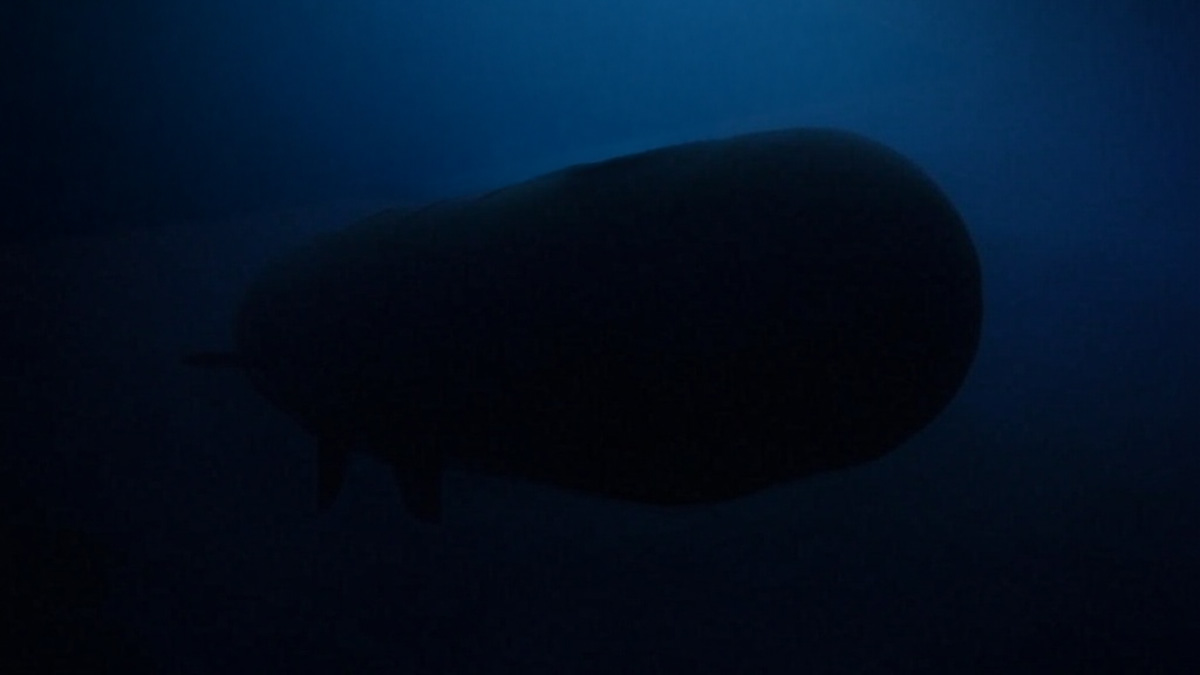
Leonardo has successfully demonstrated its Open Digital Platform in anti-submarine warfare trials using an autonomous uncrewed surface vehicle, in a series of tests organised by the Ministry of Defence under the Atlantic Bastion programme, the company stated.
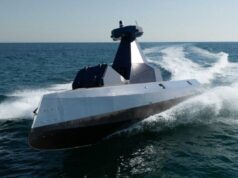
Working with SubSea Craft, a UK-based SME, Leonardo embedded its Open Digital Platform into the company’s MARS uncrewed surface vehicle and put it through both synthetic and real-world scenarios at Portsmouth earlier this year. The trials were designed to advance the Royal Navy’s ambitions for a hybrid naval force that integrates surface and sub-surface capabilities.
During the demonstrations, the USV was tasked with conducting autonomous anti-submarine warfare missions. When a sensor detected a potential threat such as a submarine or uncrewed underwater vehicle, the platform’s autonomous decision support architecture could task the most effective available sensor to investigate further, doing so without human interaction. According to Leonardo, the process reduces cognitive burden on operators while providing commanders with additional layers of decision support and a more complete operational picture across domains.
The Open Digital Platform forms part of what Leonardo describes as its Information Advantage offering, which aims to exploit data already generated by sensors and systems in operational use so that operators can more rapidly interpret information and react to threats.
Callum White, Head of Information Advantage Sales at Leonardo, framed the trials in the context of the wider strategic importance of the sub-surface domain. “The sub-sea domain is a vital, unseen environment critical to our nation’s security and prosperity. Around 99% of global internet traffic goes through undersea cables, and we rely on gas and oil pipelines to provide essential energy supplies to the UK,” he said, as quoted in the press release. “It has been a pleasure to partner with SubSea Craft to demonstrate to the Royal Navy how the Open Digital Platform can reliably network a range of new and existing sensors to detect, track and neutralise sub-surface vessels that pose a threat to the UK’s critical national infrastructure.”
Andrew Sturman, Commercial Director at SubSea Craft, also welcomed the collaboration. “We were pleased to work with Leonardo to support the Royal Navy on this trial. This demonstration showcased MARS as a multi-role, modular platform capable of integration with the market leading technologies such as Leonardo’s. Collaborations across the defence industry like this one are critical to supporting the UK and its allies,” he said.
The Atlantic Bastion programme sits within a broader Royal Navy effort to develop and field autonomous and uncrewed systems for maritime operations, with particular emphasis on tasks that are hazardous, persistent, or resource-intensive for crewed platforms. Anti-submarine warfare has long been one of the most demanding maritime disciplines, requiring sustained sensor coverage across large ocean areas and rapid interpretation of complex acoustic and environmental data.
The application of autonomous decision support to that problem, through platforms like MARS, reflects growing interest across Western navies in offloading elements of that cognitive and physical burden to uncrewed systems. SubSea Craft, based in the UK, has developed the MARS platform as a modular vessel capable of carrying a range of payloads, positioning it for integration with multiple sensor and effector systems across different mission sets.






Would like to know how communications were conducted with the USV? As I suspect the craft had to surface to receive new orders, as well as relay back its findings.
MARS is a USV, not a UUV, so it can stay in constant radio contact.
Ah, misread it. Thought they were testing an underwater craft – duh!
They always seem shy of sharing underwater comms techniques. I expect fibre and sonic are still the norm.
“One Ping”.
Sir, I think I can hear singing
I’ve gained $17,240 only within four weeks by comfortably working part-time from home. Immediately when I had lost my last business, I was very troubled and thankfully I’ve located this project now in this way I’m in a position to receive thousand USD directly from home. Each individual certainly can do this easy work & make more greenbacks online by visiting
following website—.,.,.,.,.—>>> JobatHome1.Com
Yeah we need our own companies to be developing this not an Italian company. Lessons are not being learnt. Never again should be beholden to foreign countries and their foreign policies.