


The Ministry of Defence has declined to provide timelines for either Initial Operating Capability or Full Operating Capability for the Mk 41 Vertical Launch System on Royal Navy warships, telling Parliament that in-service dates will be confirmed in due course, the UK Defence Journal understands.
The written answer, given by Minister for Defence Readiness and Industry Luke Pollard on 21 May in response to a question from Ben Obese-Jecty MP for Huntingdon, stated that the MoD “continues to progress integration of the Mk 41 Vertical Launch System across relevant platforms” but that in-service dates “remain subject to ongoing programme delivery, integration activity, and approval processes, and will be confirmed in due course.”
The Mk 41 is one of the most widely used missile launch systems in the world, in service across the United States, Germany, the Netherlands, South Korea, Japan, and a growing number of NATO allies. Capable of firing a broad range of weapons from a single launcher, including Tomahawk cruise missiles, Standard Missiles for air and ballistic missile defence, and anti-submarine weapons, it offers a flexibility that the Royal Navy’s current Sylver launcher on the Type 45 destroyer does not.
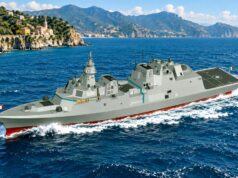
Both the Type 26 and Type 31 frigates are confirmed to receive the system. The Type 26 City-class will carry 24 Mk 41 cells, with BAE Systems awarding Lockheed Martin a contract for their supply back in 2018. The Type 31 Inspiration-class will carry 32 cells across four eight-cell modules, with the ships already being built with the structural foundations to accommodate them.
The Mk 41 cells will not be installed when the ships first enter service, however. Instead, Babcock secured a £65 million contract in April 2025 for a Capability Insertion Period, under which the launchers will be fitted during a planned upgrade window in the early 2030s. Design changes required to the first two Type 31 hulls to accommodate the future VLS installation contributed to a £140 million charge on the programme contract that Babcock disclosed earlier this month.






Given that there’s not many (if any) UK weapons to put into them i suppose there’s not quite so much urgency.
It would be nicer to see an ” adequate” amount of sea-Ceptor silos and 8x NSM fitted on completion however..
AA. ( without expanding on the wish list)
A broad range of American missiles…..
I do not think you will see anything launching from the UK Mk41s being installed on the T26s until may be 2035 ish.
I’ve gained $17,240 only within four weeks by comfortably working part-time from home. Immediately when I had lost my last business, I was very troubled and thankfully I’ve located this project now in this way I’m in a position to receive thousand USD directly from home. Each individual certainly can do this easy work & make more greenbacks online by visiting
following website—.,.,.,.,.—>>> JobatHome1.Com
I’ve gained $17,240 only within four weeks by comfortably working part-time from home. Immediately when I had lost my last business, I was very troubled and thankfully I’ve located this project now in this way I’m in a position to receive thousand USD directly from home. Each individual certainly can do this easy work & make more greenbacks online by visiting
following website—.,.,.,.,.,—>>> PayAtHome1.Com
With CAMM wonder if the manufacturers of the CAMM farm can come up with a modified 6 VLS block silo that would sit inside that of the same mk41 space footprint and be made to take the CAMM-ER and MR? For example the NZ Anzacs have 20 CAMM over a two mk41 spaces. France designed a 32 CAMM/CAMM-ER silo for the Swedish FDI frigates – why hasn’t the UK done something with evolving the T23s 32 CAMM layout space? The T26 has a hybrid CAMM farm mk41 mix, the T31 could do the same.
One thing to consider is that the Mk 41 cells are longer and therefore penetrate deeper into the hull compared to the CAMM farms.
Why not just integrate CAMM-ER and MR into the standard Mk41 block rather than design a new module. Mk41 can quad pack ESSM, it can surely fit CAMM ER in a 4 pack too.
A dedicated launcher is cheaper and easier to maintain than a universal launcher. It also doesn’t need to be as deep as Mk 41. However you lose the flexibility and future proofing.
Mk41 can quad pack camm and that’s exactly the reason the camm farms on the 31s are being directly replaced with 32 mk41 instead of retaining camm with a lower number of 41 cells
The push for VLS on the new generation Frigates was to get access to ASROC
Really? Type 31s don’t have a sonar. Type 26s are looking to hunt boats at the first convergence zone and ASROC VLA only has a reported range of 24 kms. If they want something to go out to the first convergence zone, they’ll have to hope the Yanks upgrade ASROC or look elsewhere.
Glue a StringRay onto the front of old Aster boosters, wire-up a low altitude cruise mode & GPS drop of point. 25+km in 1min20sec 🙂 Could probably be done in 6 months if we cut the crap.
Whilst you’re right in saying that it wasn’t a consideration when the procurement decision was made, there has in the intervening years been made public a decision by the USN to procure a new VL-ASROC-type missile, with significant range increase. Most importantly for the UK though is that is was mentioned with an AUKUS P2 context, therefore signifying that the US are pushing for this to be used both by the USN, RAN and the RN.
Those that will protest may mention the lack of Stingray compatibility, but the UK does intend to operate a mixed pool of American and British lightweight torpedoes on the P-8 MPAs, so there absolutely is precedent.
I’m not against a ship launched weapon but it has to have ‘legs’. STWS and MTLS were useless. the USN latest ASROC isn’t good enough. Reading online, it looks like the Italians had something, but it’s out of production. The Japanese and South Koreans might have a system with a decent range. Apparently, a StingRay is physically shorter and lighter than a Mk48, so if the Yanks, Japanese or Koreans have something that fits in in Mk41 then it should be fairly easy to adapt it to carry StingRay. It’s easier than getting the helo in the air at short notice.
getting into a knife fight with ship launched torpedos is suicide.
Not even close.
ASROC was mentioned once in a MoD letter to the Defence committee when they asked for possible weapons.
The driving requirement was for land attack missiles.
Wrong, but there you are, you weren’t there.
RN wants stand off weapons, back to the Ikara days –
The government snail continues on it’s way.
I suspect the the new frigates are going to suffer from more of this FFBNW nonsense for years.
Look what happened with the T45s, they are only just getting Seaceptor ungrades, and it took years to get harpoons fitted,
plus the strange haphazard way the MOD goes about adding these upgrades
means the fleet is not not being upgraded, in a consistent or timely way.
“Mk41… offers a flexibility that the Royal Navy’s current Sylver launcher on the Type 45 destroyer does not.”
can we please stop with US propaganda?
Mk41 comes in different sizes depending on weapon (ie strike length, etc…) and only fires US made weapons just like Sylver fires MBDA weapons. You cant launch all weapons from just one magical tube.
so far no foreign weapons is operational from a Mk41. NSM is launched from deck mounted canister launchers to date.
in principle you could fire CAMM, etc.,, from Mk41 but so far this is on paper. T26 will be the first ship to deploy this system, just like Swedish FDI will have first CAMM capable Sylver. These are specific VLS since they are subdivided in small compartments to multi pack, hence you cannot just swap out CAMMs for Aster or SM2 on the fly.
only reason it is widely used is that many NATO, etc.. are still completely reliant on US hardware … and US often drags its feet when it comes to adding foreign kit on their platforms
hopefully UK won’t have to buy “interim ESSM” while Mk41 gets its “Block x” hardware and software uograde – quid AMRAAM/Meteor on F35
This just isn’t true, though.
If you want one VLS that launches all required types of missiles (AAW, BMD, LACM/AShM, ASW), then the ‘strike-length’ Mk41 will do that. A70 will not, given that A70 can only launch LACMs, not AAW missiles. A50 conversely can launch AAW missiles, but is not large enough for LACMs.
There is no available European options for a single VLS type that launches the full spectrum of required missiles.
The Japanese have been launching their ASW missiles from the Mk41 for some time now.
The Swedish FDI will have a new, cold-launch VLS for its CAMM-ERs.
T26 will likely not use its Mk41 for CAMM. The first customers will be the Poles.
Technically Sylver A70 can fire Aster missiles, it just hasnt been done since Marine Nationale has and uses A50
it’s just the height that is different between A70 at 7m and A50 at 5m, both have same deckspace dimensions 6sq meters for 8 cell and internal dimensions of 56x56cm per tube
It’s pretty widely understood within the industry that A70 cannot for whatever reason easily be modified for launching Aster. MBDA’s claims come from a simple dimensional check. You’re probably also aware that MBDA claimed CAMM and CAMM-ER could be quad-packed into Sylver, and then that turned out to be impossible as well.
There’s a reason why A70-NG is being pushed by the Italians at the moment.
pretty widely understood? LMAO please stop with your fallacies! you can’t even explain why technically.
A70 is desighed by Naval Group and only operated by Marine Nationale.
technically Aster 70 can fire Aster just like Aster 50 can fire both Aster 30 and 15, while Aster 43 can only fire A15. it’s a question of height.
*Sylver A50 can fire Aster 30 and 15.
*Sylver A43 can fire Aster 15.
Surprise, I’m not a munitions or rocketry-based engineering expert. On the other hand, those that actually are have informed the industry that the integration faces significant hurdles. The summarised version is that:
– A70, being designed a decent while after the A35, 43 and 50 variants, doesn’t actually share a significant amount of internal infrastructure with the other three. A50 was never intended to be universal as its primary concern, it was intended to be really good for launching Aster – which it is. A70, on the other hand, was designed in tandem with MdCN. The major issue is that the internal shape of A70 is not compatible with the currently used Aster-30 canisters, thus preventing integration without major redesigns for the A70 internals or the creation of a specific A70 container for the Aster (which is difficult considering the way that the Aster is designed to sit within a canister.
– There are also electronic discrepancies between the latter A70 and the others. Naval News (who are generally reputable on the French stuff specifically) have also mentioned this is a couple of articles.
The most damning evidence is arguably that, despite multiple opportunities to integrate the missile with the A70, there have been zero indications of it being credibly considered. The initial induction with the FREDA, then the Greek desire for A70 and MdCN, and now the FREMM EVO. All have considered, and taken the air defence/LACM hit, rather than integrate the two (not sure on the current status of the Greek MdCN bid, might have been shelved).
These are the opinions of credible industry insiders and defence reporters. Unfortunately, you are neither, and so I think I’ll continue to trust the experts, and those who have proven themselves to be knowledgeable in the field, as opposed to the MBDA marketing rep.
Nonesense. neither are you qualified to talk about a french system wity french weapons that hasnever been used in UK!
The VLS dimensions are the exact same for A50 and A70, 56x56cm so missiles fit just fine. As i said the difference is height! I also said, while technically possible it is not an operational reality since up to date Marine Nationale has never needed to and many ships don’t carry the Sylver A70.
secondly Greeks did order A70 + MdCN , it’s planned to be fitted to Greece’s 4th FDI Themistocles along with A50s. The order was placed in the fall of 2025. still not clear if previous hulls will get A70 later.
there are no such articles by Naval News which I read daily! in fact, Xavier is on a french defense forum on with plenty of ex-french Navy, people working in the french arms industry and journalists! they know a lot more than your anglo “opinion” givers – next you are going to quote me Jon Lake on Rafale 😃
PS try reading french sources about french equipment, like Mer et Marine if you are truly interested in french naval matters
Forgot your Fremm Evo comment -> Italy only carries 16 VLS max on only some its Fremm and PPA. some don’t even have VLS. Of course A70 or more VLS can be added to a max of 32 on Fremm EVO if a customer or Marina Militare chooses to.
Italy seems quite content using their anti-ship missile for limited range land strikes and has no current plans to put any cruise missiles on their Fremm or PPA. So I have no idea why you keep bringing them up. Completely irrelevant
I’m talking about internal canister shape, mate, not total dimensions. Two different things. I expect people on this site, and commenting on defence matters, to be aware of that, especially since it was said above.
There are definitely articles, I’ll find the links for you.
www navalnews com/naval-news/2024/09/greece-initiates-talks-for-4th-fdi-hn-frigate-and-cruise-missiles/
There you go, NN are literally posing the same arguments that I’m making above.
So, not only are you misinformed, you also just…lying?
Again, you are going against the vast majority of defence commentators, and I’m not going to keep reiterating what is widely known, simply because you refuse to believe it, for what I’m assuming is a sense of misplaced nationalism.
here is the link to official DCNS (aka Naval Group) document that clearly shows how Aster 15 and Aster 30 are fitted in the Sylver A70 VLS. it’s an image hopefully even you can understand!
web archive org/web/20081114195052/http://www.dcnsgroup.com/files/pdf/Sylver.pdf
This is offical document by manufacturer. not some opinion piece by some internet random.
There is no debate you are 100% wrong. Accept it or not does not change reality.
here are 3 links that explains in detail that Aster can be launched from the A70 Syver VLS !!!!!!!!!
you will note A70 can launch MdCN, Aster 15 and Aster 30,
en wikipedia org/wiki/Sylver_vertical_launching_system
www meretmarine com/fr/defense/marine-nationale-quelles-solutions-pour-ameliorer-l-autodefense-des-batiments-de-surface
www seaforces org/wpnsys/SURFACE/DCNS-Sylver-vertical-launching-system.htm
re the Naval News article -> /sigh. Dimitri is asking questions without making any affirmations, supositions at best. BTW Diimitri is a greek freelancer in Athens and he doesn’t have the contacts at Naval Group like Xavier Vavasseur
My guy – the document you’ve linked is from 2008. It is literally almost two decades old. In the intervening two decades, almost every reputable defence commentator and industry insider has come to the conclusion that agrees with my original point.
In fact, you can literally see the infrastructural differences between A50 and A70 in the images in that link.
I can pull up several other documents from 2008, that very much did not come to pass, and are not true. A two decade old source is not a reliable source, especially when the thing the source is talking about did not enter service until 2015.
The second thing you link is quite literally Wikipedia. Not a credible source.
The third thing you link doesn’t even mention A70.
The fourth link is famously non-credible. This site is full of errors and mistakes, I can list a few if you want.
It is still signed off by the editorial group at NN. He is also far, far more informed than you, for example. His questions are the same questions that have led to the rest of the industry forming the same opinion.
So far, you have provided a host of non-credible sources, and one document from twenty years ago.
A70 NG being pushed by Italy? stop making stuff up.
1. Italy has nothing to do with A70 since they do not operate this system nor have they ever bought any MdCN or expressed any intention of doing so in the future
2. Sylver VLS family are 100% designed and produced by Naval Group in France, again nothing to do with Italy
A70 NG is literally being pushed for by the Italians as a future supplement to their DDX programme.
www rid it/shownews/6893/indo-pacifico-droni-e-missili-parola-all-rsquo-amm-credendino
RID reported on it as part of an interview with Italian Naval chiefs.
Again, I’m trusting the people who have proven to be knowledgeable in the area, rather than you.
www edrmagazine eu/euronaval-2024-fincantieri-unveils-ppa-mpcs-evo
Another source referencing it in connection to the Italians.
neither article you mention covers technical feasibility of firing Aster missiles from Sylver A70. not even remotely.
articles only talk about preliminary ideas of putting cruise missiles on italian ships in the future. I imagine they are referring to Stratus LO/RS missiles in development, since Italy has not placed any orders for MdCN or Tomahawk.
Since there are no detailed specs on Stratus missiles hard to say much. But going by the mock ups displayed at arms shows, it seems very doubtful that Stratus will fit in A70, therefore a new Sylver NG will need to be developed to launch Stratus vertically, otherwise it will be from deck canister launchers like currently for Exocet, NSM and Teseo
My guy, are you literate? You asked for evidence that the Italians were pushing A70 NG. That’s what those links demonstrate.
ad hominem, thanks. BTW nice to skirt the issue re Aster fired from Sylver A70
FYI there is no program called Sylver A70 NG. I can also invent a name and call it Sylver A90 for Stratus
Stratus is being developped and questions remain as to how it will be launched from a ship
– It does seem some in Italy are interested in a vertical launch option for Stratus on their DDX with 80 VLS that they haven’t started building yet
– on the other hand, some prefer the deck canister option since compatible with existing ships while not having to sacrifice AA capability.
these are clearly ongoing discussions between the Stratus partner nations, no official decision has been made so far.
My guy – the Italian naval chief being interviewed literally states that there is industry engagement on a new universal VLS, one that is known widely in the industry as A70 NG.
If you don’t like that, take it up with the Italians.
my guy – Italy does not design or build Sylver launchers, much less name them.
Until Naval Group names them since they are the manufacturer
seems you just like to argue. in the end Sylver A70 can launch Aster 15, Aster 30 and MdCN whether you can admit it or not. keep coping.
‘A70 NG being pushed by Italy? stop making stuff up.’
That’s a quote from your comment. My sources clearly showed that to be untrue.
There is one person coping here, and it’s you.
Sylver A70 can launch Aster 15, Aster 30 and MdCN
web archive org/web/20081114195052/http://www.dcnsgroup.com/files/pdf/Sylver.pdf
* (add dots between web and archive and org to download pdf)
This is an offical document by manufacturer Naval Group (ex DCNS). end of discussion.
That document is two decades old. It came out before development and construction on either A70, the MdCN, or the FREMM was complete.
irrelevant if this official document is from November 2008, MdCN started development in 2006
this was part of the program requirements when developping the Sylver A70, like size and types of weapons it can fire. Sylver A70 dimensions have not changed since that publication.
The ‘Mer et Marine’ article I also linked dates from May 14th, 2024 confirming this. FYI This website is highly regarded as the most reputable journalistic source concerning french naval matters
you are just illustrating bad faith and simply trying to cope.
meanwhile you have not provided one source that states Sylver A70 cannot launch Aster 15 and Aster 30, neither can you provide any logical explanation as to why.
I am done arguing with you, believe what you want. good day!
The MeM article linked does not mention any of those things. Presumably you linked the wrong article?
I also noticed you did not address any of the reasonable criticisms of your sources above? That’s bad faith.
I have provided sources for my claims. You have provided a two-decade old marketing pamphlet.
But yeah, walk away. It’s very clear you have nothing more to say.