

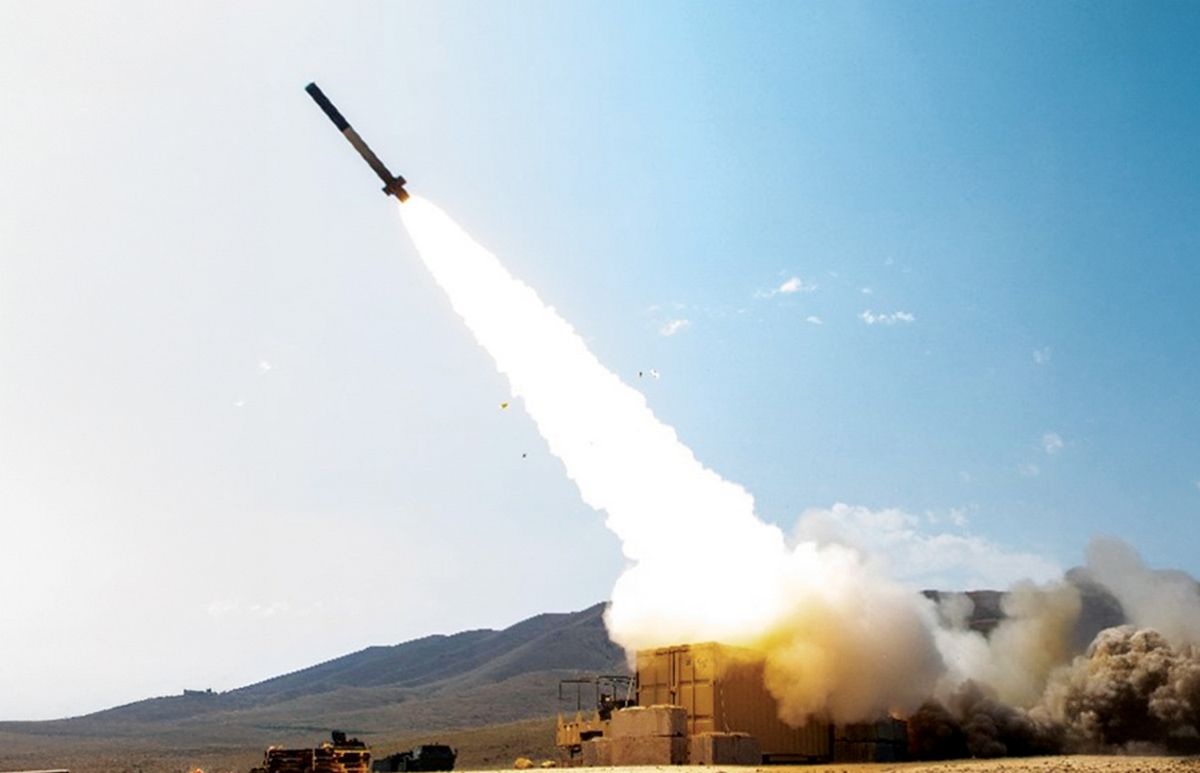
Lockheed Martin has completed the first live-fire test of its Kodiak containerised launcher, demonstrating a system designed to carry up to 12 GMLRS rockets and deploy from air, land or sea platforms.
Lockheed Martin has completed the first integrated live-fire test of its new Kodiak containerised launcher, using a Reduced-Range Practice Rocket to demonstrate offensive fires from the system, according to the company.
The test, announced by Lockheed Martin, involved loading and launching an RRPR from the containerised unit. RRPR is the training round used by HIMARS and M270A2 Multiple Launch Rocket System crews for live-fire training associated with GMLRS and the wider MLRS Family of Munitions.
Kodiak is intended to provide a transportable launcher for offensive fires while retaining the external form of a containerised system. Lockheed Martin says each unit can accommodate up to 12 GMLRS rockets and can be deployed from air, land or sea platforms, potentially allowing missile launchers to be positioned without relying solely on conventional dedicated launch vehicles.
The company is presenting the system as part of a wider effort to develop both offensive and defensive containerised launch capabilities. The Kodiak test follows a series of demonstrations involving Lockheed Martin’s GRIZZLY system, with the company arguing that placing launch equipment inside standardised container-like structures can give military users greater flexibility in where weapons are transported, positioned and employed.
Randy Crites, vice president and general manager of Lockheed Martin Advanced Programs, said, as quoted in a news update: “Achieving a live-fire launch from our Kodiak containerized system in under six months showcases the speed and agility our customers demand.”
He added: “Completing all mission requirements on our first attempt reinforces our commitment to delivering a ready-to-fire solution that keeps pace with the evolving battlefield.”
The company describes Kodiak as a “plug-and-play” launcher, although the announcement does not detail the full set of interfaces, command-and-control arrangements or external sensor requirements needed for operational deployment. Nor does it identify a customer, procurement programme or fielding timetable. The live-fire event therefore demonstrates that the launcher can successfully employ a practice rocket, rather than confirming an operationally deployed capability.
Containerised launchers have attracted increasing interest because they can potentially complicate an adversary’s targeting problem and broaden the range of platforms able to carry missiles. Their effectiveness in service, however, depends on more than the launcher itself, including targeting data, communications, reload arrangements, platform integration and the ability to safely store and operate munitions from different locations.
Lockheed Martin says Kodiak can hold as many as 12 GMLRS rockets, giving it a larger magazine than a single standard HIMARS launcher, which carries one six-round launch pod. The company did not state in the announcement whether Kodiak is restricted to GMLRS-family weapons or whether other munitions could ultimately be integrated.
The Reduced-Range Practice Rocket used in the trial is intended for training rather than operational strike missions. Its use allowed Lockheed Martin to test the containerised launch sequence while drawing on an established rocket already associated with HIMARS and M270A2 training.










Not sure if I get the point of this to be honest. It’s basically a shipping container which I assume would make it extremely vulnerable to counter fire since its static. If it can be targeted and fired remotely it would be a really cool, albeit REALLY expensive fire and forget piece
Well I assume the container could be static but also could be on the back of a lorry, ship, aircraft carrier or even C17 (i suppose – sounds a bit tricky).
Seems sensible if it turns out to be a low cost launch platform for the rockets! Rack it off a DROPS, fire the rockets and forget the container once empty! Good concept, albeit one which will be a little more vulnerable to counter strikes!