

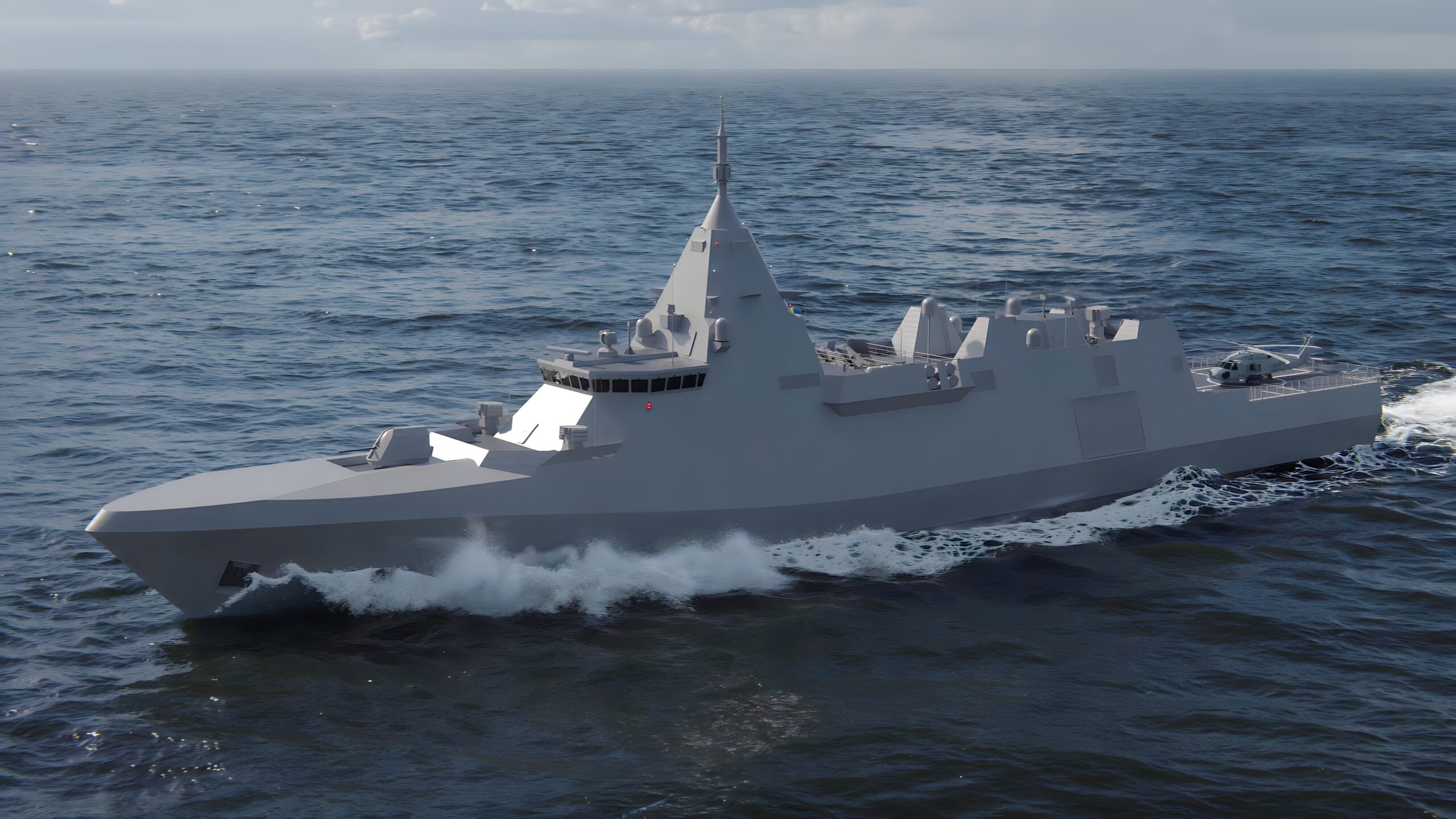
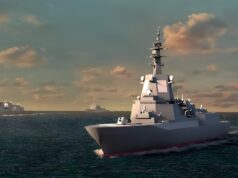
Saab and Babcock have issued fresh details on their joint bid to supply Sweden’s next generation of surface combatants, setting out how their proposed Arrowhead 120 frigate would be configured for the Swedish Navy’s future operational requirements.
In a joint statement, Saab and Babcock said the Arrowhead 120 (AH120) had been developed specifically to meet Sweden’s emerging maritime needs, and described the partnership as combining two “sovereign defence companies” and their supply chains.
The firms said the project would support Sweden’s national defence and reinforce the wider defence relationship between Sweden and the United Kingdom.
“The Arrowhead 120 (AH120) is an advanced multi mission frigate jointly developed by Babcock and Saab to meet the future operational needs of the Swedish Navy,” the spokesperson said, adding that the partnership was intended to contribute to Sweden’s defence and security while supporting the long-standing bilateral relationship.
The companies said the AH120 design integrates what they described as a highly capable combat management suite, with Saab taking the lead on combat system elements. Saab cited its recent international work on Singapore’s Multi Role Combat Vessel programme and Poland’s SIGINT ship as relevant experience, and said it would provide fully equipped composite superstructures as well as weapons including anti-ship missiles and lightweight torpedoes. The spokesperson noted Saab has integrated combat systems for more than 20 navies globally.
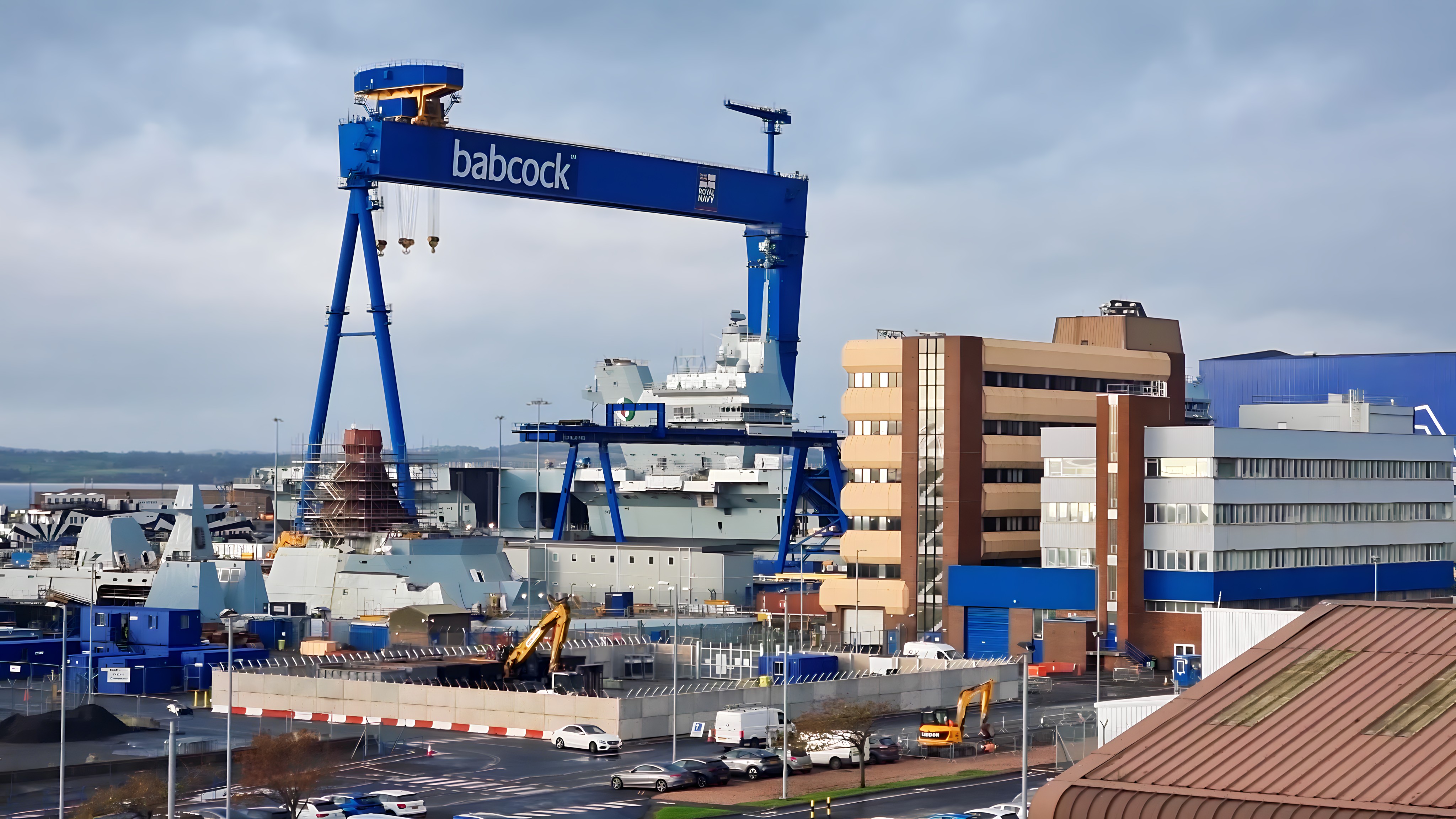
Babcock, meanwhile, said it would provide design, build and integration expertise drawn from its Arrowhead 140 programme, which forms the basis of the Royal Navy’s Type 31 frigate and has also been selected for programmes in Poland and Indonesia. The companies described this as evidence the wider Arrowhead family has already proven itself as an export-ready design.
The AH120 is described as a 124-metre frigate with a steel hull and lightweight composite superstructure, with a displacement of around 4,650 tonnes. Saab and Babcock said the vessel would be optimised for Swedish territorial defence in the Baltic Sea and the High North, with a focus on endurance, survivability and manoeuvrability.
“The partnership brings together a proven, export-ready design tailored to Sweden’s needs,” the spokesperson said. “It is adaptable and provides strong potential for international adoption.”
In their statement, the companies also claimed the frigate would be equipped to counter sophisticated air threats, including ballistic missiles, and would offer defensive capability against manned and unmanned surface and underwater threats, reflecting the evolving threat environment faced by Nordic and Baltic states.
Sweden is seeking to acquire four new frigates under a programme expected to be worth tens of billions of kronor, with a number of European shipbuilders understood to be competing. The Saab-Babcock offer is one of several bids, alongside proposals linked to France’s Naval Group and Spain’s Navantia.


And the winner is ?
At less than 5,000 tonnes with a crew of 80 could these be a good fit for an additional UK frigate to back up the T26 in home waters and leave the T31 for deployments further afield.
With CAPTAS 2 they could be a more affordable ASW capability especially for the North Sea and UK continental shelf operations.
There were proposals very similar to this for T31 and they got rejected in favour of AH140, if we get anything more now it will be those. Besides, we need to make sure the vessels we do have are fully equipped first.
It would make a good deal more sense to order a T31 Batch 2, rather than faff around with a different but basically equivalent design.
AH140 has all the space it needs if we want additional systems; far better to upgrade that design and potentially backfit upgrades to the first five ships.
Agreed 👍
That is absolutely right.
The only thing that needs tweaking is the initial outfitting.
A third frigate class? Not a chance.
With a lightweight composite superstructure it will never fit into RN DC.
I don’t think it just means the radar mast is composite. Although in some respects composite can be made more resistant to small calibre than steel of equivalent weight. The issue I see if fire or blast.
It is only the hull that isn’t of composite, Saab has delivered composite superstructures to both Singapore’s navy and India’s navy and of course the corvette class HMS Visby is the whole boat in composite.
That was my understanding too.
I knew the Visby class was all composite.
Thing is that there is no way this can work with RN DC standards.
Doesn’t make it a bad warship just a different approach.
Will the hull in any way be ice hardened?
It won’t be sailing In Minnesota 👀
Now that one caught me off guard. Haha
Yes, they are a bit hard sometimes.
It takes a focussed mind and an understanding of the mindset usually !
Well done though. 🤗
You Sir, are a bad, bad boy!
Personally I’d like see us stick to
type 31 just build about 20 them
20?! Thats ridiculous
BBC article today about what to do about the increasing numbers of sanction- busting shadow fleet ships. If not 20, then maybe 10 T31 ‘patrol frigates’ as originally envisaged would be good start. Pax Britannica.
Hi folks hope all is well .
Jim, you are one the experts on this site I turn to on defence matters – a fascinating subject indeed – this is rather light in weight compared to modern frigates, possibly still heavier than the Royal Navy types of the second world war. Can you please advise why this type is light and small? I was thinking about a comparison to our Type 31 we are building which is larger.
Cheers
George
It’s a scaled down version of the Type 31 with a significantly reduced crew requirement. If it’s cheaper to buy and run than a T31 then I think we should consider it as a follow on.
If we are to get a follow on to the T31 I believe the main requirement is for acoustic reduction. The Polish version of the T31 incorporates this and it can operate a CAPTAS 2 towed array sonar which is the little brother of the type 2087 we use on the T23 and T26.
It’s very handy for nearshore work and littoral environments.
I thought the RN has decided that the ASW future is Bastion, Teledyne Gliders and Type 92, rather than cut price frigates and CAPTAS 2?
That, and the 12 SSNs apparently scheduled for the 2030s-2040s.
I’m guessing the whole vision connects somehow to the ‘one web’ or whatever its called, targetting concept. Conceptually the data sensed by the UUV, SSN or T26 is transmitted (via satellite ?) , processed using AI , target identified and nearest hunter assigned- Wilcat, Merlin, Proteus, ASROC,SSN. T26 and SSN retain their existing kill chain capabilities. Nothing to stop a T31 or a River acting as a T92? The challenge is the information architecrure and where the processing / target id is done.
Saab being a partner in this is good….beyond the need for frigates, the Swedes are looking for a broader industrial/defense partnership, so Saab being involved is promising. Suspect the French might take the win tho….
This would be a long term thing, but could this be used as the basis for the River OPV replacements? It’s cheaper and smaller than T31 with less crew while maintaining some commonality. It’s obviously a lot bigger than Batch 2 River, but with that size comes better sea keeping and endurance. It wouldn’t need a heavy armament, maybe a 57mm, 40mm and a few CAMM.