

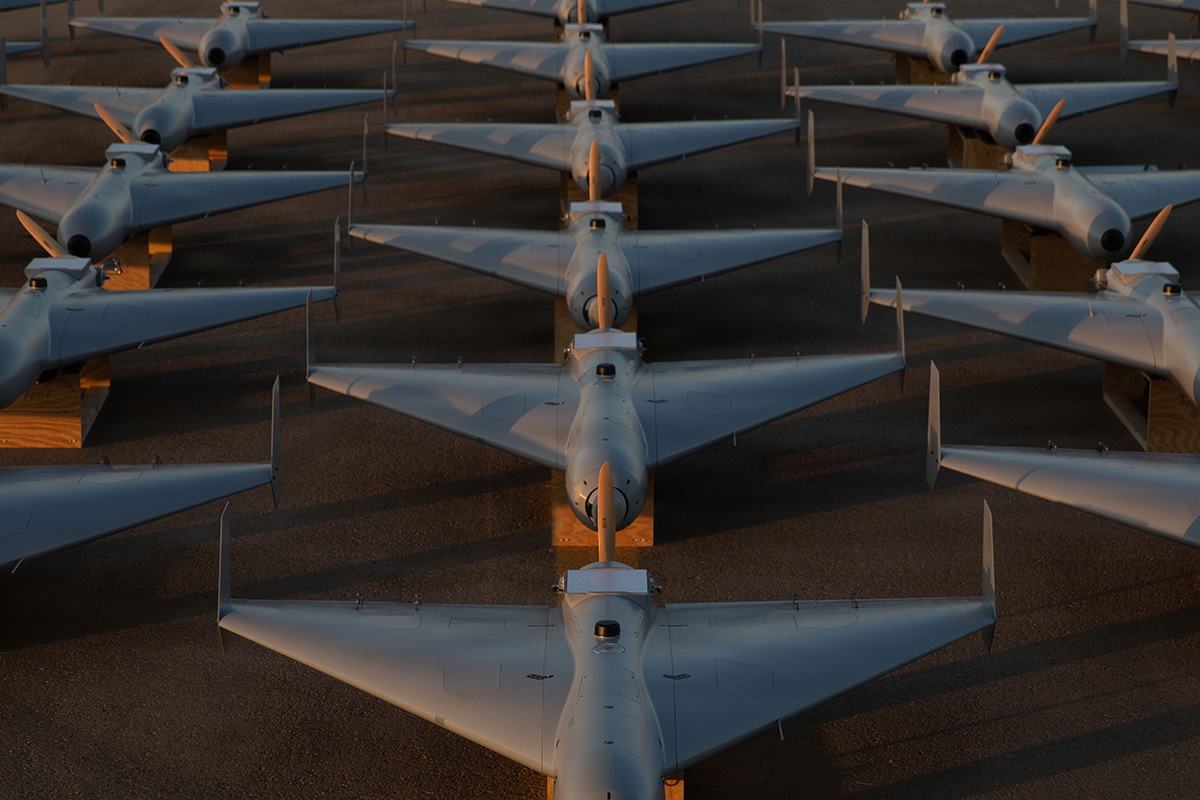
A Labour MP has set out an ambitious blueprint to overhaul Britain’s fragmented regulation of uncrewed systems, warning that outdated rules are driving innovation overseas and leaving the Armed Forces struggling to train for modern warfare.
Fred Thomas, the Member of Parliament for Plymouth Moor View and a former Royal Marine, used Defence Questions to argue that the UK’s regulatory architecture for drones and other uncrewed platforms is no longer fit for purpose. He said overlapping responsibilities across multiple departments and regulators were slowing development, increasing costs and pushing British firms to test and manufacture abroad.
Thomas is calling for a root-and-branch reform of how uncrewed aerial, surface, underwater and ground systems are governed, with proposals designed to accelerate testing, support small and medium-sized enterprises and allow the military to integrate new capabilities at pace.
Speaking in the Commons, he said: “Reforms to uncrewed systems regulations are urgently needed. Across our Armed Forces there is growing concern about the UK’s inability to train and develop our force at the speed modern warfare demands.” He added that companies were increasingly relocating activity overseas because of what he described as a burdensome and opaque regulatory environment.
At the heart of Thomas’s proposals is the idea of moving away from ad hoc exemptions and bespoke permissions towards a tiered, standardised approval system. He argues that the current model creates a circular problem, where companies cannot gather safety data without permission to test, but cannot secure permission without that data. In aviation, approvals for individual trials can take around six months in the UK, compared with weeks in countries such as the United States and Canada.
One of the most significant recommendations is the creation of a new central regulator, provisionally described as an Uncrewed Systems Executive. This body would act as a single point of authority across land, sea and air, drawing in expertise from existing regulators such as the Civil Aviation Authority, the Maritime and Coastguard Agency and Ofcom, as well as industry and serving military personnel. The aim would be to cut through duplication, align risk appetites and provide clearer guidance to developers and operators.
Alongside this, Thomas is advocating a unified Uncrewed Systems Code, covering aerial, maritime and ground platforms. The code would be designed to evolve with technology and would set common principles and standards, reducing the need for one-off exemptions and inconsistent interpretations between regulators.
Testing infrastructure is another major focus. The proposals argue that the UK lacks sufficient sites for long-range and integrated trials, particularly for beyond visual line of sight drone operations and combined land-sea-air experimentation. Companies are currently forced to conduct trials overseas, sometimes as far away as India, while access to Ministry of Defence ranges can be prohibitively expensive for smaller firms.
Thomas wants government-backed test and training areas with standing permissions agreed in advance by all relevant regulators. These sites would be used by the Armed Forces, industry and other public bodies, with transparent pricing and protected access for SMEs. He also highlights the absence of UK locations where full-spectrum electronic warfare trials can be safely conducted, something he says is essential for preparing forces for high-intensity conflict.
The proposals include targeted updates to existing legislation, much of which predates autonomous systems entirely. In the maritime domain, the Merchant Shipping Act and the Workboat Code are cited as particularly problematic, with companies reportedly being quoted close to £100,000 to certify a single uncrewed vessel. In aviation, Thomas argues for faster, performance-based approvals for autonomous and beyond visual line of sight operations, supported by clearer timelines and better resourcing for regulators.
Industry figures have echoed these concerns. One UK-based uncrewed surface vessel manufacturer warned that without regulatory change it may have to move manufacturing overseas, joining other firms already at breaking point.
The Government has signalled a willingness to engage. During Defence Questions, the Minister for the Armed Forces, Al Carns, agreed to meet Thomas and industry stakeholders to discuss the proposals. Officials are understood to be examining where changes could be made, including through the Armed Forces Bill expected in 2026.
For Thomas, the issue is as much about national security as economic growth. He argues that uncrewed systems are now central to how wars are fought and deterred, and that Britain risks falling behind allies and adversaries alike if it cannot develop, test and field them quickly and safely. “A key part of Britain’s future security depends on developing, testing, and fielding innovative uncrewed systems,” he said. “These changes would help reverse the drift we are seeing.”






Another fine example of HMG putting the UK on a war footing, as business leaves.
All part of the picture of total neglect of our defences for far too long… We also have a poor record of supporting and nurturing SME, particularly high tech companies in this country. At least there seems to be something happening, but parliament is not exactly noted for its lightening reactions to this kind of issue and HMT’s attitude to risk funding is – no way, no how..!
Stupid and short sighted.
I see that the Chief of the Defence Staff has spoken out and said our sons and daughters will need to be ready to fight! I wonder if that sort messaging is having an influence on the increasing numbers volunteering to the military? If so it is about time the state machinery stepped up and got behind the changing mood in the country.
Cheers CR
Morning mate.
I commented on that on another thread. Rather ironic I think, such calls for unity and all of society to come together while MPs sit indoors.
It was always thus, mate.
I wouldn’t mind so much if some of them could actually lead their way out of a wet paper bag. What we need is someone capable of ‘mobilising the English language’ to pull us to all together to tell truth in plain language without frightening people or at least giving us hope, i.e. a sort of modern Churchill.
However, we live in very impatient times and folk expect change to happen at the speed of the internet. Not in the real world..! It will take time to repair the damage done to our industry and military, but crucially it needs the country to rally together given how little time we actually seem to have and that will need sustained effort and that in turn requires inspiring leadership.
Can you nominate anyone for the role? Sadly, I can’t…
Cheers CR
No, I can’t either mate.
FUBAR..!
The shambolic regulatory approach to drones also impacts on their potential for commercial exploitation. e.g. using UAVs for logistics is currently impossible because operators are required to maintain line-of-site at all times. So all the innovation goes overseas.
FPV drones are effectively illegal for that reason, which can’t be helping our drone development.
‘Thomas wants government-backed test and training areas with standing permissions agreed in advance by all relevant regulators.’
Set up a drone centre of excellence at Cranfield University (used to be College of Aeronautics) where they have an airfield.
Might struggle with the creeping anti defence mindset of today’s academia…nothing that a whiff of cordite from the east can’t sort out…..
Also Marshall have just cancelled on them so they have room in their diaries and much else…..