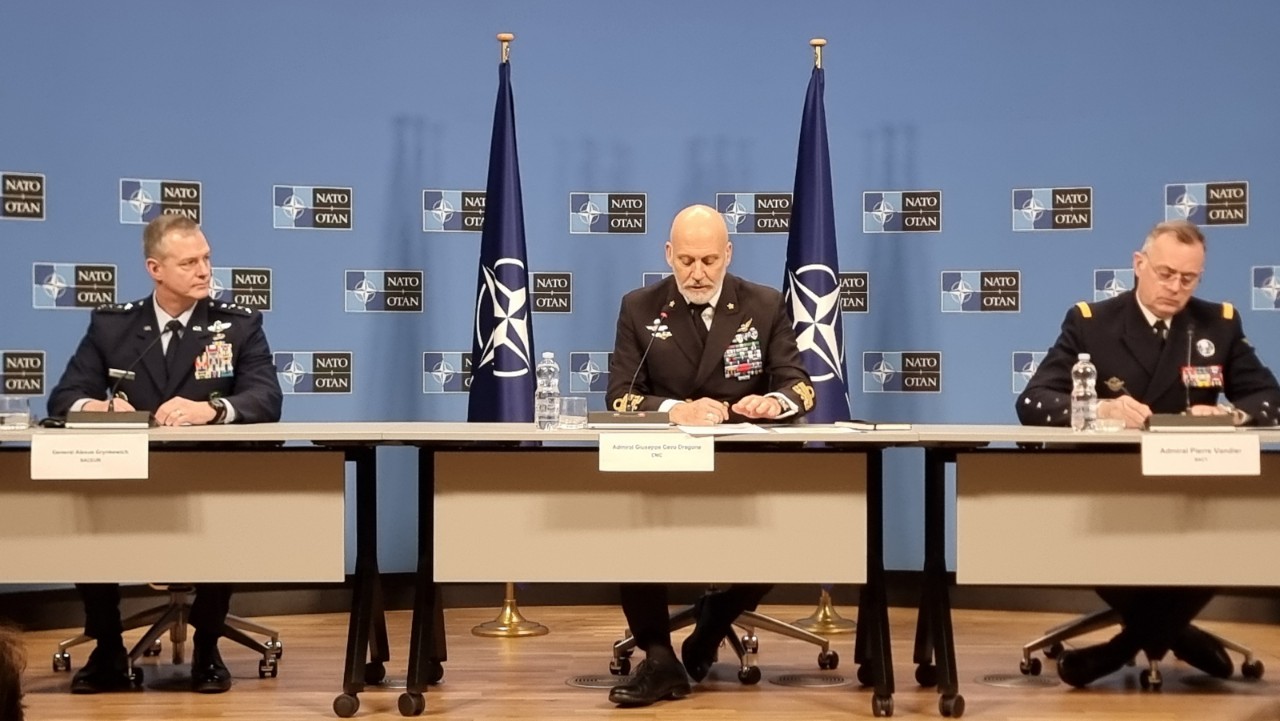
Senior NATO military leaders moved to project unity and reassurance in Brussels as growing concern over Greenland and Arctic security spilled into public debate across the alliance.
The Military Committee Chiefs of Defence session took place against an unusually tense political backdrop, with speculation about allied divisions and warnings from Greenland’s leadership fuelling anxiety about the territory’s future security.
Speaking after the meeting, Admiral Giuseppe Cavo Dragone, Chair of the NATO Military Committee, said discussions surrounding Greenland remained at an early political stage and that NATO had not received any formal direction to begin military planning. He confirmed that while a framework was being discussed between governments, no guidance had yet been issued to the alliance. “We are still waiting for direction,” he said, adding that planning would only begin once clear political instructions were received. He stressed that negotiations were ongoing at the political level and described them as a three-party process intended to find a solution acceptable to all sides.
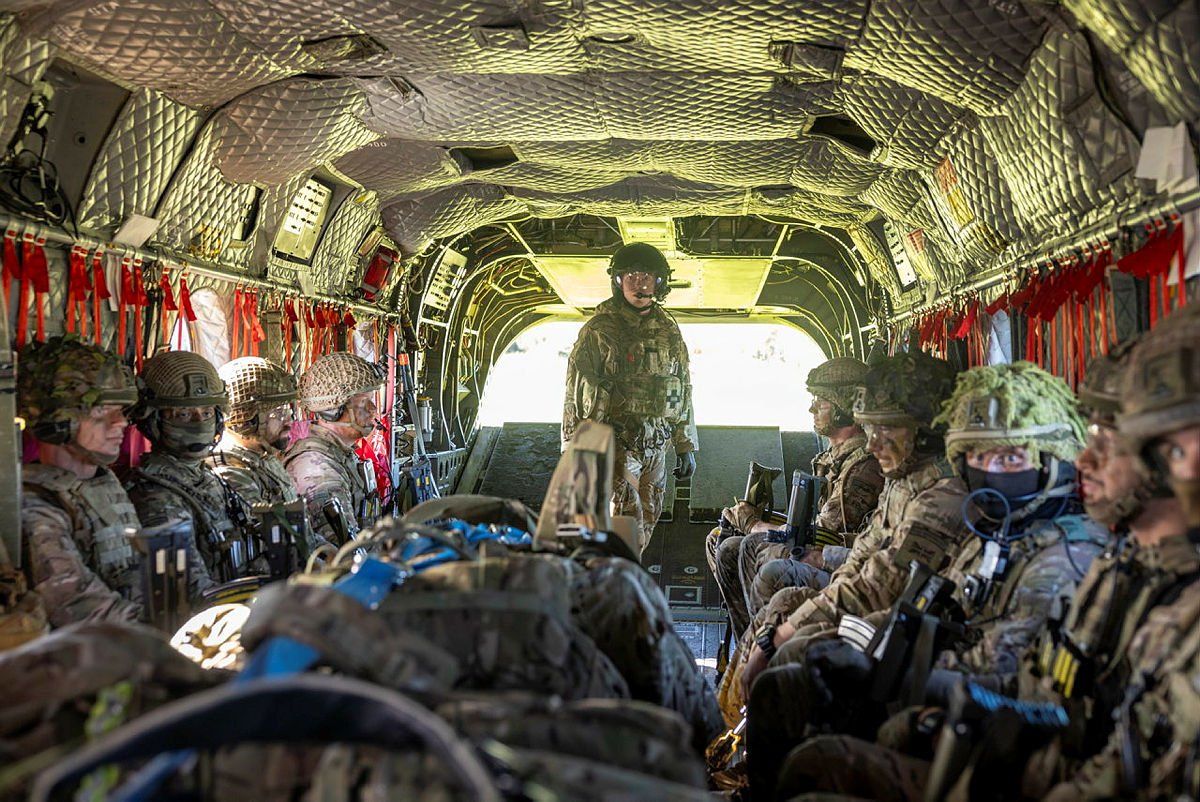
Despite intense public debate in recent days, NATO’s senior commanders told myself and other journalists that political friction had not translated into military disagreement. Supreme Allied Commander Europe General Alexus Grynkewich said alliance military leaders remained fully aligned on their core task of defending the Euro-Atlantic area. “We remain strong, we remain united, and we remain ready,” he said, noting that the Chiefs of Defence meeting itself proceeded without disruption or division. Admiral Cavo Dragone echoed that assessment, describing the gathering of NATO’s most senior military leaders as a clear demonstration of cohesion at a time of heightened political noise.
The Arctic featured prominently throughout the discussions, reflecting its growing strategic importance as climate change opens new maritime routes and increases military activity in the High North. Grynkewich confirmed that NATO has not been directed to establish a dedicated Arctic mission and that no formal operational planning has begun. However, he said the alliance is actively considering how it would respond if tasked, pointing to recent command realignments that place responsibility for the Nordic and Arctic region under Joint Force Command Norfolk. He also confirmed that Arctic exercises are scheduled in the coming months, while noting that activity in the region is already taking place through close coordination with NORAD.
NATO commanders highlighted increasing cooperation between Russia and China in the Arctic as one of the most concerning developments. Grynkewich said joint maritime patrols and coordinated long-range bomber flights have become more frequent in recent years, underlining why the region requires sustained attention. He stressed that protecting the High North involves long-term investment in surveillance, sensors and early warning systems rather than short-notice military deployments, describing these as capabilities with significant lead times.
Addressing public anxiety in Greenland, Admiral Cavo Dragone sought to dampen fears, arguing that ongoing political dialogue itself should provide reassurance. He said there was no indication of imminent danger and emphasised that discussions were being conducted openly between governments. Grynkewich reinforced the alliance-wide message of deterrence, stating that NATO’s collective defence commitment applies to all allied territory. “Our commitment under Article Five remains ironclad,” he said, framing reassurance not only for Greenland but for citizens across the alliance.
NATO leaders were also keen to stress that attention on the Arctic has not displaced focus elsewhere. Grynkewich pointed to continued reinforcement of NATO’s eastern flank, including multinational forward land forces in Romania and Bulgaria, as well as ongoing efforts to strengthen air and missile defence and counter-drone capabilities. He described these deployments as practical expressions of transatlantic solidarity, involving forces from across Europe and North America operating under unified command structures.
Supreme Allied Commander Transformation Admiral Pierre Vandier underlined that NATO’s response to emerging challenges follows long-established defence planning processes rather than reactive decision-making. He said Arctic security, eastern deterrence and southern stability are all addressed through the same 360-degree planning framework, ensuring the alliance is not stretched thin or diverted by short-term political developments. Vandier noted that environmental change and technological evolution are reshaping the operational environment, requiring NATO to adapt without losing strategic focus.