

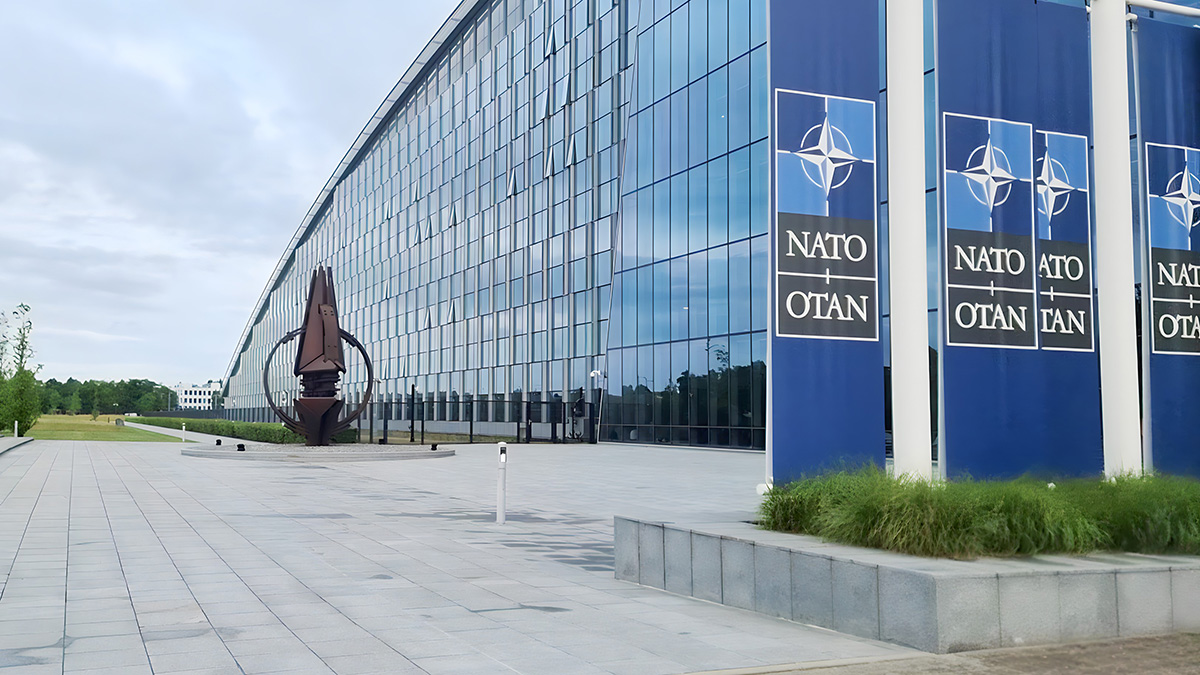
NATO’s Director General of the International Military Staff, Lieutenant General Remigijus Baltrėnas, took part in this year’s Berlin Security Conference, arguing that the war in Ukraine has drawn the European Union and NATO closer together in both policy and military adaptation.
Baltrėnas joined senior representatives from Norway, the United States and Finland for a panel titled “The Transatlantic Bond,” chaired by Dr Géza von Geyr of the German Federal Foreign Office.
In his remarks, he thanked Germany for its contribution to strengthening NATO’s military capabilities and outlined what he sees as the conditions for maintaining the transatlantic link. He said “the transatlantic bond will continue to be strong if the United States of America stays committed, European pillar in the NATO will become stronger, and defence industrial base of Europe will become bigger.” He added that full commitment to these elements, accompanied by timely innovation, would ensure NATO remains “the most successful Alliance in the world.”
Baltrėnas also highlighted efforts to incorporate lessons from Russia’s war against Ukraine into NATO planning and doctrine. He pointed to the Joint Analysis, Training and Education Centre in Poland, which works with Ukrainian counterparts to analyse battlefield experience and translate it into NATO strategy, policy and operational practice. He said “JATEC in Poland brings the real combat proven lessons, the knowledge and the experience from the war zone to the NATO tactical level,” noting that this learning process is mirrored at political and strategic levels through the NATO–Ukraine Council and the Joint Military Committee with Ukraine.
On the question of NATO–EU cooperation, Baltrėnas stressed regular coordination between NATO’s military staff and their EU counterparts. He said “cooperation between EU and NATO is deep and the war in Ukraine has brought both organizations even [closer] together. This cooperation is not about duplication of efforts, it is about complementarity of each other.”
The Berlin Security Conference, held annually since 2001, is one of Europe’s larger security and defence events, bringing together participants from European and non-European states, EU institutions and NATO. The 2025 conference took place at Vienna House Andel’s Berlin on 18–19 November.

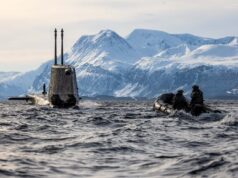










Looks like NATO needs to concentrate on the North and Arctic for a while. ☃️☃️☃️
Beware Strangers in red, bearing Gifts.
The four Raindeers of the Apocolypse.
👀👀👀
It Snow joke.
In red.. even more evidence Santa is a commie
You’re sleighing it today!
And if the US forces Ukraine to accept the current “Capitulation” deal
then NATO has let them down massively….Putin wins, and this will be noted by other Autocrats around the world.
Bringer, NATO is doing all that its Charter allows them to do…and more. NATO cannot actively intervene in the war with forces as Ukraine is not a NATO member but I understand that the organisation coordinating the delivery of military equipment to Ukraine is a NATO one?
Understood.
But what ENATO can do is oppose the deal and let the US know in no uncertain terms, they are merely implementing Putin’s wishlist.
What does the Ukraine stand get for all massive loss of lives, equipment and territory?
Just the humiliation of defeat.
Yeah NATO and the EU are winning… What a joke!. Not really relevant.
This ^^
Well the Tangerine has shocked NATO into spending money in a way that even UKR couldn’t.
That is interesting – the addition of the two Nordics to NATO has massively strengthened the alliance and they are spending €€€€€ as is Germany, Poland etc so that is actually very good. France talks about spending €€€€ but does have any. Spain refuses to spend €€€€. Italy gets an amazing amount for its €€€€€. UK talks about spending €€€€ in the future but continues to cut.