

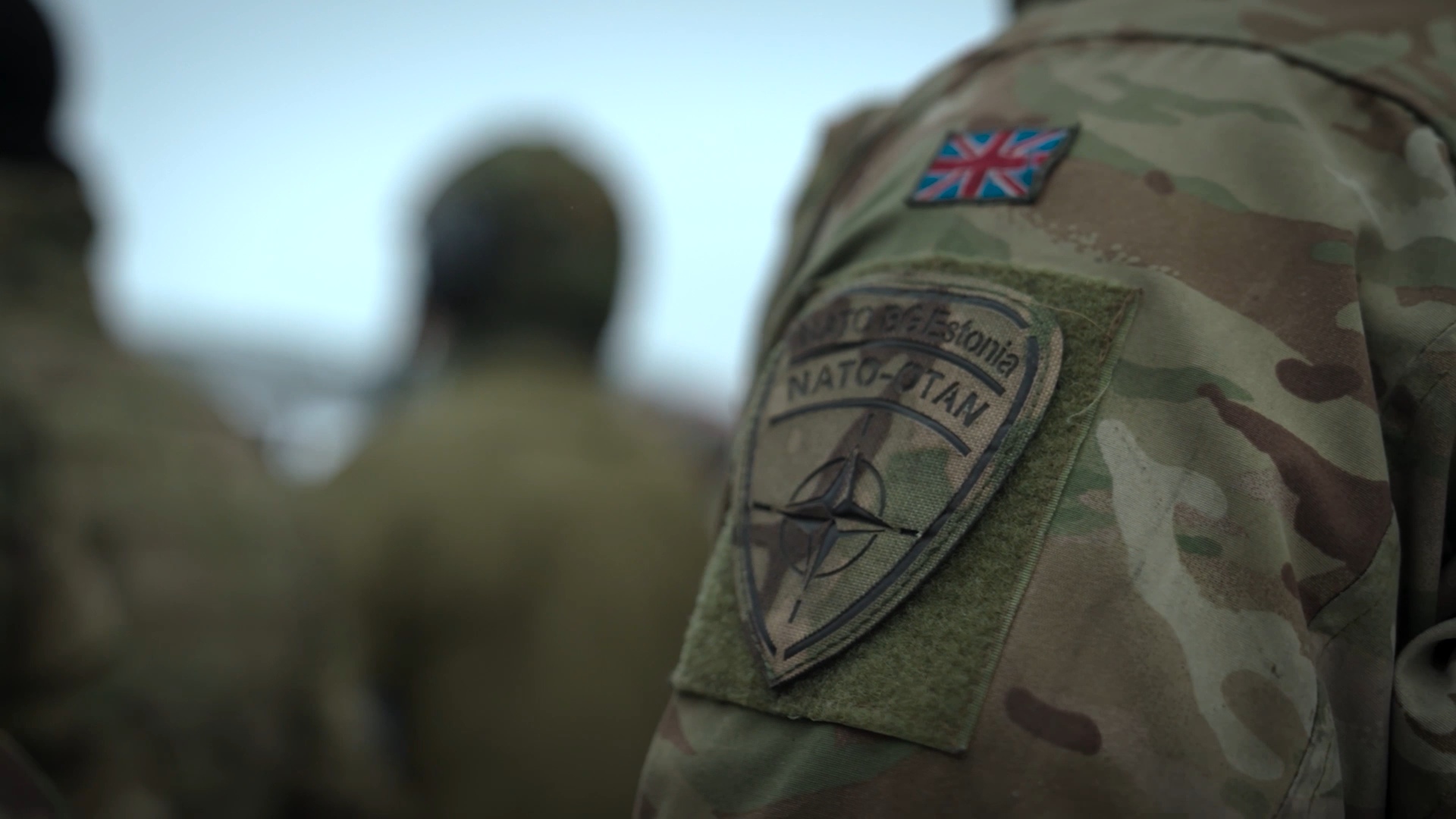
NATO is less concerned with the repeated delays to the United Kingdom’s Defence Investment Plan than with whether Britain and other allies are actually delivering the military capability the alliance needs against a potentially reconstituting Russia, a senior NATO official has said.
Asked by the UK Defence Journal at a background briefing whether the repeatedly delayed plan was frustrating the alliance’s ability to plan and deter over the short, medium and longer term, the official said that what really mattered was that countries accumulated the resources needed to deliver on their capability targets, adding that NATO was “not so much interested in money” as in making sure that nations were “on a clear path towards the delivery of the capability that we need”, especially in the shortest term, as the alliance faced the potential of a reconstituting Russia.
The frustration, the official said, was a general one across the alliance rather than a complaint aimed at any single nation, arising from “nations not being able to deliver the equipment that is needed” to fight the plans, a problem rooted in the long history of underinvestment from which European militaries were only now emerging.
Setting the wider scene, the official said the alliance now had a clear idea of how its members planned to reach the capability targets agreed last year, even as it embarked on the next cycle of defence planning, with intensive political discussions expected in the autumn of 2026 to set the parameters for that cycle on the basis of revised force requirements, a process that will in turn feed updated capability targets for nations including the United Kingdom.
On the financial side, the official said almost all allies were now close to or across the 2 per cent of GDP guideline, with some far above it and a number already approaching 5 per cent, and with allies holding plans towards 3.5 per cent by 2035, placing the United Kingdom’s position as one part of a broader picture in which European members are markedly increasing what they spend.
The remarks on capability over cash chimes with the message coming from the top of the alliance, where the Secretary General Mark Rutte has repeatedly insisted that the Ankara summit must be about combat-ready forces and a scaled-up defence industry rather than spending pledges alone, and it places the underlying test for Britain not on when the plan is published but on whether it funds the equipment the alliance is counting on, at a moment when NATO is increasingly focused on the prospect of a rebuilt Russian military.







Has Trump yet berated Starmer at the G7 for underfunding the MoD?
I’ve gained $17,240 only within four weeks by comfortably working part-time from home. Immediately when I had lost my last business, I was very troubled and thankfully I’ve located this project now in this way I’m in a position to receive thousand USD directly from home. Each individual certainly can do this easy work & make more greenbacks online by visiting
following website—.,.,.,.,.—>>> JobatHome1.Com
I’ve gained $17,240 only within four weeks by comfortably working part-time from home. Immediately when I had lost my last business, I was very troubled and thankfully I’ve located this project now in this way I’m in a position to receive thousand USD directly from home. Each individual certainly can do this easy work & make more greenbacks online by visiting
following website—.,.,.,.,.,.—>> PayAtHome1.Com
I’ve gained $17,240 only within four weeks by comfortably working part-time from home. Immediately when I had lost my last business, I was very troubled and thankfully I’ve located this project now in this way I’m in a position to receive thousand USD directly from home. Each individual certainly can do this easy work & make more greenbacks online by visiting
following website—.,..,.,.,,,,.,.,.—>> LIVEJOB1.COM
Would anyone care if he did?
Almost all I hear now when that prat speaks is duck quacking sounds; did he not contradict himself “twice” today? What a clown shoe! Back in the day, when the Washington spoke, you could have reasonable faith it was the truth, whereas when Moscow spoke you can have extreme faith it was nonsense rhetoric. But recently, White House & Kremlin are the same bullshit boat.
I don’t even hear the duck sounds anymore, I have to mute him, it’s like listening to sand paper or scratching on a black board.
The worst public speaker in the history of the world.
I think they even share the same hymnbook.
I’m thinking touting the availability of our armoured vehicles is probably not a good strategy.
our 40 year old, lacking spares and ammo armoured vehicles?
Some hope; remember Labour’s motto, ‘Welfare before warfare.’ As long as Starmer is in No. 10, there is no chance of increasing defence spending. A fresh leader could bring in a new chancellor who might look favourably on the MOD, more so than the current blinkered No. 11 occupant.
I think if you had the nations bank balance in your hands you would be cautions too.
If Churchill had been cautious we would all be speaking German.
When Churchill was the chancellor in the 30’s he gutted defence spending. It was only after he was sacked and went to the back benches that he became a big fan of rearmament.
Pretty clever of him considering he was out of office right through the 1930’s. As I recall from history he spent most of the middle and late thirties campaining against cuts and warning about Germany.
I don’t think there is much threat of us all speaking Russian anytime soon.
That’s what Chamberlein said about the Germans.🤔
And he wasn’t surrounded with the mass and capability of NATO like today.
😊
No10 Need No11 as No11 Makes No10 Look Relatively Competent in Comparison..!
‘…to deliver on their capability targets’
Britain is in breach of its obligations as a permanent member of the U.N. Security Council. It is in breach of its security assurances to Ukraine. It has been in breach of its defence treaty obligations to its Middle Eastern friends and allies. It is in breach of its capability target obligations to NATO.
All three major political parties are responsible for this state of affairs.
What an absolute disgrace!
What obligations do we have as permanent member of the UN Security Council? Can you list them?
Is Russia in breach of its obligations for invading another UN member?
Is China in violation for claiming other countries territorial waters?
Is the USA in breach of its obligations for attacking another un member on the other side of the world of for grabbing the leader of another UN member from their home?
Strange logic. How would other Security Council permanent member misbehaviour excuse that of Britain?
‘Under the United Nations Charter, the functions and powers of the Security Council are:
to maintain international peace and security in accordance with the principles and purposes of the United Nations;
to investigate any dispute or situation which might lead to international friction;
to recommend methods of adjusting such disputes or the terms of settlement;
to formulate plans for the establishment of a system to regulate armaments;
to determine the existence of a threat to the peace or act of aggression and to recommend what action should be taken;
to call on Members to apply economic sanctions and other measures not involving the use of force to prevent or stop aggression;
to take military action against an aggressor;’
That’s a convincing fail…
Where are we in breach of our obligations on your list?
I woukd suggest the UK is easily the most compliant member of the five with that list.
‘To maintain international peace and security in accordance with the principles and purposes of the United Nations;’
‘To take military action against an aggressor’
Those are the obligations and powers of the Security Council as a collective, not individual members.
You clearly have zero understanding of the UN Charter.
And you do? Or not really…
‘The fifteen-member UN Security Council seeks to address threats to international security. Its five permanent members, chosen in the wake of World War II, each have veto power.’
That’s it…
I do, hence why I’m having to explain it for you.
The powers you listed are exercised by the Council as a body, not imposed as duties on individual states. Citing the Charter as evidence of UK breach demonstrates a fundamental misreading of how the UN actually works.
The veto exists precisely so that P5 members cannot be bound to collective military action against their will. There is no individual obligation on the UK or any P5 member to ‘take military action against an aggressor.’
That’s the whole point of the veto. The Charter does not work the way you’re describing.
You are completely missing the original point.
Britain is in no position to take military action against an aggressor…because:
‘I can absolutely assure the Committee that we can provide a trained divisional headquarters and certified and assured brigades—16 Brigade, 7th Light Mech Brigade
Combat Team, and an armoured brigade—but there will be capability gaps in our ability to get there and our ability to sustain it for time.’
We do not have an expeditionary capability that we can move or sustain for any length of time.
We cannot therefore meet any possible deployment under the auspices of the U.N. as we are obliged to do, if and when called upon.
I’m not missing the original point, because that wasn’t your original point.
You claimed Britain is in breach of its obligations as a permanent UN Security Council member. I challenged you to identify the specific Charter article, and you couldn’t. Now you’re talking about capability gaps and NATO readiness, which is a separate issue entirely.
Capability shortfalls are a legitimate concern, but they don’t constitute a breach of UN Charter obligations not least because no such individual obligation exists in the Charter in the first place.
This is not complicated. Of course Britain is in breach if it cannot produce any expeditionary capability with which ‘to maintain international peace and security in accordance with the principles and purposes of the United Nations…to take military action against an aggressor’
And, as the then CGS pointed out to the H of C defence committee (Nov 2023, nothing has changed since then!) Britain cannot move or sustain any credible military expeditionary capability. That’s it!
It really is this simple: those are the collective powers of the Security Council as a body, not individual obligations on member states. The UK doesn’t need to unilaterally deploy an expeditionary force to ‘maintain international peace and security’. The Council acts collectively, by resolution, with contributions from many member states.
More fundamentally, no P5 member can ever be compelled to contribute forces to any UN action, because each of them holds a veto. Russia vetoes resolutions it dislikes. China does the same. The UK could veto any resolution that required it to deploy forces it didn’t have. That is precisely what the veto is for.
Capability gaps are a real problem – I am not is denying that. But a capability shortfall is not a legal breach of the UN Charter which was your original point. Those are two entirely different things, and conflating them doesn’t make the argument stronger.
Sorry Munro but LP is correct, there has never been any military requirement placed on any member of the security council least of all the five permanent members who have a veto to stop them being called upon to provide military support. All members of the UN are required to provide collective security but only when mandated by the security council.
The last military action mandated by the security council was in Libya in 2011 which Britain lead alongside France.
Neither China or Russia had ever lead a UN authorised military intervention. Britain has lead many although this leadership is not a requirement of P5 membership.
The point is that Britain cannot deploy any expeditionaty capability…or naval assets at any given moment. That quite clearly puts us in breavh of our obligations.
No it’s doesn’t as no such obligation exists. The UK also retains a far bigger expeditionary capability than any other P5 member excluding the USA.
The UK military has plenty of problems but an expeditionary capability deployment on colonial policing type missions is not one of them.
‘To maintain international peace and security in accordance with the principles and purposes of the United Nations;’
We cannot even maintain the security of our own sovereign base areas or, indeed, our own national borders.
‘To take military action against an aggressor’
We are, quite simply, not in a position to take military action against an aggressor, as we have just clearly demonstrated in the Mediterranean.
That puts us in breach of our clearly stated obligations as a member of the security council.
It’s not a very complicated thing to understand. I was wondering why you seem to be struggling to comprehend what everyone is telling you and then saw you decided to bring “defending our borders” into it when it has no relevance to the conversation at hand.
That fully explains the type of person you are and presumably why your life is reading comprehension is in the gutter…
You keep quoting the same bits from the UN Charter but it’s been explained to you three or four times now that these are collective obligations and only apply when mandated by the UNSC.
Ask your carer if you’re not sure.
Yes. Collective obligations of which we, along with do many others, are in breach. That is why both we and the U.N. are international laughing stocks.
We have been attacked overseas and had no response. We have been attacked on British soil by enough CBRN agent to kill thousands, one British citizen dead, a Police Officer seriously injured; arson attacks, cyber attacks, threats of ballistic missile attacks on our cities, clear threats to our undersea infrastructure. Even the most myopic will by now be aware that we cannot defend our own borders. Why is all that relevant? Because it shouts weakness to the world, as, I may say, do your petty insults.
Lose the atmospherics and stay off the harmful chemicals. They quite clearly aren’t doing you any good.
Sigh. Stick to the Racing Post pal. A basic understanding of international law is clearly beyond you.
Clueless.
‘International law’ is incompatible with national sovereignty. However many countries do legally constrain themselves to follow the rulings of specific international courts for specific things.
So ‘International law’ is simply a formalized framework of different aspects of international relations (treaties, diplomacy, soft power interactions etc).
It has very little similarity at all to, for example, the English system of Common Law based on precedent.
U.N. Charter Article 42
‘Should the Security Council consider that measures provided for in Article 41 would be inadequate or have proved to be inadequate, it may take such action by air, sea, or land forces as may be necessary to maintain or restore international peace and security.’
Britain does not, any longer, have air, sea or land forces that can usefully contribute to the maintenance or restoration of international peace and security.
We know this because we have just been attacked in the Mediterranean and in the Gulf and had no credible land (division), sea (major warship) or air (Air wing) formations with which to respond.
We are therefore in breach of our obligations to the United Nations as a permanent (meaning we should permanently have sea, land, air capabilities available for peacemaking, peacekeeping, as we did in 1950, 1974, 1990, 2000) member of the security council.
That’s it.
You’ve actually undermined your own argument by quoting Article 42. Read it again: ‘Should the Security Council consider… it MAY take such action.’ That is a discretionary power granted to the Council as a collective body not a standing duty imposed on individual P5 members to maintain permanently available forces.
Your parenthetical definition of ‘permanent member’ as meaning a state ‘should permanently have sea, land, air capabilities available’ appears nowhere in the Charter. You’ve invented it. Permanent refers to permanent membership of the Council as opposed to the ten rotating non-permanent seats not to a requirement to permanently maintain expeditionary forces.
This has been explained to you repeatedly, by multiple people, citing different parts of the Charter each time, and you keep returning to the same conflation. Capability gaps are real. They are not a Charter breach. Those are different claims and no amount of repetition will make them the same one.
Your words:
‘…it MAY take such action.’
The point is that Britain cannot take any action at all, if so requested, since it does not possess the means to take such action, as it has just clearly demonstrated in both the Gulf and the Mediterranean..therefore…it no longer possesses the ability to discharge its duties as a member of the security council.
Each member of the security council should possess the means of discharging its duties if called upon to ‘take such action by air, sea, or land forces as may be necessary to maintain or restore international peace and security.’
So each permanent member should always have available to it the means of taking such action as required for peacemaking, peacekeeping, as Britain did in 1950, 1974, 1990, 2000.
This is not a capability ‘gap’. Britain was attacked in Cyprus and had no way of responding. Britain was attacked in the Gulf and had no way of responding. This is a complete lack of any capability to respond at all.
We no longer have the capabilities to discharge our duties as a member of the security council, permanent or not.
Read your own sentence back: ‘each permanent member SHOULD always have available to it the means.’ Should. Not ‘must,’ not ‘is obligated to,’ not ‘shall.’ You’ve written the word that proves my point and then ignored it.
The Charter creates a discretionary power for the Council to act collectively. It does not create a standing legal duty for the UK, on its own, to permanently maintain deployable land, sea and air forces. If it did, you’d be able to quote the Article that says so by now. You’ve had five attempts across two days and you still haven’t found one, because it doesn’t exist.
What you actually have is an opinion that the UK *should* be more capable, dressed up as a legal claim that it *must* be, so it sounds more serious than ‘I think defence spending is too low.’ Just say that instead. It’s a fair point. It is not a Charter breach, and no amount of repeating ‘1950, 1974, 1990, 2000’ changes what the treaty text actually says.
Should is a modal verb used to indicate an obligation or expectation.
Your words:
‘Those are the obligations and powers of the Security Council’
I say again: Britain is in breach of its obligations as a permanent member of the U.N. security council.
The point is not that defence spending is too low. If it had been spent more effectively, rather than in search of votes, we might very well not be in this position But unless we can deploy a credible force at a moments notice as we have been able to do in previous times, we are in breach.
And we know we cannot deploy such a force at a moments notice because we have just been attacked multiple times overseas without being able to respond.
For heavens sake, the Defence Minister and others in Britain’s defence ministry have just resigned.
They have resigned precisely because we cannot meet our obligations to our allies, to the U.N. or even to our own defence forces deployed overseas.
What an absolute disgrace!
You’re defending the grammar of your own sentence, not the Charter. ‘Should’ appeared in YOUR paraphrase ‘each permanent member should always have available to it the means’ not in any article you’ve quoted. Article 42 says the Council ‘may’ take action. That’s the actual treaty text. Your gloss on what a P5 member ‘should’ do is your opinion about desirable policy, not a quotation of binding law.
You can keep relitigating the meaning of a modal verb in a sentence you wrote yourself, but it doesn’t get you any closer to producing the actual Charter clause that creates an individual obligation on the UK to maintain standing expeditionary forces. You’ve been asked for that clause for three days. You still don’t have it, because it isn’t there.
Ministers resigning over capability gaps is a real and serious political story. It is not evidence of a Charter breach. You’re using one to dress up the other again, exactly as before. You’re clearly thick as mince if you can’t understand this. Stick to what you know – which is seemingly naff all.
Basic logic.
Your words:
‘Should. Not ‘must,’ not ‘is obligated’
Should is a modal verb used to indicate an obligation or expectation.
‘Under the United Nations Charter, the functions and powers of the Security Council are:
to maintain international peace and security in accordance with the principles and purposes of the United Nations;
to investigate any dispute or situation which might lead to international friction;
to recommend methods of adjusting such disputes or the terms of settlement;
to formulate plans for the establishment of a system to regulate armaments;
to determine the existence of a threat to the peace or act of aggression and to recommend what action should be taken;
to call on Members to apply economic sanctions and other measures not involving the use of force to prevent or stop aggression;
to take military action against an aggressor;’
That’s a convincing fail…
Lose the atmospherics and stay off the harmful chemicals. They won’t do you any good.
This is what Britain, a permanent member of the U.N. security council, should be capable of in order to discharge the obligation of such a role:
July 1974
British forces:
Royal Navy Task Group
Aircraft Carrier: HMS Hermes (which carried Wessex helicopters and Royal Marines).
Destroyer: HMS Devonshire.
Frigates: HMS Andromeda, HMS Rhyl, and later HMS Brighton.
Submarine: HMS Onslaught (Oberon-class).
Royal Marines & Army
41 Commando, Royal Marines: The Royal Scots (1st Battalion), 10th Gurkha Rifles, 16/5th The Queen’s Royal Lancers: Aircraft: Two No. 41 Squadron Phantom FGR2s, Several Avro Vulcan bombers and Lightning fighters already stationed at RAF Akrotiri.
From the U.N. website:
‘the functions and powers of the Security Council are:
to maintain international peace and security in accordance with the principles and purposes of the United Nations…
to take military action against an aggressor;’
Precisely how do you suppose that we going to meet our obligation to act, even as part of a collective, if we cannot even act in defence of our own service personnel and bases?
An absolute disgrace!
‘To say there is no legal duty to act beyond the broad entreaty in Article 24 does not mean there is no political, institutional or – for that matter – ethical responsibility. That responsibility, moreover, impacts the real world of great power politics, at least to the extent that those politics play out in the Security Council. The effectiveness of the Council depends in part on its perceived legitimacy. The term ‘legitimacy’, as a sociological concept, refers to the belief of those subject to an institution’s authority that it has the right to exercise that authority. Thus, the legitimacy of the Council depends at least in part on the extent to which other states (and their citizens) perceive it to be acting on behalf of the membership as a whole and not entirely
on the basis of the narrow interests of its five permanent members. Understandably, the P5 do not like to have their hands tied. But just as action that is widely perceived to be illegitimate can undermine the effectiveness of the Council, so can inaction. Unless the P5 accept some constraints on their freedom not to act, the Council will cease to be an effective instrument for the maintenance of peace and security, which would serve none of their interests.’
Ian Johnstone, Professor of International Law
You’ve now posted that exact same list of Security Council functions three times across three days, despite it being explained to you each time that those are collective Council powers, not individual member obligations. Pasting it a fourth time doesn’t change what it says.
And a list of ships and regiments deployed to Cyprus in 1974 doesn’t establish a legal obligation either. It shows what Britain chose to deploy on one occasion, fifty years ago, under a specific Cypriot intervention treaty. This was not a standing Charter duty to maintain that exact order of battle in perpetuity. You’re substituting nostalgia for a citation again.
You still have not produced a single Charter article that creates an individual obligation on P5 members to maintain permanent expeditionary capability. After four days and however many attempts, that’s not a coincidence. It’s because the obligation you’re describing doesn’t exist in the document you keep quoting from.
From the U.N. website:
‘the functions and powers of the Security Council are:
to maintain international peace and security in accordance with the principles and purposes of the United Nations…
to take military action against an aggressor;’
Precisely how do you suppose that we going to meet our obligation to act, even as part of a collective, if we cannot even act in defence of our own service personnel and bases?
An absolute disgrace!
‘To say there is no legal duty to act beyond the broad entreaty in Article 24 does not mean there is no political, institutional or – for that matter – ethical responsibility. That responsibility, moreover, impacts the real world of great power politics, at least to the extent that those politics play out in the Security Council. The effectiveness of the Council depends in part on its perceived legitimacy. The term ‘legitimacy’, as a sociological concept, refers to the belief of those subject to an institution’s authority that it has the right to exercise that authority. Thus, the legitimacy of the Council depends at least in part on the extent to which other states (and their citizens) perceive it to be acting on behalf of the membership as a whole and not entirely
on the basis of the narrow interests of its five permanent members. Understandably, the P5 do not like to have their hands tied. But just as action that is widely perceived to be illegitimate can undermine the effectiveness of the Council, so can inaction. Unless the P5 accept some constraints on their freedom not to act, the Council will cease to be an effective instrument for the maintenance of peace and security, which would serve none of their interests.’
Ian Johnstone, Professor of International Law
It goes without saying that many other members of the security council are regularly in breach of their obligations, for a variety of different reasons. But for Britain, a permanent member, to be unable to deploy and sustain a credible land force, even one credible warship, makes a complete joke of the entire idea of a ‘security council’. Our shame is only partly mitigated by the fact that the entirety of the U.N. has become a very expensive global laughing stock.’
Read your own quote again. Johnstone’s first sentence is: ‘there is no legal duty to act beyond the broad entreaty in Article 24.’ He is explicitly confirming there is no individual legal obligation which is exactly what I’ve been saying for four days. What he goes on to discuss is political, institutional and ethical responsibility, and the Council’s perceived legitimacy. That is a completely different category of claim from ‘Britain is in breach of its obligations,’ which is the legal claim you opened with and have repeated ever since.
You can absolutely argue that UK capability gaps damage its credibility, its alliances, and the Council’s legitimacy. That’s a reasonable political argument and nobody here has disputed it. But you’ve now quoted an international law professor explicitly stating there’s no legal duty, while continuing to insist Britain is in ‘breach.’ Breach is a legal term. You cannot use a source that says ‘no legal duty’ to support a claim that depends entirely on one existing.
1. The full first sentence: ‘To say there is no legal duty to act beyond the broad entreaty in Article 24 does not mean there is no political, institutional or – for that matter – ethical responsibility.’
2. Responsibility is the duty or obligation to diligently fulfil tasks
3. Obligation is not a ‘legal claim’. Obligation is a word. Obligation: Indicates that an entity is bound by a duty.
4. Duty broadly refers to a moral or legal obligation, or a task required by one’s position or occupation
5. Breach is a word not a legal term. A breach is a break, rupture, or violation. It refers to the act of breaking a rule, law, or agreement. The phrase “in breach of” means violating or failing to comply with a law, rule, agreement, or duty.
6. ‘The broad entreaty in Article 24: ‘In order to ensure prompt and effective action by the United Nations, its members confer on the Security Council primary responsibility for the maintenance of international peace and security, and agree that in carrying out its duties under this responsibility the Security Council acts on their behalf. The specific powers granted to the Security Council for the discharge of these duties are laid down in Chapters VI, VII, VIII, and XII.’
7. Chapter VII, Article 42: ‘Should the Security Council consider that measures provided for in Article 41 would be inadequate or have proved to be inadequate, it may take such action by air, sea, or land forces as may be necessary to maintain or restore international peace and security. Such action may include demonstrations, blockade, and other operations by air, sea, or land forces of Members of the United Nations.’
I say again: Britain is in breach of its obligations as a permanent member of the U.N. security council.
Why?
Because, in the event that it may become necessary, Britain no longer has the capability to ‘take such action by air, sea, or land forces as may be necessary to maintain or restore international peace and security’ as it is obliged, either singly or collectively, to do as a member of the security council.
We know that Britain no longer has that capability because it has just clearly demonstrated in the Mediterranean and the Gulf that it has been unable to ‘take such action by air, sea, or land forces as may be necessary to maintain or restore international peace and security’ even with regard to its very own service personnel and bases overseas.
What an absolute disgrace!
That is one of the major reasons behind the resignation from Britain’s Defence Ministry of The Rt Hon John Healey MP and Colonel Alistair Scott Carns, DSO, OBE, MC, MP
Britain is in no position to take military action against an aggressor…because:
‘I can absolutely assure the Committee that we can provide a trained divisional headquarters and certified and assured brigades—16 Brigade, 7th Light Mech Brigade
Combat Team, and an armoured brigade—but there will be capability gaps in our ability to get there and our ability to sustain it for time.’
Gen. Sir Patrick Sanders Nov 2023 to HofC Defence Committee
And things have got worse and continue to get worse since then.
We do not have an expeditionary capability that we can move or sustain for any length of time.
We cannot therefore meet any possible deployment under the auspices of the U.N., either individually or collectively, as we are obliged to do.
And we have just clearly demonstrated that by failing to deploy anything in response to attacks on our own service personnel and bases overseas.
That is at least one of the reasons why the Defence Secretary and others have just resigned, with service chiefs considering their positions now as well.
That covers about every member in breach. Trouble is the definition of those ‘headline’ clauses are obscure at best and if taken literally would put us in conflict with half the World especially the United States these days. Fact is Most of those even short of conflict scenarios, if Britain acted unilaterally would attract objections and votes in which we would be decisively defeated. One has to be realistic the UN sadly has not only become but a shadow of its Utopian hopes and objectives, it has effectively after years of manipulation by the permanent members amongst others sits almost powerless now to even protest the actions of those openly breaching the rules. Funny how all the former noisy members have nearly all gone quiet because they are so scared to attract the wrath of Trump. Even eternal friend maker Oman managed to get itself threatened by the madman in the White House even if no one actually knows (probably even him) whether he meant it or not.
Yes. It goes without saying that many other members of the security council are regularly in breach of their obligations, for a variety of different reasons. But for Britain, a permanent member, to be unable to deploy and sustain a credible land force, even one credible warship, makes a complete joke of the entire idea of a ‘security vouncil’. Our shame is only partly mitigated by the fact that the entirety of the U.N. has become a very expensive global laughing stock.
The UK can deploy a credible land force. It’s has part of that force forward deployed at all times in Estonia. Why don’t you think the UK van deploy a land force? The UK just sent 4,000 soldiers to Germany on a rapid deployment. The UK can send a brigade in a week, a division in a month and two divisions in six months. What do you think the 73,000 full time people in the British army do with there days?
The UK has a 65,000 tonne aircraft carrier deployed at sea right now with an escort force, why do you say we can’t deploy one credible warship? Is a QE class aircraft carrier not a credible warship? Is a Type 45 not a credible warship? Is a Type 23 not a credible warship?
The key word is ‘credible’. If you cannot even deploy one division for any period of time then you are in no position ‘‘To take military action against an aggressor’. And CGS pointed out to the H of C defence committee in Nov. 2023 that we cannot:
‘I can absolutely assure the Committee that we can provide a trained divisional headquarters and certified and assured brigades—16 Brigade, 7th Light Mech Brigade Combat Team, and an armoured brigade—but there will be capability gaps in our ability to get there and our ability to sustain it for time.’ General Sir Patrick Sanders
Things have got worse since then.
Britain was attacked, for real, in the Mediterranean and could not respond. That’s it.
Can’t Understanding why Certainly INDIA is Not A Member of the Permanent Club..? Others To …???
India could Certainly Replace Britain..!
We should give it up out of shame and embarrassment. We won’t. What a disgrace! Russia’s seat is also at risk so no unanimity to kick us out and, believe it or not, we could veto that in any case.
We are a joke internationally but the U.N. is more so…and, frankly, now also an irrelevance.
Rutte and NATO might be more concerned about capability than spending but the problem is the Republicans only care that they can whine about spending so that they can whip up their voting base, actual capability is of zero interest to them. Oh and of course those European funds should ideally be spent on American munitions….
I agree Dern, I don’t think there is any amount of defence spending that would placate the Republican Party. Indeed I dare say that if Europe did reach a level of military spending sufficient to shut them up we would be seen as a security threat by them instead.
The Republicans are simple xenophobic and looking for any excuse to bash foreigners because they mistreat convince themselves of their superiority while simultaneously stocking up fear. If they suddenly seen foreigners as not inferior they would instantly see them as a threat.
That is about as spot on as it gets, would be nice if our political leaders understood that rather than when Mandy was running things in the US pushing for us to give the US (scarily Palantir and Anduril) defence contracts to keep Trump sweet and produce US jobs. ‘Coincidentally’ Palantir got a contract with no competition and now we seem to be stuck with a Trump/Vance agent totally allied to MAGA plans for the future within our Military, not to mention the NHS. All about trying to keep the Party in power short term for 5 years than what is best medium or longer term for Britain.
Just to Clarify…Why Should ANY American Administration Care About Our Defence IF We in Europe ( inc Britain )
Have Taken Not A Jot of intrest in Our Own Defence and Security in the Last
30 ODD Years…????
Just To Clarify: Aside From The Fact You Do Not Capitalise The First Letter Of Every Word In English:
This is a discussion about how the US has actively wanted Europe to be reliant on it for the last 30 years.
Sorry Force of Habit..!
However critics of American Policy makers seem to forget the constant warnings since the Berlin Wall fell from America of the foolishness of cutting to far …for anyone to have a go at any political leaders or parties in America !????!
Perhaps the biggest fault of the Americans was them not taking action sooner..And down sizeing their NATO commitment….! Leaving us to our Own devices….
Have you even bothered to read this thread before jumping into it?
Or do you just want to spout your little Trumpian lines and collect a paycheck afterwards?
Also “force of habit?” Bullshit.
The thing is it’s not just the Republican’s, despite me throwing shade at them. They tend to use Defence Spending as a tool to enrage and activate their voter base, but the democrats also don’t care about capability. The rather simple, and awkward fact is that if we wanted to maximise European Defence Capability we’d be looking at making common European Defence structures. Minimise duplications, create permanent command structures etc. But even Obama was very clear and pressured the EU into not pursuing those things because it would “undermine NATO” (rubbish, the US doesn’t undermine NATO because it exists as a single entity instead of each of the 50 states being there. What they really mean is “An EU with any sort of viable common defence structure being a NATO member might be as powerful as the US and that can’t be allowed.”)
So, I don’t think that if Europe spend a trillion on defence it would be seen as a security risk by the US. It’s how that money was spent. 1 trillion on 33 individual defence budgets with 33 procurement programs, many of which will be buying American equipment? That’s probably fine. 1trillion in a single defence budget, procuring European equipment en-masse, with a single command structure? Yes that’s probably seen as a security risk by the USA.
Even if it’s not a security risk, it’s a risk to their MIC. The US is already struggling with exports in a lot of fields, but imagine if the US wanted to flog F-16’s to South Korea a few years ago (for example) and the EU could turn around and instead of saying “Hey so we have this production line building Gripens, we’re only building 300 and so we’re doing a slow build of only 10-20 a year to keep the production line going. You want a 150? Well we’d have to ramp production up, so cost a bit more, we’ll get you all 150 in 10 years?” It would have turned around and said “Oh yeah, we’re building 4,000 Gripens, have a hot production line, and we can easily knock out another 50 a year, we’ll have those to you in 3 years and because we’re making so many we can pass on some economies of scale.” Suddenly buying European instead of American is a much more attractive option.
Even in shipbuilding, Europe is currently working on at least 4 AA destroyers: The Italian DDX, the Spanish F110, the German F127, and the British Type 83. Italy is developing a home grown fixed array radar for DDX, but Germany and Spain are both buying American radars (Spy 6 and 7 respectively) while the UK is still unknown. Now if a central procurement agency in the EU had said “We are standardising on the Italian Kronos system, buck up.” Now not only does America loose out on at least 11, potentially 15, Radar sales, but suddenly the UK is choosing between and American system and a European System that’s going to be operated by 17 AAW ships, and probably whatever eventually replaces Horizon too, instead of 2.
Encouraged by Reeves, Starmer seems to have become be mule-like on defence, its £10bn and 2.68% by 2029, and not a penny more. If the MOD thus has to make cuts, so be it. SDR 2025 is basically in the bin! His only concern seems to be whether DIP can be published before the NATO summit on 7-8 July without triggering another wave of mass resignations. It would be highly embarrassing if say CDS and 1SL very publicly resigned the day before the summit in protest at the governments failure to adequately prioritise the security of the realm. Postponing DIP until after the summer Parliamentary recess starts (17 July) might be the least worst option for him politically.
Better to get that and have it done, the damage being caused by stretching it out is more than the loss of the extra billion’s.
Two years ago the MoD would have been over the Moon with 2.68%, the only thing that changed was Robertson’s farce of a review and the failed attempt to placate Trump by promising 5%.
What changed was that British bases, service personnel, were attacked and were unable to respond. Not one warship was available to deploy to the emergency. No capable GBAD was available to protect a key Sovereign Base Area.
This is an extremely serious state of affairs now, as the Defence Secretary’s resignation makes abundantly clear.
RB,
Agreed, certain elements of the SDR recommendations will presumably have to be delayed or cancelled, but the exercise was beneficial in terms of determining aspirational goals. However, cannot fathom the logic of the current HMG committing the UK to potential additional roles and responsibilities (e.g., future peacekeeping presence in UKR, co-lead in future Persian Gulf maritime assurance op., etc.). Should be areasonably straightforward proposition to declare that the nation has insufficient resources to accept any more responsibilities and punt the political football to the remainder of ENATO. Let wealthier countries underwrite more expensive geopolitical roles. Or, perhaps, convince/motivate the EU to expropriate the €200+Bn in frozen RU central bank funds to underwrite UKR defence. British taxpayers should not be compelled to support a foreign military when their own forces have insufficient funds, and certainly when other funds can be utilized. Rant over.
Now, on a lighter note, it has been widely publicized in the US that the Scottish “Tartan Army” of World Cup supporters temporarily exhausted the on-tap beer supply in certain establishments in Boston, MA., until emergency supplies were shipped. Folks, this is a legendary event that will eventually inevitably achieve mythological status! 😉🍺🍻🇬🇧
“… and certainly [not] when…” 🙄
I’m not convinced it was a worth while exercise Former, remember the section where the Queen Elizabeth would be firing missiles off her deck what was that about.
It was conducted by three people not in the military taking into account tens of thousands of “views” it seems to me to be everything flashy on the internet with drones, drones, drones but it wasn’t based in a funding reality and it proposes new methods of warfare and new capabilities but without getting rid of anything old.
Fact is drone war fare is cheap compared to armoured maneuverer. Deep strike and missiles warfare is cheap compared to manned aircraft and strategic bombing. USV’s are cheap compared to large warships and UUV are cheap compared to submarines yet they tell us we need to spend more money than ever.
Much of that is because they want to stick with everything else they are already doing and gold plate it. We have too broad a spectrum of capabilities, especially in colonial policing forces if we are to fight a major land war in Europe. Even if the money was there the man power would not be. I don’t think the SDR looked at anything like that as there appears to be zero cuts proposed. Indeed it wasn’t really a Strategic Defence Review as opposed to a statement of wishes that they convinced themselves would all be granted. The DiP is actually the Strategic Defence Review. Lord Robertson wasted a year we didn’t have concocting an incoherent document that did nothing to inform defence and only made the actual SDR process harder.
‘Myth 7: Drones have killed manoeuvre warfare; tanks and large formations are obsolete
Operational reality.
A popular misconception circulating in Western military circles is that the proliferation of drones – especially intelligence, surveillance and reconnaissance (ISR) drones and first-person view (FPV) kamikaze systems – has ended manoeuvre warfare. Some insist that tanks can no longer operate, large movements are impossible, and that the battlefield has become permanently static. This view misinterprets the battlespace that currently exists in Ukraine. Drones have made manoeuvre more difficult, but not impossible. The battlefield is in an evolutionary – not revolutionary – phase, and smart people are finding ways to negate drone effects. In reality, manoeuvre warfare will evolve and return.
The widespread use of drones has undeniably increased battlefield transparency and lethality, making large-scale movement and massed formations more hazardous. Adaptations in manoeuvre warfare methods have therefore been necessary. These have included the introduction of new countermeasures, tactics, and organisational responses to drone-enabled surveillance and strike. The following examples are relevant.
Firstly, rather than eliminating the need for movement and shock, drone warfare has strengthened the find-and-fix functions of the kill chain. Armoured and mechanised forces remain essential for breaching, exploitation, and control of terrain. What has changed is the requirement for dispersion, deception, and integration of armoured capabilities with counter-UAS and electronic warfare (EW). Ukrainian and Russian forces have both adapted by reducing formation density, improving camouflage and concealment, and synchronising manoeuvre with EW and fires to disrupt enemy drone reconnaissance.
Secondly, the Russia-Ukraine War demonstrates that battlefield dominance fluctuates with the balance between sensors and countermeasures. Periods in which drones have appeared decisive on the battlefield have often been followed by phases in which jamming, physical obstacles, and air defence have reduced their effectiveness, enabling renewed manoeuvre. The introduction of fibre-optic drones, terrain-masking flight profiles, and decoys reflects an ongoing contest between reconnaissance and concealment rather than the permanent triumph of one over the other.
Thirdly, armoured warfare has adapted rather than disappeared. Tanks and infantry fighting vehicles continue to play critical roles in assault and defence, but with modified tactics: operating in smaller packets, using extensive engineer support, and coordinating closely with ISR and fires. Ukrainian counteroffensives and Russian defensive operations alike have shown that, while armoured breakthroughs are harder to achieve, they remain operationally necessary for exploiting tactical success and achieving decision at scale.
Finally, historical patterns caution against premature claims of obsolescence. Consider, for example, previous technological shocks – machine guns, precision-guided munitions, and airpower – were each declared the ‘end’ of manoeuvre warfare. Yet all were ultimately absorbed into evolving combined arms concepts. Drone-enabled surveillance represents a further increase in battlefield lethality, but it does not negate the enduring requirement for manoeuvre to dislocate the enemy, seize ground, and impose operational dilemmas.
In operational reality, manoeuvre warfare is not obsolete. Instead, it is being reshaped by a new balance between detection and denial. The contest is shifting toward who can better integrate drones, EW, deception, and armour within combined arms formations. Events on the battlefield in Ukraine suggest that advantage will accrue to forces capable of suppressing enemy sensors long enough to enable movement and mass effects at decisive points. While drones have raised the cost of manoeuvre, they have not eliminated its necessity.’
Dr Oleksandra Molloy Australian Army Research Centre March 2026
Drones Clearly have a Place in Modern Warfare But the Way Some at the MOD Are Acting its like Everything.!.. Even in the UKRAINE Were the Relatively Open flat Conditions suit Drone Warfare Normal Warfare is Still Required…!
Same With Compact Black Sea v Open Ocean…??
Spot on. Drone warfare is a simple air superiority battle. If you have air superiority you are able you conduct combined arms manoeuvre operations. Without it, unless poor visibility weather permits, you have severe difficulties. But that has been the case since the Spanish Civil War, if not before.
Jim,
Fear nought, cuts to existing/legacy capabilities are virtually guaranteed to be forthcoming, after the official release of the DIP, based upon projections of the final budget settlement from HMT.
I’m Sure even at the G7 , STARMER realised what effect the British Defence spending plans (DIP ) was having on Britain’s standing globally and to our Allies…
Much of the problem with UK defence csn be attributed to the appalling level of incompetence at the MOD which has shown time and again it cannot manage complex programs properly. Personally given the lsck of new money from Treasury I’d like the new DS to have sn overhaul of the MOD and tbh more Treasury oversight of its projects which lack a cohesive overarching strategic framework and cost accountability. I’m sure I’ve forgotten a lot else but that would be a start!
Some Work I understand has been done by the Last Two more Competent Defence Secretaries to Improve Procurement…It will be Worth Seeing if this Works Rather than Chopping And Changing Yet…!!