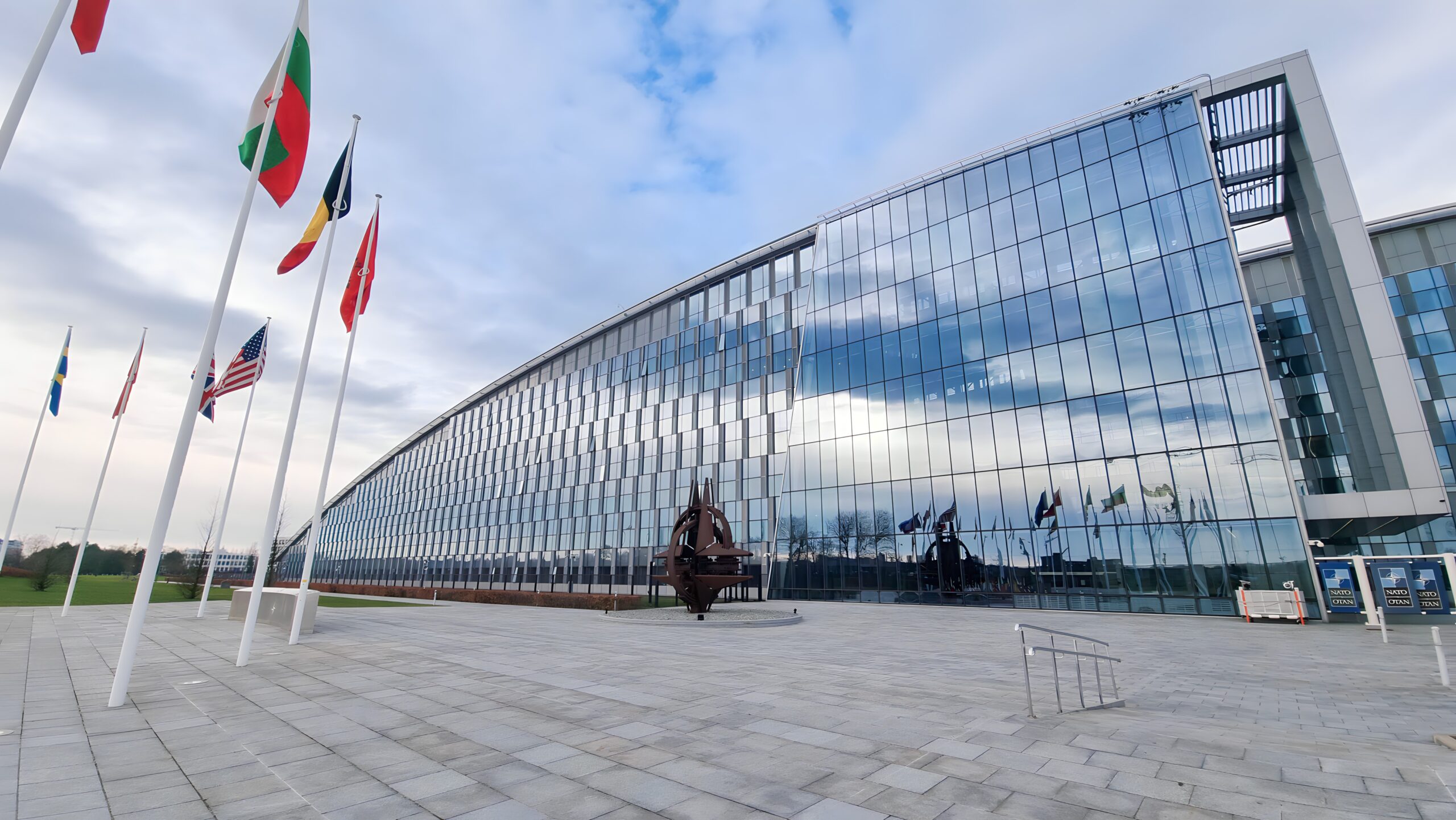
Students from the Colombia War College have visited NATO headquarters in Brussels for briefings on the alliance’s political and military structure and on its partnership with Colombia, the only Latin American country to hold partner status, according to NATO.
The visit on 24 September was hosted by the International Staff Political Affairs and Security Policy Division alongside the International Military Staff Cooperative Security Division. This year’s delegation for the college’s Advanced Military Studies Course brought in students from Argentina, Brazil, Ecuador and Mexico as well as Colombia, and the group was taken through the alliance’s decision making, roles and responsibilities after a tour of the building.
Captain Philippe Vitel, head of the Military Cooperation Branch within the Cooperative Security Division, addressed the students on why the alliance invests in relationships of this kind. “NATO faces challenging times ahead, with a growing global strategic competition and regional challenges,” he said. “Now, more than ever, strengthening cooperation with NATO partners such as Colombia is essential.”
Javier Colomina, the Secretary General’s Special Representative for the Southern Neighbourhood and Deputy Assistant Secretary General for Security Policy and NATO Affairs, gave a keynote on the alliance following the Ankara Summit. According to NATO, he also covered the partnership framework and how working with countries outside alliance territory makes the alliance itself safer, through contributions running from policy development and defence capacity building to interoperability work and crisis management.
The students then attended an expert panel on NATO-Colombia cooperation drawn from both the International Staff and the International Military Staff, concentrating on the Individually Tailored Partnership Programme that governs the relationship and on practical military cooperation within it. The NATO Defense College closed the day with a session on how senior military education connects to strategy and policy.
Colombia became a NATO partner in 2017, and remains the only country in Latin America to hold that status. The main areas of cooperation are cyber security, counter-terrorism and maritime security, the last of those reflecting a Colombian navy with long experience of interdiction work in the Caribbean and the eastern Pacific.
The traffic does not run in only one direction, since Colombia provides demining training to allies and partner countries through a Partnership Training and Exercise Centre at the Colombia International Demining Centre, an expertise built over decades of clearing explosive remnants from its own internal conflict, and one that has obvious application for allies supporting Ukraine with the same problem on a far larger scale.
Partner status carries no security guarantee and no obligation on either side, and sits well short of membership, which under the North Atlantic Treaty is open only to European states. What it provides is a structured route into alliance standards, exercises and education, which is most of what a visit of this kind is for.