

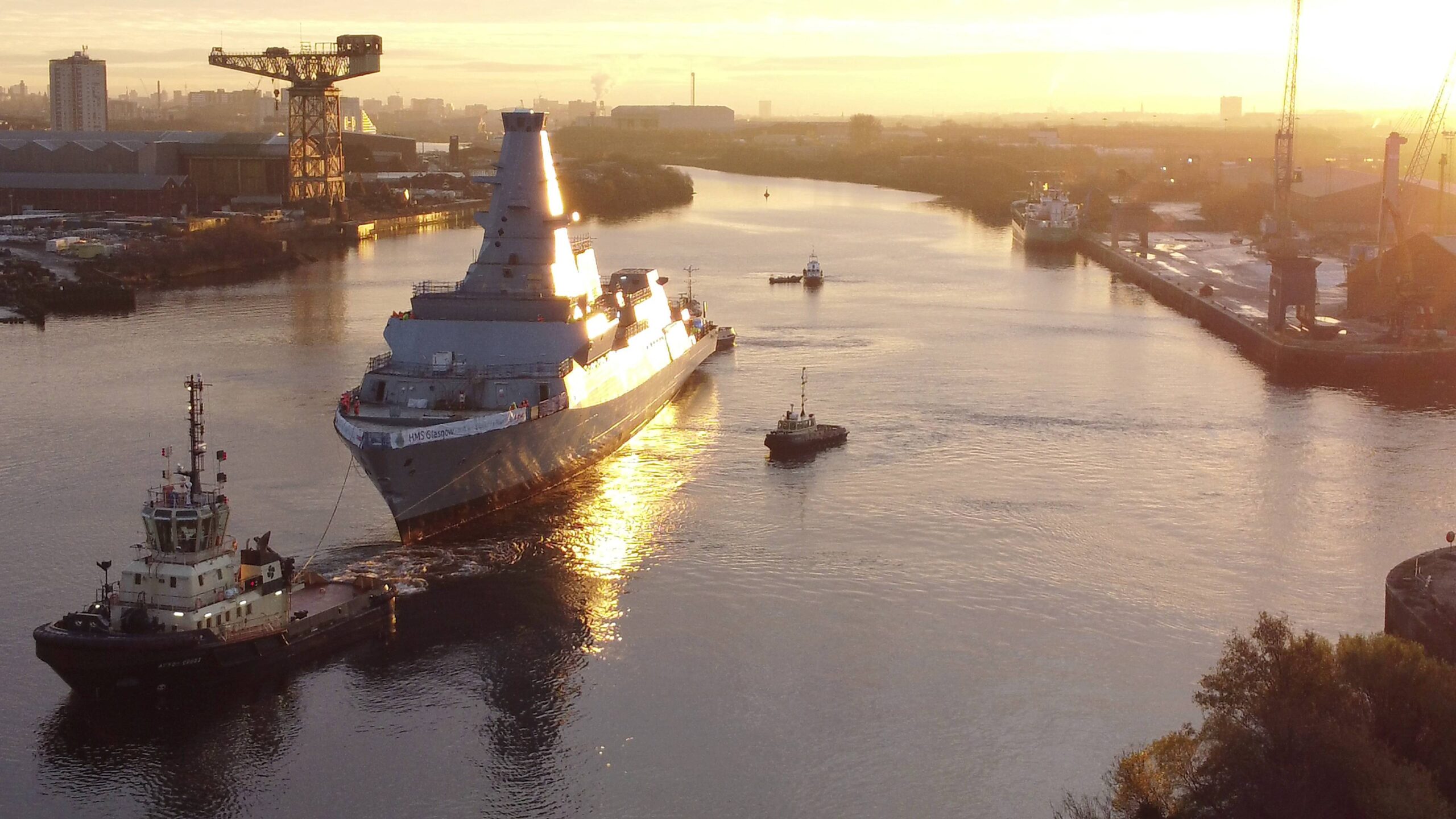
Norwegian defence planners are considering reducing the number of new frigates to be acquired under the country’s long-term force structure, according to reporting by Norwegian newspaper VG, amid rising costs elsewhere in the armed forces investment programme.
VG reports that the Norwegian government and senior defence leadership are assessing whether fewer frigates than previously approved by the Storting could be procured, as the overall cost of rearmament continues to increase. The outlet cites multiple sources within both the defence establishment and government system, while noting that no final decision has yet been taken and that the Ministry of Defence has declined to comment on internal deliberations.
Under Norway’s long-term defence plan adopted unanimously by parliament in 2024, the Royal Norwegian Navy was due to receive five new frigates. However, VG reports that the government is now working on a revised plan, with Defence Minister Tore O. Sandvik previously acknowledging that costs have exceeded the framework set by parliament.
A key driver appears to be submarine procurement. According to VG, the Storting has now unanimously approved the acquisition of two additional submarines, in line with advice from the Chief of Defence, General Eirik Kristoffersen, who has prioritised undersea capabilities. At the same time, the cost framework for the submarine programme has almost doubled, rising to around 96 billion Norwegian kroner. VG reports that the Ministry of Defence signed a contract with German shipbuilder TKMS for the additional boats last week.
“This means that bigger cuts must be made elsewhere, or more money must be put on the table,” VG states in its reporting, framing the frigate programme as one of several areas now under scrutiny.
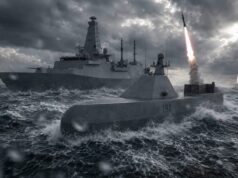
The issue also intersects with Norway’s developing naval cooperation with the United Kingdom. A strategic agreement announced by Prime Minister Jonas Gahr Støre and UK Prime Minister Keir Starmer envisages a new generation of frigates to be delivered by BAE Systems, with Starmer estimating the overall value of the deal at around £10 billion, or just over 130 billion kroner. However, VG notes that the political endorsement did not lock in a specific number of ships.
According to VG, the Ministry of Defence is now considering whether Norway could acquire fewer than five frigates in order to bring the revised long-term defence plan closer to the Storting’s approved spending framework of 1,624 billion kroner through to 2036. The newspaper adds that both the Red Party and the Centre Party have publicly argued for a reduction in numbers, favouring stricter prioritisation rather than an expanded financial envelope.
While the final decision will rest with the Storting once a revised plan is presented in the spring, the reporting highlights the growing trade-offs facing Norway’s defence modernisation effort as submarine, frigate and wider force investments compete within a constrained budget.






It’s good to know that UK isn’t the only nato country not taking their defence seriously
Norway takes its defence far more seriously than the UK ever will. This is just a question of how many large frigates the Norwegians actually require within their overall force posture.
Hardly the uk military is massively more powerful than norways
Well, they want to have more Submarines… Not exactly shunning their defence.
Most of Europe hasn’t taken its defence seriously enough for quite a while, however lately things have gotten better.
While I am not in favor of buying less of anything in this regard, I can definately see reason in buying more submarines instead. There is a very good chance submarines will , even more than already, become the most important assets for our navies.
Most of Europe hasn’t taken its defence seriously enough for quite a while, however lately things have gotten better.
While I am not in favor of buying less of anything in this regard, I can definately see reason in buying more submarines instead. There is a very good chance submarines will , even more than already, become the most important assets for our navies.
If we’re building fewer ships for Norway then maybe we could prioritise getting the RN’s escorts built at a sensible pace?
Just so long as the build slots they give up are the earlier ones rather than delaying our own replacements for only 3 ships.
MoD could step in and guarantee BAE that they can build 13 in total. That allows BAE to keep recruiting and training apprentices. One strategic lesson from the past 35 years, keep your defence contractors employed because trying to re-tool takes years and is disproportionately expensive.
👍 and the RN takes up whatever vessels the Norwegians dont want
That would be the sensible thing to do, which means it is not what will happen
Pretty much spot on, but it would be the clever thing to do.
You sound like a depressed teenager. Pull yourself together.
He’s saying what most of us are thinking. Let’s not introduce toxic positivity.
It’s a very similar contractual arrange the MOD does with the US, in particular when purchasing Chinooks. The Chinooks are originally earmarked for the US Army, but through a foreign sales agreement, Chinooks on the production line for the US Army are transferred to the foreign Nation. Though the US do add additional Chinooks on to the back of the order to back fill their original requirement.
Seems unlikely, as that would require the MOD (and by implication the Treasury) to actually make a concrete financial commitment to the defence of the realm.
Not entirely surprising. T 26 is bigger and more advanced than anything Norway has ever deployed. Given the size of it’s sovereign wealth fund, it’s hard to believe that financial constraints are the main reason for this possible change.
Norway doesn’t have a sovereign wealth fund per-say. It is a national pension fund and it can’t be used to finance government budgets.
Rich people (and presumably governments) don’t spend their wealth. They borrow super-cheaply off the back of the wealth and spend that instead.
Hi Jim It actually has 2 completely separately managed funds and both are labelled as Pension Funds and yes they cannot be used for government funding. They are Managed Sovereign Wealth funds but are labelled as Pension funds because their prime purpose is to underwrite future Pension obligations should normal Government funding not be sufficient to cover the cost (which is unlikely).
One is for overseas long term investments and the other smaller one is for Norwegian and Nordic ones, but both are funded by Norways surplus Oil Revenues.
However the sheer size of Norways Pension Piggy Banks compared to its population (<6 million) is beginning to cause problems and debate in Norway as to why they continue to invest all the surplus when it is already so large and growing in value due to the investment returns. To give you some idea their overseas fund is consistently rated to have the best return on investments of any fund on the planet (shame we can’t buy into it).
They are actually debating diverting some of that surplus to other uses such as Defence and infrastructure, which should help out.
I actually have family who live near Stavanger (moved from Stonehaven after U.K decided to kill our Gas/Oil industry). They and their Norwegian friends quite happily describe the U.K Governments of recent years as the “Biggest bunch of idiots on the planet”, when it comes to our energy policy. Why import Gas and Oil when we sit on lakes of it when we could use it ourselves, export it and use the money to go Nuclear, lower prices and invest for the future.
Norway has used its oil / gas revenue to “Go Green” for their long term energy needs and save for the future, Massive Hydro Electric, heated road surfaces in winter and the highest % of EV’s on earth.
IMHO Milibrain should be booted over to US with his Brother !😖
ABCRodney, wish I could give a 👍 😆
I also love the fact that Norway used their cash to build lots of hydro schemes. They now flog this hydro power to UK, Netherlands etc at prices based on international energy prices (i.e. gas) so pocketing even more ‘profit’. Kerrrching!
because in the UK it would be invested. we could have our own Sovereign Wealth fund but some one thought it better to use most of it for tax cuts
sorry should say “wouldn’t be invested “
Not true. Under current rules, 3% of the value of the fund can be used to finance government expenditure, say £ 60b per year. Norways total defence budget in 2025 is @£8b.
There is nothing to prevent the Norwegian parliament from increasing the percentage – it was 4% at one time.
So lack of money is almost certainly not the main reason for any change in commitment.
The announcement was always up to 5 ships. Three is a pretty good number and it allows is to grow our own fleet faster which is more important than export jobs at the moment.
No, Jim. It was always five with an option of a sixth.
Europe isn’t serious about defence
What part of replacing frigate purchase with submarine purchase was too difficult for you to understand?
It’s not hard to understand, it’s just difficult for the doom mongers to complain about so they ignore those bits.
Yes the site does seem to attract lots of Private Frazers who seem to enjoy wallowing in doom mongering…
😁👍😂
🤦♂️
And an SSK provides precisely what AAW capability?
None, which is exactly the same as an ASW frigate like the Type 26.
The Type 45s are the AAW warship, Noway isn’t buying these.
I mean they do provide AAW capability, not on a destroyer level but better than nothing.
Having air-defence capabilities and being AAW specialist are two different things. 🤦🏻♂️
You said they provided none, but they do.
🤦♂️🤔🙄🤦♂️
And European complain when Trump treats them like spoilt adults still living at home under daddy
And Americans continue to struggle with reading.
(Assuming you are American of course, I hear the weather in Moscow is pretty cold right now, can you confirm?)
Ah straight to some personal attack , I must have hit a nerve with a bit of hard truth.
It wasn’t a personal attack, it was a statement of fact. It’s very obvious you didn’t bother to read the article.
That’s rich coming from a President that behaves like a petulant spoilt child…
For everyone complaining about a lack of Norwegian commitment, this isn’t a total forces cut. They’re just considering replacing two frigates with two submarines, rather than adding two submarines overall.
The RN considered a similar proposal under Ben Wallace IIRC.
And at the moment the USNs only dedicated ASW assets are Submarines as they have zero ASW Frigates. Norway has to choose between which asset serves their needs best but keep an eye on manning as they have less than 6 million bods.
Let’s all be a bit serious for a moment.. with the not being serious about defence and consider scale Norway is not the UK it’s got a population of 5 million and a GDP of 0.5 trillion.. we have 12 times greater population and almost 7 times greater GDP.. so 3 large warships and 8 submarines for them is the equivalent of 21 type 26s and 56 electric boats for us. The U.S. with its population of 450 million and 30 trillion has 90 times the population of Norway and 60 times its GDP so let’s say scales to 180 major warships and 480 Electric submarines..
We are so used to singing to the US we forget to look at the facts.. most US defence spending is related to exquisite strategic systems purely in regards to U.S. global power and not related to NATO defence..
yeah,
what did the americans ever do for us ?!!! 😁
Brought the word ‘like’ to the forefront of the OED? (Repeatedly)
This Is Wat I Iz sayin Like, init bro.
Apart from type 3 diabetes and morbid obesity ??? not much
Good point Jonathan that so many overlook -. Norway has a tiny population and GDP compared to us, so 5 T26 and.extra SSKs is no mean feat.
Correction though – I think the population of the USA.is 330 million, not 450 million. They are generally 5 times our population.
Hi Cripes, yes your right 350 million, going on my mid 50s memory sometimes causes slips.
Hi Jonathan. I may not like their thinking but it makes a lot of sense, Norway may have money but they don’t have a huge population, and have done some maths.
Fridtjof Nansen Frigate crew size 120 so 4 of them = 480 in total (it was 600 but one had an RTA).
T26 Frigate crew size @160 so 3 of them = 480 (rather than 800 for 5).
Type 212CD Submarine crew size 30 so 6 of them = 180 of 360 if you have 2 crews per boat.
Honestly it makes a lot of sense and even 3 extra to be built helps cut the costs within the supply chain of our T26 as it counters the effects of RAN cancelling 3 Hunter class.
And we don’t yet know they are moving to the 3.. I suspect they may settle on 4 as they have been running with 4 frigates for almost 8 years now.. so it would not cut their capability… four would make sense.
So HMS Edinburgh, the last of the RN’s T-26s will be rolled out when 2030? probably later?
Where does building ships for Norway fit into the schedule?
As much as the shipyards need this work, it feels like this order will just delay the RNs procurement.
I believe HMS London is the final Type 26.
Looking at the projected build rate of the T26, can’t see us building all 8 for the RN by 2035. If they take 18 months each to build, which is not a lot for a major warship, it would take 12 years to get them all, so 2038 for the last one.
The budget will likely prevent them being built faster, we don’t have £1.2 bn a year to spend on it, so spreading it over 18 or 24 months will appeal to.the RN, despite the fact that this will jack-up the cost.
Because of course, Bae are building them one at a time (heavy sarcasm)
Which bit of the budget constraint did you not get?
Difference between Norway reducing the order size and all those times the UK has is that Norway has replaced them with two submarines – in other words, they aren’t reducing for financial reasons, they’re reducing because they feel the extra submarines will provide a better mix for the job.
So much for the shared T26 resources in the North Sea and North Atlantic.
If they do this, they can go to the back of the queue – no jumping for Belfast or Birmingham to be transferred to them. That will help them with costs 😜
And if they promptly stick 2 fingers up to us then our costs rise and we lose credibility, one of the reasons we got the order was an agreement to fast track it. Have you never noticed that France and Italy have ran circles round us for 40 years on warship exports. Simple reason is they see a ship in the queue as an opportunity to export and then just order another one.
Italy ordered 10 FREMM Frigates, sold 2 brand new off the line to Egypt (replaced the orders). In addition they are selling 2 existing ones to Greece, build 2 new ones for them and replace the older ones with a new improved FREMM NEO.
So order 10 get 10 and build 16 ! Good business and I suspect they may not be done yet (Brazil may want some of their older ones).
I agree if I’m playing devils advocate for the Treasury. Give Norway an early slot which helps kick the cost can down the road and then straight through with the rest of the RN ships with 2 or 3 for Norway at the end. By next year we will be getting a steady flow of type 31s which should be upgraded for the last two to include ASW capabilities from the go. Then order another 3 or more for resale of our first 3. That’s how you do it in a business.
Then you order a couple of battle cruisers to keep up with the Jones’s and keep the carriers company. They wouldn’t fit in the shed though.
They would be breathtakingly magnificent and powerful. The big cats pt2.
There is zero news of ASW upgrades for T31, i dont know where youre getting that idea from.
Why has the ‘rule of 3’ never, seemingly been applied to our Frigate orders? Especially now ….. “in this heightened period of tension” ….. and off the back of the latest Defense Review where we are (quite rightly) supposedly bolstering our SSN numbers (back to 12). The Review should have squared that circle of Frigate numbers up. It goes to show, “in this heightened period of tension” the bean-counters still hold all the cards at the expense of well thought-out, pragmatic operational thinking, based on many decades nee centuries of experience, much of it in combat!
And then you remembered to factor in the budget, always an inconvenient hindrance.
That is likely why we order 8 T26 rather than 9, so 3 at sea, 3 alongside and 2 in dry dock. Similarly 5 T31 rathet than 6 – 2 at sea, 2 alongside, 1 in dry dock.
So the AUKUS SSN could more likely be 10 rather than 12, ratio 4:4:2.
Because there’s no such thing as a “rule of 3” except on internet fanboi sites.
Sure but the 8 number is just because were replacing the 8 T23 ASW, not a strategic choice.
Is this site a “fanboi site” ?
🤔😁
(It’s ok, you don’t have to answer, I know that the implication that anyone who comments here must be a “fanboi” 😁😁😁) (have you been on here long ?)
I thought it was the rule of eight plus a flotilla leader.
I have never, ever, known the UK Govt cut warship orders, have you?
What must the Norwegians be thinking.
On a serious point, there is reciprocity in the business arrangement and a cut in orders would hurt some of their manufacturers, as well.
I wonder what clout they have with Govt.
I would think very little clout. Norway sounds like it’s in the same kind of position as we are with our DIP – the military wishlist rather exceeds the budget, so procurement has to be trimmed. The suppliers will just have to live with 3 or 4 frigates rathet than 5.
It’s not just budget they don’t have a big population and Norwegian Labour costs are eye watering. Big jump from 480 to 800 just for Frigates !
The Sovereign wealth fund is more than capable of funding a navy bigger than ours, they just don’t want to because they still believe the Yanks will save them
Except for Poland and the Baltics everyone is at it, they are all talk and no action. If the Ukraine war ends in a couple of years once Pooooootin has his blessed Donbas I suspect it will be business as usual and Europe will sit back and wait for Trump to go and then we can hide behind the North American colonies again. So much for a war footing, so much for an existential crises facing Europe, just the same old blether and watch the welfare budget surge once more. Better get Russian onto the GCSE syllabus PQQ. Norway are sitting on the biggest Sovereign Wealth Fund imaginable, they can afford anything they like.
Forgetting Germany are we?
Lots of Kremlin trolls out and about at the moment, I suspect the omission of Germany and ignoring that this isn’t a cut are part of an agenda.
An opportunity to make an early start on the MRSS strike frigates.
What?
Well, if BAE have 2 frigate building slots going spare why not dust off those strike frigate blueprints and get cracking with MRSS? 🙂
Because that’s not any good for MRSS?
Well, they shouldn”t waste an opportunity….more batch 2 Rivers perhaps 😂😂😂
They need agreed designs on the books for a fill in if they can’t agree on something else. In my opinion it should be the Type 31 for Rosyth and I don’t know what for Govan. Could do worse than Batch 3 Rivers with a hangar. However there are no frigate building slots free at Govan for the next decade.
Yes, of course. I was just trying to put a problem = opportunity perspective on the news. Regarding the BAE/ T26 budget / B2 Rivers saga, its worth noting how well things can turn out if you decide to make the best of a bad job. We might be down to half a dozen frigates but we still have a global defence engagement presence and a high-low mix which is good for training, career development and recruitment. We will also have the affordable T31 ‘GP’ frigate fleet; hulls with significant growth potential. We will in fact, have grown the global fleet to 24 but only 19 are frigates.
Where do you get 19 frigates from?
T23 are kaput and won’t be on the books for much longer.
That leaves
8*T26
5*T31
My mistake …19 ‘escorts’. 13 frigates and 6 destroyers.
Haven’t you heard? Cables down are they; wonder why?
An early start on a program that began in 2000?
Guessing before long it will be reduced to 1….
No? Why would they do that.
On The Line with Vice-Admiral Angus Topshee
Interesting interview about the RCN but of particular interest was of using Naval Reserve stations for the initial weeks of turning up 9 – 5, getting kitted out, using the time to assess the candidate and whether they really are a worthwhile fit into the RCN and then allocating them training time on a shore based establishment where more in-depth studies would be taken as to their potential speciality at which point, FE colleges would do, for example, electronics training leaving the RCN to deliver more in-role training.
Given the number of TACs that sit fairly idle in the UK for most of the week, I was prompted to think, whether that might not be a good use of resources.
It would give added billets for JNCOs/SNCOs with regard to training people in basics, reduce the stress on the recruits going from ‘home with Mum and Dad’ to 24 hour Army barmy (choose your Service) and allow for expansion of the Armed Forces in times of war because we had a larger cadre of JNCO/SNCOs, junior officers.
Just an idea, thoughts?