

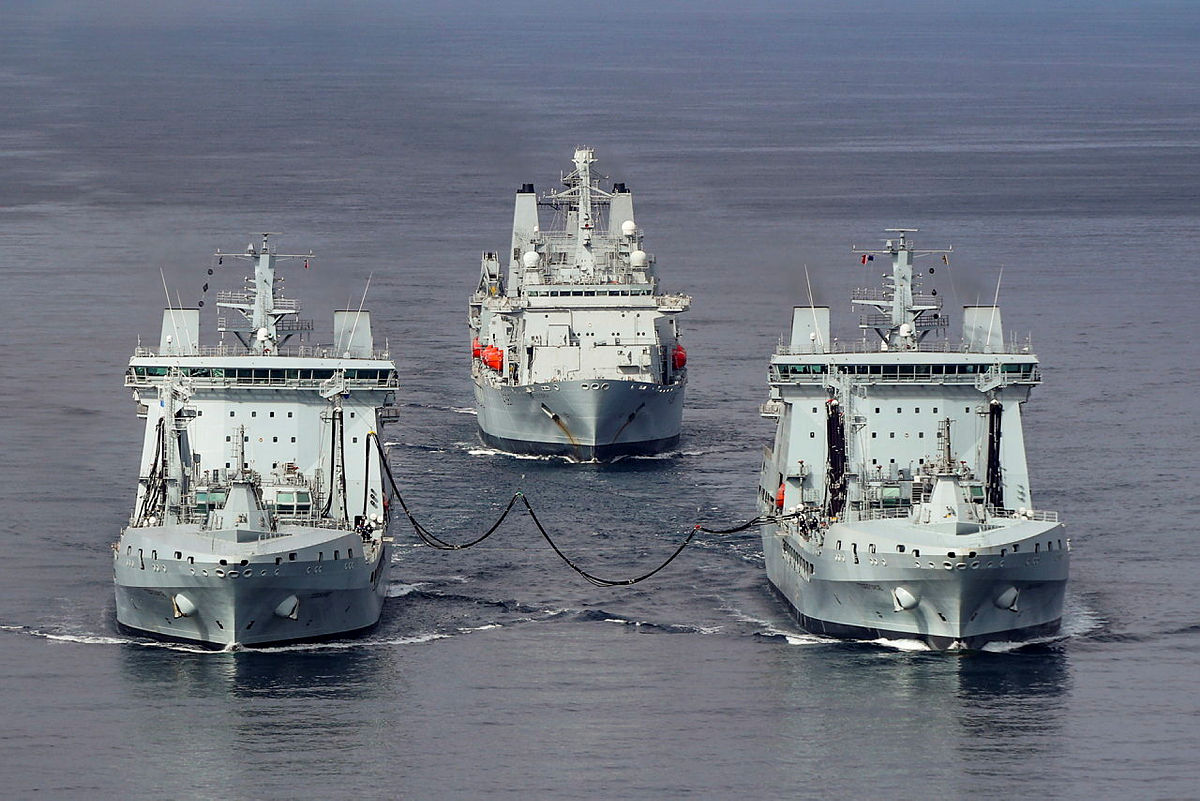
The Ministry of Defence has confirmed that only a minority of Royal Fleet Auxiliary personnel currently work a three-month on, three-month off rotation, after the issue was raised in Parliament over claims in recruitment material.
In a written response to Labour MP John McDonnell, Defence Minister Louise Sandher-Jones said the option to opt into a reduced assignment length remains available to all RFA seafarers, but is not the standard model. She confirmed that, as of January 2026, 10% of permanent employees had chosen the arrangement.
Sandher-Jones added that wording on the recruitment website suggesting the three-month rotation was the default has now been removed.
The question follows wider debate over RFA recruitment, retention and employment conditions, as the service continues to face workforce pressures and remains central to sustaining Royal Navy deployments. McDonnell also asked whether the Ministry of Defence would compare RFA contractual employment conditions with those used on outsourced maritime service contracts. In response, Sandher-Jones said the department was continuing work to transform the RFA workforce framework in line with operational requirements, and was drawing on best practice from across the wider maritime sector.
“As part of the continued transformation of the Royal Fleet Auxiliary’s workforce framework in support of Defence operational needs, the Department continues to draw upon best practice across the maritime industry, proactively engaging with stakeholders to inform future policy,” she said.
Further questions sought clarity on operational crewing levels and the proportion of Royal Navy tasking currently being delivered by the RFA. Veterans Minister Al Carns said RFA vessels were maintained at safe-crewing levels sufficient to meet operational commitments, but stated that detailed figures were not disclosed for security reasons.
“The Royal Fleet Auxiliary (RFA) maintains its vessels at the required safe-crewing levels to meet all operational commitments,” Carns said, adding that the department was taking measures to improve recruitment, training and retention.
On the scale of the RFA’s contribution, Carns said the Royal Navy and RFA operated as an integrated maritime force, but that no formal proportion was recorded between the two organisations for operational activity. “The Ministry of Defence does not record a proportion between RN and RFA for operational activity,” he said.
McDonnell also asked whether the Ministry of Defence would establish hourly pay rates and annual hours across RFA seafarer grades. Sandher-Jones said work was already underway to redefine terms and conditions, including salaried obligations, and that this would inform future pay and reward reforms.
“We are already working to redefine Terms and Conditions of service for the Royal Fleet Auxiliary, including salaried obligations,” she said, adding that the work would help shape a strategy aimed at improving lived experience and optimising capability in line with the Strategic Defence Review.









3 months away from home is a long long time….that’s a job for someone who is single…
So 90% of the staff are at a disadvantage by having less leave for the same money and same role. How can some do 90 days on for 90 off and others do 120 days on for 90 off? Sounds like some inequality or discrimination.
Imagine spending 3 months on one of those ships with Halfwit…
Harsh but fair !
You would probably get a trials bike and spend your off hours bouncing around the ship. Oh Lordie I can see it now…
How long have they been working on this??? Seems to be taking an inordinate amount of time and effort to come with an equitable pay and reward structure for such a small cohort of seafarers. I sense that dead hand of HMT here…
Cheers CR
RFA people have been ignored, downplayed and not understood for a number of years now! Essential part of the RN, boost pay, better conditions, better pensions and therefore it’s going to boost recruitment! Skilled seafarers who’s goodwill has now been quashed!