

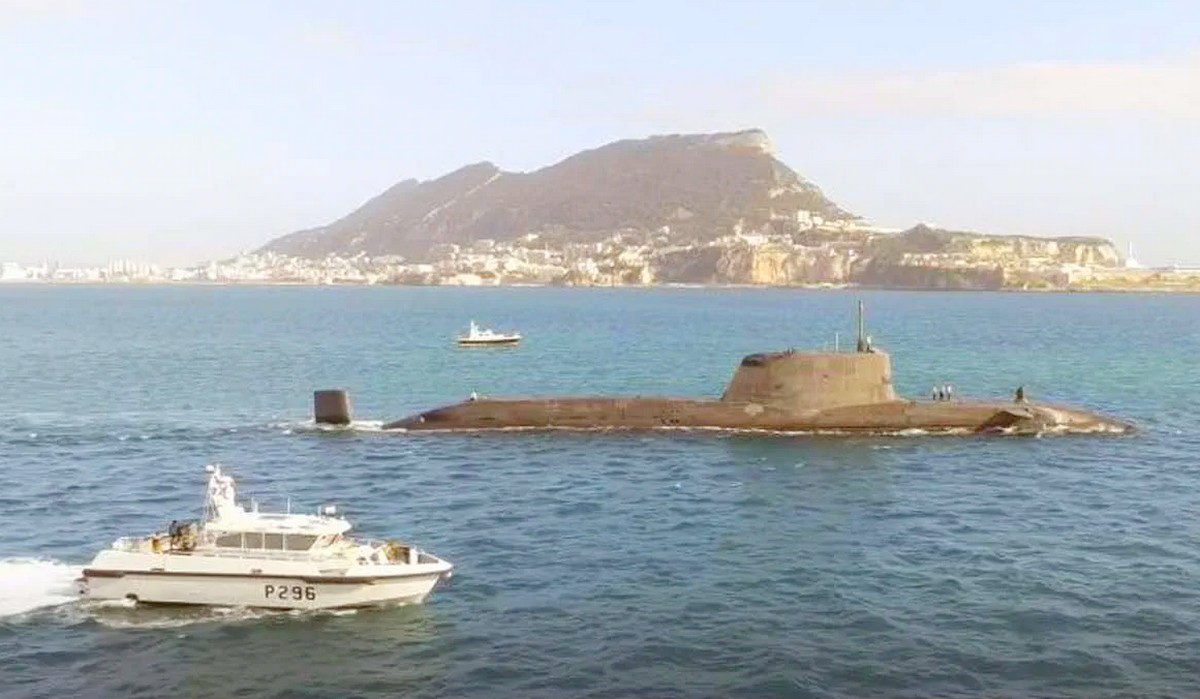
A Royal Navy unit based in Gibraltar has begun using small quadcopter drones to support surveillance and security operations around the British Overseas Territory, including monitoring visits by major UK warships, according to the Royal Navy.
The Royal Navy Gibraltar Squadron has introduced the ANAFI Parrot drone into its intelligence and monitoring toolkit, enabling personnel to gather aerial imagery during patrols and maritime security activity around the Rock. The drones have already been used during visits by large Royal Navy vessels to the territory.
Personnel in Gibraltar also worked with naval aviation, safety and maritime specialists to streamline the approval process required for operating small drones from ships and boats. Previously, the clearance system known as “ship-air release” was designed primarily for larger and more complex aircraft systems, meaning approvals for lightweight drones could take weeks or months.
The revised approach, described by personnel as a “tailored route”, introduces new documentation, risk assessments and procedures, alongside a supporting application, which has reduced approval timelines to a matter of days. The process was tested using ANAFI Parrot drones operating from the patrol vessels HMS Cutlass and HMS Dagger, as well as launches used by the Royal Navy Gibraltar Squadron.
According to the Royal Navy, the simplified accreditation route could now be expanded to other platforms including the experimental vessel XV Patrick Blackett, diver support craft such as Vahana boats, and vessels operated by 43 and 47 Commandos.
Lieutenant Commander Jonathan Davies Royal Navy, Commanding Officer of the Royal Navy Gibraltar Squadron, said the drones have already improved operational awareness.
“The ANAFI drones have enhanced our ability to deliver effective surveillance during both routine patrols and major tasking,” he said. “Whether supporting Intelligence gathering tasks or protecting high value units such as the Carrier Strike Group, the system’s clear imagery significantly improves situational awareness and supports tactical decision making.”
He added that integrating remotely piloted systems more closely into maritime operations reflects the service’s wider adoption of modern technology.
“The improved integration of remotely piloted systems reflects the Royal Navy’s commitment to adopting modern technology that delivers operational advantage. As the Squadron continues to refine its procedures and explore more opportunities to further enhance its use, drone technology will play an increasingly important role in supporting both routine patrols and high-profile maritime security activity.”






Saw my first Parrot drone at a company I haven’t worked for since 2012, I’m sure they have come some way since then but excitement over using them in 2926 and describing them as ‘modern technology’ hardly inspires me to think we have got to grips as yet with keeping up with developing technology, even at the cheap end.
The big problem with using cheap drones like this is that it enables tasking for manned ships even with a 50cal to melt away.
The threat of a heavy machine gun with a trained operator is a pretty good answer to most stupidity.
I guess that’s what you do when you have no ships at your disposal…
You get Gibraltar involved in war as well 😡 Cyprus involved,, who’s next ?? Well done UK 😡👎✌️👌 Poor Gib Monkeys,,drone spotting soon ??
Left it up top ,,ok 👍
Doesn’t apply in this case though, does it.
Gibraltar has a River B2 OPV, it has Dagger and Cutlass, and 3 RIBs.
The GDP also have RIBS.
A small Drone is a useful expansion of their underway surveillance kit, it doesn’t replace ships.
So here, they’re useful.
Using toy quadcopter drones is not the flex MOD thinks it is
really handy that, drone’s to defend the wrong end of the mediteranean, never has the labour gene pool been so low, the cupboard is bare !
A NAF Parrot Drone.