


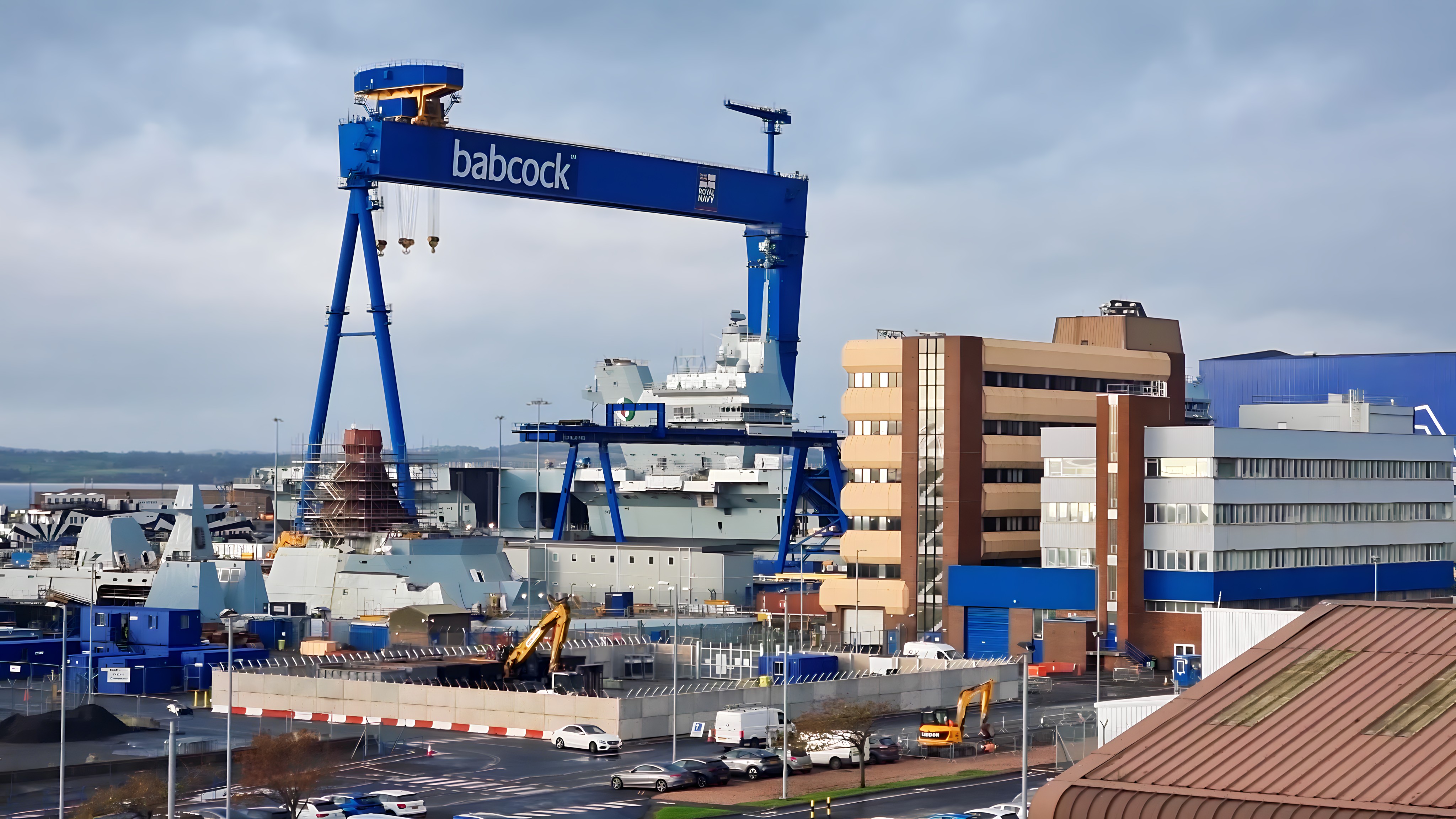
Deputy First Minister Kate Forbes has set out how the Scottish Government is seeking to strengthen the skills base behind major shipbuilding programmes such as the Type 31 frigates at Rosyth.
Speaking to me at the yard, Forbes said advanced manufacturing and shipbuilding have been central to recent skills interventions. “Advanced manufacturing, shipbuilding have been a key focus when it comes to our skills interventions,” she said, pointing to investment in the Clyde maritime cluster where funding was directed on a sectoral basis and leveraged alongside private sector support to focus on maritime skills.
She said the intention is to apply a similar approach in Fife, working alongside Babcock and local institutions. “What we’re looking to do here in Rosyth is work with Babcock to make sure that there is similar investments in Fife College, for example, in facilities here, so that there is that pipeline of skills.”
Forbes acknowledged that Scotland’s comparatively tight labour market presents challenges. With unemployment lower than in the rest of the UK, she said there is a need to broaden the intake into the sector. “That implies that we need to essentially expand the pipeline, invest in people that wouldn’t otherwise have thought of a future in shipbuilding.”
She referenced work to support apprenticeships, including engagement with fifth and sixth year pupils who might not traditionally have pursued that route.
Forbes also highlighted workforce retention and diversity. She said she had been struck by the number of women working on site and by support offered to parents returning from maternity leave. She mentioned a recent initiative aimed at supporting mothers and fathers of premature babies who require extended leave. “So all of that is retaining the workforce,” she said.
Speaking later, Forbes added:
“It is a landmark day with two key milestones, and we are incredibly proud of the skills and the brilliance of the workforce here at Rosyth. But you know, in other sites in Scotland too, who have delivered such a brilliant physical manifestation of shipbuilding in Scotland. And I said in my speech that I’m incredibly proud that shipbuilding is, once again, synonymous with Scotland. And it’s not just about our contribution to national security here in the UK. It’s also the recognition from global governments about the brilliance of our workers, the cutting edge technology and the investment that is being made in shipbuilding in Scotland.”
The Type 31 programme supports around 1,250 jobs directly at Rosyth, with a similar number across the UK supply chain.




You have to laugh. Is this why the SNP Government refused to provide support funding for the Clyde Shipbuilding Welding Centre?
Properly crackers.
Jumping on the bandwagon now they can see this actually creates and sustains real manufacturing jobs.
That new Babcock logo is terrible.
Logo dreadful but at least making an effort on cost effective warships so I can forgive them the graphics snafu.
They did mention the meaning , but it sounded just bollocks.
Idiots, do you want the jobs that go with military industry or not??? And yes, worst “square-peg-in-a-round-hole” logo ever award goes to Babcock.
An election is arriving soon, perhaps?