

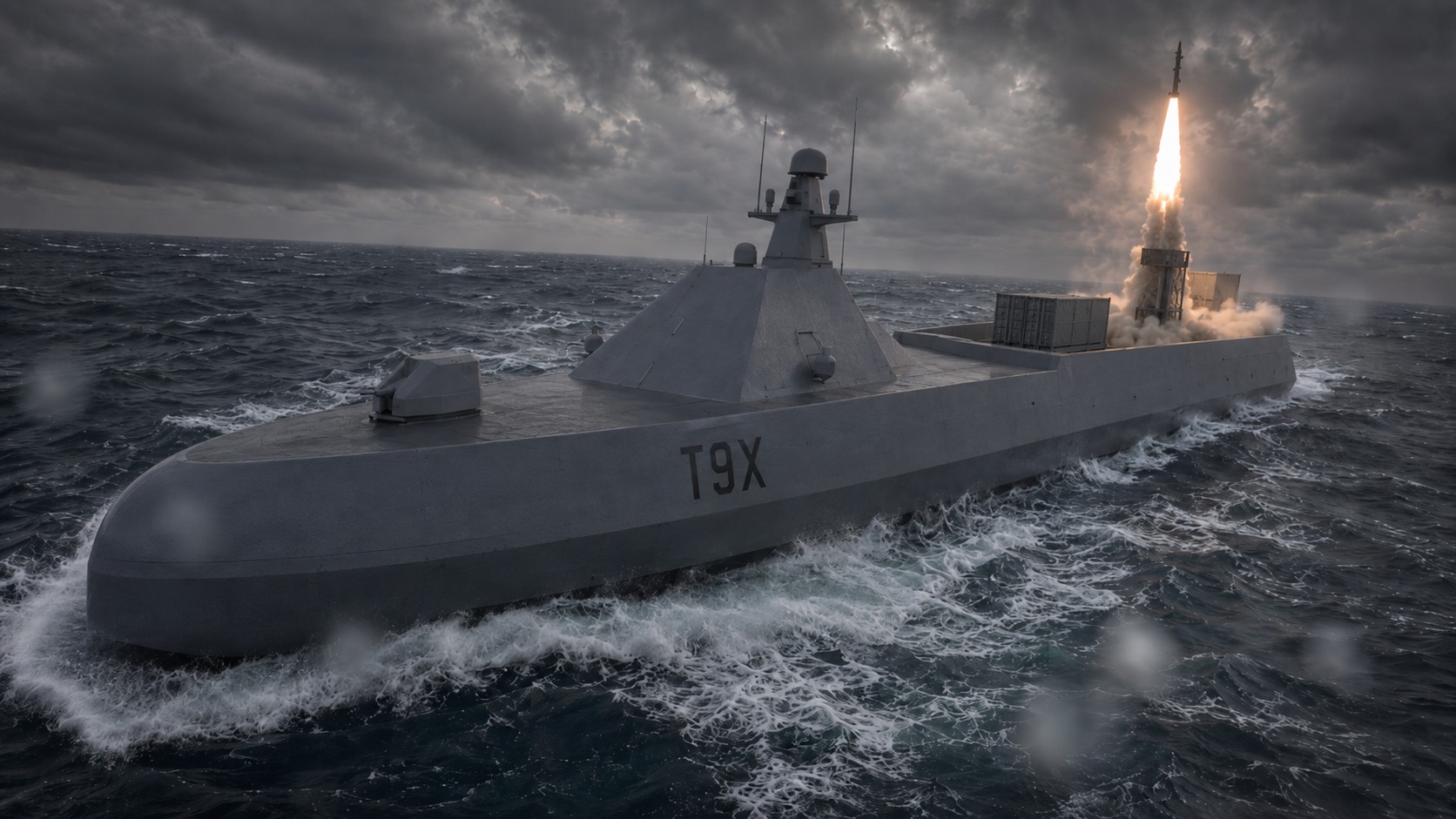
The Type 83 destroyer was an early-stage concept on which no decisions had been made about where or how it would be built, the Ministry of Defence has said, responding to concerns that its cancellation will cost jobs at BAE Systems’ shipyards on the Clyde.
Andrew Bowie, the Conservative MP for West Aberdeenshire and Kincardine, asked what assessment had been made of the potential impact on employment at the Clyde yards of the decision not to proceed with the programme, which had been intended to succeed the Type 45 destroyers as the Royal Navy’s dedicated air warfare ship before the Defence Investment Plan dropped it in favour of the hybrid navy approach.
The question follows analysis published by the UK Defence Journal this month of what the cancellation could mean for the big warship yards, which noted that the dropped generation of crewed ships, the Type 83 and the never-numbered Type 32 frigate, might have amounted to perhaps eleven large and complex hulls whose steel and thousands of skilled jobs would most likely have concentrated at the Clyde and at Rosyth.
Those figures are estimates based on what is known so far of programmes that were never contracted, and any impact on the yards was always a possibility rather than a plan, since neither ship had been assigned to a builder, but measured by tonnage and man-hours, six command ships and a fleet of smaller, simpler uncrewed vessels would likely not match the work the cancelled programme represented, though the sum looks different once the measure is hull count and the number of yards able to take part.
Minister for Defence Readiness and Industry Luke Pollard replied on 10 July that the plan “has committed to a pipeline of work in Type 26 and Type 31 construction which will employ the prime Scottish shipyards (BAE Systems and Babcock) well into the 2030s, securing thousands of jobs and millions of pounds of economic benefit to the local areas.” On the cancelled destroyer itself, he said: “Delivering world-leading anti-air warfare capability for the Royal Navy has always been a priority for this department as set out in the Strategic Defence Review and the DIP. The Type 83 destroyer was an early-stage concept, and no decisions had been made on where and how it would be delivered.”
The minister pointed Scottish industry instead towards the uncrewed programmes replacing the Type 83’s role. “The DIP made commitments to the Common Combat Vessels and Type 9x autonomous vessels as part of the hybrid navy. This work presents a substantial and exciting opportunity for Scottish shipyards, boatyards and technology companies to sustain and create jobs across the shipbuilding enterprise and supply chain,” he said, adding that the government is focused on providing a clear and transparent pipeline of work in support of the Royal Navy and as a spur to sectoral growth.
The “Type 9x autonomous vessels” comprise the Type 91 uncrewed missile platforms, the Type 92 uncrewed underwater sensing platforms, the Type 93 extra-large uncrewed underwater vehicles and the Type 94 uncrewed sensor platforms, which will work alongside the Common Combat Vessels and the eight Type 26 and five Type 31 crewed frigates in what the Defence Investment Plan describes as a once in a generation investment in new maritime capability.
The air defence task the Type 83 would have inherited now falls to the six Common Combat Vessels, timed to arrive as the Type 45s retire from the mid-2030s, operating alongside the uncrewed platforms they will coordinate, and the uncrewed escorts are not confined to the air defence group, with the Type 26 and Type 31 frigates each expected to operate accompanied by a number of drone escorts, spreading the family across the surface fleet. The department said separately on the same day that no service entry date has yet been set for the Type 91.
The answer’s logic on employment is that a ship never assigned to a yard cannot have cost that yard jobs, with the Clyde’s future resting instead on the Type 26 line, which Pollard told a committee this week has been extended by fifteen years through the Norwegian export deal, while the follow-on question for Rosyth after the faster Type 31 run has been publicly linked by the minister to the Common Combat Vessel.
Where the Type 9x vessels themselves will be built has not been announced, with the Type 91 still in its concept and assessment phases and the Scottish Labour MSP Paul Sweeney having told the UK Defence Journal this week that the government should formally designate the core surface shipbuilding sites and directly award work to smooth the demand signal across them, we can only wait and see.
The justification on scrapping plans for Type 83 also came in a written parliamentary answer from Luke Pollard on 10 July, responding to Andrew Bowie, the Conservative MP for West Aberdeenshire and Kincardine, who asked what assessment has been made of the impact on the Royal Navy’s high-end air defence capability of cancelling a planned class of up to eight Type 83 destroyers intended to replace the Type 45 fleet.
“The decision to move to this hybrid approach was taken after detailed analysis of current and future threats, including lessons from ongoing conflicts,” Pollard said. “The specific analysis is necessarily classified, but the mix of crewed and uncrewed systems will produce a more flexible force, with greater missile capacity while also improving mass. The alternative, an expensive, exquisite platform such as the Type 83, would have resulted in too few ships to cover all the Royal Navy’s tasks, increasing risk.”
What’s what?
Type 91 — uncrewed missile platform. The “missile barge” concept: an autonomous surface vessel carrying missile silos to add magazine depth to the fleet, part of the future maritime air defence and strike mix alongside the CCVs. A prototype is aimed to be in service by 2030, no class service entry date set. The May RFI for silos that can stay ready to fire for 30 days unattended aboard uncrewed vessels is almost certainly its enabling technology.
Type 92 — uncrewed underwater sensing platform. A submarine-hunting and underwater surveillance drone, the ASW and seabed-monitoring element of the family. Sits naturally with the undersea infrastructure protection push, though the MOD hasn’t detailed it beyond the designation, it’s likely to pull a towed array sonar and be a surface vessel.
Type 93 — extra-large uncrewed underwater vehicle (XLUUV). The big autonomous submarine, building on the XV Excalibur trials from Plymouth, with payloads developed through AUKUS Pillar 2, which the DIP identifies as the partnership’s signature project. Also in the by-2030 first-vessels aim from Friday’s answer.
Type 94 — uncrewed sensor platform. The surface counterpart to the 92: an autonomous picket ship extending the fleet’s radar and sensor coverage, named alongside the Type 91 in the maritime air defence mix that replaces the Type 45’s role.






Does seem to be a pretty arrogant assumption that the Clyde would be building the T83 when there are two other surface yards run by competing warships producers.
Yes, but it is a realistic assesment.
I think it’s pretty arrogant to think that half of this will ever come to fruition. Financial reality will hit this government and the welfare party won’t priorities defence over benefits.