

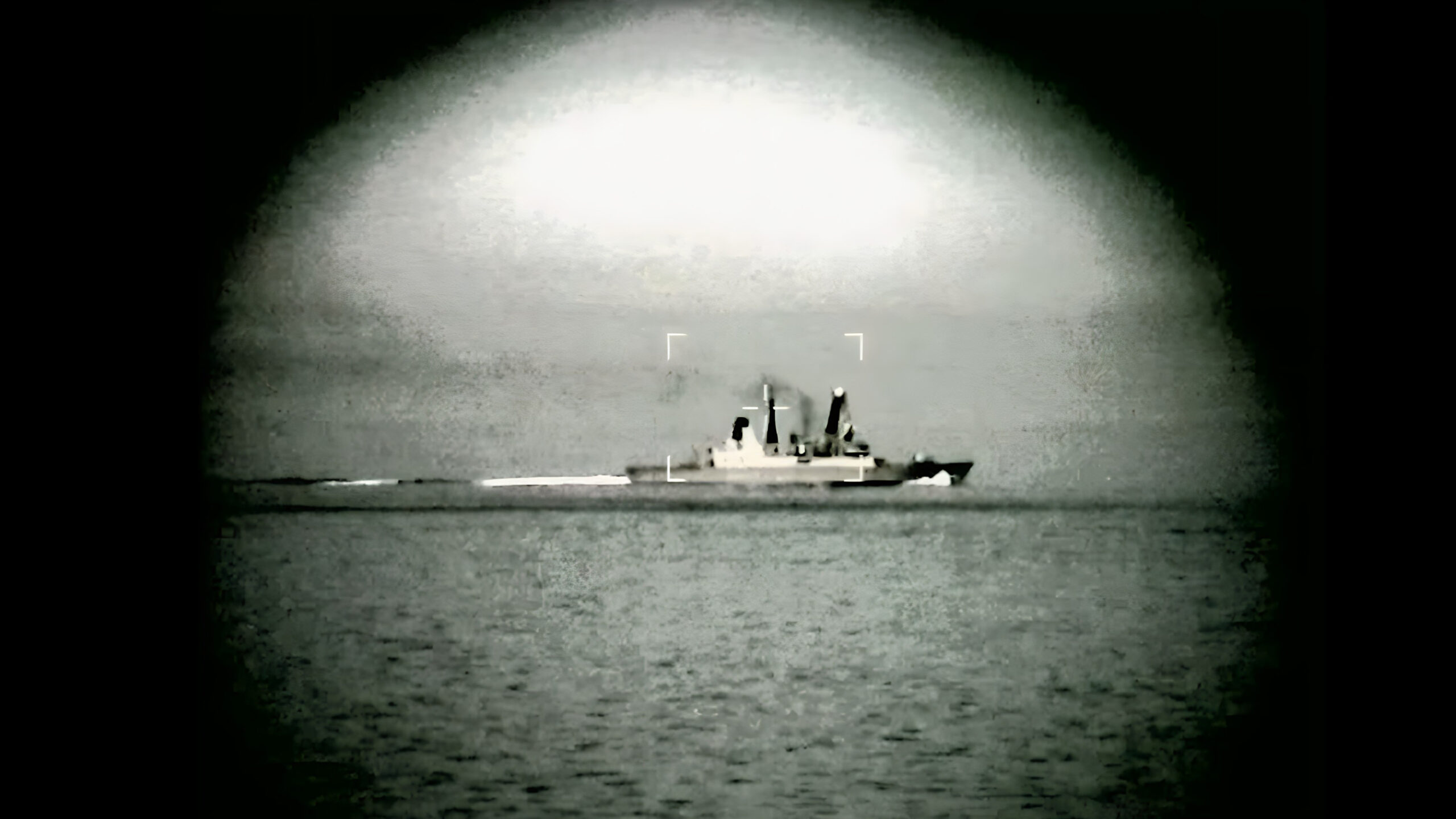
The Royal Navy Type 45 destroyer fleet is expected to remain in service until the late 2030s, with the final ship scheduled to retire by the end of 2038, the Ministry of Defence has confirmed.
Responding to a written question from Conservative MP Ben Obese-Jecty, Defence Minister Luke Pollard did not provide individual out-of-service dates for each vessel.
“On current plans, the last Type 45 Destroyer will retire from service by the end of 2038,” he said.
Pollard added that the Royal Navy does not release decommissioning timelines for individual ships, citing standard policy on operational information.
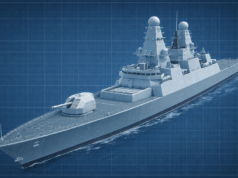
The Type 45 destroyer, or Daring class, comprises six guided-missile destroyers built for the Royal Navy in the early 21st century. The design is focused on air defence, built around the Sea Viper system, which combines the SAMPSON active electronically scanned array radar with the S1850M long-range radar to provide wide-area tracking and engagement against aircraft and missile threats. The ships were constructed using modular block build techniques across multiple UK shipyards, with final assembly by BAE Systems, and HMS Daring entered service in 2009.
The class displaces roughly 7,350 to 8,500 tonnes and measures 152.4 metres in length, with a core crew of around 190 and capacity for more when required. Propulsion is via an integrated electric system using Rolls-Royce WR-21 gas turbines and diesel generators driving twin shafts. This arrangement was intended to improve efficiency and reduce acoustic signature, though reliability issues led to the Power Improvement Project, which has progressively upgraded the class’s power generation and distribution systems.
The primary armament is the Sea Viper air defence system, with 48 Sylver A50 vertical launch cells carrying Aster 15 and Aster 30 missiles, the latter providing long-range area defence. Upgrades under the Sea Viper Evolution programme will introduce a ballistic missile defence capability and associated system improvements. In parallel, the class is being fitted with 24 Sea Ceptor (CAMM) cells, replacing Aster 15 and allowing the Sylver launchers to be fully allocated to Aster 30, increasing overall missile capacity and flexibility.
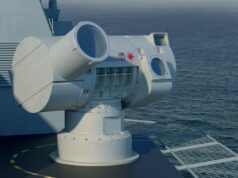
Secondary armament includes a 4.5-inch Mark 8 naval gun, 30 mm DS30B guns, Phalanx close-in weapon systems, and various machine guns. Harpoon anti-ship missiles were previously carried but withdrawn by 2023, with the Naval Strike Missile intended as a replacement. The ships are fitted with a medium-frequency hull sonar but do not carry shipborne anti-submarine weapons, relying instead on embarked helicopters for that role. Directed-energy weapons, including the DragonFire laser system, are planned for introduction on selected ships from 2027.





So, by that point we should have the Type 83 in service then eh?
Well yeah, actually a bit before then as 2038 is the out of service for the last type 45. Not much time…
Well shouldn’t we know what the replacement is and construction already started seeing how long it takes us to get a ship into service?
Definitely should be more advanced that the current project status
They will have to last much longer than that. No replacement exists, even on paper. Suspect it will be 20 years until new ship appears. FADS is described as a System of System, none identified positively to date.
I still find it funny that Type 45 relies upon an embarked helo for ASW, but it doesn’t carry one. The HM2 Merlin covers this role. The Wildcat is a lightweight general purpose utility.
Because its primary role isn’t ASW.
Even if 2 a year were going to be withdrawn , the first 2 in 2036, with a 5 year build time, work would need to start in 2031 on the first replacement if fleet size is to be maintained.
If it’s one a year then 2033 date for the first out. They would have to start a T83 next year.
No chance, unless T83 is just an AAW version of a T26 hull.
In 2040 it will be groundhog day. Ships falling apart and no replacement.
I doubt it. T45s have plenty of life left in them. They were built originally for a far longer life than the T23s, and have since been in port for several years.
A LIFEX could push them out beyond 2040 fairly reasonably.
It can carry a Merlin if required but it’s far more useful for most of its mission including air defence to carry a Wildcat.
Labour have still not ordered a single fast jet or warship
27 F35s will be in the DIP and we’ve got T26 and T31 coming. As for T32, I doubt it. Tempest is moving forward, and I doubt very much aby more Typhoons will be ordered. ECRS Mk2 upgrades are going ahead which is very capable but very expensive. I think any additional mass will come from drones/hybrid.
Current FGR4s are getting fragged. With the threat picture and predictable US reliability the current orbat is woefully under resourced in mass. We need double the number of FGR4s to maintain current tempo. Typhoon Force wants more. Control the air control the battlespace.
As for t26 Cameron cut the numbers from 12 to 8 replacing them with less capable t31s (no ASW capabilities). RN needs more mass
I’d forget about more Typhoons. If we ordered 50 tomorrow you wouldn’t see the first one delivered for 5 years. Then you are into Tempest territory, and that’s were the money will go. Plus the bigger issue is people. Recruiting new pilots and technicians In greater numbers is no easy task. We do need more mass, but their is no easy solution.
We’d have said that 3 years ago, when they’re needed now. I’d order now in case 1. They’re needed. 2 Tempest is delayed/ cancelled.
I agree the additional big issue is pilot pipeline – this needs tackling alongside the additional order.
Same with the RN – additional orders need to be reflected in recruitment
If we order more typhoons tomorrow we won’t see any for more like 8 years. Turkey won’t be seeing its typhoons until after 2030. Getting how ever many tranche 1 air frames back from the bone yard and putting them through the same limited upgrade Airbus did for Spain is the only option for more typhoons before Tempest
That’ll be the DIP which has been expected since early autumn last year and has just missed publication before the parliamentary Easter recess, which will mean due to [parliamentary] scheduling (election purdah, King’s speech, summer recess and [likely] a Prime Ministerial resignation, etc) that the DIP can’t/won’t be published before autumn this year at the earliest. This government, like governments before it, isn’t serious about defence and when the ‘media circle’ has moved on from its current focus on the military, the government will quietly drop the commitments to defence and return to bribing the welfare junkies with more social spending and the Navy (et al) will continue to be in a awful condition.
Not a chance they’ll retire on those dates, unless we accept a capability gap which is something the current global situation should make clear is not acceptable.
I’m betting on “45 till 45”
Key words “On current plans” that will definitely change. More than likely out of necessity.
With the 5 T26 going to Norway BAE wont be able to start this project on time. Only chance would be if Babcock are involved to, they could have yard space after T31.
Given the ongoing conflicts involving Iran, Ukraine, and rising tensions in the Pacific involving the United States, the global security environment is approaching a level of instability not seen in decades. As a result, the United Kingdom will require a significantly larger navy, with an expanded fleet of surface combatants, particularly destroyers, to maintain presence, deterrence, and operational capability across multiple theatres.
To support such an expansion, it will not be sufficient to rely solely on existing shipbuilding capacity. The current industrial base is unlikely to meet the demands of a rapid or large-scale naval build-up. Accordingly, there is a strong case for reopening former shipyards and repurposing underutilised maritime infrastructure.
In this context, the reactivation of facilities such as Southampton dockyard should be seriously considered. While Southampton is not currently a major naval shipbuilding hub, its existing port infrastructure, industrial base, and strategic location make it a viable candidate for expansion into naval construction or modular assembly. Alongside the reopening of other historic shipyards, this would form part of a broader emergency shipbuilding programme aimed at restoring sovereign industrial capacity.
Such an approach would enable the construction of additional destroyers, potentially through a Block 2 variant of the Type 45, while also ensuring resilience in production and reducing reliance on a limited number of existing yards.
It’s best to stretch out the T45 service as long as possible. After the type 26 frigate BAE can start work on however many type 91 sloops is required. This will keel the yard working and the type 91 can provide a valuable upgrade to type 45 with extra VLS and radar. Then the Tye 83 destroyers can be built but with full knowledge of how well the type 91 works.
Once the PiP program is complete along with the CAMM, NSM and Aster 30 NT upgrade the T45 should have its AESA radar plates swapped out with the same gallium nitride plates being developed for the type 91 and type 83.
It’s probably possible to incorporate a skyward facing plate to enhance her ABM capability.
There is massive life left in these ships, we should do everything possible to keep them as long as possible.
Let’s be honest that’s their designed service life of 25 years, they are going to go on for well beyond that.. the T23s were designed for 18 years services and will end up doing 30… The T45s could probably easily manage 30 years without any issues, so I would imagine they will not be decommissioned until the mid 2040s
After all BAE have still got to build and deliver a minimum of 13 Type T26 ( it could be more as its 5+ Norwegian frigates) once you add the 6 T83s that’s 19 7000+ ton high end warships to be delivered from 2027 even if they can drumbeat 1 per year without any interruption for moving to the Type 83 that’s 2040 for delivery of the first T83.. with ICO of 2041 and the last one delivered in 2046.
For this reason alone I think the T83 is going to end up a T26 derivative or will end up being built by Babcock… there will not be time for BAE to finish all the T26s create a new line and build a completely new ship.. it would probably move IOC of the first T83 into the mid 2040s.. which would have the T45s struggling to the end of of the 2040s..
If the navy is going to recapitalise itself effectively have another wave of recapitalisation in the mid 2030s to 2040s ( which it needs) then it’s going to have to move well away from gold plate and be very pragmatic with the T83.