

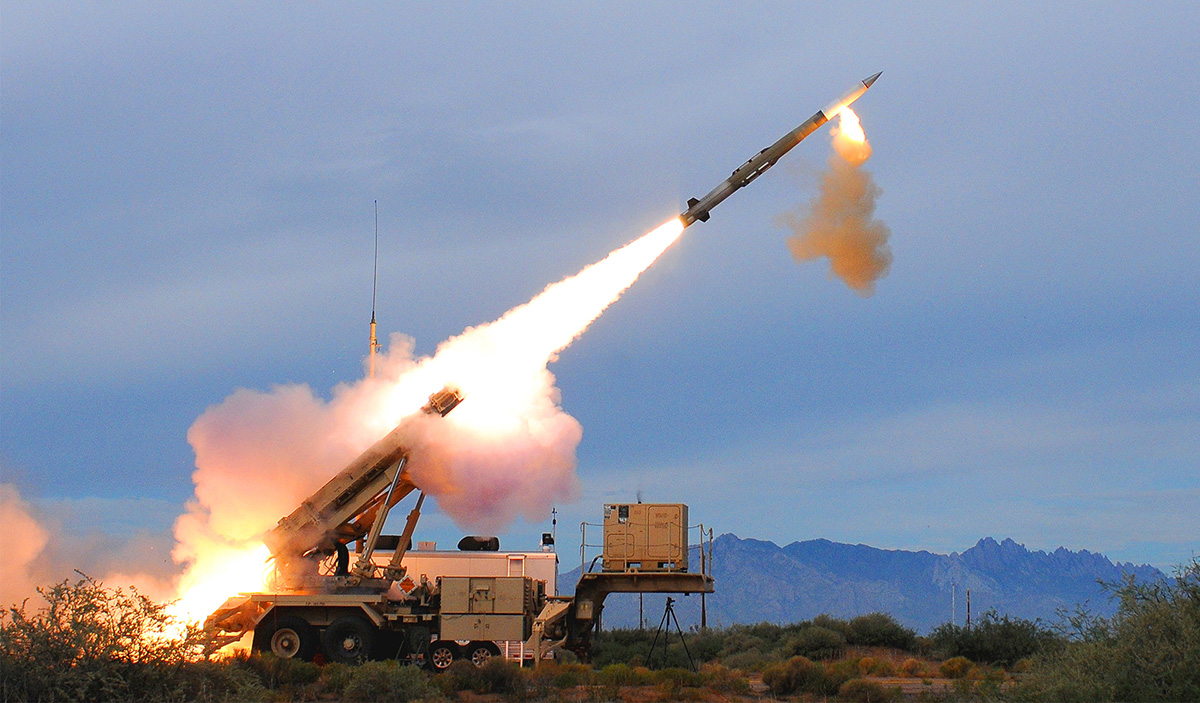
Lockheed Martin has signed a framework agreement with the U.S. Department of War aimed at accelerating production of PAC-3 Missile Segment Enhancement interceptors, with annual output planned to rise substantially over the life of the arrangement, the company stated.
According to Lockheed Martin, the seven-year agreement is intended to support sustained production at scale, increasing annual PAC-3 MSE capacity from roughly 600 interceptors to around 2,000. The company says the framework is aligned with the Department of War’s Acquisition Transformation Strategy, which is described as introducing a long-term demand model designed to provide industry with greater certainty and enable investment in expanded manufacturing capacity.
Lockheed Martin states that the agreement incorporates a collaborative financing approach intended to allow production investment while maintaining initial cash neutrality. According to the company, this structure is meant to support higher production rates and operational efficiencies while sharing cost-saving benefits between the government and industry over time.
The company notes that it has already expanded PAC-3 MSE production in recent years, stating that output has increased by more than 60 percent over the past two years. In 2025, Lockheed Martin says it delivered 620 PAC-3 MSE interceptors, representing an increase of more than 20 percent compared with the previous year.
Lockheed Martin links the agreement to rising international demand for PAC-3 MSE following recent operational use, stating that the planned production increase is intended to support U.S. forces as well as allied and partner nations. According to the company, the expanded production effort is expected to add thousands of jobs across the U.S. supply chain and contribute to the resilience of the defence industrial base by enabling longer-term supplier investment.
Commenting on the agreement, Lockheed Martin Chairman, President and Chief Executive Officer Jim Taiclet said: “We appreciate the Department of War’s leadership in advancing acquisition reform. This first-of-its-kind approach builds on years of advocacy and collaboration to bring commercial practices to major acquisition programs.” He added: “We will create unprecedented capacity for PAC-3 MSE production, delivering at the speed our nation and allies demand while providing value for taxpayers and our shareholders.”
According to Lockheed Martin, the framework agreement is expected to lead to an initial contract award once final fiscal year 2026 congressional appropriations are completed. No further details were provided on delivery schedules or the allocation of interceptors between U.S. and international customers.











We see other countries getting on with it but is the UK doing anything, purchasing anything for its GBAD/Shorad?
You have three guesses as to which document the procurement decisions are waiting for.
Hi TJ, yeah, we know, but seriously, stuff can still , should, have already been ordered. Why don’t they even do a two stage release? First, high level, so we all gave some idea of scope, vision etc, and then a second with the lot? All this time wastage is just silly buggers. Serious lack of GBAD, lack of ships, subs, missiles, you name it. How does anyone know if these issues are truly being tackled? Surely it’s got to be more than just about l drones of all shapes and sizes? Is everything being hi-jacked just because of the Ajax debacle? Why can’t that be dealt with on the side? And are they going to actually deal with it one way or the other, like an in or it’s out? Talking of which
Poms just lost the Ashes too. Poor team preparation but maybe we can blame the two Kiwis (Callum and Stokes), sorry Klonkie. I’m an Pom from way back. Come on Team 🇬🇧 get your mojo back!
Might have to learn to catch first!