

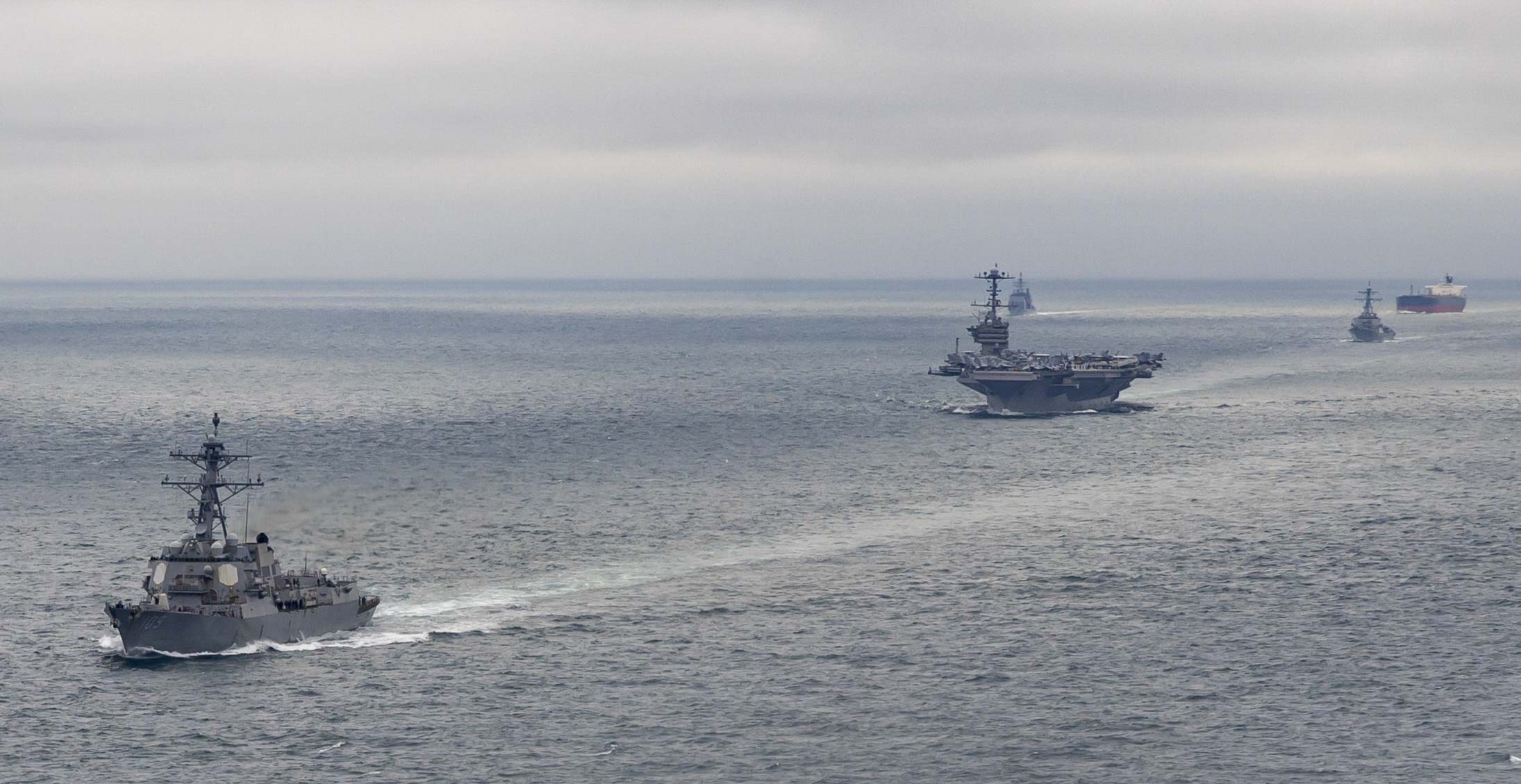
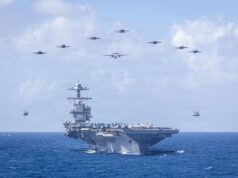
A set of U.S. Navy investigations has found that four separate incidents involving USS Harry S Truman and its air wing during the carrier strike group’s 2024 to 2025 combat deployment were all preventable.
The reports examined mishaps that occurred while the group was striking Houthi targets and operating under sustained missile and drone threat conditions, but investigators concluded that procedural lapses, training gaps and equipment deficiencies played decisive roles.
The deployment included Operation Rough Rider, a 52 day period of intensive combat activity in the Red Sea. The investigations, released this week, covered four events: a friendly fire engagement by cruiser USS Gettysburg on 22 December, a collision between Truman and a merchant vessel in February, the loss of a Super Hornet during evasive manoeuvres in April, and an overboard Super Hornet caused by arresting gear failure in May.
Adm Jim Kilby, Vice Chief of Naval Operations, said “the Navy is committed to being a learning organization” and added that the mishaps underline the need to invest in people and strengthen readiness. He stated that despite the pressures of the deployment, the strike group had shown “adaptability, professionalism, and complete commitment to the mission.”
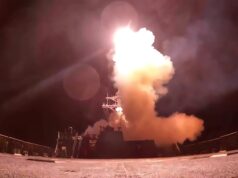
In the friendly fire case, Gettysburg’s firing of two SM 2 missiles at incoming Super Hornets was attributed to inadequate integrated training, weak forceful backup on the cruiser and poor cohesion across the strike group. One aircraft was destroyed and another narrowly missed, but there were no casualties.
The February collision with the merchant tanker BESIKTAS M in Port Said was judged fully avoidable. Investigators found that Truman’s bridge team failed to execute safe navigation. The ship’s commanding officer was relieved shortly afterwards. Repairs at Souda Bay restored weathertight integrity before the carrier returned to operations, with full restoration deferred to its upcoming refuelling and overhaul period.
The April loss of an F A 18E and tow tractor from the hangar deck occurred while Truman was manoeuvring to evade an incoming Houthi ballistic missile. Although the ship’s reactions followed procedure, an aircraft brake failure combined with poor communication between the bridge, flight deck control and hangar control led to the accident. No personnel were injured.
The May incident saw an F A 18F go overboard after the number 4 arresting wire failed. The root cause was a malfunctioning starboard sheave damper. Investigators highlighted contributing issues that included inadequate maintenance, low manning, limited technical knowledge and insufficient training, compounded by the tempo of combat operations.
Kilby said “the Navy remains laser focused on producing battle ready Sailors and forces” as it implements improvements prompted by the investigations.


All set to the Benny Hill Tune !!!
😁