

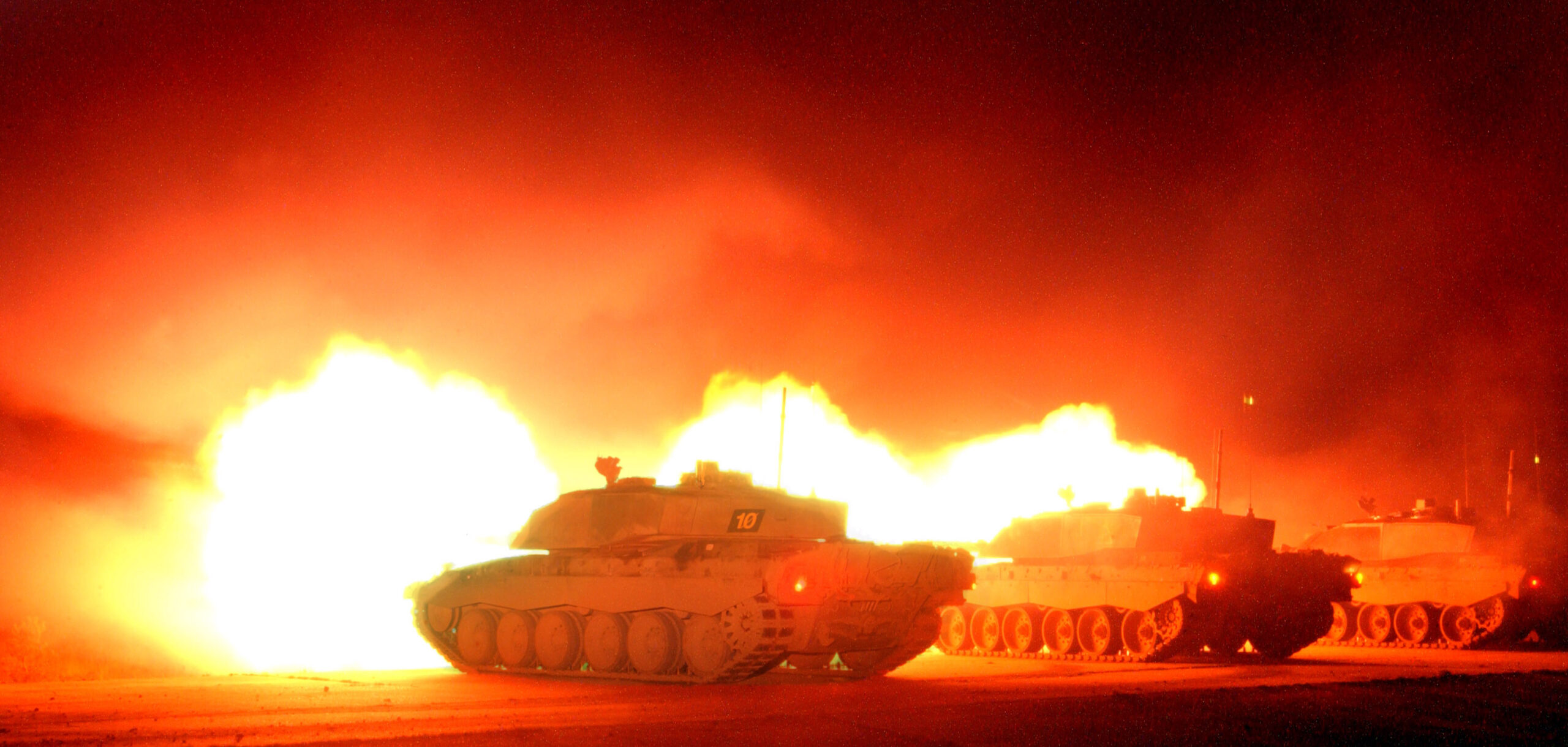
The UK is currently below the level required by NATO’s latest capability targets and does not yet have the full heavy force mass sought for high-intensity operations, Ministry of Defence officials told MPs, while stressing that the targets are deliberately set above current force levels and apply across the alliance.
The exchange took place during an oral evidence session of the Defence Committee on 17 March 2026, examining the MoD Annual Report and Accounts 2024–25, where senior officials were questioned on readiness, capability and delivery alongside wider concerns over delays to the Defence Investment Plan.
Derek Twigg asked how many of the capabilities the UK is committed to provide to NATO it is currently failing to deliver, pressing officials on whether there is a present shortfall. Air Marshal Tim Jones, Deputy Chief of the Defence Staff for Force Development, said “by definition we are” not meeting the targets, but explained this reflected how they are set, adding that “the nature of the targets is that they are higher than where we are now.”
He linked this to NATO’s shift towards higher-end warfighting requirements, describing a “pivoting to a war fighting head mark, which is not where we are now,” and emphasised that “this is the same for all allies.”
Twigg continued to press on whether this represented a current capability gap rather than a future planning issue. Jones maintained that the targets are designed to drive long-term force development, with delivery dependent on future investment decisions.
Further questioning from Ian Roome focused on what the UK could deploy in practice, particularly in the land domain. Asked whether the Army could field a heavy division, brigade or battle group, Jones did not give a direct confirmation at any level, instead stating “we know that we are shorter where we want to be in terms of heavy capabilities.”
He added more broadly that “we are not where I know we need to be in terms of meeting those future NATO capability targets,” while stressing that plans are in place to address this through ongoing modernisation and investment.
Jones pointed to the Defence Investment Plan and Integrated Force Plan as the mechanisms intended to close the gap, stating that capability development is “designed to get us there as quickly as possible.” Jones then explained that capability decisions are “rooted in what the NATO operational demand signal is,” with targets intentionally set at a higher level to push allies towards greater readiness and warfighting capacity over time.
The evidence highlights that the UK, like other NATO members, is operating below newly elevated capability benchmarks, particularly in heavy land forces, while the MoD maintains that these gaps reflect a planned transition towards higher standards rather than a failure against fixed present-day obligations.









The problem the government is creating for itself is that if you publicly dump every important decision into the DIP, and then keep delaying that DIP, unless it’s a humdinger when it eventually comes they are in the deep political do da. Especially when there’s two big wars going on and even the BBC are taking the mickey out of the RN.
The really scary thing for me is that Starmer doesn’t seem understand that, or if he does he doesn’t care.
I still don’t think the dire state of the armed forces has landed in the publics minds. The majority are so focused on the cost of living and wars being fought elsewhere that any political party is unlikely to divert the required funding to enable the MOD to bring about the kind of change we need. Few people outside of places like this care about the DIP and i would argue even fewer know what it is.
I think there is at least a growing realisation amongst the public that the RN is not fit for purpose. The Army too. The widely publicised Dragon/French Fleet/Trump comments fiasco showed that.
So I think there would be public approval for an increase in defence spending, so long as it comes from cutting waste (eg welfare, net zero) not tax.
I hope so. My concern is Labour is on such shaky ground already any reductions in cutting waste or going after the welfare bill would likely be political suicide for them. This means we are stuck in limbo with a paralysed government unable to unwilling to do what needs to be done. Such a shame they wasted all the political capital with endless u turns.
Surveys in the past few years have shown public support for increased defence spending, but only if its fuelled by tax rises, not cuts to services.
Unfortunately, what that likely means is that most of the public want a stronger military, but think it should be paid for by someone else and not significantly affect their lives.
The economy is already struggling under a truly colossal tax burden, struggling to retain wealthy taxpayers, and suffering with an ever-growing benefits class not contributing to the nation. This isn’t a partisan view or a dig at Labour or previous governments; these are the facts of the situation. Without stabilising the country, the only option for funding defence would be increased borrowing; unfortunately for defence, that would likely breach the government’s fiscal rules, and if they were willing to do that, it would arguably be better spent on massive infrastructure investments to fix things like the energy crisis and cost of living/operating a business.
Agreed. Its the British population that’s the problem -they want bread and circuses, not defence capability with no immediate benefits for them. Plus, you can assume that most non-indigenous British don’t have any interest in “Defence” at all, their interests are mostly abroad.
This seems like great headline for the Daily Mail tomorrow, clearly all 73,000 people in the army are sitting on their asses making TikTok videos today and we can’t even deploy an armoured battle group despite the fact we have a permanent armoured battle group deployed in Estonia.
We have 1,000 or less troops in Estonia… integrated into Estonia’s 1st Infantry Brigade and falling into the operational command of the Estonian Division. Not what you would call a massive force.
We all know we short of heavy kit, the real point is if and when that might change? 2031 seems a very busy year everything will be fine by then so we are told. Lets wait and see what really happens and what excuses are dreamed up when its still all a shambles then and numbers have not gone up much.
The DIP will not fix all of this but it might make things better, there is no real will to sort the Army out its just about looking busy while going through the motions knowing its too big a job and will costing to much to fix 30 years of neglect.
4.5% is needed right now and that level of funding should have been available to inform the Defence review.
It wasn’t, the government is keen to kick the DIP to a point after the May elections, because they know it will mainly consist of small tweaks and a few cuts, with most of the yearly procurement budget going into GCAP and AUKUS for years to come.
Rebuild the surface fleet, not happening.
Rebuild the Army, not happening.
They are in for a right savage kicking in May, quite rightly so.
Will it make them take Defence seriously, nope, its just not in their DNA, with Labour its welfare all the way to the bankruptcy and World Bank bail outs….
Should be 3.5%, not 4.5%
I would prefer 5%… Trump may be many things, very few of which are nice things, but in some rare instances I agree with him.
US defence budget was 3.2 to 3.4% for 2025 and they are looking for 8% cuts in the budget,Trump hasn’t really got much to shout about has he?
Trump is, frankly, deranged. Our problem is that we can’t depend on America – they are more likely to be the cause of us going to war. We need to be able to defend ourself – and although I believe Europe plus us would be able to do that in every area except nuclear weapons, we need to be able to make it imprudent for someone to attack us without help. That means increasing spending to build up kit we should already have as well as prioritising defence objectives. A large expeditionary force in Germany I would consider a pointless waste of resources – it’s covered better by others.
Not any problem with what your saying it’s just trump baying for 5% of NATO spending when even the US is not approaching that👍
Personally more concerned about us than Trump. I’m going for a 5% figure because we’ve got a lot of catching up to do on equipment and capital costs – once that’s sorted (?) dropping back to 3.5% would probably be about right.
Yea but when you have a trillion dollar defence budget, it more than makes up for it.
What has the US’s defence budget been for the last 20 years….both as GDP and in real terms? Compared to our contunal cuts over that time period they have amassed a fair bit of military collateral stuff ‘in the bank’ so.to speak.whereas we have not. Itt’s hardly fair to compare their upcoming cuts to our previous ones TBH.
Was going to say something similar….trying to say the US doesn’t live up to its own rhetoric when it has the full spectrum of capabilities that everyone else only dreams of is crazy. It has invested like you say for decades where as every other western country has cut for decades. Always check what hasn’t been mentioned when stuff like this is rolled out.
The US’s defence budget went from 6% of GDP in 1988 to 3% in 2001, it then climbed again to about 4% during the height of Iraq and Afghan before dropping back down to 3%. In real terms the US defence budget dropped to about 500 billion USD per annum in the 90’s (inflation adjusted), down from 900bn USDPA(IA) in 1989.
The US was no exception when it came to buying into the peace dividend. The US Army cut something like 8 divisions from it’s structure in the 90’s (That’s where 5th, 6th, 7th (technically) 8th, and 9th Infantry Divisions went). It’s also when Iowa, New Jersey, Missouri, and Wisconsin became Museum ships.
More like the derranged extreme Trump regime is a real present danger & threat to allies & enemies alike. That makes it urgent to re-arm asap, but we just get soundbites & more cuts in reality.
Yesterday’s Times had a good opinion piece from William Hague, saying that Starmer would do worse than give a big boost to defence to secure some kind of legacy. Unfortunately I’m not sure that he either knows or cares about defence, and even if he did his approval in the country is so low it will never recover. And he gave an interesting statistic, if you strip out pensions and other non warfighting expenses the actual budget for ships, aircraft, bombs bullets and people is 2.13% of GDP. Even if there is a big percentage increase in this benighted DIP we are starting from a very low base.
They simply won’t Nick, in many ways they are far worse than the Tories, they could see ‘precisely’ what was happening in opposition regarding defence, shouted loudly about it and have continued to do absolutely sod all…
They just bury their heads in the sand and continue vast, un-reformed welfare spending and a blinkered net zero evangelical stance on energy.
We can only hope we get through the next three years of this car crash government in one piece, until a new administration can make a start sorting this mess out.
The Governmeny hasn’t exactly ‘done nothing’ John. It has increased the defence budget by £14bn, which is being spent right now.
Defence spend will go from £60m in 2024, when Starmer came in, to £73.5 bn in 2027/8. That is a 22% increase over what the hopeless Conservative government were spending. I find it odd that you omit this rather important element.from your party-political view?
Of course we need to be spending a lot more. But the Government has set out an increase from the 2.34% of spending in 2024 to 3.5% by 2035. If that aim is achieved, it will be a 50% increase since the Tory years. At least things look to on an upward trajectory.
My fear about the new administration you are.hoping for will turn out to be a backward step, another right wing party committed to tax cuts, with the inevitable knock-on effect on the defence budget
So back to the Tory austerity years. Please not.
Evening Cripes, but they haven’t, they promised to increase defence spending by a small amount and to 3.5% by the end of the next parliament, if conditions allow, and as it certainly wont be a Labour government, thats a promise that’s worth absolutely sod all.
The review is frozen, they won’t release the DIP, that tells you everything you need to know about these idiots.
Make no mistake about it, Labour are just screaming ‘ its all their fault ‘ pointing at the Tories, meanwhile its 1938 and they are just fiddling while Rome burns.
Our whole defence infrastructure reqires overhauling from the ground up, that should now be underway, it isn’t.
They flushed 20 billion a year into the NHS, at the drop of a hat, with no reforms and its made ‘zero’ difference.
It requires emergency measures to fund defence to 3.5% in this parliament, but Starmer and his clown show, just haven’t got it in them. Defence to them is a bullshit, smoke and mirrors show, kicking the defence can into the next governments term, post 2029.
The billions is absolutely there, in welfare, foreign aid and NHS reform, but they won’t do it, too terrified of loosing 50 or more MPs to Wacko Zacos Green looney club.
I don’t have the slightest doubt, scores of them would cross the floor, if the sacred welfare budget was raided in any meaningful way, or the one million strong army of idle fat millennial Labour and Green voters was (shock horror) made to join a new YTS scheme of some sort.
I will personally vote for whoever promises 3.5%
(minimum) on defence in 2029.
Even Germany, has pledged 3.5% by 2028, Germany ‘see’ the urgency!
Our government sees very clearly the writing is on the wall, its got three years left of a (without the slightest doubt), a single term to sit through and they will procrastinate and delay every aspect of defence they can possibly get away with, while spinning bullshit about the great strides they are making in defence.
And how much was buying the housing stock back and how much is raw military power?
Also we have a wrong ratio of expensive regulars to reserves. Boost reserve numbers now. The US operate this way. Our thinking is stuck in yesterday…….
Welfare? Funny how every time the nation needs cash it’s always the poorest that are asked to give it first! Those on welfare never get inflation matching raises, so this presumed profligousy has been reducing over decades. Meanwhile many billionaires get filthy rich reusing to pay employees so they have to have their income topped up by welfare. There’s plenty enough in the world for all, but never enough for the greedy.
Well said
I’m now sure the DIP is delayed due to the Iranian War and the growing concern about immediate knock-on effects of the cost of food/fuel and ramifications on the general economy. Most of Europe is in the same boat, and military spending, though important, will most likely have to take a back seat. Sadly, the truth is in the opposite direction, as now is exactly the time to build up our collective military. Russia will take every opportunity to gain political traction, especially if the Iranian war slows supplies for Ukraine.
The current British Army heavy armour plans appear to be weak, with no obvious signs of any sizable increase on the horizon, which may need to change if Trump pulls his heavy armour out of Europe before the end of his tenure. Such a move would encourage Russia to place even greater stress on NATO land forces. As for draw down on European US Air Force assets, that could probably take longer than Trump has remaining.
Shameful shocking and shambolic. The dude couldnt even be honest to MP’s when pressed. No wonder all manner of countries think the UK’s military capabilities are of any real use any more.
Maybe the simple answer is that it’s simply too late, to repair the damage done by years of gross underfunding and neglect. Maybe the stark reality is we can only afford to revitalise one of the services at this time, and we do not know which one to go for first.
Sad desperate times.
Hard to know if we don’t attempt to revitalise any.
That fabled Defence Investment Plan will make for most interesting reading when and if it is finally released.
If history with every SDSR is anything to go by, it will be mostly spin and announcing things that were announced before, but repeated for effect.
Even small increases in niche areas without cuts elsewhere are big wins these days.
Two of the three people who wrote the 2025 SDR have already disowned themselves from HMGs actions concerning it.
And isn’t that telling mate, a bloody clown show….
Mate the truth is that Defence isn’t a vote winner and doesn’t put money in people’s pockets or voting slips in the box. Labour know it and the Tories knew it too. It takes an existential crisis to increase defence spending and we aren’t in one yet (in the minds of the public).
Very true, all these clowns have to do pretend they are doing somthing, just a little smoke and mirrors and they can dump it in the next governments lap.
This government even more than previous ones is not interested in spending billions on something you hope to never use. It thinks there are votes in welfare and endless money thrown into the NHS for no obvious improvement but not in defence spending. It is a doom loop of denial. They are morons because defence spending if it’s done right will boost growth too. Nothing will change until its too late but this isnt the 1930s you cant rearm in in few years when it takes a lifetime to finish a frigate. WE’re doomed…..doomed….do you hear what I say?
On the army side the current commitment to NATO of long standing (since 1st Oct 1992) is that we provide COMMARRC, HQ ARRC, most if not all of its Corps Troops and two divisions (one ‘armoured’ and one ‘infantry’), the latter includes 16AA Bde. Plus attrition reserves of men and equipment and CSups and other stocks to fight and be supported for the required period. There are probably other Land capabilities of lesser order that we are committed to supplying. AM Jones should have answered whether we had this all in place and if not where were the ‘holes’. It sounded like he did not know the difference between a Division, a Brigade or Battle Group.
It is not a future requirement/targets; it is the current requirement/target.
A common weakness, the question is poorly worded, and the questioner equally clueless.
Those assets all remain, as you know, apart from the fact that our Divisions have dropped from 3 manoeuvre Brigades to 2, and that levels of heavy equipment have dropped through the floor.
And some of the formations we do have, are lacking in CS and CSS, again, long discussed here.
As Dern has said before, without personnel increases, where do the people come from to expand the CS CSS areas unless we reduce establishment of other formations or recruit more Gurkhas? This is already happening regards the latter.
I don’t think it was poorly worded, more that it wasn’t pressed. ‘Jones can you give me a clear answer on whether the UK is able to deploy a heavy Division? Yes or No. If No can the UK deploy a Heavy Brigade? Yes or No? The Air Marshal was basically refusing to answer questions from an elected parliament which personally i think should be made on oath same as a courtroom.
Officers have been avoiding questions for years in front of the HoCDSC, it’s been suggested gagged by MoD.
Finland:
1/12th the population of UK
Can put 280,000 fully trained and equipped troops at the spear point in a few hours.
Can put 870,000 fully trained and equipped reservists at the spear point in days
1,400 artillery pieces
We are not a serious armed forces
In your rush to one note rubbish us, you are misrepresenting Finland massively here, but that’s common.
The Finnish Army can put about 60,000 troops into the field, and it needs more than a few hours to achieve that. The 280,000 number you are citing is including Finlands terretorial forces. It’s okay they normally get lumped together. But for clarity: The Terretorial Forces are defensive only units. This is Simo and his mates who do their annual military top up training, have a few mortars, rifles and machine guns and maybe a couple of towed howitzers in their unit, and, if called, will defend their local patch of ground against the Russians.
These forces are not suitable for manuever, they lack the training, equipment, logistics and integrated command to be able to execute anything complicated. They are, as their name suggests, a quick solution to defend relatively static terretorial positions (this is btw why Finland has a lot of artillery pieces, most of them are 120mm Mortars for supporting these static units). To be clear the only reason these forces would be at the spear point “in a few hours” is because they phsicially live at the spear point and the fighting will come to them. This is not a force that will mobilise and move to where the fighting is in any timely manner.
The actual combat forces of the Finnish Army are the Operative Forces, and that’s formed of 3 Mechanised Brigades and 2 Light Infantry Brigades, as I said about 60,000 troops including their support structure. These also wouldn’t be ready in a few hours btw. They might be able to generate a few sub units at very short notice, and form ad-hoc battle groups but to be deployable as formed units they’d need longer given that none of them are standing units.
The 870,000 number is the total number of personnel who are undergoing or have completed their conscription, and therefore are liable for recall to the forces. They are not “fully trained” as after five years of reserve service they are downgraded in refresher training priority and continue to be downgraded as they age. Finland also doesn’t maintain equipment or logistics base to call up fully 1/5th of it’s entire population, nor could it realistically do so. The 870,000 number is in practice meaningless in terms of military capability beyond throwing Molotov Cocktails from Helsinki windows, far from “being at the spear point in days.”
But I get it, facts are difficult and inconvenient when you are grifting.
Meanwhile….
The UK
Navy, 4 operational warships, all ancient
Army can’t even deploy a light division
Air Force that on a very good day coukd deploy two squadrons
And we’d run out of high end munitions in 2 days and be Winchester small arms in 6
So now suddenly a goalpost shift from the grifter.
Want to compare the Finnish Navy? Hint it doesn’t have a single Warship, just boats. The Type 45’s are also hardly Ancient.
The Army can’t even deploy a light division? Your on crack at this point.
And now bitching about the RAF. So again, want to compare that to a “proper” country, Finland, which has half the fast jet fleet, and no strategic or tactical lift? No? It’s just shit when you can bitch about the UK isn’t it?
Yawning silence in reply is noted. He’s run to the hills…
Does raise an interesting question on the types, numbers and formations of our reserves. Army wise I think its fairly easy infantry and logistics wise, but for anything more complicated, such as engineering. How do you maintain a decent level of readiness, but also ensure they are still trained to the appropriate level on old and new kit?
For the Navy and RAF I think it’s harder, as how to do you maintain trained engineers on complex systems? That then has to meet strict safety guidelines. I guess in a war, the risk appetite and conforming to safety pretty much goes out of the window. But there is still a training overhead that cannot simply be penned off.
Definitely something I would like to think has been considered by the Chiefs of Staff, who then have a cunning plan!
In terms of training? A lot of it is by leveraging peoples day jobs. There are entire units in the Army Reserve like the Staff Corps that exist on the basis of utilising peoples civilian skill sets. A lot of the RAMS reserve are doctors and paramedics working for the NHS and Private Healthcare too.
Certainly there are gaps, and frankly even getting reserve infantry the same quality and frequency of training as their regular counterparts isn’t easy. Currently I think the short fall is made up with PDT, but obviously in a mass call up of the reserves that can’t be the solution.
PDT?
Pre-Deplyoment Training.
Basically if you are deploying on Operations the Army will require you to do training above and beyond your mandatory baseline training, exactly what that entails depends on the Operationa and your Role. For example a high readyness unit might do a generic PDT that has all manner of checkboxes and major exercises in the lead up to it’s high readyness so that it can simply be rushed out the door if a crisis happens (this is one of the reasons we talk about being only able to deploy one Brigade on Operations even though we have 5).
Individuals volunteering for specific ops, which is mostly what Reservists fall into, you’d get a PDT designed specifically for that Op, taking into account things like the skill set you might need, what the risks are etc.
So a Medic volunteering for a humanitarian Operation in, say, a friendly carribean country, might do a week long PDT package focused on medical skills and not touch a rifle, while someone deploying as a infanteer to Afghan in 2007 would have gotten a much more in-depth PDT focussed on broad infantry skills and CIED.
Nah, it’s just his MO. Drive by comments about how shit the UK is, and no argument when anyone corrects him. He’ll be back on a new Article telling everyone the UK/ENATO/EU/etc is crap soon enough.
Maybe Finland are not “Serious” when they lack nukes, C3, Space assets, Carriers, SSBNS, SSN, Frigates and destroyers, TLAM, a UKSF Group, 5 Eyes infrastructure and Cyber to match, hundreds of bases, and a dozen overseas bases?
They have an impressive Army for their size.
“We are not a serious armed forces”
With the like of the UKSF, the RM, The Paras, the Submarine Service, Thursday War and FOST, where other nations send their ships to be trained by and train with the RN.
No…clearly we are a laughing stock…come on!!
Most of that stuff exists on paper but is either barely functional or a de facto dead capability
Please don’t mention the submarine service –
4 SSBNs in a truly desperate state and only fit for scrap this last 10 years
1 operational SSN – 1!
We are serious? Yeah…..
I spent 27 years doing TOEs for exercises and deployments
We went from carriers and assault ships, multiple, backed by Destroyers and Frigates, multiple, supported by RFA wet and dry support ships, multiple to doing exercises with OPVs, P2000’s and even RIBs pretending to be ‘warships’.
“Most of that stuff exists on paper but is either barely functional or a de facto dead capability”
Most? You list in reply the SSBNs, and 1 SSN. What about the rest I listed, you left those out?
Why?
“We are serious? Yeah…..”
Yes, but you’re twisting it, aren’t you?
You gave Finland as an example of what can be done as a smaller nation, yes, impressive, with the limited objectives and goals a mostly defensive force needs.
And I gave you examples of stuff they lack.
So, if they lack, they are not serious are they?
So yes, I will, and did.
I was thinking further, perhaps you can give me the Finnish equivalents of:
GOSCC.
DIFC, NCGI, JIOC, DOSIC,
CCC.
JESC, MCIC, FIOC, IOC.
DCMC.
NCFP. ( PAG )
All very important assets, one of which cost several hundred millions alone. I doubt you have a clue what they are, but you might…
“I spent 27 years doing TOEs for exercises and deployments”
That is interesting, as I had you down as not even British, so fair do’s if you are there from me.
We all moan at lack of assets and MoD cockups and HMG disinterest and betrayal, but saying we are “not serious armed forces” is clearly nonsense, sorry.
And to add to that, with Finland not needing to fund such a diverse range of assets, and not needing to be Expeditionary in nature, no wonder they have an impressive Army. The two geostrategic conditions are not comparable.
Come on Daniele, you know better than that. Just Me is like the long list of Kremlin funded posters we’ve seen over the years here. He’ll never care what we post because his only purpose here it to rubbish the UK, Europe, or NATO, whichever target his paymasters see fit to take aim at today, and the facts be dammed.
I know, I try to treat people fairly at face value….for my sins.
I mean, I moan as much as any other at cuts and loss of assets, but to say we are “not serious” just pushes my buttons.
I’ll not have trolls or not just rubbish HM forces without some retort.
The fundamental problem isn’t the politicians – it’s the Admirals, Generals and Air Marshalls who dream fantastical plans and lie to themselves and the politicians.
We don’t ’punch Above our weight’ – we are an armed forces with a champagne habit on a beer money budget.
Never buy COTS or good enough if they can avoid it – wave the ‘unique operational requirement’ pixie dust over anything and it ends up 5 years late, 100% over budget and bought in penny packets.
MOD spends an eye watering amount to achieve very little outcome – see AJAX, now costing more per unit than a main battle tank.
It’s spending a fortune trying to scope out what to replace a Land Rover with – just buy Landcruisers!
Pretty much everything is unique, bespoke and ends up unaffordable
On this, forgetting the above, I absolutely agree with you!!! Far too much gold plating, every time. Sometimes it is right for a niche, high end low volume capability, and other times going Gold is a disaster when good enough would be fine.
One example, please buy thousands of Patria rather than mounting as much as possible on a Boxer.
Too true, now im grumpy and thirsty, im off to open another bottle of wine mate…
So, we have a new bunch of Moscow morse tappers to deal with do we, I haven’t been paying attention of late….
So Dern thinks. There are several who only ever put down the military, no matter what positives there are.
They either revel in it or, they indeed have an agenda.
I do think we may get in to trouble if we overly concentrate on the Patria 6×6. I get the reason, due to the cost of Boxer. But the Patria as per all the other vehicles we have had, where they are only supposed to be supporting vehicles, inevitably get caught up in a contact or deliberately sent in to harms way, as it’s the only vehicle available at that time. Boxer is expensive for a reason. However, being realistic, I do recognize that the MOD will likely favour the low cost over the high cost. Just hope they order the additional armour for the Patria?
In balance to that, Davey, is the 432 and Warrior?
We couldn’t afford to replace everything with the primary platform in the old Mechanized Infantry Battalions of BAOR, so the supports remained on 432 and Spartan.
I assume that their armour was lighter than Warrior MCV80?
We cannot put everything on Boxer.
But neither should everything go on Patria either.
J has talked at length on the Stanag levels available.
Like the RN Escort fleet, a balance between quality and quantity is sensible for me. So two tiers of assets.
Imagine the money that could be saved in Whitehall meetings by simply replacing replies like: ‘We know that we are short of where we want to be in terms of heavy capabilities.’ with ‘No’.
The entirely predictable consequences of the Peace Dividend and subsequent imposed austerity (only for the lower echelons of society). Most of us on here warned about this time and time again. Capability gaps, failed and blinkered procurements. Mostly a complete failure to realise that there needs to be spare capacity over and above day to day norms to be able to cope with any emergency situation. Exactly as outlined by the Hallett Covid Inquiry. Yes spare capacity and reserves costs but being unable to meet the additional demands costs even more, and those who benefitted hugely over the last nearly twenty years complain about the likelihood of them making an appropriate contribution to the society they live in and depend on.
Spot on.
Why is anybody surprised? The COVID Inquiry has shown exactly the same with the NHS, it was running hot at 100% with no spare capacity even before COVID hit and only avoided being overwhelmed because of the people in it. It’s the same with Transport Infrastructure, Social Care, Policing, Education as well as Defence.
If you impose fourteen years of austerity to fund ‘mates rates’ tax cuts and shoot your biggest trading partner in the foot and let everything go to wrack & ruin by scrimping on repairs and running costs it’s going to cost a helluva a lot more to rebuild capabilities than if you’d done proper maintenance in the first place.