

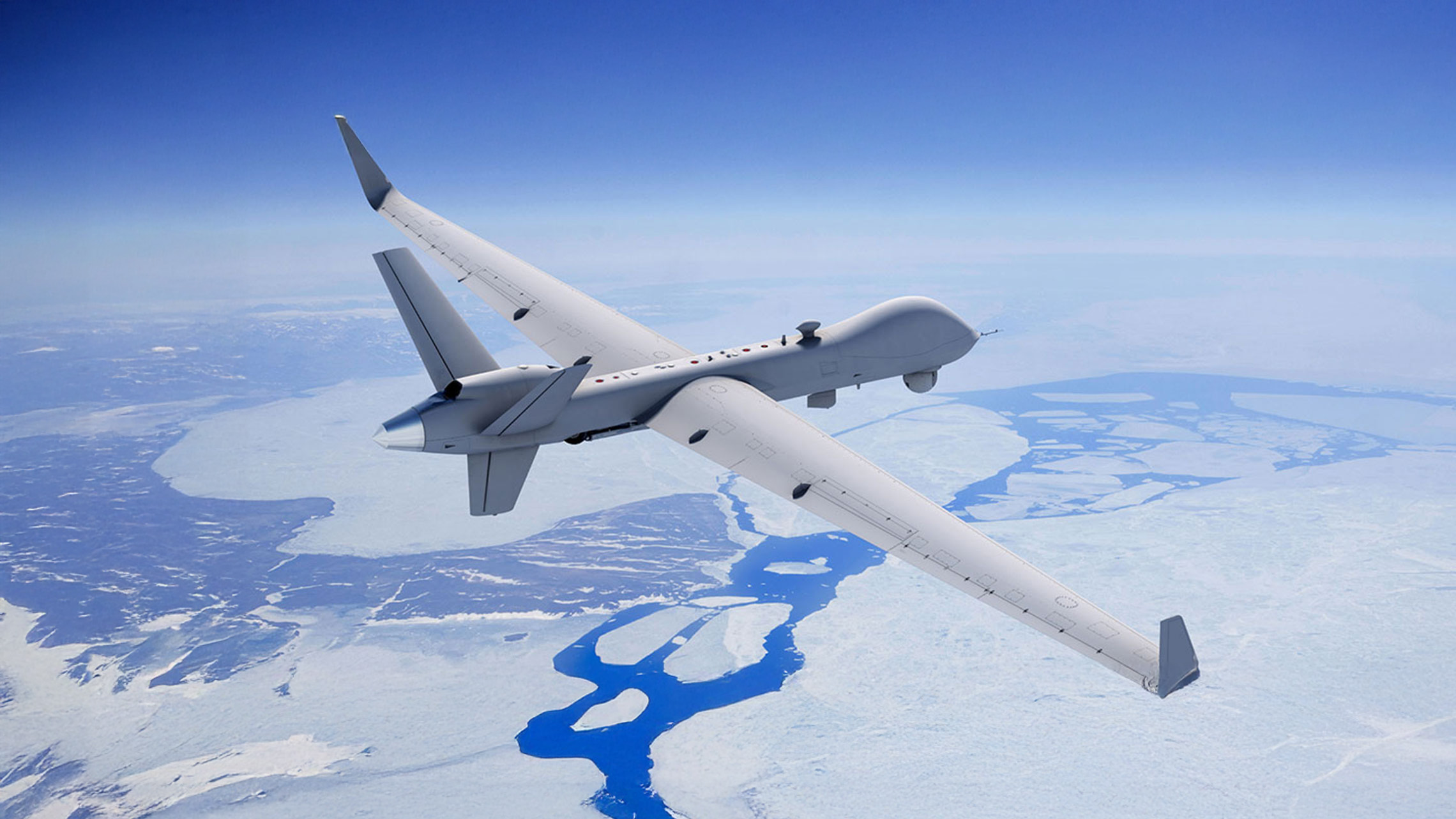
Lockheed Martin has warned of significant capability gaps facing UK forces in the High North, including risks to airborne early warning coverage following reductions in Wedgetail numbers, unreliable satellite communications above 70 degrees latitude, and degraded precision navigation at high latitudes, in written evidence to the Defence Committee’s Defence in the High North inquiry.
The company, which employs 2,000 people directly in the UK and supports a further 24,000 jobs across more than 800 British companies in its supply chain, placed almost £3 billion of orders in the UK last year and describes its connection with UK defence as stretching back more than 85 years. The submission describes the High North as “transitioning into a strategically contested region due to climate-driven accessibility, increasing military activity, and emerging economic routes” with UK interests including “securing North Atlantic lines of communication and reinforcing the northern flank of NATO” and “deterring and monitoring Russian military expansion, particularly in anti-access/area denial, undersea warfare, and long-range strike.”
Airborne early warning is identified as a particular concern, with the company warning that “airborne early warning capability remains important, ensuring there is not a coverage gap following the reduction in Wedgetail numbers” and suggesting that “carrier-enabled uncrewed AEW solutions should be considered, including radar technologies designed for such missions.”
Continued development of F-35 interoperability is also called for, with Lockheed Martin pointing to the potential for multinational F-35 operations across NATO and the North Sea to deliver “unparalleled interoperability capabilities for allied forces and their operational support crews, including Quick Reaction Alert deployments from Iceland and cross-national sustainment arrangements for deployed fleets.”
Space presents a separate set of acute challenges specific to Arctic geography. Lockheed Martin warns that “traditional geostationary SATCOM is unreliable above 70 degrees latitude”, that “existing polar and highly elliptical orbit systems offer limited bandwidth and high latency” and that “PNT accuracy degrades at high latitudes, affecting navigation and precision targeting.” To address this, the company calls for dedicated ISR constellations optimised for Arctic coverage, protected military satellite communications capable of reliable high-latitude operation, space-based early warning systems for missile detection, and resilient ground station networks.
In the maritime domain, the company suggests “exploration of uncrewed surface vessels equipped with modular payloads, potentially including vertical launch systems, to extend sensor and effector coverage within the Atlantic Bastion construct” and calls for extending maritime integrated air and missile defence northwards through integration of radar and effector systems including “SPY-7-class ballistic missile defence radars linked to Mk41/Mk70 vertical launch systems.”
Allied cooperation is described as “central to UK effectiveness in the High North, particularly given scale and environmental challenges”, with Lockheed Martin highlighting opportunities to strengthen UK-Norway cooperation in anti-submarine warfare leveraging Type 26 frigates and Merlin helicopters, and calling for “enhanced interoperability between maritime patrol aircraft and rotary assets, including shared concepts of operations to extend loiter times and improve targeting efficiency.” The company also calls for joint approaches to uncrewed systems deployed from crewed platforms to maintain persistent tracking, and says the UK should plan for “an array of scenarios that include various levels of European burden-sharing and autonomy.”
Capabilities developed for the High North are described as broadly transferable, with ASW, ISR and uncrewed systems “directly applicable to Indo-Pacific and North Atlantic operations”, space-based ISR and communications “globally relevant”, and cold-weather logistics experience enhancing resilience more broadly. Conversely, the company notes that “capabilities designed for other regions can be adapted for High North operations, provided environmental constraints are addressed.”
Lockheed Martin concludes that the High North will become “an increasingly contested and strategically significant region” and that “a coherent, multi-domain approach, underpinned by leveraging strong alliances, interoperable systems, and targeted investment will be essential to ensure the UK can deter and, if necessary, respond effectively to emerging threats in this challenging environment.”









Yup, problems in the high North and the far South !
I’ve gained $17,240 only within four weeks by comfortably working part-time from home. Immediately when I had lost my last business, I was very troubled and thankfully I’ve located this project now in this way I’m in a position to receive thousand USD directly from home. Each individual certainly can do this easy work & make more greenbacks online by visiting
following website—.,.,.,.,.—>>> JobatHome1.Com
Some problems created by LM Lack of promised F35 capability, ie UK weapons integration. WCSP project destruction by LM project failure & lateness shall we continue.
European branches of US companies are subject to US law and congressional export control regulations, particularly through extraterritorial rules that apply to foreign-made. This means they must comply with US export controls even if the products are manufactured outside the US.
This is an excellent reason not to award any further business to US owned companies but develop deeper partnerships with Swedish, Canadian, Australian and European companies for our mutual defence and support.
There is an element of truth to the suggestion that LM’s tardiness in delivering the tech refresh for F35 has gifted the perfect excuse to drag heels on procurement as well as creating some of the capability gaps that LM are talking about!
If you’re not going to follow through with buying the aircraft you want and paying for the integration for your own special weapons, that’s on you.
They’ve paid the integration costs, they provide dedicated fleet in the US for integration and testing work. Lockheed Martin is just taking forever to integrate weapons.
Tricky Ray, when there is not even a confirmed plan or cost for F35B block 4 isn’t it?
F35 has demonstrated why ‘Sovereign Capability’ is useful.
Some problems created by LM Lack of promised F35 capability, ie UK weapons integration. WCSP project destruction by LM project failure & lateness shall we continue.
European branches of US companies are subject to US law and congressional export control regulations, particularly through extraterritorial rules that apply to foreign-made. This means they must comply with US export controls even if the products are manufactured outside the US.
This is an excellent reason not to award any further business to US owned companies but develop deeper partnerships with Swedish, Canadian, Australian and European companies for our mutual defence and support.
Really? I’m amazed. Just the north? Not too bad everywhere else then?
We know.
How many times does it have to be said?
This the LM who are next to useless with our F35s? Do one Yankee MIC.
Yes, no possibility of ANY ulterior motives with the MIC is there.
Spend your money here.
Zakly.
What’s the comment on carrier AEW about? LM build Crowsnest but is this a sign they are also planning to compete for its replacement?
Yep, that statement caused my eyebrow to twitch! As far as we know publicly, Lockheed Martin’s only AEW platform is the Hawkeye, where they supply the AN/APY-9 radar. I very much doubt we will be seeing any Hawkeye’s operating from our carriers sadly. I don’t think we have the budget for it. I’m sad to she the front runner is probably the MQ-9 with Saab’s radar fitted to it. Which if it happens will be yet another bad AEW decision made by the MOD.
Might be they are trying to implement the technology from Hawkeye in a format that our carriers can use?
You know my opinions on MQ9B, it’s good enough and the ASW capability would be transformational but I agree that a dedicated platform with better power output is what is really needed.
Is/was there ever any Osprey AEW Hawkeye type option?
For AEW for the carriers that is.
The US Navy/USMC did a trial back in the 90’s, where they used the radar from the S3 Viking, mounted on a trapeze mechanism lowered from the ramp. A bit like Sea King’s Searchwater method, lowered for a clear few below the aircraft. It didn’t work very well due to the ramp vibrations interfering with the radar. If it did work, they were looking to have them operate off their LHDs. But like the Sea King would only be able to operate up to 10,000ft due to the lack of air for the crew. Wouldn’t fancy being on forced air wearing a mask for 4 hours either!
As TJ says below, Bell/Boeing proposed a variant of the Osprey fitted with a fixed non-rotating triangular phased array radar array fitted above the wing mid section. This would have been a better option than the lowering a radar off the ramp. As the crew compartment could be modified to be pressurised, aiding crew comfort, but also allowing the aircraft to operate at a higher altitude.
It is still a viable option, especially when married to the V22 using bigger side pods that substantial increase the fuel load. The problem is the really high unit and maintenance cost of the V22. The MV75 Cheyanne 2 could be the answer though. As Bell designed it with lessons learned from the Osprey, specifically trying to match the costs of owning a Blackhawk.
There were concepts around the time Crowsnest was being developed but never a complete design.
General Atomics kit is insanely expensive and as Iran has proven very vulnerable- We need a Sovereign solution
GA say SeaGuardian is 1/3 the cost of a P-8 and has much lower cost per flight hour. I have no way of verifying that, but if it is true the capability offered is much more cost-effective than a fleet of all P-8s and for carrier use a better investment than more F35.
The MQ9As that have been shot down over Iran have been vulnerable because the US used them the same way they did in the operations against defenceless terror groups, at low altitude and with extended loitering over the targets. At sea there’s simply less to get shot at by and so MQ9B would be much more survivable.
Purely out of curiosity, why do you think MQ-9 with the Saab kit would be bad and more pointedly what do you think would be better – just waiting for a bespoke BAE Vixen AEW variation or something like that? MV-75 seems like a possible solution as a small tanker & AEW but I personally want to see us moving away from US tech myself. Granted there might nit be a decent sovereign solution.
My thoughts on why the MQ-9 and Saab radar combination would be at best a silver medal contender.
1 – To operate off the carrier, the MQ-9B will need the short take-off and Landing (STOL) wing modification. The standard high aspect ratio wing gives the aircraft a too high landing speed and it would never get off the deck into flight. The longer wing would make taxying the aircraft around the deck a nightmare. With the STOL wing it should be able to take off and land on the deck unassisted. Taxying is still going to be tricky, with lots of parked aircraft movement to make sure it has a clear run up.
2 – The MQ-9B is powered by a single Honeywell TPE331-10 turboprop engine, that can generate 45kv of electrical power. I can’t confirm if this would be sufficient for a high power radar. A lot will also depend on the data-link power requirements, but also if any processing is done on the aircraft, before its forwarded on via data-link.
3 – The relatively small size of the airframe and payload capacity, constrains the size and number of the active electronically scanned arrays (AESA), i.e. number of panels, their size and shape. There is not a lot of ground clearance between the wing and ground. So the array will need to be short in the Y axis. But also the X-axis length is constrained by the take-off and landing angles. This will make the antenna array size smaller in area. Thereby limiting the number of transmitter-receiver modules (TRMS) the array contains. The less TRMs means the radar will be less powerful and have a less sensitive receiver. I don’t believe the MQ-9 would be able to carry and operate both S-band and X-band radars.
4 – For a carrier strike group, maximum detection range is key; especially if you want to maximise the advantages that the F35 gives you. You really need to be capable of detecting fighter sized targets at a minimum of 400km away, preferably more. This rules out X-band radar, for it to reach these ranges you will need a significant amount of surplus electrical power along with active cooling, probably requiring a small-ish transport aircraft to carry the radiators needed for the cooling. C-band is ok, but you get more bang for your buck, i.e. detection distance, with UHF, L or S band radars. As the lower the frequency you use, the less atmospheric absorption affects the transmission, but also the less electrical power you need to put into the signal to get the range.
However, antenna sizing is dependent on the transmission wavelength. For example L-band operates over 1 to 2GHz, which has a wavelength of 30 to 15cm. Ideally you want the antenna length to match the wavelength, but there are various means to shorten this but still be over 80% efficient. The problem is spacing between antenna elements, as they need to be ideally 1/2 a wavelength apart or a minimum a 1/4 wavelength apart. Any closer, the transmission signal from each antenna gets fed in to the neighbouring antenna, giving lots of unwanted feedback, thereby lowering the performance of the radar.
The shape of the antenna array is also crucial. The more circular you can make the array in the X and Y axis, means you can generate a tighter and more rounded beam. Such a beam concentrates more energy into a smaller area, so the transmission will go further. A wide in the X axis and short in the Y axis, such as the Erieye or the Hawkeye’s antenna arrays. Means the beam is predominantly lopsided in one axis, much like a beaver tail. Which is good for covering a larger area of the sky, but means the beam wont reach as far. Compare these to the Wedgetail antenna array shape.
Using a lower frequency radar does come with some disadvantages. Due to the beam’s width, they do detect a lot more clutter. Which is not great if you want to detect a sea skimming missile flying a few metres above a choppy sea. Higher frequency radars, such as X-band are much better at this. As there is significantly less signal processing required to remove the clutter. Therefore for a carrier based AEW platform, it should have both a long range radar operating in the UHF, L or S bands, as well as look down radar operating in the X-band (Much like Saab’s Globaleye aircraft).
To carry these radars, you will need a bigger aircraft than a MQ-9, preferable twin engined, with a high mounted STOL wing. There are no aircraft currently available off the shelf, that could carry and power the radars, but also be capable of unassisted take-offs from the carrier. It would be possible to do an unassisted take-off for the carrier, but the wing will need to incorporate a full span boundary layer control system, as well as having engines powerful enough to power the system as well as provide take-off power. Something the size of a small STOL transport aircraft like a CASA Aviocar. Where it could mount four X-band AESA panels around the lower fuselage, predominantly looking down and towards the horizon. Then two S-band AESA arrays mounted back to back on top of the fuselage, preferably in a top hat configuration like the Wedgetail’s MESA antenna array. Which also then allows a forward and rearward looking array. Therefore, both the S-band and X-band provide a 360 degree field of view.
The V22 Osprey and the forthcoming MV75 Cheyanne 2, are both tilt-rotor aircraft, So can either do a vertical launch and landing or with the rotors angled past 45 degrees do a rolling take-off and landing. The bigger Osprey would be the better option, as the airframe is bigger so you will be able to mount a larger antenna array. However, the design is now 30 years old and does have quite a few maintenance issue, along with a few inherent design flaws. The newer MV-75 was designed with lessons learned from the Osprey. Such as only tilting the rotor gearbox and not the engine. So the engine remains horizontal during vertical landings, making sure the exhaust doesn’t kick up debris that gets ingested by the engine intake. The second lesson, was making sure the prop-rotors were the correct length for the max take off weight for vertical take-off. Meaning they have a longer length proportionally and a slower rpm. Therefore due to lower disc loading, the downwash is significantly less and unlike the Osprey it can do an autorotate landing, if the engines cut-out.
A possible problem is the size of the airframe? Bell have displayed a maritime version, aimed at replacing the UH-1Y and AH-1Z in the USMC. Like the Osprey it has a a rotating main wing and folding prop-rotors. So any top fuselage mounted radar, will have to be fitted to the mid section of the wing. I still feel this would be the best position for a long range volume search radar. As it would have a clearer field of view, compared to being mounted to the aircraft’s fuselage sides. The aircraft could also still have a four X-band array radars (such as Leonardo’s Osprey 50) fitted around the fuselage. As the aircraft has plenty of power from the engines. The maritime version also has a retractable refuelling probe, so time on station could be extended. There’s a valid question about whether to crew the aircraft when doing AEW tasks. But it would also mean that the aircraft must be capable of processing the data from the radars on board, which will add weight. Plus the cabin would probably only have 2 or 3 operators, who wouldn’t be able to leave their stations for rest. Mind you its no different on the Hawkeye! Whereas without the rear crew and workstations, you could include a ferry tank to further extend the duration.
Why not use a load of MQ-9s with X band radar that are networked together?
The most you be able to do with X-band radar is to get a detection range of around 300km, without adding serious oomph to it, which the MQ-9 does not have the internal volume for. The R37M long range air to air missile has a “published” range of 300 to 400km. Which means a Su35 could launch the R37 at the MQ9, without being detected. The X-band radar is unlikely to detect the R37 until it is less than 150km away. But when it does, it will have to put the radar into standby and try to evade. An AEW platform using a radar with a longer detection range, will detect the Su35 before it can launch, and vector a combat air patrol (CAP) to investigate. Even if the CAP doesn’t prosecute the Su35 and it manages to launch the R37, by making the Su35 bug out, stops it from giving the R37 mid-course updates. The radar on the R37 is relatively short ranged, so the AEW platform should be able to evade the missile. Furthermore, to match the detection range of a single Erieye, you will need at least 3 X-band radar equipped MQ-9s, preferably 4. A US carrier operating in a conflict will have two Hawkeye’s in the air as a minimum. The Hawkeye has shown that it can detect fighter sized targets well over 400km away. To match the area coverage of a Hawkeye using a MQ-9 with X-band radar, means you will need at least 5 to 7 aircraft operating in concentric rings. To match the area covered by 2 Hawkeyes, you’ll have to double the number. You need a longer range radar, which will allow you to reduce the number of platforms needed to give you a certain area coverage.
Can we cover high north with wedge tail airborne aew whilst waiting for a alternative for crows nest?
Yes, but to extend the duration of the patrol. It will need to be mid-air refuelled. Our A330 voyager, does not have the boom kit, so will need another Nation to support us. I think I read that the RAAF Wedgetails have done something like a 17 hour patrol, when operating over Jordan and Iraq, supporting actions against ISIS.
Is that boom kit issue ever going to be sorted out for the UK? Can the tankers actually have both drogue and boom on the same aircraft?
There are A330 MMRTs with booms. The problem is the Air Tanker Contract. We would have to pay through the nose to change the terms of the contract and adding booms is a change, so you would have to pay for the work to be done and for a change to the contract.
If the contract is not good for UK, why should a sovereign government even respect it? National security, etc, etc, are far more significant than an army of lawyers who hides behind the strength of armed forces.
And when will Wedgetail be on station? Every Boring project is a clusterf*ck. Should have gone with Saab like NATO! insane procurement decisions
Well no shit, glad someone pointed out the bleedin obvious…
Liebour not getting on with doing what is needed because it involves tens of billions that they have already given away to unions.
Except for the Union that looks after the RFA don’t forget. There is a definite pattern in their lack of support for UK Defence.
I would add, basic ice hardening for future frigate & destroyer hulls.
I don’t think many in the Defense Commitee, the MOD or the armed forces believe the UK is currently delivering defence effectively.
Warfare is shifting very rapidly—towards drones, autonomy, software, and data-driven operations—while the UK’s ability to simply “spend more” is increasingly constrained.
In that context, calls to increase spending on existing traditional approaches risk reinforcing a model that is clearly already failing, and one that aligns more with the business models of large primes like Lockheed Martin than with operational reality.
The answer isn’t just more funding—it’s structural change:
– Reduce regulatory and procurment barriers to entry allowing new entrants and real competition
– Prioritising innovative, faster and simpler design and deployment, not ever longer programmes
– Systems designed for affordability and scale, not “gold plated” performance at any cost
– Sovereign ownership, design, development, and manufacturing
There are signs the MOD recognises this, but progress remains very slow. What is needed is not just more funding for the same organisations and programmes, but real structural reform of the MOD and of the defense industrial base in the UK.
The UK doesn’t need a handful of very profitable, protected multi national contractors. It needs a competitive, dynamic, flexible and innovative defence ecosystem. Without this, we’ll keep paying more for worse defence.
Maybe.. just maybe, LM should keep its trap shut and get block 4 sorted and then missile integration 👍
I understand that even though the order for Widgetails for the RAF was reduced from 5 to 3, the UK still had to pay for 5 radar systems.