

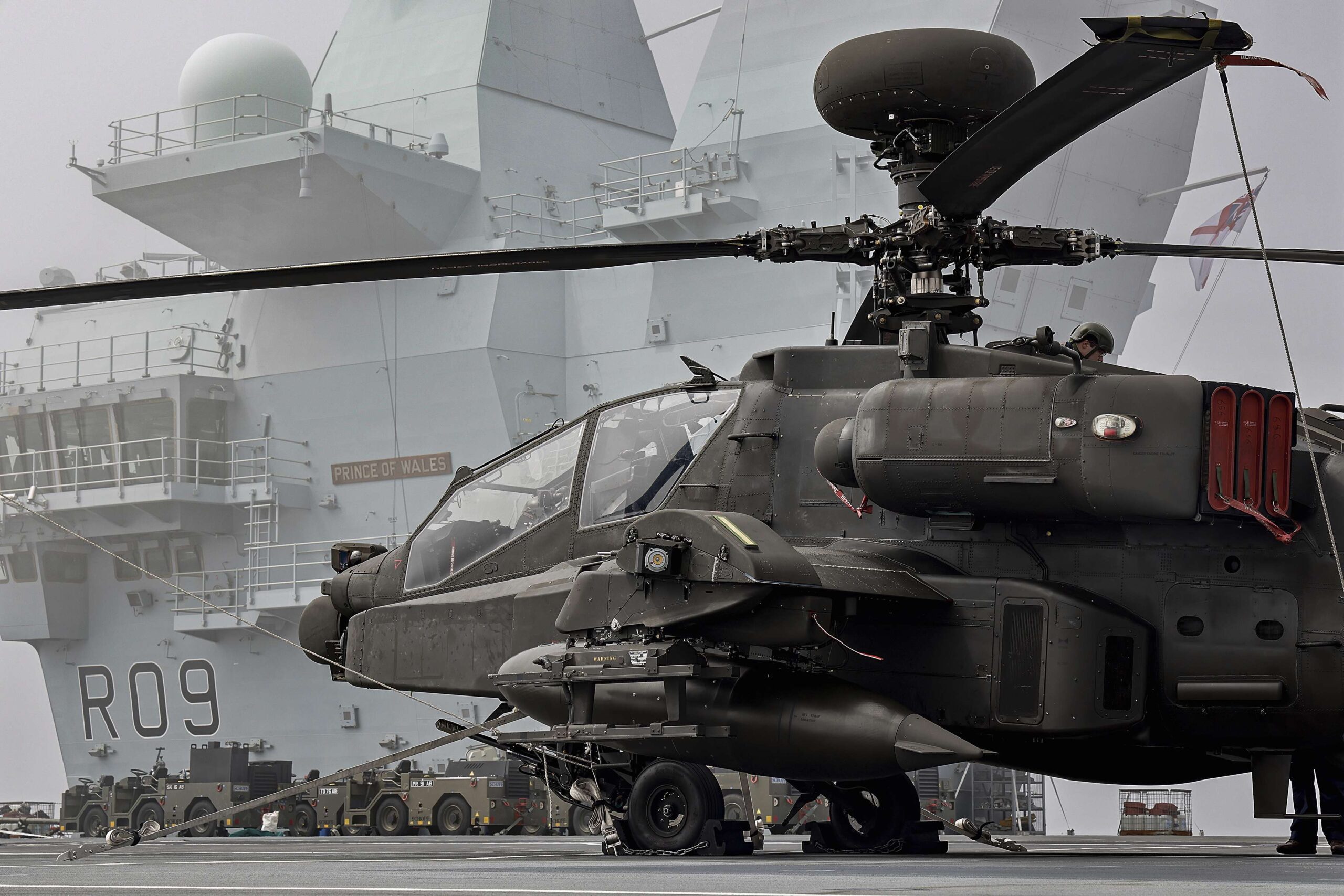
The government has acknowledged concerns over European reliance on United States military capabilities, but stopped short of committing the UK to leading the replacement of specific US systems should Washington reduce its presence.
In its recent report, the Defence Committee warned that an orderly transition of responsibilities would only be possible if the US could see credible European investment in defence capabilities. The committee argued that “the US needs to see European investment in defence capabilities for there to be any chance of an orderly transition of responsibilities”, and called on the government to assess where the UK could lead in replacing US capabilities if they were withdrawn.
It also urged ministers to strengthen links between NATO and EU defence initiatives, particularly those outlined in the EU’s ReArm Europe Plan and Readiness 2030, in order to increase crossover between NATO and EU capability development.The committee concluded that the government must “play a leading role and expend every effort to hold the NATO Alliance together.”
In response, the government reaffirmed its commitment to what it described as a “NATO First” approach, stating that collective defence through the Alliance remains central to UK force design and capability planning.The response said ministers are “considering where to prioritise investment to meet our responsibilities to the Alliance”, including examining “areas where NATO is most reliant on US capabilities” and potential UK involvement in EU capability development programmes.
However, it added that “choices regarding these priorities will be detailed in the forthcoming Defence Investment Plan (DIP)”, leaving decisions on specific capability leadership roles unresolved for now. The government also highlighted structural changes intended to improve interoperability across the Alliance. It said that within the Military Strategic Headquarters, the Chief of the Defence Staff has appointed an interoperability champion to deliver the Strategic Defence Review’s recommendation for a UK NATO Interoperability Roadmap. Ministers pointed to early progress, noting that “the UK’s Carrier Strike Group was recently placed under NATO command, integrated into both Alliance operational and tactical command and control systems.”
On European defence integration, the government welcomed EU efforts to strengthen defence readiness, including the Defence Readiness 2030 roadmap, but stressed that such initiatives must remain aligned with NATO. The response said it was “crucial that these initiatives are designed to complement NATO’s role.”
While acknowledging that negotiations have not resulted in full UK participation in the EU’s Security Action for Europe (SAFE) mechanism, ministers said British industry would still retain limited access. According to the response, UK companies will be able to participate in SAFE contracts “under standard third-country terms”, providing up to “35% of their content.”
The government added that it would continue seeking deeper defence industrial cooperation with European partners through the UK–EU Security and Defence Partnership, and said it is “actively partnering with European nations to leverage the strengths of British industry in delivering European security.”
It cited recent defence agreements reached since the election with Norway, Turkey, Germany and France as evidence of this approach.










Yes, I’m not sure how Europe could possibly replace four fighter squadrons and two infantry brigades that the US has stationed in Europe.
Even the US national security strategy states the threat from Russia is diminished and Europe can look after itself already except for nuclear weapons.
We need to put an end to this defeatist nonsense that the US is guarding Europe.
It’s more about logistics, maintenance, satellites and intelligence gathering. For example lots of NATO countries are buying F-35s, but these all depend on the US for maintaining their stealth coating. Or the US controls half the world’s military satellites, while most NATO members have none.
So we need America so we can buy stuff from Lockheed? Do you not think Lockheed with continue to sell us F35 components if the US pulls out of NATO.
That’s not a very good business model for NATO.
As for logistics the US has close to zero logistics foot print for European deployment. Such deployments rely on trucks and rail all of which is European. The US uses the same logistics for European deployment.
The UK provides much of the European SIGNIT picture and European countries now have large satellite arrays that are growing. France is supplying two thirds of Ukraine’s sattelite intelligence needs.
The US itself says Europe can look after itself in its own national security document. Time to listen .
8 Logistics Brigades is hardly zero logistics footprint.
That latter is where we as a group need to really focus. We are gaining the military strength but without ‘information’ that strength is sorely limited. Surely a joint European orbiting sensor network isn’t beyond us in case we lose US support which is very possible. Again I don’t mind talking up commitment to NATO blah, blah, blah but really in the end its effectiveness and very existence as is simply is not in our hands and burying one’s head in the quicksand really is to put it bluntly pathetic. So despite the cringy words I hope that there is a strong development of a plan B going on as the chaos across the pond is very unpredictable and it simply isn’t feasible to talk up the closeness of relationships when that Country may well be headed, in worse case scenarios for extensive civil unrest bordering on civil war, tyranny and/or outright hostility towards our real allies like Canada. There really is only so far you can keep turning a blind eye so whatever the words of commitment to NATO and cross Atlantic unity we need to have a strong increasingly powerful European perspective if that goes belly up. Thinking this danger and risk ends with Trump would be decidedly naive. Above all actually ordering capability rather than ordering new committees to investigate forming plans to eventually potentially do so (let’s be honest clearly in the deluded hope it all simply calms down) would help whether it’s NATO or ENATO responsibilities.
This Government is on a go slow. Britain needs a set up that can run a serious economy to be able to afford a decent Navy, Army, Airforce, Intelligence and Nuclear Deterrence Force.
I dont see how we can do that as well as pay for half the world and their wives.
You forgot to include the USN in the Atlantic, airbases across mainland Europe and what they can surge from the US in terms of tanker, bomber and recon forces.
European NATO has far more ships and submarines in the Atlantic than the USA.
An inconvenient truth.
Look how hard it was for the US to grab one tanker in the Atlantic.
Which we should note was brought to British waters and as a US Coastguard Cutter (whose coast?) sat there, engineered two crewmen under UK legal jurisdiction to be thus illegally lifted and taken back to the States under our noses. The most embarrassing US incursion on UK homeland security since a US frigate ‘invaded’ a South Coast port, crewmen got drink in a pub, stole some silver and pissed off home with it.
Just because the US NSS says the threat from Russia has diminished, doesn’t mean that the threat from Russia is diminished……
We need to put an end to this defeatist nonsense which claims Russia isn’t a threat
The US maintains a Cavalry Brigade and an Airborne Brigade on a permanent basis in Europe, along with a Division on rotation in Poland. But alongside that the US also has 6 Logistics and Support Brigades and 5 independent Logistics Battalions, 3 Military Police Brigades, 3 Artillery and Air Defence Brigades, a signal brigade and 3 signals battalions, a medical brigade and an indipendent medical battalion, and an Engineering brigade. It also has Divisional scale Medical and Logistics HQ’s stationed in Europe.
Additionally US Army’s III Corps is subordinated to USAEUR which brings 2 Armoured Divisions, and Infantry Division, 2 MP Brigades, a Cavalry Brigade, an Engineering Brigade, a signal brigade, a artillery brigade, a signal brigade and another medical brigade.
The loss of 4 Divisions and 3 separate Brigades stings, but in Europe there are enough fighting formations that it isn’t the end of the world. But the loss of 22 Brigades of Corps and Field Army level enablers would be hard to replace.
The issue has always been: Europe can generate a lot of combat power, but that force is designed to slot into American 3* and higher formations. Part of the problem is that no single NATO country needs 22 CS and CSS Brigades and two CSS Divisional HQ’s, but combined we do. So who foots the bill for formations that they do not need in their national orbat?
Not to mention the US Ballistic Missile Defense ships based in Rota, Spain, and AEGIS Ashore sites in Romania and Poland. BMD is tremendously expensive, and current options for exoatmospheric interceptors consist of US/Japanese SM-3s and Israeli missiles.
Yeah but that’s not ground forces and therefore boring 😀
The 7th Cavalry isn’t amongst those I hope.
1st Squadron, 7th Cavalry Regiment is the Divisional Recce Regiment for 1st Cavalry Division
2nd Battalion, 7th Cavalry, is one of the Combined Arms Battalions in 1st Cavalry’s 3rd Brigade,
Both of those are part of III Corps, which is US based but falls under USAEUR-AF operational command in the event of hostilities breaking out.
The final Regiment, 5th Squadron, 7th Cavalry, falls under 3rd Infantry Division, which isn’t aligned to USAEUR-AF permanently, but from time to time forms the Rotational Division on Atlantic Resolve.
So yes, all three Regiments can be part of the US forces in Europe theoretically.
(And apologies for the weird terminology, the US Cavalry calls a Squadron a Troop, a Regiment a Squadron or Battalion, and then treats the Regiment much like the British Army’s Infantry does, so it gets confusing).
Jim mate! It’s not about what the US assets that are in Europe now but the huge logistic capabilities of virtually endless resupply. American stocks are vast in comparison to any nation on Earth and there is little hope of getting anywhere near matching it in the near/longterm future.
The US has four fighter squadrons at Lakenheath alone, two F‑15E and two F‑35A. They probably have more F‑35s stationed in the UK than the UK does.
Arguably more important than the fighters are the enablers at Mildenhall, tankers, SIGINT, special operations aircraft, and logistics.
On top of that you have Fairford, which acts as the base for rotational nuclear bomber task forces.
That is before you even look at what is permanently based elsewhere in Europe, with major USAF presences in Germany, Italy and Turkey, and additional permanent and rotational bases in Spain and across Eastern Europe.
The contribuation that the US makes to pure numbers is insignificant, european armies already have far more manpowr on paper.
The benefits that the US bring are all the things that are less easy to replace and easier for politicians to ignore/the public to miss but which have led to the majority of the wars in the past few years being won.
Electronic warfare, SEAD, Specialist survienlance capability, strategic bombing, out of area operations (europes secrity depends on many things far away from euorpe). Interoperability standards – link 16, CEC for example, space surviellance. Maratime patrol aircraft, SSN submarines. Not to mention Logistics.
Europe has some capabilities in these areas but
Acknowledgement but no committment . Sounds about right for UK defence. Very much like talk but no orders.
Defence Investment Plan… seems everything waits on review after review, plan afterplan, but nothing gets done! Europe needs more nuclear warheads (to deter – already enough to basically destroy Russian capabilities!), we need more frigates/destroyers (fitted for and equipped), the army needs artillery and.. well lots but not the main need – Europe already has enough ground forces available. UK needs homeland air defences and we all need to sort out the satelite situation so we aren’t dependent on the US.
The fact is, we don’t need reviews or plans. We know what is needed – we need action.
So nothing at all new beyond the usual word salad.
We’ve been NATO first since NATO began, but it sounds good so HMG trot that out anyway.
We are a hollowed out nation with really limited military capability and huge gaps in our ability to defend the island we live on.
If I hear again the DIP has been delayed then the CDS and the VCDS plus CJO should resign together.
This is a crisis and worse than the 1930s….
They apparently presented the DIP based on their assessment of the SDR, which gave the £28bn shortfall. The Treasury refused to fund it and Starmer has no political capital left to force it through, even if he wanted to.
I think we can lay the blame squarely at the government for the lack of funds to speed things up. Short of the US withdrawing from NATO, I cannot see them increasing the budget beyond the 2.5%.
Reform’s policy is to increase to 3% by 2031/32, Conservatives “by the end of the decade”. None of them are stating that we need to do it now.
What does that say? They either do not think the public is that interested or they all recognise that it is not currently affordable. But both alternatives are better than what Labour are proposing, with no stated target date for 3%.
The aircraft carriers are part of the problem. They have drained the RN of resources, forcing the Navy to dispose of much needed frigates and have diverted personnel and money away from other areas. We don’t need them; they are a vanity and prestige item only with no credible role.
The wider issue is that Labour absolutely does not care about Defence. Plenty of Labour MPs view Defence as an obstacle to socialism (read Forsyth’s Fourth Protocol for an insight in that). Even moderate Labour MPs would rather plough money into the obsolete, laughing-stock NHS and welfare, than commit to Defence spending.
The RN hasn’t divested frigates to run the carriers. That is simply not true. The RN is down to just 6 frigates because 1) we gave 4 type 23 frigates away to Chile. 2) we scrapped our type 22 batch 3 ships when they could have been upgraded and run on for at least another 15 years. 3) the RN hasn’t built any new frigates in a generation but is now constructing 13. More are definitely needed. Those 13 are not enough and are delayed and won’t be in service quickly enough to prevent the current very very dangerous lack of warships.
The Type 22 batch 3 were fine Ships your absolutely right . Getting rid of them at the time was madness .👍
Unfortunately Mr Bell, the Tories played hell when Blair sold three Type 23 to Chile, but when they came into power, they scrapped the four batch 3 T22’s, (fine ships, if always underarmed) and the Invincible class, all rapidly paid off, along with the Harrier force!!
Bunch of absolute idiots, just like Labour…..
Aircraft carriers have massive roles and are enormously helpful. Governments not caring enough about defense to put in a bare minimum is a different issue than spending everything on an aircraft carrier.
Frigate cannot cover the same area that the fighters can, they cannot sustain operations for as long as time, they cannot protect power as well or defend an area as well. And the carries were not even that expensive, 6.5 billion for 2 carriers that can hold 70 aircraft. A type 26 is over 1 billion a ship.
Nonsnese, the aircraft carriers are what makes the RN, frigates and destroyers exist to escort and protect things.
We’ve got rid of our amphibious fleet (at lease for the next 10 years) so the Carriers are the only surface vessels that count as capital ships.
The RN has run out of frigates simply because it’s taken 26 years for the governemnts and british infantry to build the T26s (I doubt that was why they were named) and the T23s built in the 90s with a 15 year design life are literally fallign apart, those that weren’t have been sold. Similarly all the T22s which were much better built than the T23s were sold or scrapped.
You say labour doesn’t care about defence but literally all of the ships listed were started under labour. Carriers, T26s. The only class that the conservatives started the T31s which are a basic cheap frigate that will make up numbers but really is only going to replace the River patrol boats that have been filling in for proper warships around the world. Then there’s the T32s a class of warship that seems only to have existed in Boris’s mind when he claimed to have delivered them in his speech much to the surprise of everyone else and nobody before or since seems to have any idea what they are/were or seen a design for them, none have been built.
Then there’s the complete mess of AJAX essentially because the conservatives wanted to go with a US company rather than BAe in Europe, the CV90 could have been in service for years and a factory on Tyneside chruning them out for export.
The one good decision that they made was to build the carriers as CATOBAR, but they then back tracked on that and that has led to enormous knockon expenses and problems whilst bespoke aircraft and capabilities have had to be developed.
I’ll believe that Labour doesn’t believe in defence when I see any evidence that the Conservatives know how to do anything other than cut.
There’s literally nothing that the conservatives did in their entire last run of government that suggests they’re “pro-defence”
Thatcher’s cuts in the early 80s led to the Falklands war, the 2010 SDR under Cameron is basicallly responsible for the mess we are in today.
Europe has a large combined military force, they can look after themselves.
Why is it the UKs responsibility too nanny them.
We should kick the American bases out of the UK, and pull all our bases out of Europe. It’s time Europe grew a pair and as they always say…..America looks after their own.
Putin/Xi Love this comment. Yes, let’s rat on all our alliences & cross our fingers that all our enemies leave us alone. Genius! Do you write policy for MAGA?
“UK prepares to shoulder greater NATO capability burden“
No please! That’s enough comedy for the year 🤣
Russia is a threat to Europe! We must rearm!😧
That’s the Russia that has spent 4 years trying to get more than a toehold into a small neighbour which has no navy and a tiny Air Force? 🤷♂️
Russia can invade Europe!😧
But then we claim Russia is so weak, just one more Ukrainian push will cause them to collapse.🤷♂️
There’s also China which is daily attacking us over a broad greyzone area, plus Trump/MAGA USA could invade an ally any time & become an enemy. This is the worst possible time to have allowed our forces to be so badly weakened.
Russia has spent 4 years fighting an enemy that had spent 10 years building up its army and revamping itself after it got absolutely anihilated in 2004. Europe has not done the same. I don’t think Russia could successfully invade Europe but we’ve spent 35 years running down our defence capability on the basis that they wouldn’t ever be tested….
How can the UK shoulder a greater burden on our budget and manpower honestly 🙄
Healey and Starmer and all the clowns must never speak without their fingers crossed behind their back. Everyone accepts Trump lives in an alternative universe but our gallant leaders are out there on the event horizon too. Nothing is moving forward everyone is just drowning in a soup of delays and subtle and not so subtle cuts.
That requires more funding, expanding the forces, buying more warships, aircraft, tanks & recruiting more personnel. But we’re not really doing any of that, just trying, & making a terrible fist of, replacing what’s old & badly worn out. Ministers/MPs may fool many of the public with nice sounding soundbites, but our enemies do their homework & know the truth; if in fact they haven’t already done a successfull job nobbling our leaders to allow the near destruction of our once mighty armed forces. Sounds far fetched I know, but IF someone wanted, say back in the late 1980s, to undermine our forces, deterrent etc, wouldn’t they be filled with deight at much of the dangerously low state of forces we have today? Job’s already done for them.
Good to know that we’ve had a strategic defence review and a defence investment plan.
Now we’re assessing what we might do.
I suggest that the enabling meeting and keypoint indicators discussion should be had ASAP.
Otherwise Putin might be confused into thinking nothing is actually being done….