


Senior figures from Britain’s defence industry and critical national infrastructure sectors are to receive closed-door government briefings on threats linked to Russia, according to the Cabinet Office.
Security Minister Dan Jarvis will chair a briefing for organisations representing critical national infrastructure providers, while Armed Forces Minister Louise Sandher-Jones will lead a separate session with industry bodies representing defence companies. The briefings are intended to share intelligence on activity the Government attributes to the Russian state and associated proxies, including cyber attacks, sabotage and disinformation.
The Government said Russia and groups linked to it have sought to disrupt organisations supporting essential services in the UK and those involved in assistance to Ukraine. The briefings will draw on intelligence assessments and are intended to give companies a clearer picture of the threat and of measures they can take with government to improve resilience.
Jarvis said: “Strong defences are built on a clear understanding of the threat.
“That’s why I’ll be chairing this briefing, to share world-class intelligence with some of the most important organisations in the country, to ensure they understand and are prepared for the threats we face.
“We’ll be focusing on the actions they can take in partnership with government, to help keep our country safe.”
Sandher-Jones said: “Russia is actively seeking to disrupt the organisations that form the bedrock of our national security.
“By bringing government and defence industry leaders together, we can deepen our shared understanding of the threat and strengthen our collective resilience.
“Protecting our defence sector is essential to keeping Britain secure.”
The Government said similar briefings were held earlier this year for university leaders and political parties, focused on foreign interference and steps organisations could take to strengthen security. Defence companies and infrastructure operators already receive support through bodies including the National Cyber Security Centre, the National Protective Security Authority and specialist policing organisations such as the Civil Nuclear Constabulary.
The announcement also referred to a recent National Security Act case in which the Crown Prosecution Service charged a British man over alleged conduct connected with preparations for sabotage and instructions allegedly received from a person believed to be linked to the GRU Volunteer Corps. The case remains an allegation and has not been determined by a court.




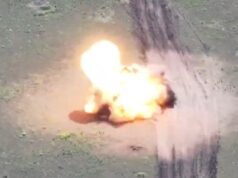



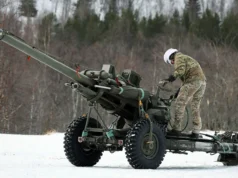



The drone war between Ukraine and Russia has transformed into a high-speed, technologically sophisticated race for air superiority, where precise electronic tracking systems dictate success.
To bypass dense Russian airspace and strike targets like the Moscow Oil Refinery in Kapotnya or logistics hubs along the Novorossiya Highway, Ukraine uses a coordinated “blinding” cycle.
Armed Forces of Ukraine operators launch low-cost, 3D-printed decoys to intentionally flood Russian airspaces.
This forces Russia’s heavy air-defence units to activate their high-powered tracking systems – specifically the 92N6E “Grave Stone” engagement radar (used by the S-400 Triumf) and the dual-band tracking radars used by the Pantsir-S1/S1M. While Russia’s wartime economic footing pumps out 40–50 new S-400 interceptor missiles monthly to outpace launcher destruction, Ukraine is successfully winning the sensor war by blinding the critical, chip-dependent radar units required to guide them.
Once these sensors emit a tracking signal, Ukrainian fighter jets deploy Western-supplied AGM-88 HARM anti-radiation missiles, which follow the radar’s own energy beam directly to the source. Kinetic SEAD strikes do the damage. Concurrently, Special Operations Forces guide loitering munitions to attack the vulnerable 1RL123 target acquisition radars and command vans. This creates temporary radar blind spots, allowing deep-penetration drone swarms to slip through untouched.
Russia has heavily upgraded its offensive posture by replacing its slow, piston-engine Geran-2 (Shahed-136) platforms with jet-powered Geran-4 and Geran-5 variants. Geran-4 features an aerodynamic delta wing configuration and a Chinese turbojet engine, raising its cruising speed to ~500 km/h with a 50kg warhead. The Geran-5 utilises a cigar-shaped cruise-missile design powered by a Telefly TF-TJ2000A engine, reaching ~600 km/h. These jet variants bypass Ukraine’s manual mobile machine-gun trucks and fly with passive, electronic anti-jamming subsystems that circumvent standard GPS spoofing.
The response to these evolving threats highlights a sharp strategic divide between Russia and Ukraine
Pokrova is Ukraine’s highly secretive, nationwide strategic electronic warfare (EW) ecosystem designed to defeat incoming Russian assets without firing a single missile. Rather than relying on traditional brute-force jamming – which merely blasts radio noise – Pokrova utilizes a sophisticated network of perfectly synchronized transmitters that operate on the principle of advanced GNSS spoofing. The system broadcasts subtle, fake binary satellite signals that quietly override the GPS and GLONASS navigation systems of incoming Russian assets, including Shahed-136/131 loitering munitions, Kalibr cruise missiles, and UMPK glide bombs. Because Pokrova feeds the weapons false coordinates that are only slightly different from reality, the automated flight systems do not detect the interference; instead, the drones gradually drift off-course, fly harmlessly into empty fields until they run out of fuel, or loop backwards entirely to their point of launch.
Widely recognized as a major innovation in non-kinetic defence, the Pokrova system – which integrates closely with Ukraine’s specialized “Lima” digital suppression stations – allows Ukraine to neutralize mass drone swarms for pennies on the dollar while conserving its high-end Patriot and NASAMS air defence missiles
To counter high-speed jet drones without burning valuable Patriot interceptors, Ukraine has deployed new specialized FPV interceptor drones (Alexa Spatium, Sting, Zirka) These platforms use automated optical tracking and terminal thermal guidance to actively chase down, ram, and detonate against fast-moving Russian targets in mid-air.
For it’s part Russia is upgrading it’s Kometa anti-jamming antennas from four-element arrays to advanced 12, 16, and 20-element CRPA modules to bypass Ukraine’s Pokrova electronic jamming system. Additionally, Russian engineers are integrating these navigation modules with inertial and electro-optical sensors to maintain target trajectories via terrain cross-referencing if satellite spoofing occurs. Their problem is they need vast amounts of US and German electronic components to build out a working system
Russia’s Layered Point-Defense: Russia relies on the Pantsir-S1M, often modified with containerized “mini-missiles” specifically designed to counter drone swarms. It acts as a close-in safeguard for the longer-range S-400 launchers, relying on an electro-optical tracking system to manually catch low-flying, carbon-fibre Ukrainian drones that try to duck underneath the 92N6E radar’s main horizon.
Ukraine has maintained it’s edge in the electronic warfare battle by shifting from localized jamming to a highly integrated, nationwide cognitive network. By combining the Pokrova network with a vast array of low-cost, tactical interceptor drones, Ukraine’s Unmanned Systems Forces have successfully neutralized up to 80% of Russia’s legacy reconnaissance drones, such as the Orlan-10 and Zala, stripping Russian artillery units of their frontline vision. Furthermore, Ukraine has rapidly adapted it’s software to execute automated, real-time frequency-hopping algorithms across own drone fleets. This rapid digital agility allows Ukrainian FPV operators to outpace Russia’s rigid, factory pre-set electronic jamming systems, ensuring Ukrainian strike assets continue to penetrate deep into Russian rear positions, even through heavily contested airspace.
“Their problem is they need vast amounts of US and German electronic components to build out a working system”
Third party sanction evasion enablers need to be countered with supply chain intelligence, tracing and agile sanction counter measures. Real business ending countermeasures that send a resolute message to any potential agents of fortune that such evasion is fatal..
All sensible.
Would include quite a wide range of sectors as well.
But what real, tangible increase in physical protection measures will happen in reality, and who pays?
So I see little change, the number of sites is so big.