

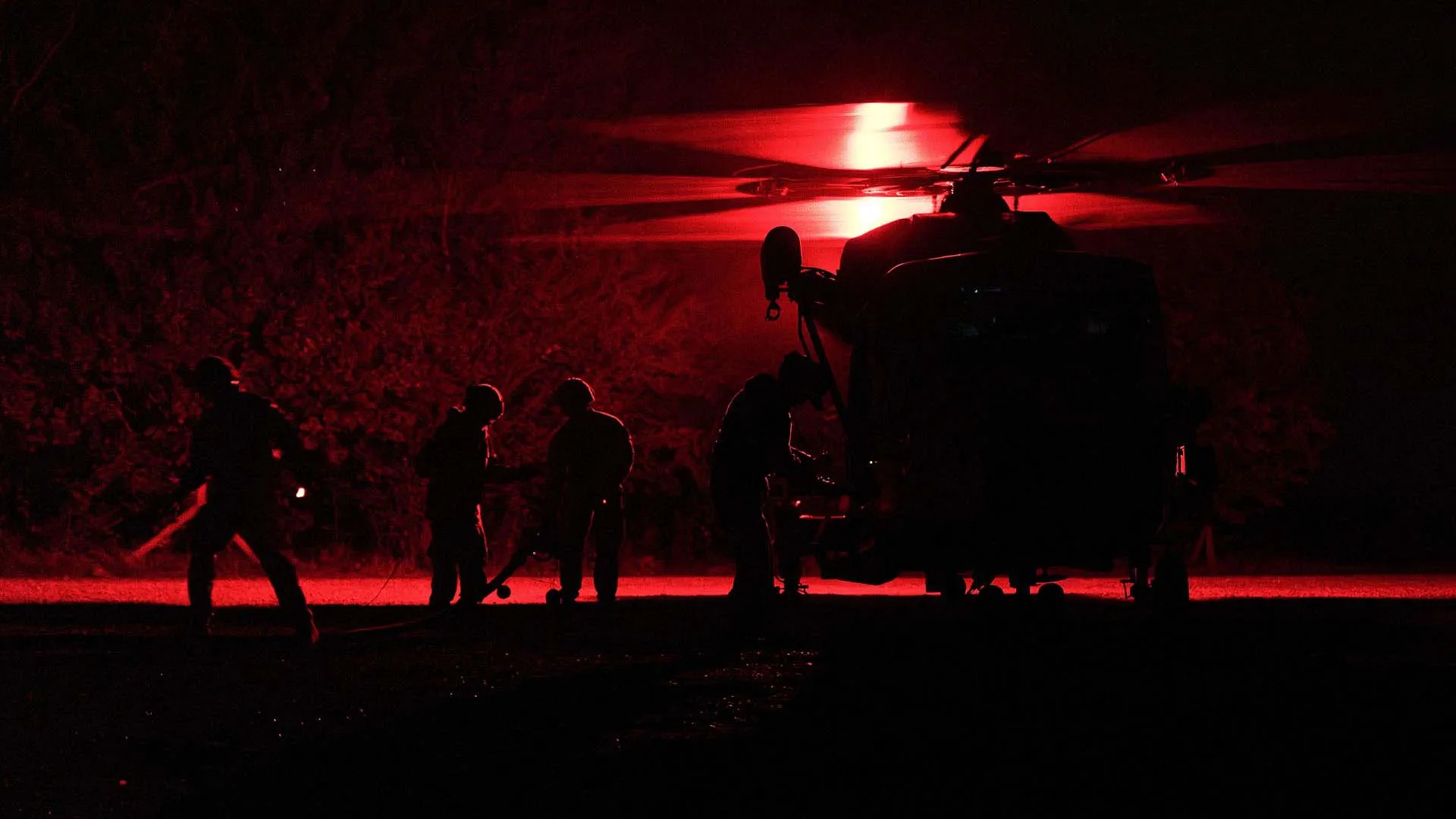
The Ministry of Defence has identified Chinook, Merlin Mk4/4A, Wildcat AH Mk1 and Jupiter HC Mk2 as the helicopter fleets currently able to support casualty evacuation tasks, while stopping short of confirming exactly which platforms will perform the role between 2027 and 2030.
The position was set out in a written parliamentary answer to Liberal Democrat MP James MacCleary, who asked which helicopter platforms would be available to the Armed Forces to perform casualty evacuation between 2027 and 2030. Armed Forces Minister Louise Sandher-Jones said Defence does not treat casualty evacuation, or CASEVAC, as a capability tied to a single aircraft type.
She said: “The Ministry of Defence continually reviews platform capabilities to ensure that current and future Defence requirements are met. Casualty evacuation (CASEVAC) is a military task rather than a capability delivered by a single helicopter type, and Defence maintains a range of rotary-wing platforms that can be employed to support casualty evacuation as required.”
Sandher-Jones then identified the aircraft currently available for the task, saying: “At present, CASEVAC capability is provided by the Chinook, Merlin Mk4/4A, Wildcat AH Mk1 and Jupiter HC Mk2 helicopter fleets. As announced in the Defence Investment Plan, Wildcat AH Mk1 is planned to be withdrawn from service from 2027.”
The answer means the Army’s Wildcat AH Mk1 remains part of the current CASEVAC mix, but is not planned to remain in service across the full period covered by MacCleary’s question. The MOD did not identify a direct replacement platform for Wildcat in the casualty evacuation task, instead saying future decisions would depend on operational and capability requirements.
Sandher-Jones said: “Decisions on the helicopter platforms that will be available to perform the CASEVAC role between 2027 and 2030 will be taken in accordance with Defence capability requirements and operational needs, which are kept under regular review.”
The Chinook fleet provides heavy-lift helicopter support to the Armed Forces, while Merlin Mk4 and Mk4A aircraft are operated by the Commando Helicopter Force in support of Royal Marines and wider maritime operations. Wildcat AH Mk1 is operated by the Army Air Corps, and Jupiter HC Mk2 is used within the military helicopter training system.
The MOD also declined to provide a fixed figure for the number of helicopters that could be made available for casualty evacuation at any one time. Sandher-Jones said availability would depend on the wider demands placed on individual fleets, including maintenance and training as well as operational commitments.
She said: “The number of helicopters available to undertake a CASEVAC task at any given time is not fixed and will vary according to operational commitments, maintenance requirements, training activity and force readiness levels.”
The minister added that more detailed readiness information would not be released publicly, saying: “The Department does not disclose detailed readiness or availability information, as doing so could prejudice the operational effectiveness and security of the Armed Forces.”





Of that list, the handful of operational Merlin HC4 is the only contender.
Wildcat will be gone, but its too small anyway and the other isn’t even a Combat helicopter.
Nothing ordered, a pint of the usual piss poor…..
Merlin sized helicopter isn’t always ideal, especially in the scenario of a minefield or urban combat. Not sure what is left to do such a role once wildcat is gone.
Hi Steve, I guess the AW149 will fit the bill eventually, but with a fleet of 23 in total, that will probably mean two squadrons of 8, they will already be spread so thin they will only ever be a niche capability.
Add to that a reduced Chinook fleet, no Wildcat no C130J…
We continue to contract our capabilities all round.
Basically any helicopter that has enough space for a stretcher inside it can preform CASEVAC however so I’m not sure why you’d write off Chinook or Jupiter.
Evening Deen, the Chinook wasn’t mentioned in the article and the Jupiter isn’t cleared or equipped for a combat role.
In fact, going by the articles 27-30 timeline and the glacial post 2030 delivery rate of the handful of AW149, all it leaves is HC4 and Chinook, both of which are on the large side for the role.
Same old shit Dern.
chinook is mentioned in the first line of the article lol.
Silly me LOL at myself….
Chinook was used in Afghanistan effectively I believe with UKSF, with SF Med Group CMTs.
Morning mate, yep, very effectively and ‘many’ lives were saved because of the following combination, Tonka tough, range, speed, room for medics, equipment and a QRA detachment, on the downside, a problem if it has to navigate a tight spot.
Chinook is the go to asset, will the 149 prove to be Tonka tough, nope, but what’s that got to do with keeping the MIC happy??
Nothing! As we know. The MIC take priority every time.
Another reminder that a complete platform will be removed, Wildcat, without a replacement! Yes it was a fudge bringing it in, without a specific role, but it’s better to have than not! The DIP, 2/3 funded from 2030! Absolute political incompetence and disinformation!
Chinook are great, but they can be too big for tight spots. That is why it is stupid to get rid of Wildcat when it still had another decade of use in it.
It probably had 20 years of life in it John, but the MIC has had its very large wedge of cash out of Wildcat, they cant con anyone else to buy it, and they have moved on to the next ‘big thing’…
‘Roll up sir, roll up, now you don’t want that old Tut Wildcat anymore, anyone who’s anyone is buying this new shiny thing, it’s expensive sir, well yes, ‘reassuringly expensive’ but …. exclusive to you only!
You will, oh that’s wonderful sir, just sign here, here and here and your shiny new helicopters will be delivered at some point in future, then you can scrap them and buy our new drones…
You would have thought that someone at MoD would say “lets keep Wildcat until AW149 is in service”, but no. As per usual.
That’s how it goes John, the typical fleet cuts without replacement.
In this case Wildcat Army/Navy is a radical fleet cut without a direct replacement either identified or ordered. Some mumbling about ‘drones’, at some vague future point.
As always, getting relevant information out of the MoD for free is no easy task.
Obstruction, deferral, deflection remain the order of the day.
They’re correct in that no dedicated type exists, or is needed, but losing Wildcat, limited as it is, gives even fewer options at a time the military should be expanding, not contracting further.
OT, I hear that Burnham still wants to go ahead giving billions to Mauritius, so they know where their priorities lie…..some of that money could have bought quite a few rotary assets.
Billions over a very long period. The annual price is low and it would clean up a situation that should never have happened in the first place
Simple solution to that Steve, it never belonged to Mauritius, so they can, with respect, Foxtrot Oscar.
Nice and simple, deals off.
Imagine telling Uncle Sam its time to hand back Guam??
Just makes things legally clear, as the UN has ruled against the UK and if we respect international law and blame others for not then we have to deal with the issue
It seems to me that we are the only fools that do Steve, so if Argentina gets enough support in the UN (possibly with US leverage, who knows with President Orange Oaf) for them to rule that the Argentinean demands over our South Atlantic territories are valid, we should just pack up and leave?
Ask the French or the Americans to hand back any of their territories and they will curtly tell you where to go and what you can do when you arrive.
Meanwhile China (pulling the Mauritian strings) just takes as many Islands as it wants in the Spratlys and tells its neighbours to do one if they don’t like it.
That is an advisary, not compulsory ruling.
To me following rule of international law is important, as I’m British and it’s in our culture.
I also don’t see the point of keeping the island, it only serves US interests and not UK.
I do wonder how much it costs the treasury each year keeping them Vs not.
What a huge waste of money! It is okay; we don’t need such noisy, hazardous, and vulnerable contraptions. I have seen an MOD working idea based on affixing a transceiver built into a device to every member of the Armed Forces, from Admirals and Generals and Air Chief Marshals through to the lowest ranks wears. You are able to press the device that’s fixed to one’s uniform, located in the chest, or arm. This enables communication with your superiors using ultra-high-frequency wavelengths. You report the injury to HQ, which will arrange transportation directly to sick bays or field hospitals, where medical staff will be waiting. It’s easier than picking up a mobile phone and dialling someone’s number. 🖖
Slightly OT but thinking of trained combat medics, as far as I know the UK has never had a dedicated CSAR helicopter or, for that matter, specifically trained crews on (semi) permanent standby. When you look at the sheer quantity of dedicated assets the US threw at rescuing the F15 crews downed in Iran, it’s mind boggling. The UK or any other NATO country couldn’t possibly come near to that level of capability but any level would be useful.
The closest we’ve come to a dedicated CASEVAC, was the Chinooks operated initially from Kandahar, then moved to Bastion in Afghanistan. A Chinook was on permanent standby, with another ready as a spare. Both aircraft were fully equipped with a trauma operating theatre. That included a surgeon, nurses and a small force protection squad. The crews and medics did sterling service, rescuing the injured whilst under fire and delivering immediate first aid and surgery. There are a lot of lads and lasses that these aircraft and crews saved! They did a similar service in Mali.
As far as I know. the Chinooks of 18 and 27 Sqn are still tasked for and can be fully equipped for CASEVAC.
Dedicated CASEVAC is a direct contradiction in terms. CASEVAC is definitionally an improvised evacuation platform. If an airframe is dedicated to moving casualties it’s MEDEVAC. Even MERT (the Chinooks with the small operating team in the back) where technically improvised as it was established in a standard Chinook as the need arose (this is also why Chinooks in Afghan never had a red cross on them, as they needed to be converted back into regular duty platforms when the need arose/Chinooks where rotated through the role).
This is why your last sentence is axiomatically true as well; As CASEVAC is by nature an improvised platform, anything can be tasked and fully equipped for it (the Army used to have Gazelles in the CASEVAC role in Canada even. It required the removal of one of the seats and some modification to the fuel tank to enable a stretcher to be placed alongside the pilot).
Hi Dern (and DaveyB). I fear I wasn’t being clear enough – I was referring to Combat Search and Rescue, not just CASEVAC. My fault.
I’m thinking of the HH-60W Jolly Green II which. as well as designed for CASEVAC is specifically outfitted for recovering aircrews and isolated personnel from contested environments. It has an extensive suite of avionics, defensive systems and longer range fuel tanks. I’m guessing also a certain number of CSAR-trained personnel armed to the teeth.
Oh no worries. I got you, I just have nothing to add to the CSAR point so focused on CASEVAC.
Technically we did have aircraft that fulfilled the CSAR (combat search and rescue) role. These were the 6 Merlin HC3As, that were bought off the Danish. These came fitted with additional kit that enabled them to do a CSAR role. These aircraft were used on exercises in the CSAR role. However, that all ceased when they were given to the Navy and modified into the HC4. Though there’s nothing stopping the aircraft from still be used in a CSAR role.
Didn’t RAF Reg with Merlin from 28 Sqn dabble in a rudimentary CSAR capability for the RAF back in the day?
And 42 Commando now, again with no dedicated asset.
Yes, that’s correct.
Hi Dern, yep, you are quite correct mixing up the meaning of MEDEVAC (MERT) and CASEVAC. We never had enough aircraft, that could be kept as dedicated MEDVAC ones. Though at the time there was a lot of discussions about forming a dedicated MERT/MEDVAC/CSAR Sqn based on Chinook.
Yup. Although slight clarification: MERT can be MEDEVAC or CASEVAC, the difference in the two terms is about the nature of the platform not the actual medical capability. A BFA with an RLC driver and a single class 2 CMT is MEDEVAC because the BFA is a purpose built ambulance, while a surgical team aboard a Chinook might be CASEVAC because they set up in a Chinook that is moonlighting as an ambulance.
We did have the sea kings for CSAR.
And to think that the wildcat only entered service in 2015 . Although the Army’s wildcat I believe is unarmed the Royal Navy’s packs a hell of a punch ,it’s like we gain a capability and then lose it 🙄
We need to decide which illegal wars we are going to keep fighting for other peoples agendas.
Russia is achieving survival rates without helicopters at the front on par with the US in vietnam and equal to western levels.
But drones are killing everything we think we know about warfare.
I know that we don’t have anywhere near the rotary numbers to.have dedicated Medevac or CSAR machines or units. This is however a big failing.
A US division can call on three Black Hawk squadrons for ferrying in troops, munitions and supplies, as well as Medevac. They also have a squadron of 10 or 12 frontline machines dedicated to Casevac. That feels about the right level of resources.
We are a pale shadow of that. We will (eventually) have probably 12 frontline AW-149s for two army divisions, plus a limited number of Chinooks charged with multiple duties. We certainly need a lot more than 23 AW-149s and 51 Chinooks. It seems that Joint Aviation Command gets trampled underfoot in the rush for big ticket RN and RAF equipments.
It makes the decision to retire the 34 army Wildcats bewildering. The MOD recognises the need for attack helicopters and we have enough Apaches to support 3 Division, 3 squadrons of 8. We do not have any to support 1 Division. The army Wildcats could be upgrade with weapons rack and pylons to give them a good enough attack capability. If the German army can use Jupiters as attack helicopters, which they are doing, Wildcat would be fine in this role.
It is just another cut to an already over-small rotary capability. Remembering that we replaced 34 Gazelles in the light utility role with the grand total of 6 Jupiter 2s.
You can’t ferry troops and supplies with the same airframes you use for Medevac. That’s why we only have Casevac platforms.
And hate to say it, but the whole “NAVY AIR FORCE! Army: make do” is as you said, what is doing this, and not least everyone and their dog crying about drones. Wildcat was always going to be on the chopping block in that conversational environment. (Annoyingly many on this website will demand Navy and Airforce spending and then wring their hands when the army gets cut). I will say two things however, the UK doctrinally does treat rotary assets very differently from the US. The US sees them as a manuver arm in it’s own right, while the UK views rotary in a much more European view, as a fires and support asset, so a 1-1 comparison with the US useage might not be the best way of looking at it.
Don’t get me wrong, with Puma and Wildcat going we are behind by a considerable margin even for them, but the comparison isn’t quite as stark.