

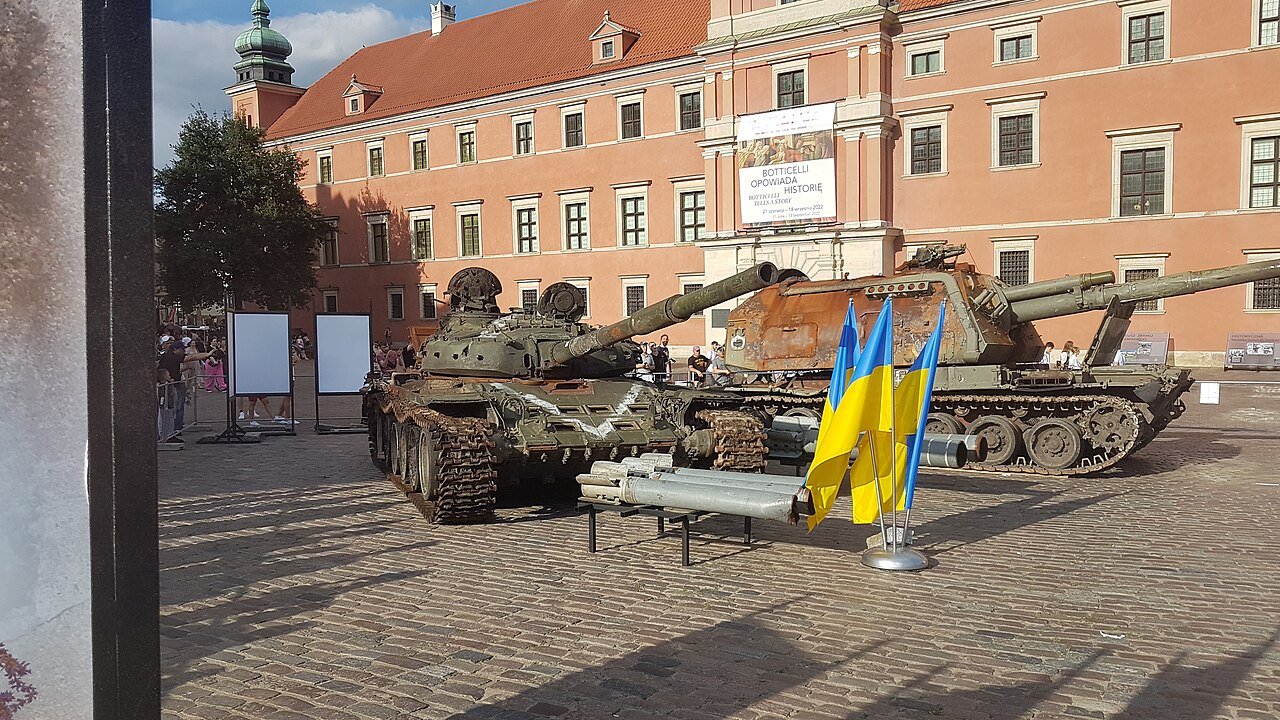
Captured Russian T-72 tanks are to be transferred to museums in Lithuania, Latvia, Estonia, Denmark and the Netherlands under a new Ukrainian government scheme.
Ukraine is to provide captured Russian T-72 tanks to museums in five European countries as part of a new programme intended to document the war and display equipment seized during Russia’s invasion, the UK Defence Journal understands.
The Ukrainian Cabinet of Ministers has approved a mechanism allowing selected items of destroyed or captured Russian military equipment to be transferred free of charge to museums abroad. According to a Ukrainian Ministry of Defence news update, the equipment covered by the scheme was captured or obtained during operations to repel Russian forces and will be used as museum exhibits rather than returned to military service.
Museums in Lithuania, Latvia, Estonia, Denmark and the Netherlands are expected to receive captured T-72 tanks under the first transfers announced by Kyiv. The Ukrainian Ministry of Defence said the vehicles are no longer combat-capable and contain no explosive components, allowing them to be displayed safely to visitors. The initiative was developed jointly by the Ministry of Defence and Ukraine’s Ministry of Culture.
Kyiv said the transfer programme is intended to provide foreign audiences with physical evidence of the equipment used during the war and to support wider efforts to document the consequences of Russia’s invasion. Rather than retaining every captured vehicle in Ukraine, selected examples will be distributed to museums in partner countries where they can form part of permanent collections or temporary exhibitions.
The Ukrainian government is also presenting the scheme as a form of cultural and strategic communication. The Ministry of Defence said displaying captured Russian equipment overseas would help provide what it described as objective information about Ukraine’s continuing struggle for independence, while strengthening cooperation with foreign museums and maintaining public awareness of the conflict among partner states.
The museum programme is part of an effort by Ukraine to make captured Russian equipment available for purposes beyond battlefield exploitation. Kyiv has already established TrophyLab, a government portal designed to give manufacturers, engineers, researchers, laboratories and international partners access to information and equipment recovered from Russian forces. That initiative is focused more directly on technical study, allowing organisations to examine Russian weapons and systems and potentially use the resulting information for research, countermeasure development and defence production.
The museum transfers have a different purpose, with vehicles being rendered unsuitable for combat and used principally for public display. The initial selection of T-72s also provides foreign museums with examples of one of the principal families of main battle tanks employed by Russian forces during the war, while removing the equipment from any potential future military use.
Ukraine said the initiative would continue alongside other government efforts intended to maintain international support, strengthen cooperation with partner countries and document the material consequences of the conflict. The newly approved mechanism provides the legal and administrative route through which further captured or destroyed Russian equipment could be transferred to overseas institutions for exhibition in the future.
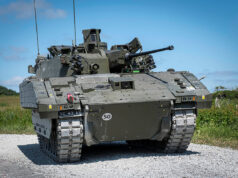
Image Kracho, CC BY-SA 4.0, via Wikimedia Commons








So if the Ukrainians aren’t needed to re-use Tanks like T72s etc . Can we have our equipment back please 🤗
If you read the article they’re no longer fit to fight probably cost more to strip and repair I would have thought anything useful inside will be removed power packs recoil system and breech components
I think it means that the museum pieces have been deliberately demilitarised for that purpose unlike those tanks donated for trials by Western countries.
I do wonder whether any Russian tanks have been captured in an intact enough state to be used again by Ukrainian crews- surely apart from the labels the interiors of those and Ukraine’s inherited fleets are the same?
Plenty during the earlier more mobile stages of the war. The Oryx list has 4437 visually confirmed Russian tank losses of which 538 were captured.
Oryx. (Ha ha ha)
What a constructive response. Not really sure how you could possibly dispute a literal archive of photographic evidence of captured equipment. Unfortunately for you, I imagine the cheques from the Kremlin will become less generous once they declare full mobilisation.
Oryx, a well regarded small group who record all losses with footage and proof! Just so happens it shows your Russian mates losses are so much higher! Boo hoo never mind eh!
Now, now, ‘Borners! We can be generous in victory. The tragic posts are the ones that say something like ‘The next Big Push is coming! …’ It’s appalling though. Losses are always estimated but all the reliable ones point one way.
You are correct mate, and so right 👍
The entire 4th Guards Tank division donated it’s equipment to Ukraine at one point, much of it in running order. For a while the biggest donor of military vehicles to the Ukrainian army was Russia.
That clearly explains why they were, and still are, screaming for new western tanks then, eh?
You’d only ask that question if a horse kicked you in the head as a child.
Thats hilarious Dern 😂
I’ve looked after a few people when they have been kicked in the head by horses….
@Dern
Princess Anne is closely involved with several British Army regiments—notably serving as Colonel of The Blues and Royals and Colonel-in-Chief of the Royal Logistic Corps and the Royal Corps of Signals among others. Regarding her June 2024 horse-related concussion at Gatcombe Park, the specific horse remains unknown because she suffered memory loss and there were no witnesses. Fortunately, HRH has made a good recovery.
What’s that got to do with the price of fish?
Also since when is a 74year old a child?
Er…actually I dont eat fish…I’m a carnivore, I eat meat
HRH looks good for 74, much better than her scowling brother the royal paedophile. And she’s Colonel-in Chief of lots of miltary regiments and corps :-
Royal Corps of Signals – Colonel-in-Chief
Royal Logistic Corps – Colonel-in-Chief
Intelligence Corps – Colonel-in-Chief
Royal Army Veterinary Corps – Colonel-in-Chief
King’s Royal Hussars – Colonel-in-Chief
1st Battalion Ranger Regiment – Colonel-in-Chief
Queen’s Gurkha Signals – Affiliated Colonel-in-Chief
Queen’s Own Gurkha Logistic Regiment – Affiliated Colonel-in-Chief
First Aid Nursing Yeomanry (Princess Royal’s Volunteer Corps) – Commandant-in-Chief
And dont forget, the Princess Anne is a Colonel of the Blues and Royals. HRH also holds numerous honorary roles within the Commonwealth, particularly in Australia, Canada, and New Zealand, serving as Colonel-in-Chief to various signal, transport, medical, and cavalry units
I expect Daniele could give more detail, he specialises in that sort of thing
Yeah okay bore off troll.
Your problem is you are far too polite. ‘Bourners on the other hand…
Pretty sure that’s the first time I’ve been accused of being too Polite on this site.
Irony, dear, irony. Very popular when one was young.
Sadly Irony doesn’t translate well to text.
Have a nice evening and I expect you will feel better by the end of the week 🙂
I’m fine. Clearly, you are not.
You’re wasting your breath, these are the same people who credulously believed that Russia was going to run out of missiles in 2022, was putting washing machine chips in its equipment and that it’s economy has been about to collapse tomorrow for the last 4 years.
You could tell them that the Ukrainian army surrounded Moscow yesterday evening and they would believe it.
Hey fascist. The ZSU did in fact drive the Russians back from Kharkiv across the Oskil and made the 4th Guards Tank Division abandon most of it’s equipment in Izyum. This isn’t credilous belief, this is facts on the ground. Some of us actually paid attention to the war, and don’t just post whatever the Kremlin pays us too.
Well said and I remember that vividly. Lots of cave trolls lurking about. More so than usual.
They always show up on any article that makes Russia look anything that’s not stronk.
There’s a lot more than usual Dern, there’s the obvious Russian ones like the dickhead above, others that seem to try and cause disruption by old fashioned trolling like Spock and David Lloyd.
I dont know if they are Russian too, perhaps….
I remember the troll JohninMK* with fondness. The thrashings he got from Airborne in reply made my day.
*I re-named him as ‘John in Magnitogorsk’. He was always such a ‘reasonable’ troll it was sad in a way.
Johninmk ! Ye gads I’d completely forgotten about that professional imbecile I’m certain he went by many names and who knows perhaps he still lurks on these shores ……..
However it seems the levels of imbecility have increased since he used to post…
“The ZSU did in fact drive the Russians back from Kharkiv across the Oskil and made the 4th Guards Tank Division abandon most of it’s equipment in Izyum.”
I guess it would be more accurately described as the 4th Guards Tank Platoon now wouldn’t it?
How are the refineries, wild berries,Black Sea fleet and shipping in the area getting on? All dastardly western propaganda no doubt eh!
Oh and of course you could go and be a truck driver and run the road to crimea,good luck with that👍
Most nations want western tanks, but even your bosses old T series are useful whey there isn’t any other option! Good job your mates run off leaving their tanks fully serviceable, ready to be used against the new batch of Russkie cannon fodder! Tell your boss thanks, it saves time and effort for the west!
It is the real story of this conflict for me, the way Ukraine adapted, improvised and innovated whilst fighting. They have taken old N.A.T.O. kit and re-purposed it with amazing skill and at the same time have rendered almost everything about large scale warfare that seemed settled out of date. Not a country with a stellar modern history in truth, but we Brits like an under dog that dishes it out. But the human cost caused by that monster in the Kremlin is horrendous; the POV video taken on the frontline is well neigh unwatchable; lives thrown away for what? How can that sea you n t sleep at night?
A very good idea. Some of the nations who contribute to the Ukrainian war effort will see some outcome relating to that support.
[Brazenly OT, does anyone know what vehicles will be used to kit out the recce platoon in a Boxer battalion? Ajax or some sort of modified Boxer]
I’m still awaiting the answer to that question mate. I,and others, always assumed Ajax as the direct Scimitar replacement. Not sure now.
Hmm, I wonder how quickly the British Army will run out of crews if it goes into general use..? Seriously every time they try to say it is fixed more people put their hands up and say I can’t hear..!
Cheers CR
Have they ever said it’s fixed? I have seen many statements about it being mitigated etc but don’t remember them going as far as fixed.
Really don’t know how your meant to do recce in a vehicle that is so loud it damages it’s own troops hearing unless they wear significant ear protection.
True enough, wrong word, but they cleared it to IOC a few months ago and then withdrew it after more troops reported sick with hearing damage so even the fix/mitigation didn’t work. My guess is that it is fundamentally too noisy. The army tried to get too much out of it. We have Ajax, the US have the Constellation Class, except I don’t Ajax will ever enter service..!
Anyway, as a recce vehicle it has one serious problem. It is crewed. Recce is now a job for drones it seems. Anything that moves in the contact area is going to be jumped on by every drone with a line of sight on it, especially something as big and noisy as Ajax. What is worse there is talk that the digital systems on board are now past their sell by date, hardly surprising giving it is basically 10 years old, I bet even the operating system is a generation behind especially if the computers are ten years old – a hackers delight!
Cheers CR
The Ajax 2 program is meant to be bringing rubber tracks, which could be the solution. Time will tell if funding allows for it
By the time they upgrade the AJAX to use rubber tracks, more problems with the AJAX are likely to be found.
There is a rumour that all the vehicles didn’t work after being taken out of storage, for instance.
People are quick to slate the manufacturers, but the implied speed at which the vehicles are being updated by the MoD to fix the apparent flaws and get them to the newest version, it doesn’t show much promise.
I keep reading that the cycle to upgrade technology used in Ukraine is on schedule for weeks to months whereas the speed at which technology is updated here is months to years.
With such a slow turnover, I fear AJAX will turn to scrap before it becomes useful for the military.
Being in the middle of an active war allows corners to be cut and red tape ignored. We saw that in Iraq/Afghan when soldiers started to die and the media did their job and highlighted what was causing it. Until we are again at war policticans and generals will cover up issues for the benefit of their careers.
For sure drones have replaced the need for ground recce, however you still need to be able to move troops and supplies around the battlefield and they still need to be defended whilst that happens and armour is still only solution. Something that hasn’t yet been solved with drones.
My assumption with time we will see tanks /APC etc surrounded by anti drone drones, effectively creating a defensive net around them like frigates do for carriers against subs.
Hi Steve,
Even if they get the rubber tracks developed successfully they will probably be faced with the need to update the digital kit inside the vehicle, but the big issue for me is that it is quite possibly an out of date concept. Drones are likely to be overtaking Ajax’s role at much lower cost, with better overall capability and way less risk to the troops.
A mix of ground and air based recce drones networked with a mix of attritable and expendable drones could probably give better coverage and greater overall system resilience.
In short, set some of the new SME’s onto the army’s recce problem and get some drones in service by the end of next year and scrap Ajax. Job’s a good’un.
Cheers CR
PS. Attritable – Modest cost, can afford to lose them but would prefer not to. Expendable – throw away so could be armed suicide drones loitering/monitoring an area.
CR, Perhaps they will send them in anyway as a drone decoy unit to allow the real recce to go through. ( Not beyond the realms of man) In all honesty, not sure they will resolve enough of the issues to go full bore with it. It has developed so much of a history that its the equivalent of a tracked L85A1. I would not like to be the guy who had to instil confidence in the kit when issuing it out. Not actually sure the toms will buy into it.
Hopefully it’s like the L85a1, after the upgrades and fixed the a2 worked well.
I’ll have a T-90 if they have any spare.
Can i get one?
I’m sure the Tank Museum at Bovington will be interested in some of this kit
I’m happy to set up a tank museum in m back garden… just saying.
You have a garden THAT BIG???
I would say I could pop about 15-16 in there.. the wife would be a bit pissed mind.
I’m envious. I love gardening, mine is much smaller, might fit 2 or 3.
It gets a bit much sometimes.. a product about 30 carloads of garden waste a year..
park them outside the russian embassies with ukraine flag on top
Love it….
Haha they really should do that next time Russia decides to test NATO by sending drones into Poland etc.
It’s interesting and we are definitely seeing a major shift in the way MBT’s are being used by both sides, they seem to be more mobile artillery than direct assault these days.
There was a time, only a few short years ago, that every single captured T72 would have been refurbished and turned against its former owners, examples deemed beyond repair would have had all usable parts stripped to keep the fleet operational.
If we see a genuine permanent shift away from traditional massed MBT usage, towards a more integrated indirect use perhaps our 148 will be enough after all??
Your Troll comment above. I can vouch that David Lloyd is not Russian, I know the fella.
He’s not everyones cup of tea with the ongoing rumble in the jungle with Jim but pretty sure he’s not Russian!! Unless he’s been in deep cover for many years lol!
Fair enough mate, its just a really odd way of behaving. David’s attacks on Jim are both childish, personal and oddly angry!
Like you mate, ive been a ‘resident’ here for a good while, we’ve spotted the obvious Russian morse tappers, but over the last two years, there seems to have been a level of FB style deliberate trolling going on.
I do occasionally wonder if its just another approch to attempt to derail an excellent base platform.
I suspect it might well be mate.
The west is free, so they exploit it and have a voice.
JohninMK was a touch suspect. If my memory serves me right I’m pretty sure he said the Moskva was tied up alongside when it was in fact Russias newest submarine😂
Ah yes JohnMK, the first and most obvious Russian troll!
Nah there where others before him. Daniele might remember, I think it was Iqbal?
Yes, Iqbal. Also there was a Peder, a “Mike” and the worst of the lot, TH, and then we had Harold.
This is going waaaaaay back though.
Opinion was divided as to whether they were Russian or Scots Nats, or even Irish nationalists, they all had it in for HM Armed Forces, so a curious website to visit and no surprise that their attitude caused problems.
Russia wise, you also have Ulya, who some consider a troll as well, and she was here long before John in MK as well.
Pretty sure that Harold and TH were the same. Then there was Kayaker. More recently John Brian Doyle, a definite CCP operative.
Don’t recall Kayaker. Good shout on Doyle though, I’d forgotten him.
The really missed feature is being able to click on a user name and seeing their post history. Caught some pretty interesting name changes through that.
Ulya wasn’t a troll, she was just Russian, with all that it entails.
I’m of that opinion too, I enjoy chatting to her.
Hello Mate,
I remember her as well. She put up some reasonable posts. I wonder if she got into trouble being on here or if she simply got isolated as Russia tightened internet controls..?
Cheers CR
@CR
She was on just a few weeks ago mate, still here reading rather than posting.
Also, regards Iqbal, he/it, was posting on Navay Lookout as well, saw the name much more recently after the fireworks here when you pretty much told him to do one with his attitude.
I don’t post on NL, this sites my home, I just occasionally look at the comment section.
Wonder if Halfwit has appeared over there?
Do you know what happened to Farouk( forgive the spelling)?
I don’t. He was one of my fav posters.
Knowledgeable, no nonsense.
Missed.
Spelling is correct too. 👍
Mr Clark I have been resident on these shores at least as long as yourself however simply disagreeing with the room does not make everyone who does so a troll…. The room here does whiff a little of collectivism and groupthink but there are genuine dissenters who seem to get run out of town who are not Putin lovers but try to offer a balanced opinion ..
I did not resort to character assassination when Um-Bongo was introduced to the market …..
Good evening,
Well, there are plenty of us that disagree on various aspects of defence and that’s fine.
That’s not what I’m talking about, there are the rather obvious ( some more subtle) foreign players, then there are the thevhandful of obvious trolls who behave like bloody children.
These idiots bring nothing to the table. As I said, its sort of like the pricks that generally inhabit FB groups.
I don’t think it’s a perm thing. Once they figure out how to counter drones properly, tanks will come back to the forefront. It’s only a matter of time.
Although we haven’t yet moved into the era of full AI drones that don’t need a data link and can therefore be hardened against jamming etc tech. They will he harder to counter but also harder to mass produce as need the processing power.