

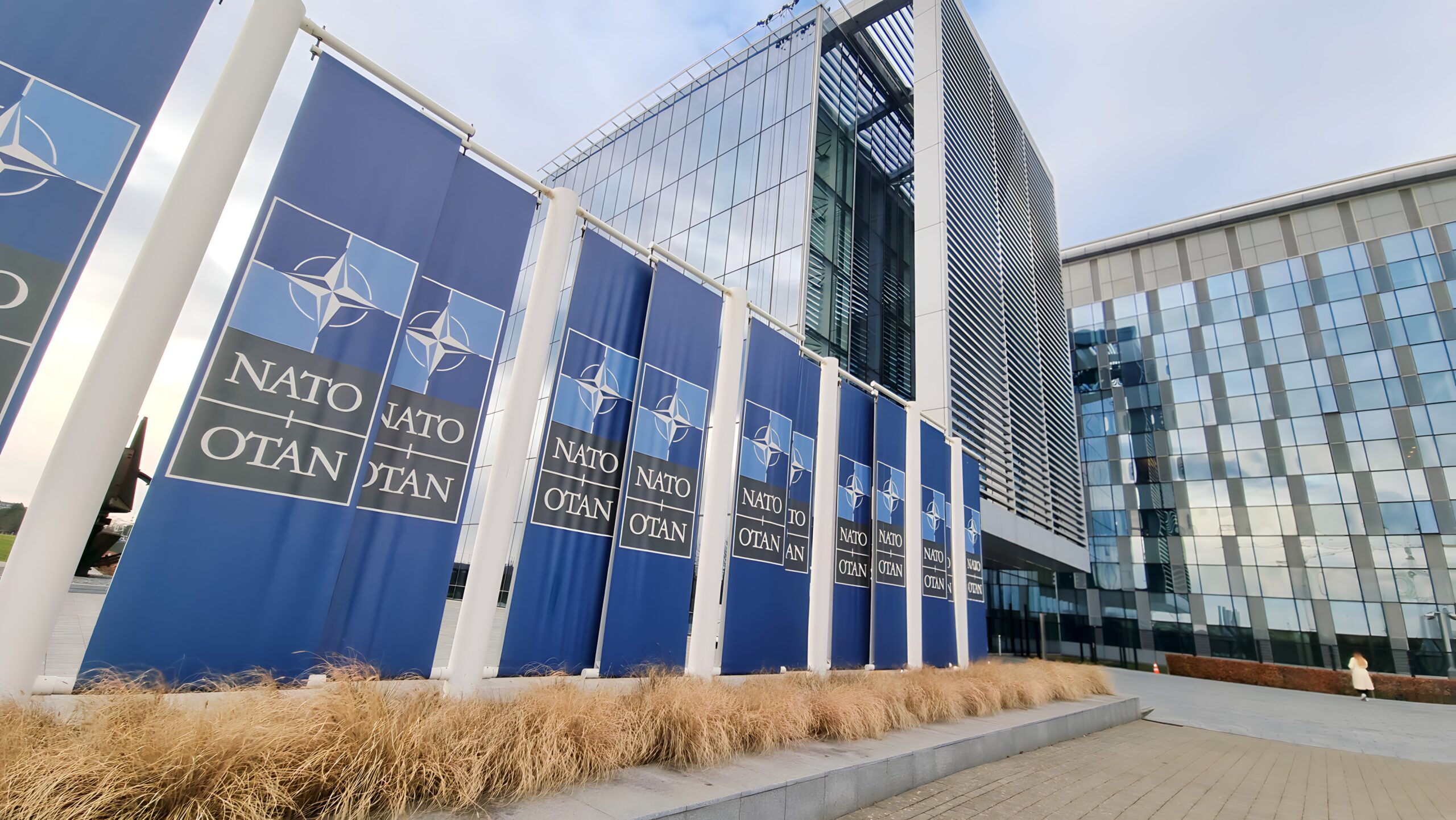
A senior US defence official has called on European NATO members to assume primary responsibility for the conventional defence of Europe, arguing the Alliance must adapt to a changed strategic environment and a growing need for the United States to prioritise threats elsewhere, according to remarks delivered at the NATO Defence Ministerial.
Speaking in Brussels, Under Secretary of War for Policy Elbridge Colby said the world that shaped NATO’s posture following the Cold War “no longer exists”, warning that “power politics has returned” and that large-scale military force is again being used.
Colby said the United States was prioritising defence of the homeland and interests in the Western Hemisphere, while reinforcing deterrence in the Indo-Pacific, particularly the Western Pacific. He added that allies must be prepared for the possibility of opponents acting simultaneously across multiple theatres.
“These realities compel us to think clearly, soberly, and realistically about how we defend ourselves, and how we do so together in a way that is sustainable, sensible, and enduring,” he said.
Colby rejected the suggestion that this shift represented a withdrawal from NATO, describing it instead as a return to the Alliance’s original purpose. He said NATO’s Cold War model involved allies being expected to “pull their weight”, citing burden-sharing debates under multiple US presidents and arguing that the approach helped deter Soviet aggression.
He described the post-Cold War era as a shift into what he called “NATO 2.0”, characterised by reduced European defence spending and a greater focus on operations outside the Alliance’s core area. Colby said this model was no longer “fit for purpose” and called for a “NATO 3.0” approach that more closely resembled the Cold War framework.
“This ‘NATO 3.0’ requires much greater efforts by our allies to step up and assume primary responsibility for the conventional defense of Europe,” he said.
Colby praised commitments made at the 2025 Hague Summit, saying NATO members had begun to recognise that a model in which the United States provided the “overwhelming share of high-end military power” while European allies spent relatively little was no longer sustainable.
He said allies were now moving toward the Hague commitments of 3.5% and 5% of GDP on core and broader defence spending, describing the levels as a “new global standard”.
However, Colby argued that NATO must now turn spending commitments into practical military outputs, including “ready forces, usable munitions, resilient logistics, and integrated command structures”.
“Defense spending levels matter, and there is no substitute for it. But what matters at the end of the day is what those resources produce,” he said.
He also called for greater emphasis on warfighting effectiveness and warned against over-ambitious procurement goals, stating that not every capability could be “gold-plated” and that NATO members would need to make hard choices about readiness and stockpiles.
Colby said the United States would continue to provide extended nuclear deterrence and would still contribute conventional capabilities, but in a “more limited and focused fashion”. He said Washington would be candid about the scale and timeline of change, while continuing to train, exercise and plan alongside allies.
“We will continue to provide the U.S. extended nuclear deterrent,” he said, adding: “We in the Department of War will continue to ready our forces to do our part under Article V with Europe taking the lead for its conventional defense.” Colby said the United States would continue to push for a “rebalancing of roles and burdens” within the Alliance, describing this as necessary to ensure NATO remained credible and sustainable.
He argued the approach was intended to strengthen Europe rather than weaken it, saying the US sought “partnerships, not dependencies”. He added that alliances were strongest when responsibilities were shared in line with power and interests, warning that imbalances could create “structural strain”. Colby said he was encouraged by increased defence spending among several European allies and ongoing reforms to procurement and readiness systems. He also pointed to NATO’s defence planning process becoming more operationally focused.
He concluded by describing a future NATO in which Europe provides the primary conventional defence of the continent, supported by US strategic power, and said the Alliance must be grounded in deterrence and effective defence rather than “symbolism”. “Partnership, by definition, means walking together, each carrying a fair share of the load,” he said.










NATO is by definition there to defend the North Atlantic Region, so if the US doesn’t want to contribute why have them in the alliance?
Don’t forget to keep buying US stuff though..
I think things are pretty clear. They are pulling out, they would appreciate that we still buy US system, but in case of war, they would not guarrantee to support them, nor participate in joint defense.
So let’s be clear: any euro spend outside Europe as to be thought: if a European or UK alternative exists, forget buying in the USA. Defense can only be meant amoung people who share a common destiny.