

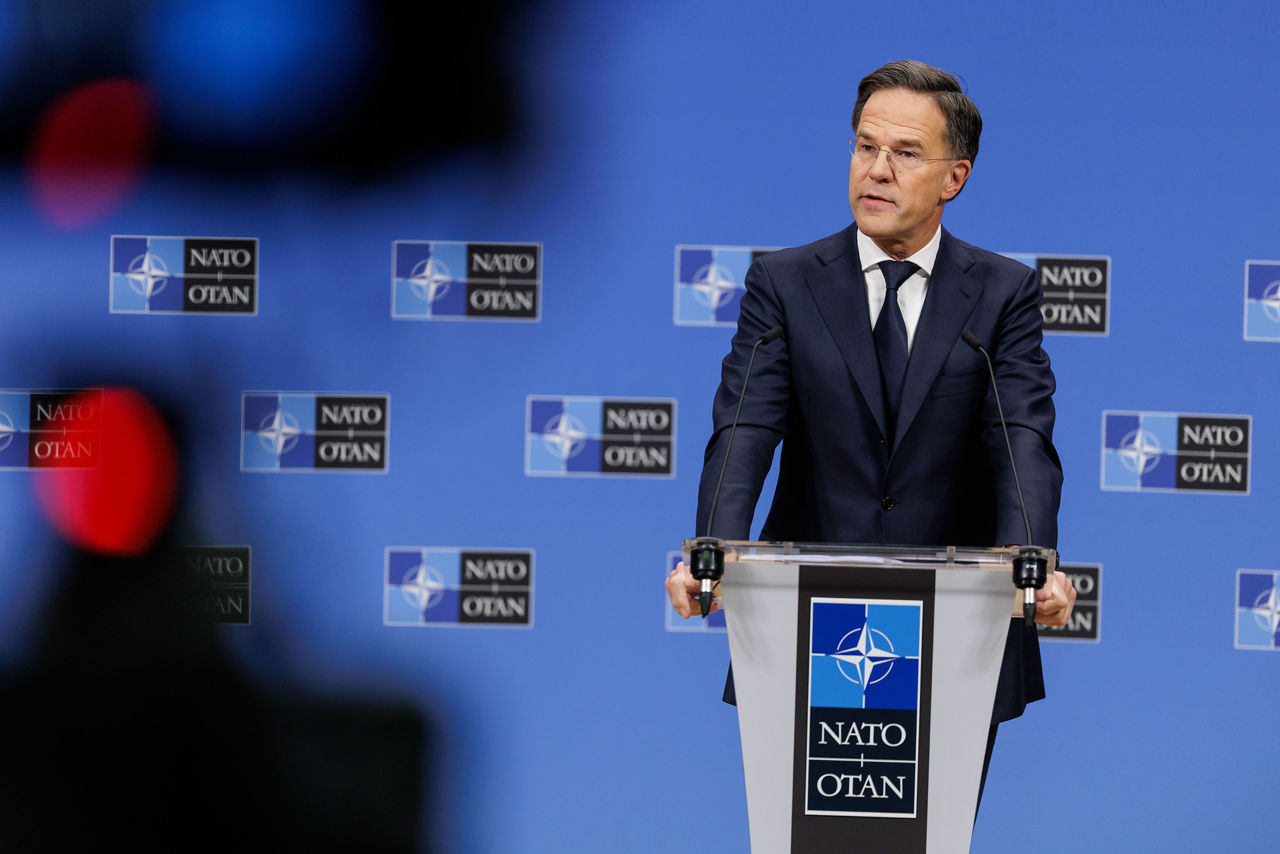
NATO Secretary General Mark Rutte warned that the Alliance is only at the start of a long effort to rebuild military readiness, telling reporters ahead of this week’s Foreign Ministers’ meeting that Allies must maintain momentum on deterrence, industrial output and support for Ukraine.
At the pre-ministerial press conference in Brussels, Rutte said ministers will assess progress since leaders agreed at The Hague to spend 5 percent of GDP on defence, including 3.5 percent on core military capability. He said this reflected a hard strategic shift: “That commitment to invest more in our security was a major leap which recognised our changing reality. But this is only the beginning of a long road, and we cannot be complacent.”
Rutte added that increased defence budgets will only be effective if industry can meet demand. “Increasing our investment is only truly effective if supply matches demand, and that’s why we are also rapidly scaling up production capacity,” he said, describing deeper cooperation with industry on both sides of the Atlantic as vital.
Ukraine will be central to tomorrow’s talks, with a meeting of the NATO Ukraine Council involving Ukrainian Foreign Minister Andrii Sybiha and the EU’s High Representative Kaja Kallas. Rutte reiterated that Allies are working toward what he called a just and lasting peace. He also condemned Russia’s intensified strikes on civilian infrastructure as winter begins: “Russia is systematically targeting civilian infrastructure, depriving Ukrainians of heat and light.”
He noted the role of states assisting Moscow: “Russia is not alone in this war, as China continues to be its decisive enabler and Iran and North Korea also provide support.”
Rutte said European and Canadian Allies have provided billions in equipment through PURL in recent months, and signalled that more announcements are expected. He closed by urging continued collective pressure: “Allies have shown they are already willing and able to work together to ensure we can tackle the challenges effectively, keeping our 1 billion people safe today and into the future.”









When will the UK Defence Expenditure plan (or whatever it’s called) be launched to the public? If NATO is to enjoy a fully functioning UK land force, then matters need to be quickly addressed. Sadly, it looks as if Ajax will require further investment, reducing the medium-term follow-on orders and new variants such as the IFV model. Boxer appears to be dribbling off the production line, and a Bulldog replacement is still rumoured to be 6×6 Patria? Apart from most MAN trucks needing urgent mechanical attention, and no more news on the RA’s new Boxer-mounted Howitzer, things are looking somewhat tardy as we come to the end of 2025. Today, Russia says it does not seek war with NATO, but it will fight if it has to, sends a stark message to Whitehall….but are they listening?
I see in other news that Canada has managed to negotiate a deal to join the EU 150bill euro SAFE defence program. Wheras the UK government has failed to do the same. Meaning issues for our defence firm to access the fund.
Canada’s defence industry isn’t a threat to European defence firms in the same way that the British defence industry is. They’ve been allowed in because they will likely buy more from Europe than vice versa. With UK it would likely be the other way around, with (mainly) French and German companies competing with, and in some cases losing out to, British firms.
So they make it harder for the UK.
You are correct and also the complicated EU /Brexit relationship still is lingering between them both.
Canadian defence companies are already quite active in EU countries already
any news on increasing our air or maritime forces? the defence equipment plan – where’s that? Any increase to pilot, soldier or sailor numbers? – no. As Putin openly threatens Europe (Trump/US is no longer reliable) we need to scale up fast. Despite posturing and constant tough talk, we’re not ready for war fighting at scale for at least 5 years. Putin knows it
Does anyone really know how much the is currently spending on defence? 1.9%? 2.2%? Other than warships, I don’t see any other evidence of spending on anything meaningful. Broken fubar ajax. Boxers still in boxes etc and soforth