

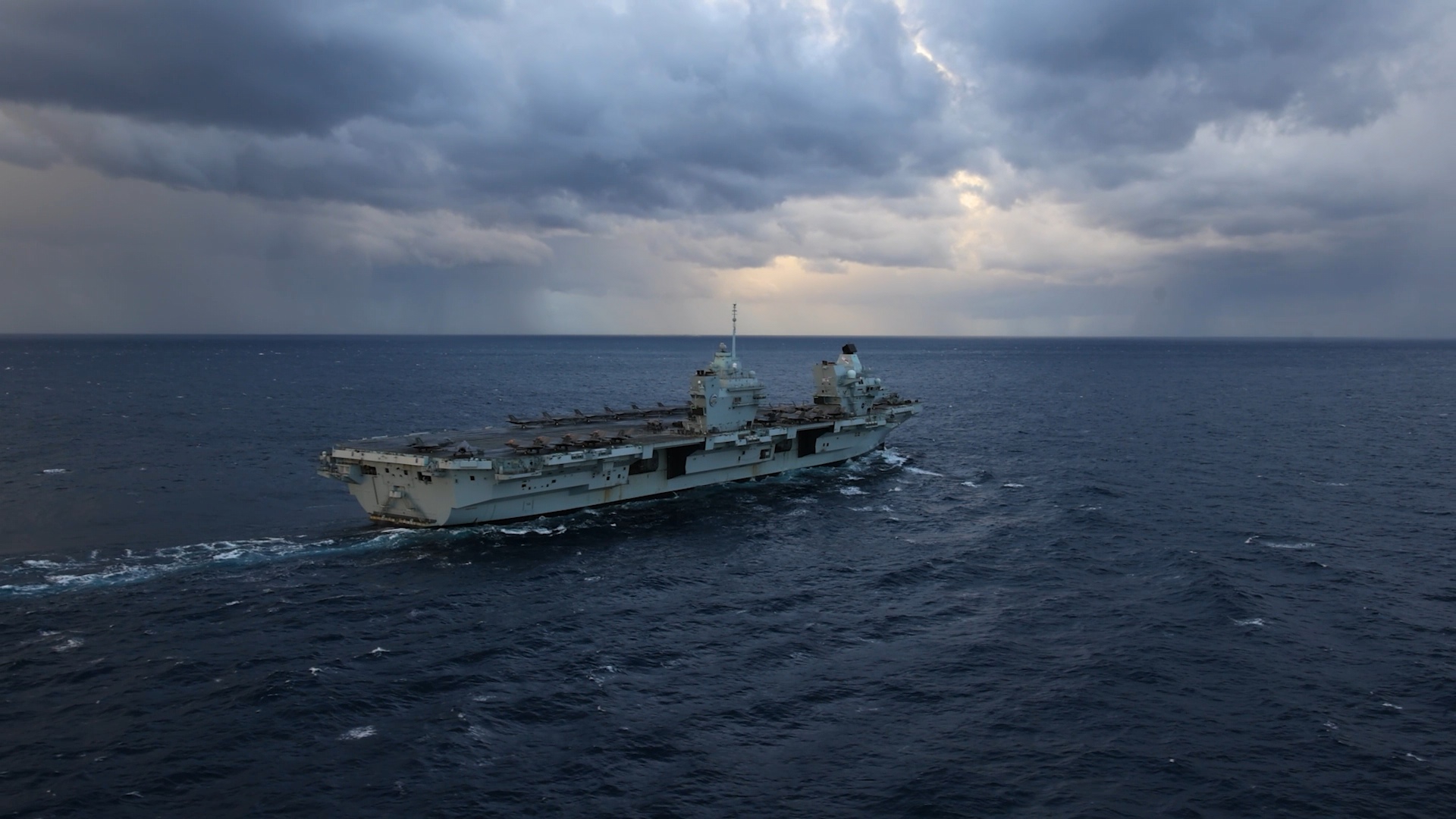
A new analysis from the Council on Geostrategy argues that Britain risks falling short of its maritime ambitions unless recent defence strategies are better aligned and translated into concrete capability, industrial delivery, and sustained investment.
In a memorandum published this week by Britain’s World, the Council on Geostrategy’s online magazine, Professor Basil Germond of Lancaster University examines what he describes as the “maritime dimension” of the UK’s 2025 strategic triad.
The paper assesses how three major defence documents published this year interact with one another: the Strategic Defence Review, the National Security Strategy, and the Defence Industrial Strategy.
The memorandum frames seapower as central to British security, economic resilience, and global influence. It argues that maritime issues now cut across traditional defence concerns, from the protection of sea lines of communication and undersea cables to freedom of navigation and the projection of military power. According to the analysis, the UK’s dependence on maritime trade, energy infrastructure, and data cables leaves it increasingly exposed to disruption from state and non state actors, environmental pressures, and sub threshold activity at sea.
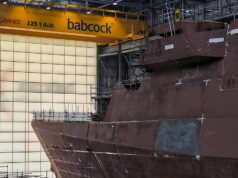
The National Security Strategy is presented as establishing the core strategic rationale. It links Britain’s prosperity and security directly to global maritime supply chains and undersea infrastructure, casting the Royal Navy and the wider national maritime enterprise as frontline defenders of economic stability and territorial integrity. The strategy commits to protecting territorial waters, defending critical undersea infrastructure, and maintaining freedom of navigation through contested regions, while also emphasising the importance of sovereign maritime capabilities and domestic shipbuilding.
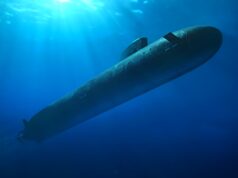
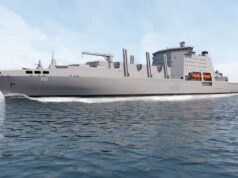
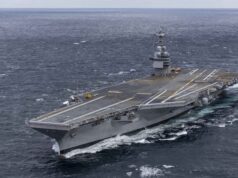
The Strategic Defence Review, although published earlier, is described as translating those broad objectives into force design and operational requirements. It calls for a balanced fleet that integrates aircraft carriers, destroyers, frigates, submarines, amphibious ships, and auxiliaries, alongside continued support for the nuclear deterrent. The review also highlights emerging requirements such as integrated undersea sensors, agile mine countermeasures, quantum secure communications, and new classes of autonomous and uncrewed maritime platforms.
According to the memorandum, the Defence Industrial Strategy completes the triad by focusing on how these capabilities should be designed, built, and sustained within the UK. It emphasises sovereign supply chains, ring fenced innovation funding, and regional Defence Growth Deals aimed at anchoring skills and industrial capacity in key shipbuilding and defence hubs across the country. International partnerships such as AUKUS and Five Eyes are also identified as essential to sustaining maritime innovation.
Despite the apparent coherence of these three documents, the paper argues that they remain insufficiently integrated. While each outlines clear ambitions within its own remit, the memorandum suggests they lack a unifying delivery framework capable of turning aspiration into deployable capability. In particular, it highlights gaps in how budgets, industrial capacity, skills, and technological development are coordinated across government, industry, and academia.
Britain’s World, published by the Council on Geostrategy, positions the memorandum as part of a wider effort to shape debate on the UK’s international posture and long term defence priorities, particularly at a time of growing maritime competition and strategic uncertainty.
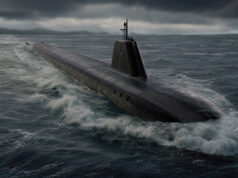
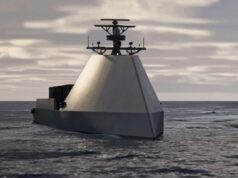
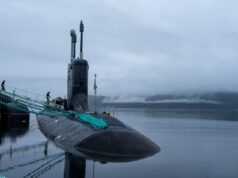


You got to love a “Thick Tank”.
Meanwhile, I just parked up near Portland Castle, I can see Tidesurge, Stirling Castle, Triton and what looks like Proteus but might not be. I think these were all here last time I visited, do our ships actually get out there much ?
Anyway must fly, got a visit to the Lighthouse planned and maybe a crab sandwich !
Considering most of the escorts are alongside for either repair or decommissioning or pending decision to be decommissioned, I doubt there is a huge need for the support ships.
The carrier has its own and also pulling a number of escorts with it, leaving not a huge number out there.
Will be interesting in a decade time when all the new frigates are ready, the navy is going to have to remember what it’s like to have them. Let’s hope they aren’t all constantly in repair or upgrade rotation like the t45 seem to be.
I suggest many lesson have been learned from T45, T45 was and still is a cutting edge power system, T26 and T31 are more conventional.
I hope so, although I can’t help thinking the amount of time alongside each time is rather excessive, I suspect there is some cost cutting going on.
Yes, I would very much say so!! I heard that RFA Cardigan Bay has completed her refit, but Reeves has blocked any money for trials until April!
I’ve wondered if she had been a member of c*n*d in the past?
An org that has sympathise with ruZZia in the past?
Highly unlikely, this labour gov has done a lot to back Ukraine when the US has kicked them hard.
I would just assume the money just isn’t there.
The UK’s navel ‘fleet’ exists for one reason – keep the construction and maintenance yards in business!
don’t forget to get a pint in the black dog in Weymouth
Is this a tradition then ?
Find a black dog and get it drunk ?
Funny lot these Dorset folk !!!
The Green Shutters outside Portland yard
Without the US in NATO (or credibly in it) we need our own long range strategic bomber.
A small purchase of B21s makes more sense than a small purchase of F35As
Agree
At approx £700 million a pop, that would be 1-2 aircraft then? Agree that F35A makes no sense if we don’t get at least 72 F35 Bs first. Although I have to admit I’m not a fan of this split buy. Buy 72-96 Bs, add another 24-36 batch 4/5 Typhoons then go all out on the Tempest.
Unfortunately B21 Raider is too much aircraft (including price) for what we need. Just my thoughts.
Completely agree the whole point of the b21 raider is for very long range strategic strikes across the pacific and Atlantic.. it’s a requirement of US geostrategic positioning that it has a 10,000km range strategic bomber force.. our strategic strike requirements are 2000-3000km that’s best achieved by a mix of
1) carrier battle group and its airwing sitting in the high north… 3-4 squadrons of f35b
2) RAF ISTAR, ASW, AEW and tankers supporting the carrier battle group
3) typhoon squadrons armed with lots and lots of storm shadows ( 8 squadrons )
4) SSNs with tomahawks
5) surface vessels with strike missiles
6) land based 2500+ km range cruise missiles
Apart from Tomahawks not sure the above has the range to hit targets in the Central or Eastern Military district?
To be honest the Uk does not need to have that capability.. for the Uk suppression of Leningrad military district is key as that is where all the capabilities of Russia to do anything much in the high north are..add in the capability to hit the Moscow district and your golden, and once the Leningrad district ports and major airfields are suppressed the bastion is essentially neutralised it gives the UK the ability to actually attack the northern parts of the central and eastern district and cut Russia from vast strategic reserves.
Russia is a nation of vast nothingness.. developing the strategic weapons to hit that vast nothingness does little and is like trying to fill a bucket with a hole in… so yes Russia can hide in that Vastness but its capabilities are essentially neutered when they do that.. and SSNs means that the UK can always hit a concentration in that vast nothingness if needed.
The vast nothingness is where the strategic nukes live? When the shooting war starts between NATO and Russia of course Russua loses, but Putin won’t give up, won’t surrender, won’t admit defeat. He will utilise his nukes rather than lose, and thus we need to be in a position to neutralise them. The only alternative there is someone under Putin removing him.
Aaron this is a simple question to answer, we cannot neutralise his nuclear weapons and making the attempt would trigger a MAD response.. if we end up firing strategy nuclear weapons at each other we are all dead simple as.. civilisation does not survive a strategic nuclear exchange.. infact humanity would be luck to survive and if it does it will be a remnant population surviving as hunter gathers..
There is one reason… there is no way to knock out the nuclear triad.. it’s designed that way and both Russia, the U.S, china and Europe have country ending second strikes in their submarine based deterrents… if for instance the UK and Russia exchanged using these second strike strategic arsenals both nations would be functionally destroyed.. there is zero chance Russia will leave the rest of Europe and the U.S. to pick over its bones so it would almost always launch a full strike.. the US would then essentially pound what was left of Russia and would probably for completion do the same to china.
Now there is a very interesting fact most people don’t get about a nuclear war.. it’s not the blast, the shattered cities or the fallout that are the true killers.. its starvation and that is what will end human civilisation if there is a strategic level nuclear war.. because our agricultural is extremely sensitive, a few degrees here and there, a little less sunlight and the world starves.. there has been some modern modelling on crop impacts of a nuclear war.. and it turns our because of the impact of black soot for every 100 tactical nuclear warheads you drop on combustible targets you loss about 10% of the worlds food production for up to a decade..so essentially a 2000 strategic exchange ends food production across the planet for a good decade.. essentially the death of civilisation everywhere as 99% percent of humanity starves to death.
Hi Jonathon,
I accept all that is true, are you advocating surrender? NATO is stronger than Russia. The EU is probably stronger than Russia. If a war starts Rusdia will lose. Once its on the precipice of defeat he will likely nuke the planet.
No it’s how you beat the nation.. nuclear weapons means there is never a route to complete destruction of your enemy.. and most wars are never about that. It’s about driving your enemy to strategic exhaustion and then allowing them an off ramp via an armistice and then peace settlement.. when a China US war kicks of neither side will be able to destroy the other via conventional conflict.. but one will loss the will to fight after strategic exhaustion sets in.. the secret is to never back the other side to a point they destroy everything. That is not easy and it means you cannot do everything that you may want… just remember India and Pakistan have been knocking lumps out of each other for decades.. but they have never backed the other into a MAD decision point.. and that is essentially how we will need to war with Russia.. but fundamentally all of this is not actually about fighting a war with Russia it’s about preventing a war via mass strategic conventional deterrent.. but even that follows a rule of don’t mess with the other side’s strategic nuclear deterrent..
We need strategic artillery, not a strategic bomber.
A medium range ballistic missile, positioned at our various useful positions around the world with conventional warheads, would be able to match B21 for payload on target for any given cost and probably for survivability too.
Strategic bombers are a vast investment even for the US, we don’t stand a chance.
A tactical aircraft cannot carry those heavy bunker busting bombs. About the one role you need a B21 for. Most of the time ballistic or cruise missiles are a better choice. If you can produce them cheap enough & in large quantities.
We don’t as our enemy is within 2500km of us.. we need lots of cruise missile that we can fire from tactical fighters, SSNs, surface ships and land.
Won’t Tempest be sufficient for our needs?
Don’t think we can wait that long?
That’s certainly an issue over the next few years. The F-35 is a great plane, but all the issues we have with not getting sufficient spares, the inability to integrate the weapons we want, and general lack of sovereignty will repeat with a purchase of the B-21, and that’s over and above the eye-watering cost of the planes themselves plus integration and training: a programme likely to set us back £10bn even for a handful of planes.
If we had the money, I’d rather some of it was ploughed into accelerating GCAP prototypes. We know the demonstrator is to fly in 2027, so ensuring a handful of prototypes are provided by 2030 should not be impossible. In particular, the engines seem to be on a slow burn schedule and paying more money there could bring speed dividends.
Island nation with long maritime history needs integrated naval (and marine) policy, who would have thunk it?
It does seem to me the navy may have managed to win the pre money dish out political inter service “who’s more worthy”dance .. even the i newspaper ( not know for it’s support of military spending ) is writing articles about the ongoing grey naval war going on against the UK and how the navy is out bulwark against the Russians.
It would not surprise me if we started seeing we want 8 and we won’t wait posters for T31s and other building projects…
3 – Fearless Class Multi-Role Ships to act as Littoral Ship’s for RM
3 – BMT Ellida Strike Ship’s as LPD Amphibious Ship’s
5 – Type 31 with 32 Vls which brings to a total of 10.
Manpower needs sorting ASAP. We got rid of HMS Ocean with no replacement and probably never would get another LHD Amphibious Ship (Manpower and money)
All this talk on increasing defence budget bla bla bla we are yet to see other than 6 ships being scrapped in the this labour government
You want 2 different LPD designs for some reason… exactly what we’re trying to avoid
Reply didn’t work
It is actually logical because that is what essentially we have had and that actually works… the RN does want 6 MRSS vessels the fulll number it’s been promised.. but it also wants some large amphibious vessels.. but it does not need 6 of them. It actually only needs 2 so the other 4 MRSS could and should be smaller strike vessels for company sized strikes…essentially replacing the 2 Albions and original 4 bay class vessels.. and also if you read the Point class replacement specifications they are essentially asking for a second line amphibious logistics vessel that can land the army over a beach or very austere port of needed… so the logistic element of the point bay class will be taken over by the point class replacement..
Of future force of:
2 large amphibious vessels 20,000 tons for battalion level operations
4 MRSS vessels at 10,000 tons for company level strike
6 point class replacements for logistics and sealift
That is both achievable and worth having
We have never had an “amphib” armed like a warship, that is an expensive endevaour and unlikely to happen.
Smaller strike type amphibious vessels are all over the place the T31 started life as juts such a beast, but you don’t have to arm your small raider like a frigate but having a large and small amphibious vessel is common.. and many nations do stick a lot of capability into amphibious vessels.. many give them very good armaments including medium guns and short range missiles.. infact a lot of the world’s amphibious vessels have patrol frigate level defences..it’s normal practice when you not treasury lead ( the Italians even placed a very top end set of sensors on their amphibious vessel to allow it to act as a hub for anti Ballistic missile defence).
If you make a cheap/smaller alernative or assistant to the design you actually want then we will only get those. We also don’t have the facilities to construct 2 different kinds of Amphibs.
Few nations arm their Amphibs with more than short range self defence, Mistrals are poorly armed, San Antonio never got vls and the Trieste is a special case as it is also a flagship vessel to substitute as a carrier
Of course we can build two different amphibious vessels..Italy can do it.
Theyre not doing it at the same time. they havent even laid down LPX yet
I never said at the same time Hugo, remember now is limited we have to think across time and space.. build the 2 large amphibious vessels first.. then build your smaller strike MRSS… but we do have a number of shipyards.. Babcock when it’s finished with the T31 order could take on a smaller MRSS design.
We do not have a number of shipyards. BAE can’t do large vessels. Babcock large drydock is taken up with carrier refits and Harland will not be free for the next 10 years to build any Amphibs
And that is why they will go for a mixed small large.. 2 large will go to Harland post FSS and Babcock or BAE will end up building a smaller strike vessel.
Your mythical smaller vessel isn’t happening…..
So we’ll be waiting till 2040 for the large hull then
Although i agree with the discussion that two classes could be a big ask, I also worry that government would reduce our 6 x MRSS as ‘lots’ and subject to reduction.
There are advantages to 6 of the same class of course; easier to crew re training/similarities, easier to build one class than 2. But to drploy battalion sized units you would need almost all of them, which at any time several are likely to be in maintenance, and another few forward deployed across the world. I see an advantage to 2 large and 4 smaller.
And what do we do if the larger is cancelled
That is like saying I should stay in my house because I may get run over.. we can use that to simply never do anything at all.. the best answer to that is “maybe maybe not” and if we don’t know then we may as well give it a go.
No my point is that by only designing 1 class for our requirements we will at least get a bit of everything even if it’s in insufficient mass.
Our issue before has been needing 2-3 different classes and either getting too few of each or only one of said class
Yep that is the problem really with the whole concept of MRSS being a class of 6, there is no way HMG is funding 6 large 20,000+ amphibious vessels so if we have 6 it will be smaller vessels.. but for a battalion level amphibious action you need a large amphibious vessel… it’s essentially a compromise that will give.. far more sensible to build the number of large amphibious vessels you need and the number of smaller amphibious raiding vessels you need.
I agree with Jonathan in principle.
We will need 3 smaller amphibs for the Commandos’ Littoral Response Groups. One North, one Suth, the third.alongside for maintenance, training, refit etc.
Doubt they need to carry more then 150-250 troops, as chances of raiding at battalion (Commando) level unlikely. But they will need.a better air defence.fitout then.the Bays.
We will need 3 larger.amphibs, to support the LRGs or to ferry battaion-scale army landings, with a good complement of Merlin HCs plus some Wildcats and RM Apaches. What is really needed here is a LPHD like Mistral.
Problem is that.this would be a very large spend to support 2 small raiding groups and army amphib ops for which we have no spare army troops.
But put next to other higher defence priorities, like getting more fast jets or AEW, or a raft of new kit to rejuvenate the army, or long-range.ballistic missiles and FPV drones, amphibious capability is far down the list. With the reduction of RM to a minor raiding role, we are just about out of the amphibious game for the forseeable future.
And who is going to protect this amphibiosity?
Well SSNs, type 23 frigates, type 26 frigates,type 31 frigates, type 45 destroyers, carrier with f35b, Merlin AEW and Merlin ASW, land based aircraft from the UK Norway and allies.. that sort of thing I suppose..
Read the comments; most of the assets you talk about are past their sell by date, in maintenance, laid up with a lack of manning, or being built… Take off your rose tinted glasses – the threat is government underinvestment and that’s because, 1. They thought we would be part of an eu military,and 2. They want to destroy the last bastion of Britishness!
But you know this, you just can’t say it
You asked what would protect an amphibious group and I answered.. yes the RN has to few assets to manage its global needs because its a global navy.. but do not mistake that for not having the capability to concentrate a cap ability into a task group to protect an amphibious group that only the US could overcome anywhere and china in the west pacific..
The RN could generate a group around an amphibious vessel that included
1) a carrier airwing that only the U.S. could overmatch with 2 squadrons ( three in a few years ) or fifth generation fighters
2) an SSN or two which are acknowledged as being the most effective ASW SSNs anywhere
3)two type 23 frigates that are still essentially the premium ASW frigates on the planet ( their hulls and keels are rotting but they have the best ASW systems anywhere)
4) 2 type 45 destroyers that still have the most effective radar and systems against air-breathing targets.
As the amphibious vessel would be in the north around the Norwegian Sea it would also be protected by land based aircraft..
Thanks
There are some very simple things that could massively increase the UKs naval power and ability to take sea control in the high north and so protect the UK from direct attack by Russia.. The single most important is the RAF actually starting to seriously focus on maritime air dominance..
1) it’s land based fixed wing aircraft having long range maritime strike.. one of the single most insane bits of Uk inter service fuckery is the lack of a long range heavyweight Anti ship missile for the typhoon squadrons.. essentially the RAF has given up on defending the Uk against surface vessel attacks.. and Russia has 7 ships in its northern fleet that can fire 1500-2500km range land attack cruise missiles or hypersonic strike missiles.. with 172 silos.. the RAF must be able to attack the Russia surface fleet with typhoons..so one is Marte ER For typhoon.
2) the carrier battle group airwing.. probably the single biggest lack of maritime strategy was the diversion of f35Bs to A.. the UK needs 4 squadrons of Bs for its carrier airwing and it needs to arm the with JSOWC so it can attack land and sea targets from 130km with BROACH warheads
3) AEW.. there needs to be an increase in strategic land based AEW aircraft so they can support a carrier battle group in the North along with adequate tanker support.. it’s quite possible for the UK to have constant land based AEW cover over its carrier.. and land based AEW cover is simply better than any organic carrier based cover.
4) ASW/patrol aircraft…this should be a major thrust of the RAF.. we should have 20+ P8s and there should be a plan for direct support to the Carrier battle group from constant P8 support..again it should have tanker support as well
5) ability to suppress Russian naval strike aviation airfields and its naval yards Russia has only 2 naval bases in the Barents Sea if the UK can essentially constantly attack those bases with long range cruise missiles from surface vessels, SSNs and typhoons as well as f35b strikes.and from land.. . it will massively suppress Russias ability to attack the UK..
Basicly if the RN can plop a carrier battle groups across the Svalbard gap and with the full and integrated aid from the RAF take air control of that gap and from that sea control and sup surface control..then the Uk can attack Russian bases and hold them at full risk as well as rip apart its bastions and hunt down its strategic assets and Russia would struggle to get to attack the UK infrastructure.. then the only thing Russia could do would be to send its SSNs and strategic naval strike assets straight at the carrier battle group.. and as long as the UK has a fully integrated strategy around that CBG.. strategic air support from rivet joint, wedgetail, P8s and tankers as well as Typhoons and a full 3-4 squadrons of 35Bs, 3-4 ASW frigates.. 2 SSNs with sup surface drone networks and 2 AAW destroyers.. then Russia will loss that fight.
Essentially the Uk primary focus as part of nato should be the utter ruination of Russias northern fleet and strategic strike airforce in the Svalbard gap and if that happens any Russian move against the UK or any northern NATO member will fail utterly as the UK could support reinforcement of allies and constant strategic attack against Russian infrastructure in the north..and the final assurance of that should be the ability to place in the high north land assets via maritime and air routes.. so amphibious landing of a marine brigade, air landing of a light brigade and port landing of 2 heavy/Mech brigades..and that’s the final bit of integration the armies brigades should have a high degree of maritime deployability..so the army practices and the RFA provides the strategic sea lift.
Essentially let Poland and Germany take the centre and focus on continental land battles the UK should be focused on domination of the north supported by Norway, Finland, Sweden and the Baltic states…
Given how little of Russia’s fleet can and does leave port I would suggest the best way of taking it out which, I agree should be the UK’s number one strategic war time priority, is with mass cruise missile strikes from long range UK aircraft such as A400M firing storm shadow or FC/ASW.
Storm shadow deviated Sevastopol in small numbers. We could easily fire 100 at Murmansk with tankers and AEW and typhoons for escort.
Practicing flying to the Norwegian sea with such a strike force would also be a great pressure post to press the Russians with every time they send a spy ship to hover over our cables.
The RAF needs to get back to flying large formations like this on solo strikes instead of simply sending four typhoons in penny packets everywhere.
The combined operating over the Red Sea was a good start and shows what we can do at a very long distance but a rapid dragon style capability would add a massive strategic capability to the RAF that it has lacked since 1982.
Indeed the main pressure needs to come from the ability to undertake strategic conventional strikes on the ports and airfields that support the bastion.. but the RAF also need to be able hammer surface shipping.. that will allow the RN to focus on the SSN threat.. because Russia does have limited numbers of capable surface vessels ( 7) that can fire on UK military infrastructure and a large number of older ASW vessels that will complicate the freedom of the SSNs in the bastion and we do need to assume that Russia will be dictating the pace and timing of the start of conflict so it will be able to sortie its surface fleet… however much Putin says we are the aggressors he knowns we will not initiate an attack.. so the RAF will need to be able to attack those surface vessels.. in an integrated naval strategy your airforce cannot simply ignore the blue bits of the map and say it’s the navies problem..
I suppose FC/ASW will solve the RAF issues at-least on Typhoon although unfortunately that’s going to be late. I have thought for some time we should make small purchases of foreign weapon systems to fill gaps.
This appears to be happening now with the purchase of SDB to bridge the SPEAR 3 gap. A purchase of MARTE ER could do much the same for Typhoon. LRASM is all but ready for P8 and will soon be available for F35B. We could make fairly easily purchases of a few dozen of these missiles which would be fairly cost effective but would represent a large capability increase for UK air and naval power.
America might need hundreds or thousands in the pacific against China but a few dozen in the Atlantic against Russia is all that’s needed.
I think the main thing we need in all our platforms is the ability to present multiple threats to an enemy to stop them adapting. As we seen in 1982 anti ship missiles are not great at sinking large warships and SSN’s will probably always be the best solution to sinking enemy ships but solely relying on one platform makes it easier for the enemy to adapt.
We could very easily and cheaply acquire an significant naval strike capability across three platforms with a purchase of currently available western anti ship missiles already integrated and even when our own domestic programs catch up these weapons will still be useful as a small niche capability.
If we purchased them the treasury would cancel our own programs
Not really as they have said they are purchasing small diameter bombs and yet are not cancelling spear 3.. they ordered. NSM but have not cancelled the joint UK/french weapon.. there is a great deal of difference in investment level in buying an off the shelf now option and development of a future sovereign capability.. you can do both..
SDB is stuck in negotiation hell and NSM is far less capable than FCASW, if you order LRASM and Marte ER then why the hell would we need our own version of that weapon when those are comparable to what we’re designing
FC/ASW is a generation beyond MARTE ER and even LRASM and also serves as the replacement for Storm shadow, Exocet, harpoon and TLAM.
FC/ASW is not planed for integration on P8 or F35.
So a small purchase of LRASM should not affect FC/ASW.
Would take away from the limited missile budget
They would be purchased in completely different years therefore different budgets.the treasury and government works in year.. what it spends to day is irrelevant to what it spends next year or the year after.. you can neither keep savings nor do you loss in that year for spending the year before and i can just imagine if I had to the services I oversaw they could not buy defibrillators because I was planning to buy a new model in 5 years time.l
The US is integrating LRASM on P-8. A very capable, but expensive missile. Even a small buy of LRASM for RAF P-8 would be a good conventional deterrent to enemy ships.
Attack from Russia? That’s a narrative of fear not a reality
Ok what is reality let’s look shall we:
1) 1999-2009Putin comes to power and immediately starts to second Chechen war.. to reclaim that separatist nation ( which great suspicion that the FSB undertook false flag operations to gain support for Putin and the war).. this war went on until 2009.
2) 2008- present.. as the Chechen war slowed down in 2008 Putin created a second front by invading the neighbouring Georgia. Creating to independent Russian puppet states that are still under Russian occupation today.
3) 20014- present invasion of Ukraine.
4) 2018 Russia attacks a Uk city with a nerve agent.. make no mistake it was luck over anything else that did not make Salisbury a mass casualty even.. if that bottle of nerve agent had not been taken out of the bins and has instead been collected by the waste vehicle and crushed.. the level of contamination could have been very very significant.. Russia essentially left enough toxic agent to kill a huge number of people in a UK city. The simple reality is that one event was casus belli and Russia did it as a warning to the UK nothing more nothing less.
5) 2022 since 2022 there have been 70 sabotage attacks against the UK that have been tracked to Russia.. including an attack on the facility that is building our nuclear deterrent.. to put that into Perspective, it is an acknowledged fact that to attack a nations strategic nuclear deterrent is essentially the opening gambit of any war..and is casus belli.
The ISS paper from the 19th Aug states “ Russia is waging an unconventional war on Europe. Through its campaign of sabotage, vandalism, espionage and covert action, Russia’s aim has been to destabilise European governments, undermine public support for Ukraine by imposing social and economic costs on Europe, and weaken the collective ability of NATO and the European Union to respond to Russian aggression. This unconventional war began to escalate in 2022 in parallel to Russia’s invasion of Ukraine. While Russia has so far failed to achieve its primary aim, European capitals have struggled to respond to Russian sabotage operations and have found it challenging to agree a unified response, coordinate action, develop effective deterrence measures and impose sufficient costs on the Kremlin. ”
And if you listen to Russian state sponsored media, they are constantly extolling how Russia should wipe the Uk off the map.. and Russia media only says what the Russian state wants it to say and authoritarian states message with purpose..and these messages become self fulfilling because the population expects to see what they have been told..
So will Russia go to war with the UK.. the evidence from the point of view of a risk manager ( me) is that the evidence gives I likely rating that Russia will take action against the Uk ( likely is an indication that there is a 50% chance or greater of it occurring)..
As expected, you cite Western version of events. I won’t go into all of them; only to say there are more holes in that Salisbury attack than facts.
The West/NATO have been fighting dodgy wars and interfering in counties leadership for as long as we can all remember. However, the last 30 odd years it has been intense. American, and we are their poodles when it comes to assisting them, have conducted over 250 military interventions since 1991. They have spent over 14 trillion dollars on war since 2001.. all verifiable!
Russia is not my enemy! My own government, its foreign policy and foolish duck pond admiral mouthpieces, who believe everything they are told
Ok so your going to believe the authoritarian regimes controlled political warfare operatives over the free press in the west.. that free press that over and over again has proven that if it can find any evidence it will smear its own governments in shite..
Yes the west has done some dodge things.. because all nations are essentially amoral, there never has and never will be a truely moral nation.. the west works at its best on enlightened self interest, which quite frankly is profoundly better than the authoritarian only personal interest.. but that still means it meddles to promot its own interests, but it’s nothing compared to Russia and what that regime is will to do and say.
It was Dmitry Kiselyov who said, “Why do we need a world if Russia is not in it? He is a close friend of Putin and was appointed by Putin to head Rossiya Segodnya, a Russian state-controlled media group… he has called for the destruction of the UK on a number of occasions and this is Putins chosen man to head the Russian state media ( the only media your average Russian will ever listen to).
Need a much bigger navy. We need to speed up getting to30 escorts as just a first step. China is building a global force whic we ignore at our peril. Army, RAF too. Especially when Trump is not even a lame duck POTUS but more like a vicious vulture trying to peck our eyes out. We urgently need a layered widspread UKAD plus the conventional ability to strike Russian facilities over a prolonged conflct.
I’d like to see too a willing-oparty NATO air task force to sweep the skies over UKR of Rusian air power(aircraft, missiles & drones)
We can’t easily speed up getting to 30 escorts. What we can do is agree to getting 30+ escorts and determine the form of those escorts: the split between high and low tier, and between AAW, ASW, Mothership, full-fat, autonomous and Patrol (GP).
We are pouring our infrastructure money into submarines at the moment, so creating a third build centre for escorts isn’t going to happen. Instead, we must leverage continuity and ensure that Rosyth and Govan/Scotston can build as quickly as possible, and that means ensuring they know what the order pipeline looks like well in advance so they can invest in design and in the build infrastructure. The false assumption that it’s okay to leave orders to the last minute just before the shipyard runs out of work has to be laid to rest. If Babcock knew that it was to be producing one frigate a year for the next twenty years, as opposed to just five, which is barely enough to get up to speed, it might increase its build and maintenance infrastructure still further. We can do that using demand signals: by saying what kind of ships we intend to buy, and by guaranteeing a realistic budget, stating how much we are prepared to pay.
Once we have an outlline build decision made, we can look to the long term planning of maintenance and crewing to fit.
Sadly 30 escorts is a way away and at present the numbers will fall again until they start to rise.. but we have good building programs.. into the 2035 we will have 19 escorts all with at least a decade of life left and we could for the RN get one type 26 derivative every 2 years ( selling one to Norway) and a type 31 every year.. so by 2040 we could have about 26 and by about 2042-43 we could hit 30.. then we would need to change out the type 45s.
Just something that reminded me this morning any integrated naval and maritime strategy needs to take into account our global requirements.. and although we get all het up about things that go bang a maritime strategy is way way more than a naval strategy.. maritime is about the control and exploitation of maritime resources and by its nature it is global.. ( a naval strategy can be regional and limited in scope).
Something small reminds me of this, the king has just sent a Royal Mail letterbox to the Antarctic, and let’s not forget what any other nation may say we own the best bit of the Antarctic ( the bit that is not buried under eternal ice) .. and this Royal Mail box is part of a maritime link to the Falkland Islands and then up the south and north Atlantic to the the UK..
“Rumble, HM Commissioner for the British Antarctic Territory said: “Maintaining a postal service in the British Antarctic Territory is far more than a symbolic gesture. It reinforces Britain’s presence and heritage in Antarctica and provides a vital link to the wider world.”
Or my more base interpretation.. we have pissed in this snow.. that’s our flagpole now piss off if you think otherwise..
Every military commentator, RUSI, Ben Wallace, leaders of NATO, and other European countries all agree we will be at war with Russia in 2 to 5 years. This, from our perspective, is on Labours watch. Even if a change of government comes in 2029, building up our military then will be too late. The war might already be over by then. Labours plan is to increase defence spending after the war?
Constant effort on building the NHS up when it could be rubble if we don’t defend or nation.
Russia has become an intolerable global nuisance, that in one order or another must be stopped. If Russia strikes first we eont e ready. If we strike first it would take a generation to become ready. Most of us typing on here could well be dead before we are ready. Im 55 and it would take twenty years at current capacity to get the navy anywhere close.
The UK needs to join the European nations who are placing themselves on a war footing to defend themselves. The UK is sat twiddling it thumbs. As current global events look, 2 years itself is looking extremely optimistic right now. Our only hope, our absolute only hope, is that Ukraine can cripple Russia into obsolesence. Wound their infrastructure so badly, it takes all their effort to keep their civilian population fed and warmed. Then, it buys us some time.
Russia can’t handle Ukraine, how is it going to invade Europe? Stop spreading fear, you’re just itching for war. I hope you’ll be the first to step up and lead the charge.
Well the problem is Russia just keeps on trying to invade people.. and it’s not the Uk that dumped enough nerve agent to kill thousands in a Russian city.l it’s not Uk government sponsored news casters going on every night saying we should nuc Russian into ashes and dust.. let’s be very clear who is doing what.l saying you think a nation is going to invade you or attack you and preparing for that is not warmongering..