

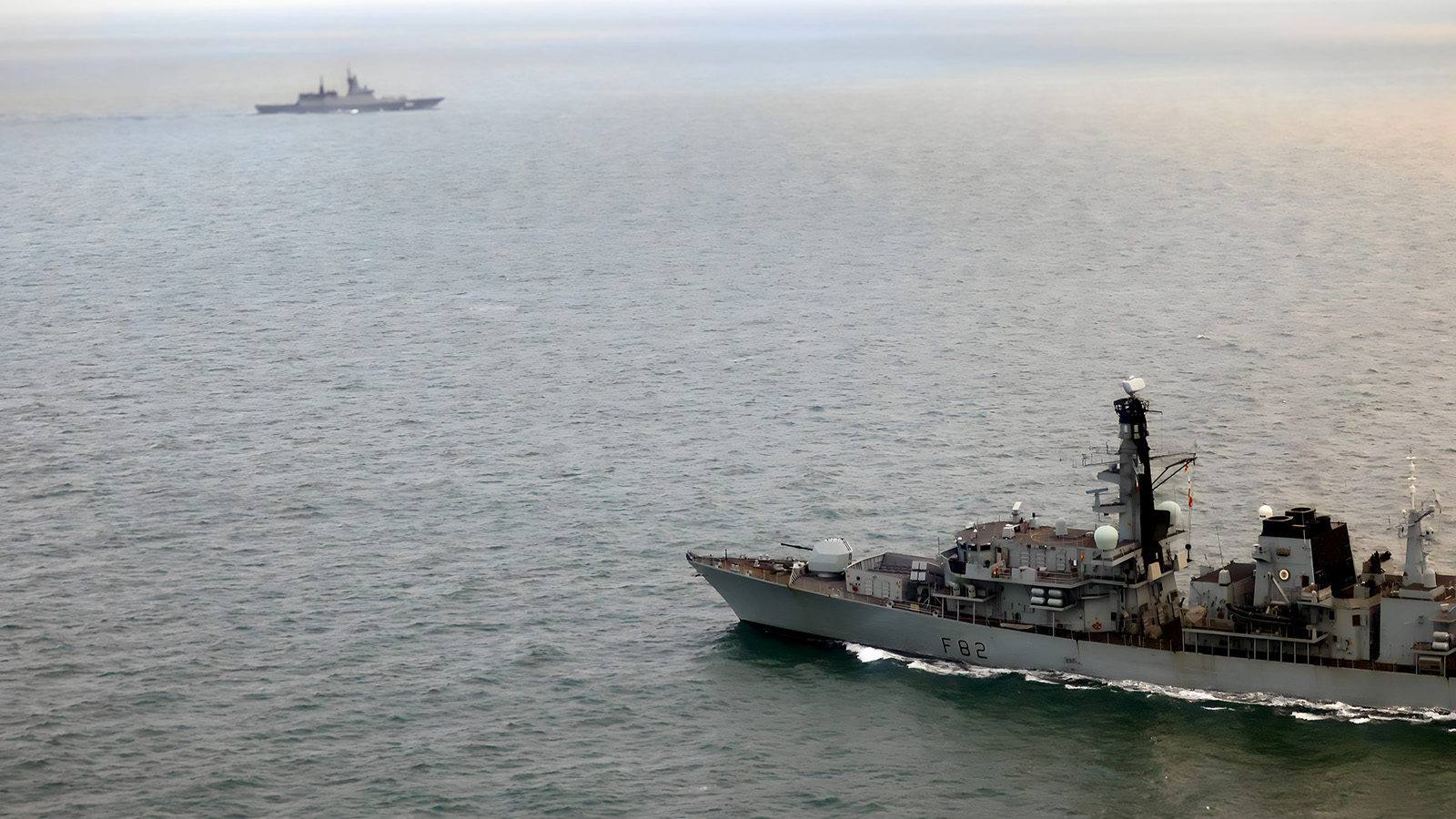
The Ministry of Defence has warned that Russian military activity represents a long-term strategic threat to the UK’s offshore energy infrastructure, while outlining the Royal Navy’s role in monitoring and deterring risks in UK waters, the UK Defence Journal understands.
Responding to a series of written questions from Labour MP Graeme Downie, defence minister Al Carns said Russia continues to pose a sustained challenge to Euro-Atlantic security and that the maritime domain is becoming increasingly contested. He stated that “hostile states and non-state actors pose a growing threat to our critical infrastructure, including energy infrastructure”.
Carns said the MOD “constantly monitors activity within UK waters and its Economic Exclusion Zone to counter and deter detected threats”. He added that British warships “frequently patrol and shadow foreign vessels throughout the UK marine area, including through the North Sea and increased surveillance of offshore oil and gas installations”.
The minister linked this activity to the Royal Navy’s emerging Atlantic Bastion concept, which he described as “a plan to scale and accelerate new and existing capabilities to defend underwater infrastructure”. He said these measures formed part of “a comprehensive and integrated approach to deterring and defending against the range of threats we face”.
Addressing the potential merits of direct naval protection for offshore installations, Carns said the security of offshore energy assets and wider maritime critical national infrastructure remains under “continuous review”. He noted that the Royal Navy contributes through “persistent presence, surveillance and deterrence activity in UK waters”, adding that the department would “continue to strengthen our ability to identify, deter and respond to threats as the risk picture evolves”.
However, the minister drew a clear distinction between military monitoring and direct engagement with industry. In response to questions on advice and training for offshore operators, Carns said the MOD “does not provide training or advice to operators of offshore oil rigs and installations in the North Sea”. He confirmed that responsibility for the security of energy infrastructure rests with the Department for Energy Security and Net Zero.
He added that while the MOD does not train operators, it “keeps Russian military capabilities and assets under continuous review as part of our routine defence intelligence and wider strategic assessment”, contributing to broader government efforts to reduce vulnerabilities and ensure an effective response to disruptive incidents.




Cool then spend more on defence.
There is absolutely no reason to panic, or even spend half an hour thinking of getting worried, as this government has ensured we have no offshore energy assets. We buy from abroad ( and the means from Russia-via-India ). They won’t lose money over this.
How about doing something about it then
I love a good MoD warning.
So where is the coherent strategy and action plan beyond hot air coming out of ministers mouths?
They’re still deciding on what food to have in the meeting.
Whilst awaiting moderation of weblink, bbc looks to be saying Mod is about £28bn short in funding to fix the capability gap.
Kieran won’t confirm or deny.
That is a frightening figure. How on earth will they square that while still pretending to follow the SDR recommendations.
The comments on the BBC article are almost entirely pro-defence. I didn’t expect that.
That’s pertaining to the 3% – 3.5% that the SDR is supposedly based around, rather than in-year deficits.
The BBC article does reference the Sun as a source, so who knows.
It came from the Times first as far as I can tell, slightly more trustworthy.
IMO Starmer was under the impression that the current spending plans were enough to deliver a DIP based on the SDR, when actually it will take a much more rapid increase in spending.
Yeah, they’re a more reliable source.
Whatever Starmer had thought, it’s becoming clearer and clearer that the money is not yet forthcoming. Where is the DIP?
But they will not stop the Russian oil moving through the Channel.