

Babcock has reported a strong third quarter performance, with the defence engineering group saying UK programmes and sustained delivery across its core activities have reinforced confidence in meeting full-year expectations.
In a trading update covering the nine months to 31 December 2025, the company said performance through the third quarter continued the momentum reported at the half-year stage, with good organic revenue growth and continued improvement in underlying operating margins. With most forecast revenue for the year now contracted, Babcock said it remains confident of meeting its full-year targets, including an operating margin of 8 percent for FY26.
The company highlighted the strength of its UK-facing activities, particularly in nuclear, naval and land programmes, as central to that performance. Growth in the Nuclear sector continued through the quarter, driven by clean energy new-build work and submarine support activity linked to the UK’s continuous at-sea deterrent. Aviation also recorded strong growth, largely due to the ongoing ramp-up of the French Mentor 2 training contract.
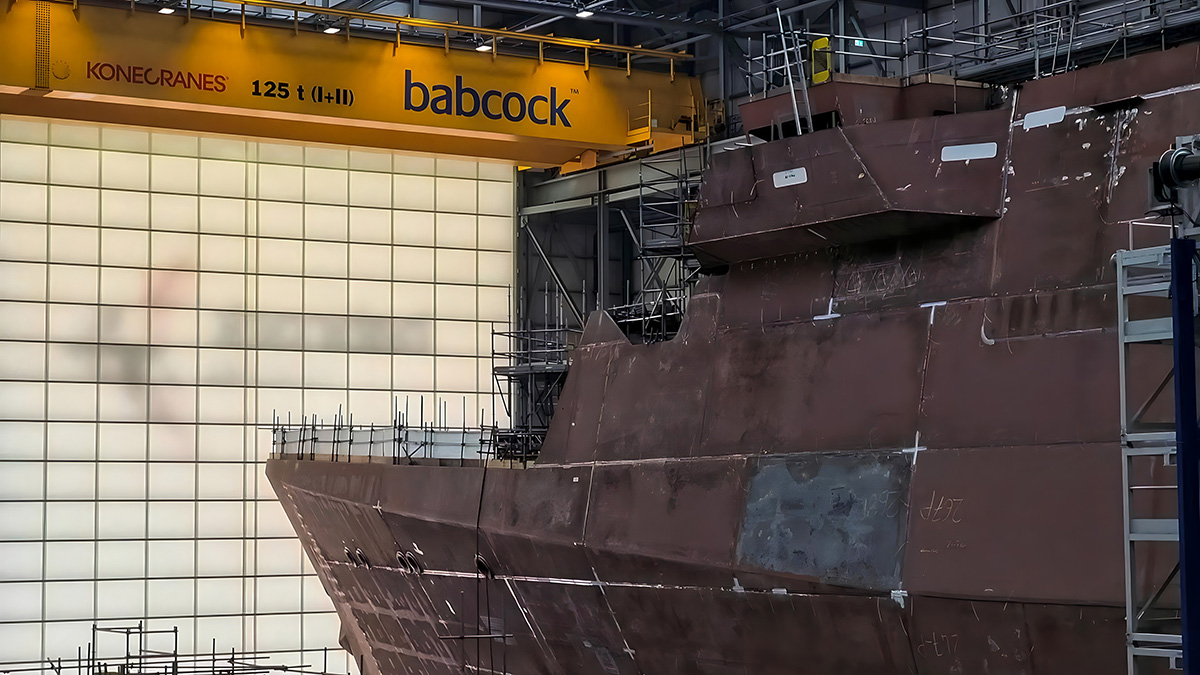
Marine performance improved during the period, supported by higher Landing Gear Equipment volumes and growth within the Skynet military satellite communications programme, offsetting lower revenue in the Land sector where rail activity remains subdued. Babcock said its UK shipbuilding work continues to progress at pace. At its Rosyth facility in Scotland, the company laid the keel for the third Type 31 frigate, HMS Formidable, in December. The second ship, HMS Active, remains on track for roll-out, while steel cutting on the fourth vessel, HMS Bulldog, is expected in the coming weeks.
The group also confirmed continued progress on key UK land programmes. The ramp-up of the £1 billion, five-year DSG follow-on contract continued through the quarter, while the first of 53 six-wheeled high-mobility Jackal 3 “Extenda” vehicles for the British Army rolled off Babcock’s production line in Devonport. Alongside domestic programmes, Babcock pointed to the growing international relevance of its UK industrial base. During the period, the company expanded its strategic partnership with Huntington Ingalls Industries to support the US Navy’s Virginia-class submarine programme, authorising complex submarine assembly work at Rosyth for Block VI boats. The move is intended to strengthen resilience across the submarine supply chain and forms part of the wider AUKUS partnership between the UK, US and Australia.
The company also highlighted ongoing engagement with the Ministry of Defence on the future of the Future Maritime Support Programme, which underpins in-service support for the UK’s nuclear submarine fleet and is due to conclude at the end of FY26.
While the update was focused on financial performance, Babcock said the consistency of delivery across its UK defence programmes continues to support confidence in medium-term growth, with the group describing its operational momentum as strong heading into the final quarter of the financial year. As part of its capital allocation strategy, Babcock confirmed it has returned £90 million to shareholders so far through its £200 million share buyback programme, which it expects to complete around the March year end.








Excellent news. A strong Babcock’s is of huge benefit to the UK.
Hopefully they will win the LMV program with their GLV vehicle.
8% net profit is really sensible and not OTT – so not profiteering but enough to reinvest in the business and to keep the all important markets happy to invest.
It states operating profit, which is not net profit, net profit will be lower
I think it would be good if they were making 8% net profit as that is a sustainable level that does allow them to invest where necessary and fend off potential aggressive bidders
At the end of the day, companies only survive if their stakeholders are seeing a return that is inline with the risk to their investment. A lot of people in UK seem divorced from this reality and are then surprised when a foreign buyer takes over our prized assets
Must have misread the handout.
My bad.
Anyway, we agree that sensible profits are a good thing as they allow for growth, investment and staff retention!
We do
And it just goes to show how lean the profits are in defence
Any update on Venturer? When are they expecting fit out to be complete?