

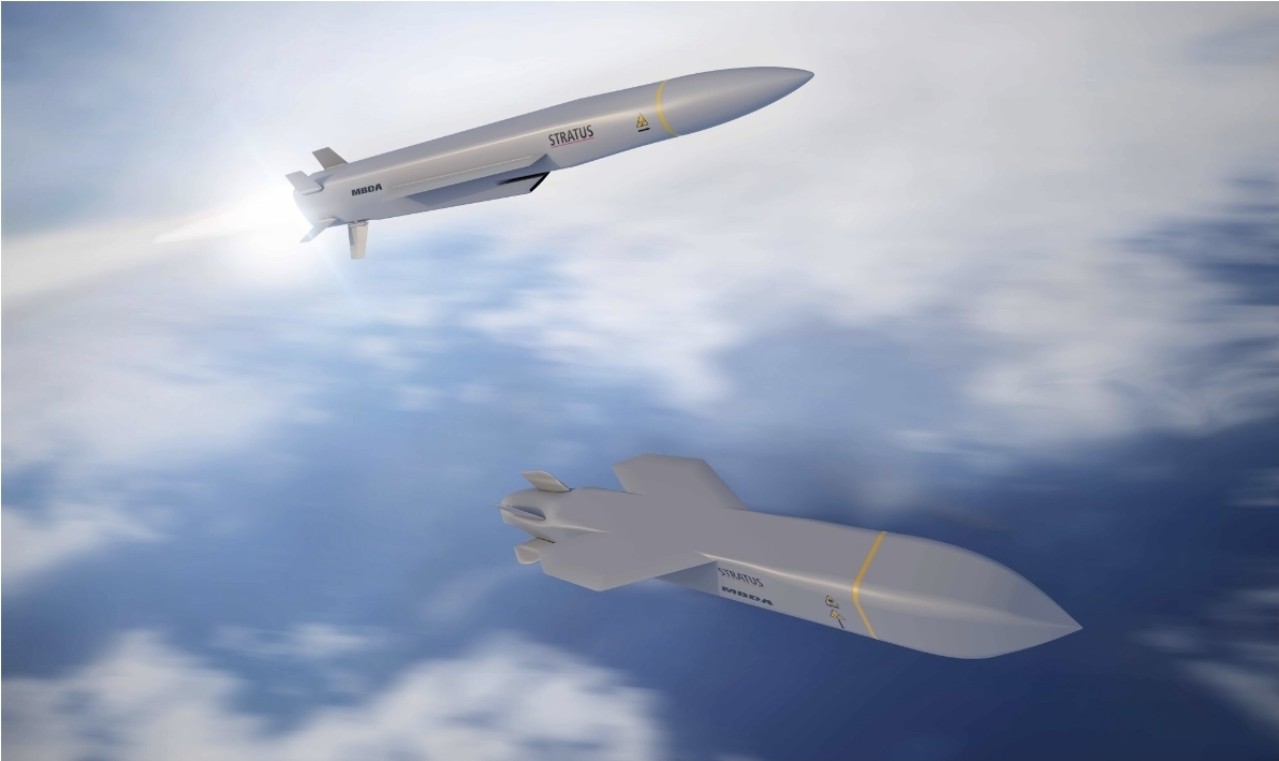
A decision on the full business case for the UK’s Future Cruise Anti-Ship Weapon (FC/ASW) programme is expected during 2026, according to a written parliamentary answer from the Ministry of Defence.
Responding to a question from Conservative MP Ben Obese-Jecty, Defence Minister Luke Pollard said the programme is progressing through the government approval process while work with industry continues.
“The Future Cruise Anti-Ship Weapon programme continues to move towards its Full Business Case approval in 2026,” Pollard said.
The programme is a joint UK-France effort intended to replace existing anti-ship and land-attack missiles used by both countries. It is expected to eventually succeed systems such as the Royal Navy’s Harpoon anti-ship missile and the Storm Shadow cruise missile used by the Royal Air Force.
Pollard said the approval process is structured in a way that allows ongoing industrial activity to continue without interruption while the final business case is considered.
“The schedule for completing the approval process is structured to allow continued delivery of industry work… throughout 2026 without the approval process introducing any delay,” he said.
The FC/ASW programme is being developed through cooperation between the UK and France, primarily involving MBDA, and is intended to deliver next-generation long-range strike capabilities capable of defeating modern air defence systems and high-value naval targets.




The project has taken 9 years to develop a business case…..
Excellent! Right on schedule
Makes you proud to be British 🥲
Two points. Firstly, should already be sorted. More government delays that risk our security. Second… Not sure about France as a partner… they don’t seem to be good team players…
That’s why we went for two versions of Stratus. We wanted subsonic and stealthy, they wanted high supersonic or hypersonic. France said their modelling showed very fast was better than very stealthy. We said, we don’t hold with that fancy modelling nonsense. We know what we need!
The Royal Navy wanted speed, it was the RAF that wanted stealthy.
Well for replacing Storm Shadow a long range cruise missiles is better, but for an AShM it does look like fast and manoeuvrable is the way to go.
There’s certainly pros and cons to both. I’d argue slower and stealthier is the better overall option for an anti-ship missile, with advantages in reliability and accuracy; its the superior option for submarines and fighter jets, and it fits at a higher level of the survivability question (“don’t be seen” as opposed to just “don’t be hit”).
Problem is that close in defence is now good enough that a subsonic missile might not even get through the visual range, last-minute phase.
Stuff like CAMM paired with E/O sensors with only initial cueing by radar would be a struggle.
Indeed. From what I have heard from Ukraine Storm Shadow has performed well, when either soft targets are available and good intelligence allows complex avoidance of the limited air defence available or as in the case of Crimea for example all manner of spoofing, mis-direction and drone saturation occurs to nullify the defences in preparation for Storm Shadow. Takes a lot of preparation and those defences will only get technologically better over the next decade while the cat and mouse isn’t always going to be in your own favour. My feeling is that both options would be desirable to pressurise defences.
The Japanese ASM-3 will fit in the Tempest weapons bays. I can see the RAF having two options , and the Japanese is specifically designed for the Chinese threat.
Well just hold back there a moment.
RAF Storm Shadow are doing very nicely in UKR.
Slower is cheaper and therefore a larger stockpile. There is sense in having a big pile of something that is effective 85% of the time. Sure there are losses to AAW but nothing is invincible. So I can see a great deal of sense in having a massively updated Storm Shadow NT.
Then for some applications a very fast missile probably has a better chance of getting through. But it will be at the exquisite end of tech and therefore ££m each.
So I can see a lot of sense in forking the project.
I would also guess that it has a degree of modularity built into it so the back end and guidance packages can be swapped around and used with various effectors.
I agree both options will be needed and this forking allows flexibility, more options and developmental potential.
Yes they checked in with Heather Robinson and he felt if it is made of matchsticks and balsa and parts from an old clock he had in the basement it would definitely spoof any available defensive measures. However it was limited to 40mph so supersonic was out. Understandably the business case for matchsticks got a little complicated since the demise of Bryant and May.
Did alright with StormShadow/Scalp which this effectively is an expanded programme development of on steroids. Like it or not MBDA is the only company which can produce this and as it is a multi European conglomerate headquartered in France, it’s difficult not to pursue the programme with France as they have much of the actual required technology as they do with StormShadow.
Ok so an answer soon, that means nothing, the DIP will be released soon, like evey thing it will drag on and no one will decide any thing. The MOD useless at just about every thing year after year. The Government great at press statements that say noting. offer nothing and decide nothing. So state normal then, hurry up and wait.
Well good news eh? The DIP will be published by 2028, after the Reeves bailing out of domestic fuel bills caused by Trump there should be a few billion spare. Another question is of course how many to buy? A few should do as we lack any bloody ships to put them on.
May I correct you there?
Reeves will announce that all of the Defence uplift previously announced will have to be reallocated to dealing with the fallout from the Iranian Tangerine Wars. Spending money on [buying votes] by subsidising domestic fuel bills.
The left of the Labour party will be delighted as will the Green and Communist votes. Putin will choke to death laughing at us and Xi will stare on disbelievingly wondering what is really going on.
There FIFY
I’m beginning to wonder whether the issue with the DIP is that a DIP is the wrong thing to be doing. There’s a general move away from old school procurement to more rapid spiral development, in part as things are moving so fast in the drone world. The DIP is an attempt at old school thinking – to produce one overarching plan with lots of subcomponents that is all set in stone at one point in time and then stuck to.
So the DIP is old school thinking, when even the MOD itself is moving on and adopting more rapid and flexible approaches. Maybe there shouldn’t be a DIP then, just a steady series of decisions and purchases, each run on its own timeline. That will feel messy to some (especially the treasury) but maybe it will be better suited to the pace of change in procurement at the moment. In some respects that is also what we are getting – constant smaller announcements of new projects.
You are absolutely right.
The problem is that DIP was pushed down from Treasury to get some discipline into a fully costed plan.
How many times have we heard that a defence black hole has been fixed only for it to appear again even larger like a sink hole?
The thing is that we cannot really say that Treasury is 100% wrong on that is there is a lot of immature wishful thinking and cost concealment going on to get project green light. OK AJAX has been used as the poster child of why but BW also came out and told everyone why the 5 E7 were cut to 3 because of the £1.5Bn of costs that had been kept off books in the program.
Pretty much what I said on another thread yesterday. This sort of macro top down process is slow, restrictive and gets out of date far too quickly, especially in present World affairs. So while overall guidance is still required in some form it needs to be far less dictatorial and set in stone, there needs to be ongoing flexibility on projects within it especially to buy what is obviously needed for the forces reflecting our risk. The overall guidance plan then needs to be flexible enough to be adjusted on the hoof proactively to cope and inform future decision making, be it with overall allocated defence budget or adjustments within on other less crucial projects. Fact is when the DIP is published like the present Defence Review it will rapidly look out of date which has in the past just led to rinse and repeat and further structural re assessment at scale. All we get is expensive delays and little new kit along the way.
Yep 10 year defence investment plan… that’s the problem.. nobody knows what the risk profile will look like next week let alone next year… China could turn around and build Russia 20 new SSNs for the mid 2030s and a ton of frigates and destroyers.. navies could face a air threat of 5000 long range drones etc.. the US could go to war with South America and China or it could hand China Taiwan on a platter… who the hell Knows so how the hell do you develop a 10 year investment plan…
By adding a finanial provision in the plan for as yet unidentified rapidly evolving needs over that period.
Yep but that’s not what this is….
So it’s still a paper and PowerPoint
There are scale models too. And don’t forget last year’s renaming.
Actually, I think MBDA are probably getting on with it. CAMM-MR seems to have gone terribly quiet and if there was any announced missile I’d be wondering about, it would be that. There are quite a few other new missiles that could stall in the future, but for now the two Stratus missiles seem to doing okay.
CAMM MR is for Poland and they have not gone quiet about it – it is still a live project.
We’ll probably end up buying LRASM
No? TP-15 prototypes are under testing.
And LRASM is already in service.
As always, we are chasing rainbows
Given the amount of time that has passed, I would expect the project to be at a working prototypes stage by now,
and the MOD would be draftinglooking at acceptance tests.
At this rate, it looks like our shiny new T26s and T31s will be sailing with empty VLS cells.
The subsonic variant has at least one prototype, and potentially more.
Talking of long range missiles of all types, who remembers the grandstanding from HMG and the CDS about “7,000” Cruise Missiles, or “7000” missiles.
Same as the “6 new munitions factories” anyone seen any sight of those? What are these “7000” missiles”?
I always took it to be the usual spin with Stratus and other OWE types, even PRSM and ER MLRS thrown in to boost the figures.
Well suspect 6000 of those were Martlets……
So much for your explanation how we were buying thousands of these missiles to seriously hurt Russia then?
I still hope, but it looks like the present lot are as moronic as the last lot..
Yes, I was on board with that, it made sense to me.
In the meantime the Interim ASM has stalled, still no Type 45’s equipped with it 🙄.
Ben Wallace announced the purchase of NSM and fitting ‘at pace’ – how long ago was that! Since then it’s been at snails pace
Naval Strike Missile NSM was selected by the RN in Nov 2022. Intended to be fitted to eleven ships. Since then only three ships have been fitted with it, HMS Somerset, Portland & Richmond.
This is deliberate cost saving, unbelievable risky short sightedness. Years of delays to Persius, now Stratus & ultra slow deployment of NSM.
I understand that the integration process is inextricably linked to the planned maintenance cycles of each vessel, meaning that no ship receives this capability outside of its pre-scheduled dry-docking and refit periods. This ensures that the integration of the launch hardware, which is a major structural and electrical modification, is completed concurrently with other necessary life-extension works, rather than forcing a dedicated, separate downtime for the ship.
The delay in expanding this capability beyond the first 3 ships is not a result of technological failure or a lack of missile stock, but rather a direct reflection of the severe operational pressure currently facing the Royal Navy’s surface escort fleet (No Money). With only 7 frigates currently in service and the Type 45 destroyers occupied with the massive, multi-year Power Improvement Project (PiP) and Sea Viper Evolution programmes, the availability of hulls for any new “capability insertion” is extremely limited. The Type 45 destroyers, in particular, are undergoing a complex, multi-stage modernization that currently takes precedence over the bolt-on installation of MOSS canisters. Consequently, the Ministry of Defence is managing a slow-burn integration strategy where the “11-ship target” acts as a long-term aspiration rather than an immediate, rapid deployment goal. The Royal Navy is effectively prioritizing the most operationally active frigates first, while the remainder of the fleet waits for the necessary maintenance “slot” to become available, a process that is anticipated to continue incrementally throughout the remainder of 2026 and into 2027.
The requirement for Royal Navy vessels to transit to Haakonsvern Naval Base in Norway for the integration of the Maritime Offensive Strike System (MOSS) has been a strategic necessity rather than a permanent policy. In the initial stages of the programme, Haakonsvern was chosen as the primary integration hub because it offered a unique concentration of Kongsberg-certified technical infrastructure and specialised Norwegian expertise in the NSM’s mechanical and electrical interface.
This was a pragmatic “fast-track” decision designed to avoid the time and cost associated with certifying and equipping a domestic UK dockyard from scratch while the programme was still in its infancy. For the first 3 vessels; HMS Somerset, HMS Portland, and HMS Richmond, this arrangement proved efficient for establishing a “proof of concept” for the integration, allowing the Royal Navy to field an offensive anti-ship capability within an accelerated timeline by leveraging existing international partner infrastructure.
However, the Ministry of Defence is actively transitioning this industrial capability to the United Kingdom to ensure sovereign sustainment and to alleviate the logistical strain of deploying operational warships to foreign bases for routine capability insertions. Future installations, particularly as the programme expands to the Type 45 destroyer fleet and the remaining Type 23 frigates, are increasingly expected to take place at domestic facilities such as Devonport or Portsmouth, where BAE Systems and other prime contractors are currently establishing the necessary “MOSS-compliant” integration bays.
The shift is critical for the long-term viability of the programme; relying on a Norwegian base for the entire 11-ship fleet would be strategically fragile and operationally inefficient, given the high demand for Royal Navy escort hulls. The transition to UK-based integration is currently underway, with the MoD investing in the training of domestic dockyard personnel and the procurement of the specialized diagnostic equipment required to certify the canisters and conduct the “integration-to-combat-system” testing. Consequently, while Haakonsvern was the site for the initial 3 ships, it is anticipated that the remaining 8 will be integrated within the United Kingdom, provided the domestic infrastructure upgrades meet the stringent certification requirements set by the original equipment manufacturer.
“Show me the money!” Let’s not forget the UK economy is in a low-growth trap / finacial bind. The debt interest payments, projected at nearly £110 billion next year, consume a massive portion of the budget that would otherwise go toward investment or services. Stabilising the debt is the priority, and every new external shock, like the conflict in the Middle East, forces the government to spend its limited budget on survival rather than the long-term investment needed to break the cycle.
It seems that the reasons for low UK productivity since the GFC include chronic under-investment in both physical machinery and intangible assets like R&D, alongside a lack of creative destruction, where inefficient firms go bust and their workers / capital move to more productive, efficient, high-growth firms to replace unproductive ‘zombie firms.’ Also, extreme regional inequality has prevented large parts of the country from contributing effectively to national growth.
Interesting reading thank you. I wasn’t aware of Haakonsvern.
Let’s hope HMG don’t delay it 🤔
Is it confirmed that we’re acquiring both variants, or is it just the one?
The CAMM-MR should be made available for the UK for the RN and GBAD. CAMM-ER too. SAMP/T as well. Is everything expected to.go into mk41s? Will Stratos-Lo not be offered in cannister launch? Why not still have a hi-lo mix with NSM?
And if the UK is going to have all these mk41s in current and future ships why aren’t they looking at making them under licence in the UK?
Because we’re not ordering enough to justify a production line of Mk41.
I guess that’s true now for the 3×8 T26, 4×5 T31 and maybe then hypothetically 12-16×4-6 T83, 4×3-6 MRSS, 4×3 T31B2 + T91-92(?)…that’s potentially a lot in the pipeline. Maybe if not full production a sub assembly? Could be an export/maintenance hub support for mk41 for UK/Europe?
Can anyone actually seriously explain to me, why we need 67 different types of missile? 1 missile to rule them all, 1 missile to find them, 1 missile to bring them all, and in the darkness…
What is needed is 1 multipurpose missile that can kill tanks, ships and structures. Then 1 missile to take out enemy missiles. Simples!
Martlet
Brimstone, but give it the Meteor propulsion to go after air targets too.
Speed vs Stealth good question? Supersonic vs Hypersonic? Hypersonic has a few issues that need to be sorted the biggest one is manouverbility, can it change direction at mach5+? I am not sure if metals can withstand that type of g force. Or if a Mach 5+ missile can fly at 20m above the sea level due to friction and heat.
What would be good is a Mach 2 stealth missile to fly at 20m above sea level for 250 miles in the surface to surface mode or 500 miles in the air to surface mode with the ability to avoid incoming anti missile defence systems.
bla-bla, yadda-yadda. Always soon…..
Still no DIP published…..