

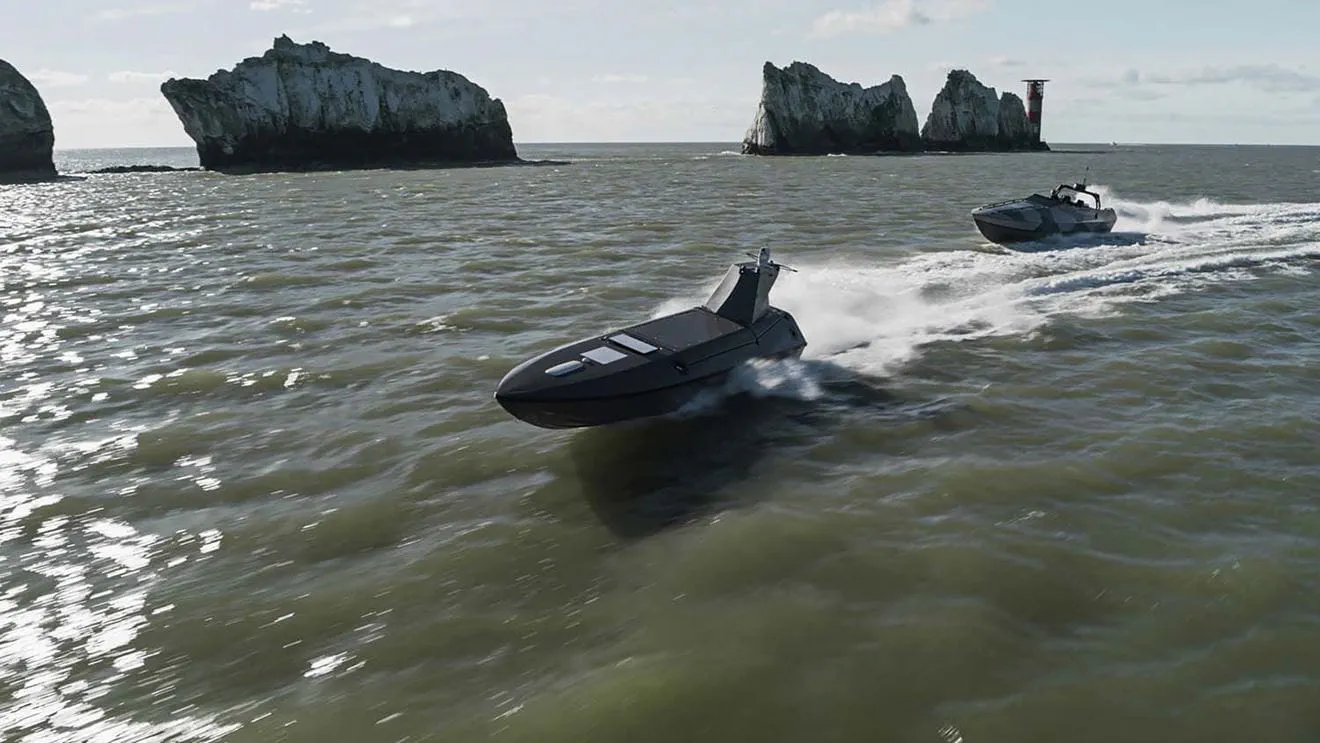
The Royal Navy has received its first fleet of uncrewed vessels under Project Beehive, the First Sea Lord confirmed in a speech at RUSI on Tuesday, describing it as a significant milestone in the creation of the Hybrid Navy.
General Sir Gwyn Jenkins confirmed the Royal Navy had received 20 uncrewed vessels through its partnership with UK company Kraken, which will be used by 47 Commando Royal Marines for training and operations. He described the delivery as “a significant milestone in the creation of the Hybrid Navy” and said the boats had been delivered in a matter of months, calling it testament to “the agile procurement system we have established and the strong partnerships we have forged with British industry.”
Jenkins also revealed that a Navy-wide wargame held at Southwick Park at the end of last month had tested the Hybrid Navy concept, saying it provided “clear evidence that our Hybrid approach will deliver a significant increase in warfighting capability, with the chances of mission success rising notably.” He said the wargame showed the Hybrid Navy generating a substantial increase in combat mass as measured by weapons and sensors, that missile capacity increased three-fold at “the level necessary to win a contest in the North Atlantic” and that readiness to respond improved markedly across all key missions including the continuous at sea deterrent, carrier strike groups, amphibious strike groups and integrated air and missile defence.
Looking ahead to near-term milestones, Jenkins said the first uncrewed gliders patrolling the North Atlantic to detect and monitor hostile activity would be in the water for Atlantic Bastion this year, that he aimed to have the first uncrewed escort ships sailing alongside Royal Navy warships within the next two years, and that the first jet-powered drone would be launched from a carrier next year.
Jenkins also pointed to the conversion of RFA Lyme Bay into a mothership for autonomous and uncrewed mine hunting capabilities as evidence of the Hybrid Navy already operating in practice, describing it as “just the start of a multi-phase process” providing “rapidly deployable and easily scalable solutions to the current situation in the Middle East, all while minimising cost to the taxpayer compared to traditional ships, reducing the risk to our sailors and marines in the process, and improving our effectiveness.”
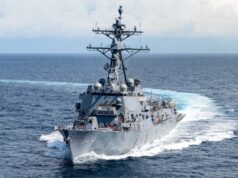
The First Sea Lord said the Hybrid Navy was not about replacing existing capabilities but increasing the mass, survivability and lethality of the force, saying “it is only through blending the conventional and the new that we will achieve this” and warning that “there is no scenario in which we will have unlimited resources.” He described the vision in practical terms as a Type 26 frigate operating in company with two uncrewed escorts using AI, while a submarine drone hunts subsurface threats alongside crewed platforms, saying “this is what hybrid looks like.”



Very nice. I would hope then that this leads to contractors like BAE systems etc, coming up with future cheaper, faster to build, perhaps, autonomous frigate/mothership concepts as the tech progresses. Can we use this new hybrid approach to achieve a greater level of mass faster, then having to wait 6-10 years for a ship/boat?
I’ve gained $17,240 only within four weeks by comfortably working part-time from home. Immediately when I had lost my last business, I was very troubled and thankfully I’ve located this project now in this way I’m in a position to receive thousand USD directly from home. Each individual certainly can do this easy work & make more greenbacks online by visiting
following website—.,.,.,.,.—>>> JobatHome1.Com
You say what now? You really think I’m going to go to the web address you give?
Just pop a condom on your device if you enter.
Presumably not AI generated spam. That would at least be written in coherent english.
It’s terrible how AI has decimated the human scammer job market.
😂😁👍
will they fit into containers? for forward deployment i wonder
What will the RN do with them operationally?
Anyone know?
The Beehive USVs?
They said ISR and training, so possibly helping with Russian ship shadowing, coastal reconnaissance and maybe practicing for Ukraine style base attacks if that’s what we have in mind.
Thanks. Interesting.
As long as they’re not used as an excuse for not buying warfighting assets that can self deploy at distance and defend themselves, and take on other tasks when not in a war zone.
In other words, a real Escort.
I see attention thrown on these to deflect from other areas where the RN has fallen dramatically.
Still, in themselves a positive development. Any self defence weapons carried?
I’ve seen the RIB going around for years with GPMG.
They’re unarmed, but only 8m long and 2.5t so it’s not too surprising. Kraken K3 scout if you want to look up anything else.
The ‘unmanned escort’ name is disingenuous, all I can see them doing is work alongside existing warships except as part of the combined Atlantic Bastion fleet.
Only one small step to the Type 91.
Built in Hamburg by Rheinmetall.
No, they’re British designed and built but are just opening a subsidary in Germany. The USMC are also interested.
Designed, yes.
However, Kraken formed a joint venture last year (not a subsidiary) with NVL for production. NVL was bought up by Rheinmetall and renamed the company Rheinmetall Kraken GmbH. I can find no evidence that any regular production of the K3 Scout has or will happen in the UK. Germany hoped to increase production from a few hundred a year to around 1000.
I have to admit the timing is odd. The “order” for 20 was announced last month and earlier this week 1SL said “Through our partnership with UK company Kraken, we now have at our disposal 20 boats that will be used by 47 Commando Royal Marines….” which sounds like we are relying on Kraken to make them available when they are needed.
Are you sure they’re unarmed?
I’m struggling to understand the 1SL’s comment about the Hybrid Navy test last month demonstrated a threefold increase in missile capacity, if the drones used in the exercise didn’t carry weapons… Unless these Krakens didn’t take part, and they were talking about a simulated or hypothetical capability?
Even at 8 M long, they could probably carry a couple of GL-Brimstone, or possibly even a Sea Venom.
Seems like the escorts are becoming the new flagships and these drones will be the new escorts.
Curious what a carrier group will look like.
Good point, the size of T26 and T83.
Dodge the new anti USV weapons being developed !
where else, alongside!
Photo ops are the future of the future navy
ferry sightseers around pompey to look at the ships that are not there
At 8 Mtr length they will be painted to blend into the docks so the sightseers cannot see them. A cunning plan!!
cunnung indeed a new version of dazzle camoflague?
Thats good to see. We need this approach everywhere. Every service needs urgent fleshing out. I admit my older infantry/Nato brain still thinks of mass in the form of tanks, ships and manned aircraft. However seeing what the Ukes have achieved, especially at sea, has changed my thinking. I do however struggle with those poor Russian sods faces when faced by a drone, a drone flown by some kid with an XBox gadget. Wonder if said kid could act as a real soldier in real combat…
Haha, there are a few on here that like playing computer games, I saw one comparing cars and military matters with AI searches the other night. (think he was 9 but he did say 12)
A Supra time was had exchanging comments !
Yup they are all rather strange to me mate. How would they cope with the Fan Dance? 🤣
Ha ha ha – good point – done that too many times and my back and knees are telling me about it now 😁👎🇬🇧
😅
Lol, I can’t even Imagine doing that now !
You just sowed a seed though, might take one of the bikes over to the Brecon’s soon (hope they haven’t renamed it In some orrible unpronounceable way like they did with Snowden !)
Do it l took my daughter there for a walk…..she nearly died. Then admitted daddy and his soldier tales are not porkies 🤣
Can’t walk far now mate, had a long term Lung Issue since late 80’s, I only go to places If I can use two wheels (off road) or Six !
I was once lucky enough to have walked many challenging places throughout the UK, It was a really great thing.
Maybe I’ll buy one of those new fangled Heckinloptors, so I can fly instead ! 🤔🚁🚁🚁
Sorry to hear that bud. I took my time but she was still knackered. She’s mega fit too. Yeah get a whirly bird and be AAC 🤣
Sadly Pen Y Fan is becoming more like Snowden, in the number of hill walkers doing the path is no longer makes the climb enjoyable. They are even looking at doing parking restrictions, because the car parks can’t cope, so people are parking on the main road.
If you’re up for a challenge, there’s a great walk near Pen Y Fan, where you start and finish at a pub. The summit you climb is called Waun Fach and is over 800m high. It’s north of the main road between Brecon and Crickhowell
Cheers for that Davey. We are doing the Munroe stuff starting this year. We did the Fan during winter to miss the crowds. Pretty much done the Wales scene and as you say tourists are everywhere. Small country.
It’s when you see them up the top of snowden in flip flops, T-shirt and shorts.. slowly turning blue…
Whut?
My controller skills are terrible so I’m not sure I’d be any use in the world war, but I’m alright at strategy games and vehicle builders.
Have you tried Pong or Space Invaders ? 😁
I coded Pong on scratch back in primary school, never done Space Invaders though.
they wouldn’t.
I managed to reach the end of “Missile Command” back in the early 80’s, It took many months of dedication and that was It, I never played any game since !
Rome Total War! The platinum modded version. Wish I had that again.
Battle of Britain on PC, vintage early 2000s, Silent Hunter II, all ones I used to play.
Back in the 80s, long before your time, Desert Rats ( the north African campaign 40 to Alemein ) then Vulcan ( Torch to Tunisia ) were rhe war strategy games I’d play on the Spectrum!
I’ve spent hundreds of hours on RTW2 Emperor edition, that’s good fun. And Total War: Empire for the naval battles. Age of Empires too for a bit and Cities Skylines for a slower experience.
Lots of flight simulators and vehicle builders, KSP, DCS through the cadets, Trailmakers.
Does Pornhub count ? 😁😁😁
It’s hard to put our method of combined arms in to the same context of the Russian-Ukrainian War. As neither side has or had air supremacy, which is why drones have made such an impact. At the start of the war, Russia was heavily reliant on fixed artillery and attack helicopters. With the objective of smashing an enemy’s defensive line, as well as deterring any reinforcement. The Russian armoured brigades would then smash through what was left. Whilst their Airforce either provided close air support or local air supremacy.
Ukraine, at the start of the war had a fairly large number of Bayraktar TP2 drones. On paper these were seen as a poor mans Predator. However, they performed significantly better than expected. Russian SAM systems couldn’t initially detect them, so the TP2s set to town taking out lots of mobile SAM systems. The TP2s were then given free reign to survey Russian troop dispositions and hunt artillery systems. Which when paired with supplied SPGs, such as Archer, AS90, Caesar and Pz2000, significantly whittled down Russia’s fixed artillery advantage.
Pre-Ukraine War, when a Russian armoured brigade moves forward, they are supported by close air support provided by attack helicopters and Su-25s. However, Ukraine were supplied with a number of advanced MANPADS, such as Stinger, RBS70, Starstreak etc. We quickly found out that the majority of Russian helicopters either didn’t have any countermeasures or it was very basic. Similarly, the Su-25s had a very basic countermeasures system. The Western MANPADS tore through the Russian aircraft, to such an extent, they began using loft techniques launching unguided rockets at targets. it wasn’t until Ka-52 was equipped with the Vikhr-1 with a 10km range, that they could stay out of MANPAD range. Then fixed wing aircraft got glide bomb kits to give them a stand-off capability, whereas before they overflew targets.
It should also be said that during the initial stages of the war, Ukraine was very successfully using hit and run tactics, along with ambushes on convoys, that the ineptitude of Russia’s command structure became clearly advertised. Sending long convoys down main roads without clearing the surrounding areas, is basic 101 force protection. But when Ukraine used a number of Western ATGMs (Javelin and NLAW), again it became apparent, that they couldn’t come up with a decent counter, the started using cope cages, which was a field fix and still didn’t stop Javelin or NLAW.
But the main problem was that Ukraine could still field an relatively effective air force of Mig-29s, Su-24s, Su-25s and Su-27s. All Soviet era aircraft, with a few added Western parts such as Garmin GPS taped to the cockpit instrument coaming. Ukraine didn’t have any AEW platforms, most of its fixed radar sites were taken out in the first couple of days of the War. So had to rely on a few mobile radar systems. Plus the air to air weapons they had were also all from the Soviet era. The beyond visual range air to air missiles (BVRAAMs), were all still semi-active homing, which required the launch aircraft to keep the target constantly illuminated throughout the attack. Yet, they persisted against a numerically superior force and achieved a number of successes. Russia with the Il-76 (A-50) AEW partnered to the Su30/35, that had the R77 AMRAAMski, should have at least on paper won air supremacy.
Now Ukraine has a few F16s armed with AMRAAMs, and Mirage 2000s with MICA, controlled by a couple of Saab Erieye AEW platforms. Russia is really struggling to adopt to this. They have been using a lot of the very long range R37 air to air missiles against the fighters, rather than getting in to AMRAAM range, with not a lot of success. Due to Ukraine becoming very adept at ambushing Russian aircraft, where the Erieye controls the fight. Russia’s air advantage has been squandered, I don’t believe they will ever gain air supremacy over Ukraine.
Compared to a NATO fight, winning air supremacy is key to the combined arms tempo. Would a NATO air force backed by its AEW assets make a significant difference? NATO air forces do have two key tenants, which is dominating the local airspace and killing any threat to it. AEW would be key to this. Although pretty old, the E3 Sentry is still the standard by which all other platforms are measured against. The radar is still very effective and yes it does have weaknesses. But for controlling an air campaign, until the E7s and Globaleyes becomes more mainstream, there’s nothing better. Which when paired with Rafale, Typhoon, F35s, Gripen, F15s, F16s, F18s and F22s all armed with the latest (AMRAAM/Meteor) BVRAAM. I believe would quickly overwhelm the Russian Air Force. Thereby allowing aircraft to switch to taking out surface to air systems and indicting ground targets.
The question of when NATO wins air supremacy, does it nullify the drone threat. I think partially as drone operators will be far more at risk. As NATO has a greater number of ELINT type aircraft available. Which could be used to pin point operator relay transmitters. So they either have to get a lot closer to the front lines or start using greater numbers of fibre optic controlled drones. As Iran clearly showed against the US, one way attack drones like the Shahed, are still really hard to intercept, even when you have air dominance. But I feel that as better counter uncrewed air system (C-UAS) come on line. The overall threat will be mitigated, especially when you have aircraft fitted with APKWS, helping to balance the kill vs cost ratio. It may not all go NATO’s way, but I am confident that NATO would have dealt with Russia in the first couple of months of the War.
Often wandered if the troops being targeted by FPV drones, would be better off with a tennis racket against the FPV drones?
Interesting stuff that thanks. I think a strategy for taking out the XBOX kids would be good. Either by 155mm arty or preferably a bayonet. I don’t consider them as soldiers tbh. That said l like traditional methods 😀
Really great synopsis – thanks. One of the things that shocked me ( in a pleasant way 🇺🇦 of course ) was the way Russia didn’t get total air superiority in the first few days of war . I’m still amazed in fact and full.of respect that the UKR air force even survived in any meaningful shape and form and even more so are still in the fight. Slava !
It can’t be over emphasized what Ukraine managed to achieve with Soviet era aircraft and weapons against the latest and greatest from Russia.
Pretty sure a film will be on its way, perhaps a Top Gun 3 where Maverick has been contracted to train Ukrainian pilots, and just happened to be in the right place at the right time, refusing orders to return to the US?
Russia only put Vikhrs on their helicopters after the war started? I thought those have been on the SU-25 for ages, they’re on the SU-25T in DCS anyway.
At the start of the war, the Mil-28 and Ka50/52 used predominantly unguided rockets, AT-9 Spiral 2 for the Mil 28, whilst the ka-52 mounted a few Vikhrs. At the time it was believed that Russia didn’t have a significant number of the Vikhrs. The Ka-50/52 has been using the LMUR guided missile to stay out of Starstreak range in particular, as its range is closer to 15km. However, Raven and ASRAAM came as a nasty surprise.
Yep the Su25T was design as fixed wing tank hunter using Vikhr. But again very few Su-25 fitted with Vikhr have been seen during the war. Suggesting either not a lot of aircraft were made, or the stockpile of Vikhrs is quite small.
I suppose the question really is can standard air superiority make a difference in a battlefield dominated by thousands of small tactical drones that fast air cannot see or engage…
Yes, up to a point. With air supremacy it allows you to fly ELINT aircraft closer to the lines. They will be particular good at detecting the radio links between the operator and drone. Thereby allowing a HQ to triangulate operator positions, or their relays. Which can either be suppressed with artillery or air strikes.
However, as Israel is currently finding out fighting Hezbollah. Hezbollah have switched nearly enmasse to using fibre optic controlled drones. As the Israeli drone jamming was so effective, plus they were really good at locating the operator’s transmissions, then using a Hellfire to take them out. Some of the fibre cables have been found to be nearly 10 miles long. Thereby making the detection and targeting of the operator nearly impossible.
Also by having air supremacy, it will allow you greater freedom to operate helicopters nearer the front line, but also behind them. Which keeps the other side guessing and off balance, and to be reactive to your moves, rather than you to theirs.
Direct non-proxy NATO vs Russia probably won’t be a straight up military war as much as a political one. Russia’s goal will be fracturing NATO, to create political splits and disagreements. Right now, of course, that’s about peeling off the US. We’ve seen those fractures can open up when the fight is not on NATO land. Greyzone pressures in the Baltics is the obvious next pressure point but it will be undertaken when something is happening elsewhere: Middle East, Taiwan, South China Sea, High North etc.
The question is what will NATO be able to bring to bear in a particular theatre when distracted and where the relative existential threat level is thought to be low? Can Russia push the boundaries beyond that which we would normally tolerate effectively unanswered, perhaps even to where the point of NATO is questioned?
One thing I never realised until recently, which was highlighted by the Sky run Russia-UK wargame, that had Ben Wallace playing the PM, was that if a Country invokes Article 5, the call to arms isn’t automatic. But each Nation within NATO votes on whether they will support it. Meaning you could have some supporting, whilst others can say no. The Sky run wargame kicked off with a Red Flag attack on Murmansk, that Russia firmly put the blame on the UK. Which led to a cruise missile strike 24 hours later, after the UK flatly refused the blame or the Russian terms. Apart from the inadequacies of Homeland defence, one area that struck me was how Russia managed to split NATO’s decision making. To such a state that the US, refused to help. In the wargame, it was only really the Nordic countries that immediately came to our aid.
Although the wargame was purely fictional. The acts the Russian side did and played out were highly believable. I could well believe Russia do something similar to a fellow NATO Country. Which would also include a lot of misinformation, with a green men attack. Which is then followed up by conventional forces coming to support the victims of oppression.
But I think you are also right, in that they’d probably wait for another World event crisis before making their own move. Especially one which captures the focus of the US.
This why JEF is important, it’s a fast-response enabler.
They said the same thing with the invention of the gun.. yes these half trained idiots can shoot a gun, but in a real fight with a warrior born and trained from childhood in true combat they will be dogmeat.. but the knights, samurai and all the other warriors born are long gone from the earth and warfare has for a long time been won by the “ half trained” commoner with a gun ( I’m not disrespecting the infantryman.. just making a point that to a knight or samurai that spent their entire lives from the age of 7 training to kill.. your infantry man with a gun and say a couple of years training was always a half trained peasant.. who if they ended up in sharp steal range one to one would be dead.. as they were generally no match hand to hand for the sociopathic killer (warrior class) trained from childhood to kill people up close)… I would imagine in some time in the future the infantry man with a gun will go the same way as the warrior classes of old.. a hero figure from a different age.
Ahh, Arsenal supporters then !
They are and always have been half trained halfwits…
first place i’d flush is the MOD and all its crusty dementia riddled old admirals who should have been put out to grass years ago
Just the start: May I suggest that by 2040, 65% of the RN fleet could be unmanned? Imagine warships at sea continuously for up to 12 months and capable of self-generating their own power without needing fuel replenishment. Obviously, these sizable craft could be crewed by a skeleton standby team (damage control) who would rotate with a manned conventional mothership. Each mothership manages four uncrewed drones over a 400-mile operational zone. Just a thought, folks.
Haha, I reckon 65% of the current fleet is unmanned !
Very true, mate….I love your humour; keep it up.
Cheers Maurice, I use it as I’m a tortured soul at heart !!!!
The implication as well is that this could lead to smaller, cheaper, aerial drone carriers, maybe along side our QEC carriers.
Mark R, the possible vessel concepts are endless, and eliminating the need to house and feed thousands of crew at sea will result in significant savings, leaving scope for more warships within current budget restrictions. Everyone in the MOD has to look to AI/robotics with the objective of reducing the casualty rates of combat. Ukraine is quickly developing autonomous systems to help backfill the battlefield losses, and this is not an option but a critical necessity. The UK is also gaining immeasurable data from this conflict, which must be ploughed back into UK defences. Unwittingly, Putin has triggered an explosion in technical advances not seen since WW2.
Amphibious Strike Group – is he kidding – a single RFA?
Fisheads think Trafalgar. Only soldiers can be realistic 😇
😁👍🤣
MRSS will be here any decade now. I know 1SL said hybrid is not about replacing the existing Navy. The problem is we badly need replacements for the existing Navy or it won’t be hybrid — it’ll just be small drones.
In a Carrier Strike Group you only have one aircraft carrier.
I’ve gained $17,240 only within four weeks by comfortably working part-time from home. Immediately when I had lost my last business, I was very troubled and thankfully I’ve located this project now in this way I’m in a position to receive thousand USD directly from home. Each individual certainly can do this easy work & make more greenbacks online by visiting
following website—.,.,.,.,.—>>> JobatHome1.Com
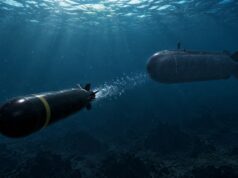
If unmanned gliders can carry sensor pods as they sink , surface , sink or autonomous patrol , then presumably they can be armed with a warhead for some form of long endurance torpedo / mine system.
The Bastion appears to be more of an area denial and anti access concept, something the Russians have practiced for years .
The US is building a new class of private industry SURTASS ships , contracted to the USN.
Something like that would fill the Babcock build hall post T31.. Triton sized vessel, long endurance , contractor operated that tow sensors 360 days a year. Add a radar, ESM suite and the whole N Atlantic , North sea is covered. T26 then does the hunting. If the RN wants to escort Ru surface vessels going through the channel, then an uncrewed boat, streamed sensor package, remote operated CIWS and a couple of naval strikes missiles provides that deterrent , without a crew going to sea
That’s fine for a defensive posture. Offensive power projection will cost a lot more.
Gliders this year, a jet drone taking off from a carrier next-year (any guesses anyone?), and escort drones alongside warships within two years – definitely faster than we expected.
The speed of construction of unmanned systems compared to the time required for Type 26, Astute, Tempest, shows that in any future conflict the only war losses that could have replacements built in time will be unmanned.🤷🏻♂️
Yes. Built faster than we thought. Cheaper, at about £500K-£600K a boat. Also smaller, for the Coastal Forces Squadron (inshore waters), and built abroad. Are these the droids we are looking for? Will we get replacements at all if we rely on foreign-built drones?
It’s a net positive, but it’s one small step for a Navy. Let’s scale ’em up and keep ’em coming.
Even in WW2 we were able to get foreign-built replacements of things.
Perhaps I’m missing something, but what is to stop a merchant vessel just coming alongside this unmanned ship, lifting it up and running off. It would be of considerable intelligence value, particularly when you start putting your latest missiles ,radar and sonar on them.
A passing foreign submarine surfacing next to one, and doing the same. Will there be a loudspeaker on board asking people to please not climb on our ship? But what do I know? I’m just ex RAF…….
.
Presumably, “Home” would be able to detect that happening. We could fit the towers with ring door cameras and announce to them “Touch me i go bang!!”
We would really be prepared in peacetime, to blow up the vessel, perhaps with it on a foreign ship, causing the mother of all international incidents? ” We thought it was a ship in distress, and were trying to assist.” A co-ordinated scoup up, and half your fleet disappeared, or a ” close encounter ” and strangly your drone vessel blows up 6 hours later.