

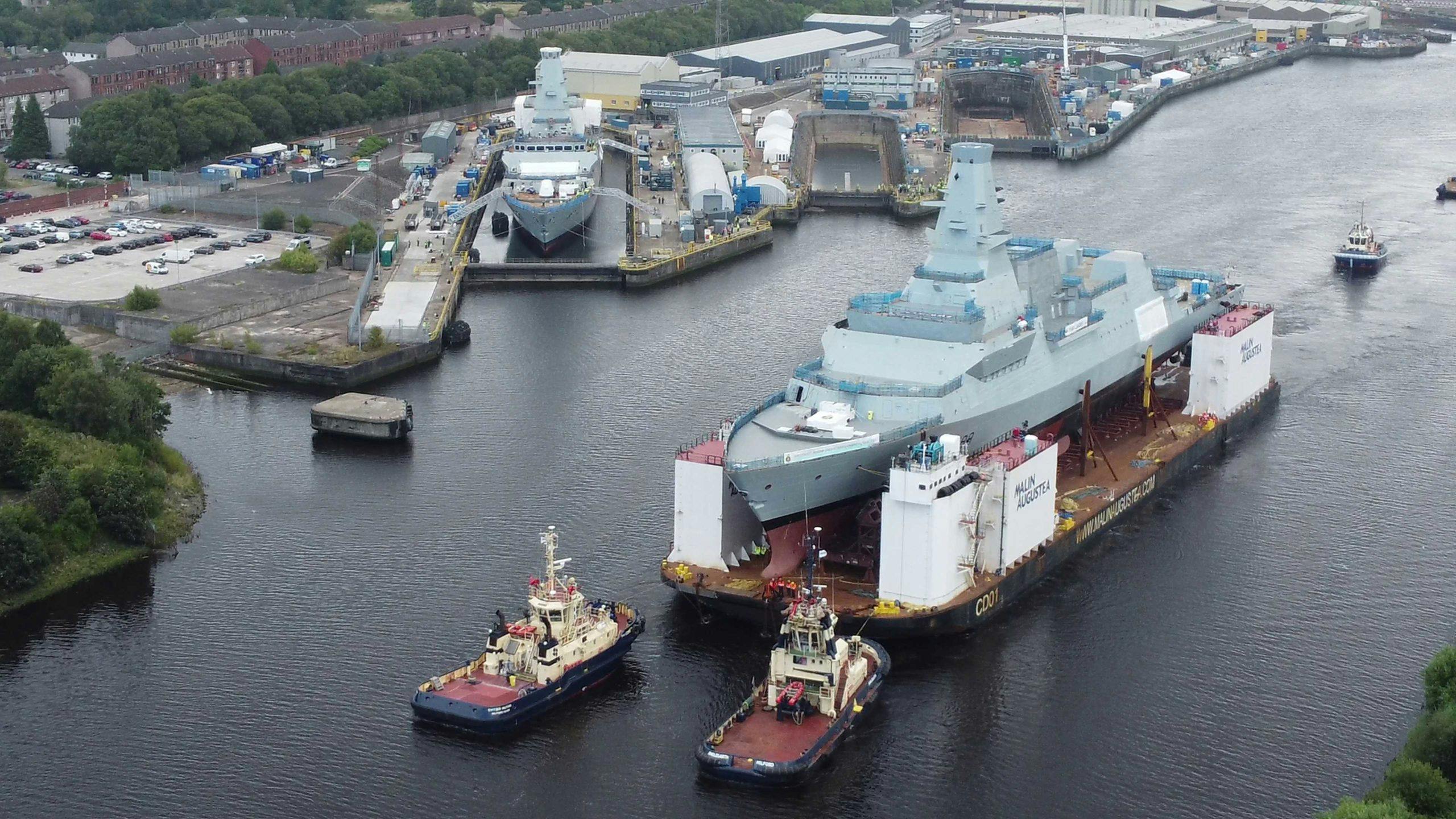
BAE Systems has told MPs that the UK-Norway Type 26 partnership, combined with space-based surveillance and uncrewed systems, provides the foundation for a durable British-led approach to High North security, in written evidence to the Defence Committee’s Defence in the High North inquiry.
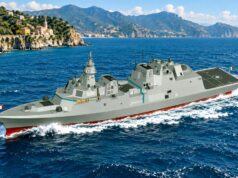
The company describes the UK-Norway Type 26 relationship as transforming interoperability into full interchangeability between the two navies, saying that “operating identical ASW frigates gives the UK and Norway an unparalleled joint ability to detect, classify and counter hostile submarines at range, reinforcing NATO’s northern flank as melting ice enables new Russian access routes.” With Norway joining Australia, Canada and the UK in the Global Combat Ship programme, BAE Systems describes what it calls an up to 34-ship, four-nation collaboration sharing a common acoustically quiet hull with modular mission systems and open architecture supporting long-term upgrades, shared training and officer exchanges.
BAE Systems also reveals it has signed a memorandum of understanding with Hamek in Harstad, Norway, to explore local dry-dock capacity, maintenance and support, describing this as a step toward aligning sovereign capability with proximate sustainment in the High North. Hamek operates one of Norway’s largest northern dry docks and is planning further facility investment.
On space, BAE Systems argues there is an essential requirement for a shared UK-Norway space-based surveillance layer, including resilient low earth orbit ISR, high-bandwidth polar satellite communications and multi-orbit redundancy, to underpin the UK’s Arctic and Atlantic Bastion, Shield and Strike concepts. The company points to its Azalea satellite cluster as a live example of the persistent sensing required in Arctic operations, describing it as a company-funded, UK-developed system that places multi-sensor satellites in low earth orbit to fuse radio frequency and synthetic aperture radar data in orbit and downlink analysed intelligence in near real time. BAE Systems also notes that its acquisition of Ball Aerospace, now its Space and Mission Systems business, expands its capacity in space payloads, optical sensors, missile warning and tracking satellites directly relevant to the ISR and command and control backbone needed in the High North.
On the Global Combat Ship programme, the company describes the combined fleet of at least 13 advanced anti-submarine warfare frigates operating together in northern waters, sustained by approximately 4,000 jobs across the UK supply chain, as both NATO-significant and industrially material. Canada’s selection of the Global Combat Ship for its River class replacement, with an intention to deploy up to six of them into the High North, further reinforces the programme’s strategic weight according to BAE Systems.
BAE Systems calls for exercise integration with industry as a means of turning prototypes into fielded capability, pointing to Cold Response and the UK-led JEF exercise Lion Protector as opportunities to demonstrate and test hybrid, uncrewed and space-enabled ISR in Arctic conditions. It also calls for a bilateral through-life support scheme for Type 26 and associated systems in the High North, built around the Hamek MoU and Royal Navy facilities, to shorten maintenance loops and create surge capacity.
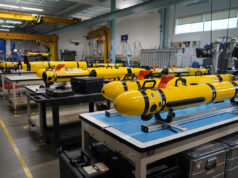
On the Hybrid Navy, BAE Systems says the Royal Navy has accelerated its crewed-uncrewed transition and that success depends on rapid spiral development, teaming and industrial collaboration. The company argues that as the UK promotes hybrid concepts to allies, it would be strategic to embed an international industrial pathway from the start, including open architectures and export-cleared interfaces, so that partner nations can integrate modules and payloads without bespoke re-engineering.
BAE Systems concludes that Arctic Sentry, NATO’s new framework launched in February 2026, has given the Alliance a single frame within which to organise previously dispersed Arctic activities, and that the opportunity for the UK is to align strategy, forces and industry so that presence becomes persistent, effects are interoperable and sustainment is proximate to theatre, describing the UK-Norway Type 26 partnership as already demonstrating “how security and growth can reinforce each other.”





There is a real need for the UK to be able to deal with security without involving the US -an alliance with Norway makes a lot of sense, it would be better if it could bring in the other non-US northern nations as well. A firm alliance involving Canada, Norway, Denmark, Sweden, Iceland, Finland and possibly, the Baltic States and Poland would be a very useful and focussed security effort…
I read that HMS Glasgow’s sea trials (originally due for Spring 2026) may be delayed.
No main radar, no MK41 VLS fitted yet.
There should be lots of spare Artisan’s in the shed from the T23s or are the T26s getting new build sets or the Artisan NG?
Silly question on the Artisan’s, but could they ever be adapted for land based use?
With the large numbers of mk41s to be procured wonder if it’d be worth the UK ever building some of these under licence?
Seems crazy that Azalea is BAE funded and not part of ISTARI. Such an RF satellite array able to fix and image radars and other EM sources seems like exactly what Ukraine requires right to get past any US threat of cutting off intelligence.
However I note that France also recently launched such a system as well and it might be the existence of both the BAE and French systems it was allowed macron to claim Europe can provide two thirds of the space based intel Ukraine requires.
There should be 20 of these planned
It was supposed to be 16!
Was the original number not 13?
Yes and 5 would have been configured for multi role mission’s. This was then replaced by type 31.
I’ve gained $17,240 only within four weeks by comfortably working part-time from home. Immediately when I had lost my last business, I was very troubled and thankfully I’ve located this project now in this way I’m in a position to receive thousand USD directly from home. Each individual certainly can do this easy work & make more greenbacks online by visiting
following website—.,.,.,.,.—>>> JobatHome1.Com
I’m disappointed that BAE have not set out a revised build schedule to cover both RN and RNoN Type 26 vessels. Though the rest of what they have announced looks to be positive.
That is very good point, but it is inextricably tied to the DIP and therefore leads to people questioning whether those final 3 RN ships will be built.
The accounts must be all over the shop at the moment, with Rachel truly dreading her day at the office but there needs to be clarity and decision for both ship-building and defence.