

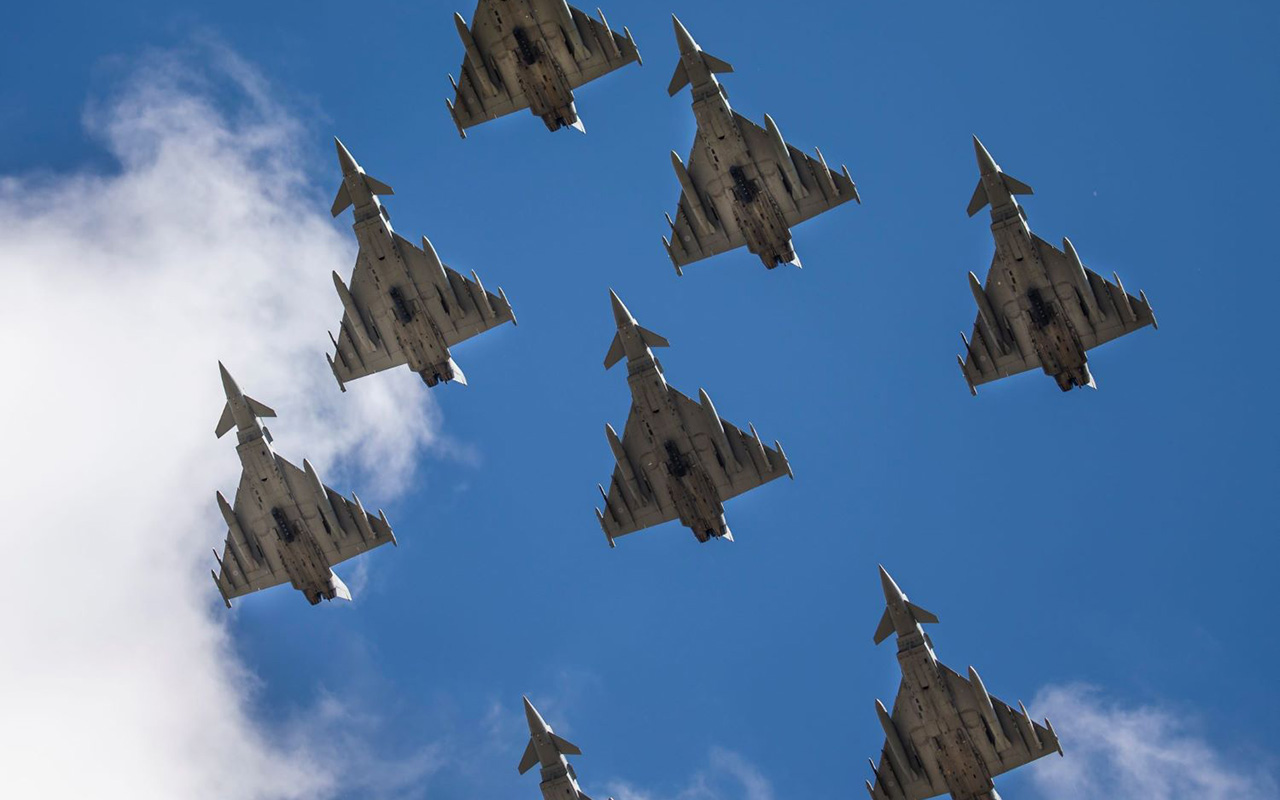
Senior Ministry of Defence officials have admitted that a significant share of major defence programmes are running into trouble, with too many projects falling behind schedule.
Giving evidence to the Defence Committee, National Armaments Director Rupert Pearce described the overall picture bluntly, saying the portfolio is “pretty troubled” and that “there’s too much red”. He added that the proportion of programmes in difficulty has crept up over time to “just over 20% pushing 25% now – it’s too high”.
While most projects are still formally on track, the direction of travel is a concern, the central issue is persistent delays. Pearce told MPs that “most of those programmes are not over budget. They’re delayed”, with delivery dates repeatedly slipping.
That distinction matters as even where costs appear contained, delays can erode capability, disrupt planning and drive further expense over time.
Evidence pointed to a mix of underlying causes as many programmes involve advanced or unproven technology, bringing what Pearce called “a big technology risk quotient”. Supply chain pressures remain a factor, and several projects depend on multiple international partners, adding further complexity. Taken together, he said, “it’s just a very, very complex situation to manage”.
The Wedgetail airborne early warning aircraft was cited as a clear example, the UK had expected to field a largely mature system based on Australia’s platform, but that assumption has not held. Pearce said the gap between the Australian aircraft and the UK build meant “a much higher level of obsolescence”, requiring new components to be certified and causing “very significant delays”. He also acknowledged that Boeing has been “a troubled partner”, reflecting well-documented issues in its wider aircraft programmes.
MPs also raised concerns about oversight, particularly as more programmes are being withheld from public reporting on national security grounds. Pearce said this was not a discretionary decision but based on “a set of objective criteria”, and offered to discuss specific cases in private.
More broadly, the discussion exposed the extent to which programme performance is tied to wider uncertainty inside the department. Several projects are linked to decisions still to be set out in the delayed Defence Investment Plan, leaving questions over funding and priorities unresolved.
Pearce made clear what success would look like: “I want to see red turning to amber and then to green.” The difficulty is that, for now, too many programmes remain stuck in the red.







We don’t hear much about the Army’s new vehicles such as Boxer, I guess we have as many as ten right now? That blasted Wedgetail is Nimrod upgraded all over again, and look what Cameron did to that! Just as supply issues were being addressed on Boxer and CH3, along comes the Iran War, which could place even more restrictions on manufacturing and supply.
The RN is not in the best of shape either, as its brand-new warships are moving at a snail’s pace from the builder’s yards, and the existing fleet is falling apart due to overwork, and painfully slow maintenance periods are restricting operational readiness. Note the international reaction to the HMS Dragon debacle.
Alarmingly, the UK is being drawn into the possibility of being at war on two fronts, Ukraine and the Middle East (especially if Trump steps back from his current commitments to Ukraine), and both the Army and Navy are to be found wanting, all due to reckless management by fourteen years of Tory policy and Starmer’s sloppy Ministry of Defence and its inability to even publish the DIP. Sadly, washing down and repainting sixty-year-old Bulldogs and tired-out Warriors may sound alarming, but that’s all we have, folks…so sleep well.
I’m fairly sure the failure to publish the DIP has more to do with the Treasury’s attitude to national security.
It all lands on Starmer’s desk. As for his Minister (I refuse to answer a question), of Defence, I feel his pain attempting to work with a PM and Chancellor so blind to the crisis unfolding. Why do I say that? Starmer refusing the US request placed our closest ally in a compromised position just when they needed it most. The war, being a mistake or otherwise, it was a wrong call. Just wait until the dust settles; Trump will deliver his answer to NATO. Then there is the Chancellor, looking into the camera and appearing to ignore the dangers ahead and not releasing defence money now! Churchill would have said, ‘Spend and be damned; there is no time to waste.’
Well said mate 👍
I totally agree, Churchill got a bloody good team together in a matter of days, we pay to be defended not to bring in illegal immigrants and give them everything free, the people slowing the system should be removed immediately.
But we don’t have Churchill, and we woukd not want him if we did. Why do we always try to rest on someone else’s laurels? It’s like being French in 1870, and asking constantly what Napoleon would have done rather than doing what we need to do. Sure let’s spend the damn money and get things moving, but as diddicukt as it may be we need our own heroes not those 60 years gone.
Where are we going to find a hero these days, my friend? We now have the most dreary set of politicians in decades. Labour are uselessly incompetent, The Greens are like something out of the X files but not as sensible, the Liberals will never leave their fence Which leaves the Tories and Reform.🫣. God help us all.
No more heroes any more…. They exist in the most unexpected places I believe, and hope.
I hope as well but in this case we need to have our hero in Westminster somewhere…
‘Churchill would have said, ‘Spend and be damned; there is no time to waste.’’
By the time Churchill became Prime Minister with all party (minus Communist) support the money had been already spent. The problem is, as you well described in your leading comment. the period 2010 to 2024 was when there was no sense of urgency, or even mild concern at all. ‘The Germans’ the reasoning seemed to suggest ‘are rolling in dosh because they leave defence to American taxpayers; why don’t we do the same?’ SoS Healey could not, even with a rocket inserted up his rectum, get industry to go any faster. The time to get a shift on was in 2014 when playing nice with Vladimir Putin had clearly been an epic miscalculation.
Ahhh!
Churchill of the Ten Year Rule.
The UK has been in economic trouble since the Great Financial Contraction of 2008/9 (we’re now approximately 20% less well-off on a per capita basis than we would have been if the long-term growth trend had continued), and the decision to cutback on public spending to ‘balance the books’ has caused enormous damage to a whole range of publics services.
One example that has recently come to light is the decline in our the organ transplant service, which has fallen from a world leading service to bottom tier due a chronic decline in investment in new cutting edge equipment.
To make matters worse, IndyRef and Brexit completely dominated all political discussion from 2014 to 2021 so the ineptitude of successive Governments went unchecked. There was no band-width to deal with the bread and butter issues of Government, it was all spent on what had, until fairly recently, been fringe issues.
The lesson from the last 20 years is that cutting back on capital investment ALWAYS comes back to bite you. There are no free lunches in this world and it will take decades and massive levels of investment to remedy the situation.
That statement tells you next to nothing, stuff delayed but in budget? Things delayed by the delayed DIP, and every thing else a secret to stop embarassment.
The reality is that the armed forces are at their worst point in decades. The situation is one of national emergency, with two wars underway that affect the country in one way or another, yet not a single measure has been taken to reinforce the three branches of the armed forces. Not a single order for ships, aircraft, or tanks. Given the circumstances, this could be called treason.
This is called treason. But will a future government do anything???
According to a French site, the government has approved Ajax production and procurement continuation. So all of a sudden, the vibration and noise issues had been resolved when lawyers and enquiries were called upon.
I missed the line that said ‘deployment remains suspended’
Very consistent thread between the appointment of US defence contractors and massive increases in cost as well as timescale.
Unfortunately our senior officers like the sweet Garvey too much in civilian life.
I think we are the only western military not buying BAE vehicles.
A few nato countries are buying cv90 off the shelf and k9 the use of common platforms between nato countries makes more sense than buying kit from an American company that has no previous experience of armoured fighting vehicles
I read a very good article today that essentially said we were pretty much already half way in WW3.. because it’s not going to be one even it’s going to develop as US, Russian and Chinese aggression continue.. and that we now have essentially linked conflict in to parts of the world as Russia, Iran and china are all supporting each other.. it will only take china to kick off something in the western pacific and we will be in WW3…
The problem is that the US has now essentially gone on its own aggressive way and even its allies worry it’s going to attack them or leave them swing in the wind.. this means anti western collaboration is now rising just as essentially the U.S. tears the west apart.
Same old same old. HMGs/MOD needs drastically sorting out.
Womp, womp. Don’t need to ask if anyone is surprised because you all know better than that
In the mean time our political elite have managed to give themselves another pay rise (£5000/year) that is like giving themselves a pat on the back for being totally inept. There was no red or amber lights there just straight to green.
We had a contract supported by Japan, UK, US and EU to make new UK jet engines, parts sourced from UK and EU only, machinery from Japan, main parts such as turbines, intake fans and driveshafts all made here in the UK.
This would of supported multiple UK companies to grow, but they decline this and go for importers and multinationals, just feels like they ignore actual UK businesses other than some T1 friends. Apparently they are funding some random paper drawn submissions, but not full CAD designed parts with supply relations and university partnerships.
Also no support from labour or Dasa/UKDI. We had so much to offer and get no support.
Wondering who else has similar issues?
It’s all a conjuring trick with the money allocated but not yet spent. Let’s be honest with the new world order being played out in front of our eyes. Do we the UK want to be apart of it or not the answer to that question determines whether we continue with the current situation regarding the armed forces or we slip into a isolated regional bit part player. Simples.
The vast majority of projects have and continually suffer from a lack of investment. An initial capability will be identified and a contractual negotiation begins to define the cost, as time goes on so cost rises, the MOD then squeeze the capability senior leadership to reduce cost or even slip the delivery date by years to meet in year cost challenges of other projects and programmes. Things are then cut from the specific capability without a full understanding of what that truly means and it has a programatic effect which then costs more when the now reduced capability is pressed into service. Type 45 is a good example of where costs were cut and it had some significant affects on both the overall numbers procured and the availability of a small numbers we now have. It remains to be seen what Wedgetail will ultimately end up as but every source agrees that 3 is not enough.
Can’t we do anything right these days where defence and the military as a whole are concerned ? .Niave ministers for decades have been reducing our military structure. A army consisting of just over 70,000 , a navy a shadow of its former size , 6 type 45 destroyers but only 2 are in service, 1 patrol boat for the whole of the falkland islands , where it used to be at least a frigate there , can’t form 2 protection screens for our carriers without the help of other nations assets , 75% of the submarine fleet not in service . Ajax fighting units STILL not usable , over budget and delayed by years.
Perhaps the problem is too many vanity employees engineering colours on a spreadsheet from red to amber to green rather than actually tangibly working on the real world product.
Ive said this elsewhere, but I’ll say it again anyway…
Starmers useless clown show, knows very well they need to sanction emergency funding, to buy spares and ordinance across all three services right now.
That would at least mean an ability to mobilise and bring to readiness the thinly spread assets we have left.
Alongside this, we need a costed plan to rapidly rise defence spending year on year, to 3.5% by 2028, like Germany and on to 4% by the early 2030’s.
They obviously won’t, because that would mean raiding the vast welfare money pit, the net zero crusade and foreign aid.
That would in turn lead to 50 or 60 leftie MP’s, crossing the floor to join the great wacko Zako and his crazy crew….
That in turn would trigger a General Election, as the collapse of their parliamentary movement and loosing so many MP’s would sink all confidence in the government.
So they will do precisely nothing, holding onto power for three more years is far more important than our national security to this insane bunch of bloody clowns.