

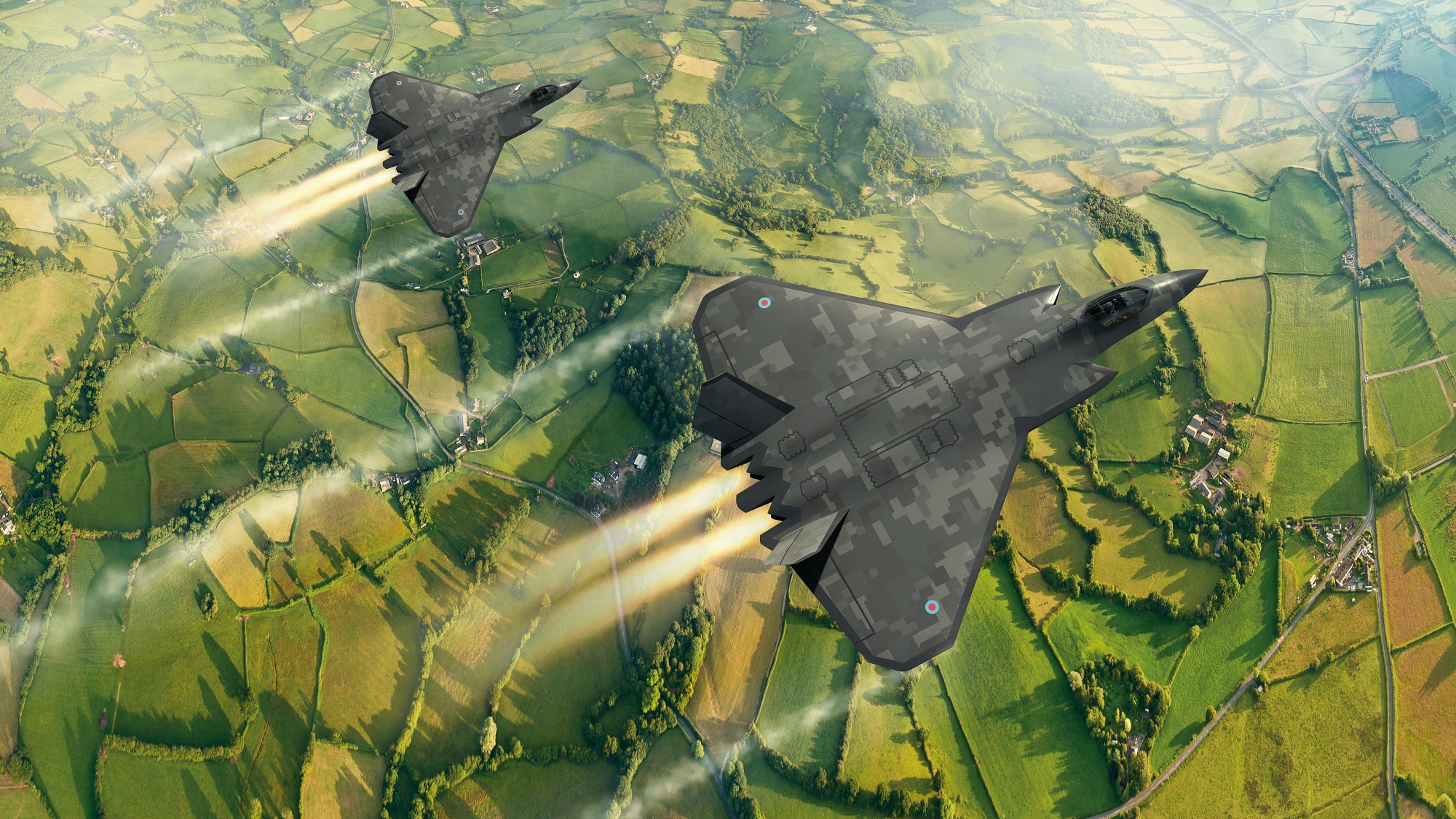
The United Kingdom is open in principle to expanding the Global Combat Air Programme (GCAP) to additional partner nations, Defence Secretary John Healey has indicated, as Poland signals interest in joining the effort.
Speaking to the UK Defence Journal in Edinburgh, Healey did not confirm any discussions with Warsaw but acknowledged that the programme is attracting wider international attention. “We’ve said, in principle, as three nations that we will talk to other nations that have an interest in the GCAP programme… potentially as future partners,” he said.
Polish officials have suggested engagement is already underway. Deputy Minister of State Assets Konrad Gołota told TVP.Info that “there is understanding for our proposal and a willingness to continue discussions” on joining GCAP, adding that he has been in contact with representatives from Italian and Japanese defence industries in recent months.
Healey, however, framed any such engagement as limited and exploratory, stressing that the programme remains firmly centred on its three core partners. “This is a programme with three countries at its core, Japan and Italy alongside the UK,” he said.
“There are already six and a half thousand engineers working on the GCAP programme. It has a real momentum and foundation, which understandably other nations are looking at.”
He said the three nations are willing, in principle, to engage with others, but only at an early stage. “We’ve said, in principle, as three nations that we will talk to other nations that have an interest in the GCAP programme, potentially finding out more, potentially as future partners,” he said.
GCAP, a joint initiative between the UK, Japan and Italy, aims to deliver a sixth-generation combat aircraft by 2035. It is built around a joint venture between the three core industrial partners and a single government programme office.
Healey made clear that his priority is maintaining progress within that existing structure, rather than expanding it. “As Defence Secretary, my first and foremost priority is making sure that the momentum that we’ve got in GCAP, the foundations we’ve already built… is maintained,” he said.
He pointed in particular to the way the programme has been set up across government and industry. “The foundations we’ve already built with a joint venture between the three major companies and a single government programme office…” he said.
That structure, he argued, sets GCAP apart from rival efforts. “That marks out our GCAP programme from other so-called similar sixth generation schemes that other nations may be involved with,” he added.
Poland’s interest comes as it continues to expand defence spending and deepen ties with major Western programmes, while reports suggest it is stepping back from the rival Franco-German-Spanish Future Combat Air System.
The focus from London remains on delivery with the existing three partners, rather than near-term expansion.
GCAP
The Global Combat Air Programme (GCAP) is a joint effort by the United Kingdom, Italy, and Japan to develop a sixth-generation stealth fighter, often referred to as Tempest. The aircraft is intended to replace the Eurofighter Typhoon in UK and Italian service and the Mitsubishi F-2 in Japan. The programme reflects a shared requirement for an advanced, multirole combat aircraft capable of operating in highly contested environments from the mid-2030s onward.
GCAP was formally launched in December 2022, when the three governments agreed to merge the UK-Italian Tempest project with Japan’s F-X programme. This was solidified through a treaty signed in Japan in December 2023. The effort brings together major industrial partners including BAE Systems, Leonardo, and Mitsubishi Heavy Industries, under a new international framework designed to coordinate development and delivery.
The programme already involves around 6,000 personnel and more than 1,000 suppliers across the three partner nations, with a significant industrial footprint in each. A central joint venture, named Edgewing, was established to manage design, development, and long-term delivery of the aircraft. Each national partner holds an equal stake, with workshare distributed across multiple sites, while certain core technology areas are led by designated nations.
Development started recently, with a flying demonstrator planned for 2027 and entry into service targeted for 2035. Alongside the core aircraft, multiple test platforms are being used to mature technologies, including the UK-led Tempest demonstrator and the Excalibur flying testbed. Italy and Japan are also pursuing their own test aircraft to support sensor, avionics, and systems integration work.








The Poles are also talking to FCAS though it seems April is the deadline for talks on workshare between France and Germany, after which the partnership may collapse.
There’s also talk of India being interested! I would hope that’s quickly killed off, they could not be trusted with such sensitive tech. This needs to kept in house with countries who share the same security concerns and diplomatic allegiances.
Absolutely correct criticism of India – they are no longer on the same side of the great divide as us. We should welcome the Poles on board unequivocally though.
India are tyre kickers, they should be avoided at all costs. They’ll only bring delays and more cost.
India seem to be closer to the French (think Mirages and Rafales) I think it’s more likely that they will look to replace the Germans in FCAS.
That said, given that the Tempest/GCAP is likely to be a longer ranged heavier fighter it would be a more sensible choice for them
Fully agree with that.
I’m not so sure.. India is neutral and the future India ocean power house… as the US moves further and further from Europe India is the potential counter balance to Chinese dominance of the Indian Ocean.. they would make a very good future ally.. no real geostrategic rub lines with Europe and a massive advantage for both.. in the future world India is a pole, they are also a democracy and not communists ( China ) I would 100% sell them the gear as long as their relationship with Russia changes.. and I think it will now Russia is essentially junior China.
They should be a natural ally with our historic links and commonwealth ties. I’d like to think Indian looks to the UK first for military equipment much like Oman and Saudi Arabia to an extent does.
As much as I have respect for India and what they have accomplished on their own. Get India involved and you may as well put all the aircraft design work on a pen drive and sent it to the Kremlin,
It’s positive that countries are interested, but surely it’s too late to join the programme? The design must be fairly mature by now and workshare agreed. Bringing in more partners now might just serve to delay the whole thing.
Tier 2 partners maybe. Same for Germany as well possibly. The ME countries will be interested certainly Saudi Arabia.
The UK MUST publish the DIP without delay as it is hampering progress on GCAP.
Exactly what i was going to post.
Uk, Japan, Italy = Tier 1 (Design/Build)
Anyone Else = Tier 2 (Preferred Customer/Access to Priority Build Slots)
Tier 2 can also get involved in the systems of systems thing, which could be very lucrative for Germany if it builds the best CCAs for GCAP, SCAF, NGAD and the F/A-XX. It could be a bigger money spinner than GCAP itself.
Agreed regarding DIP. If tier 2 partners contribute financially and get some limited work-share but don’t mess about with the design & timetables then I would be on board, the programme needs as many customers as possible to bring costs down.
Yes obviously tier 2 would enable earlier access so that such customers can tune their aircraft buys to their own specific needs and content as Canada will be doing should it buy Gripens. They then can design any equipment they would wish to include not dissimilar I guess to F1 customers like McLaren gaining ongoing information about Mercedes engine design and general layout so they can take advantage early to incorporate their own distinct requirements without impinging upon the core design efforts of the core platform. It has the advantage of such specs making it more attractive to other customers who have relations with in this case Poland, but obviously potentially similarly with other Tier 1 contributors too.
It’s probably the massive cost escalation in GCAP that’s responsible for the delay in the DIP. The UK is on the hook for £15-20 billion now. Italy is stating a cost rise of 300% over their initial assumption although their share has also gone up from 20% to 33%
Yeah, that’s the reason (eyes roll)
Largely through the actions and behaviour of the current US administration, there is huge export potential for GCAP. I hope the likes of Australia and Canada buy them too.
Canada is in discussions on joining GCAP.
Aerospace centers in Montreal, Toronto and Winnipeg means that Canada can bring much to the table.
A lot of negatives to our economy and navy reputation from the Iran war. But internationally it could be a positive. Starrmer had again come out strong like he did for Ukraine, and many nations are now questioning their trust in the US being there for them. It could see a number of more European defence projects kicking off. Including more money for the GCAP program and hopefully some cost saving through economy of scale.
Only a couple weeks ago someone on here claimed how our supposed weak response in the region would lose us influence and support amongst regional players. That aged well, in reality despite exposing our present lack of ships we all knew about, it is likely to push these States more into closer relationships with anyone but the United States, who’s ties and influence with them will remain only through threat and blackmail now, no sense of mutual benefit, all those prior bitcoin commitments, promised billion dollar investments and personal deals with Trump family members have led to this disaster for them (while Israel gets all the real support for nothing), no influence no real security and serious damage to their economies, so what trust with the US could there possibly be. As such while they may smile on the surface (like the poor Japanese PM had to as her Country was insulted in the White House yesterday) they will be desperate to do real deals with anyone but the US, China will be smiling no doubt. Real US influence almost anywhere now has been damaged to a degree it is unlikely it can be truly repaired other than papering over short term but ever widening cracks and superficial pronouncements. Trump may have thought he could intimidate everyone into obedience but that is a short term effect at best, underneath he is driving the World into self sufficiency or/and others hands. How much Britain can exploit this scenario is yet to be seen, however military sales are one great opportunity I think.
Agreed, biggest winners are China and Russia. Which is ironic that the US has damaged its own encomy to support nations it considers to be enemies or at least competitors.
Unfortunately the biggest losers are the UK, we rely too much on gas for heating and lack the buying other of other nations. We have to hope Norway doesn’t decide to profit from this mess too much.
We still have the media and the conservatives / reform pushing for more reliance on fossil fuel, which seems madness post Russia war and now Iran. We need energy security which can only be achieved by using renewable/ nuclear plus they are way cheaper
Fortunately for us in the UK, reliance on gas does not mean we have to rely on imported gas, it was a path we chose as a country. Unlike most of Europe, the UK can get oil and gas from the North sea (that doesn’t change the market price significantly but at least when it’s expensive like now the country profits from it). The UK has just chosen not to extract it and leave that to Norway.
Hopefully this is a wake-up call to the country as a whole that the world is not a nice kind place and the UK needs to look after itself (no one is going to do it for us), this means investing in the GCAP program to get it ready for sale to the world and make the profit from it. I suspect the usual mentality will prevail and anyone who comes in to invest in return for work share will be encouraged because money will be saved in the short term for much less gain in the long term.
We do rely on imported gas, most of our gas comes from Norway. However even the stuff that is dug up in the north sea is sold on the international markets and we pay market rates as the country does not own it, the energy companies do.
The US voters are also discovering this, as they thought as they were a net exporter they would be unaffected but all that oil/gas is sold on the international market rate, so doesn’t matter where it was dug up.
But most of those people are donkeys that don’t know the first thing about Geo politics, half the commentary on here comes from Russian bot farms and the daily mail. 😀
…. and Labour Party central.
Yep I would say US hegemony is functionally dead.. there will now only be US client states ( empire over hegemony). I would say the reports from Denmarks plans around defending Greenland from the US and that Germany and France ( and even 1 from the Uk) with the point of making a U.S. invasion even more geostrategically damaging.. shows that essentially NATO as is has died..E NATO was literally contemplating what it would do if the U.S. started a war with a European NATO member.. an alliance cannot survive that.. insults yes, threats of not supporting for a time yes, even tariffs and trade wars.. a threat of an attack on an ally that was considered a realistic worst case.. no it cannot survive that on top of everything else..
As for Iran that shows the US essentially wants client states to do its bidding.. the USN deemed escorting tankers through the straits of Hormuz to dangerous for its own warships so trump starts the threaten NATO allies and call them cowards if they don’t do what the USN will not.. even worse it’s clear trumps view is that when the US finish’s its attacks on Iran it will not itself be escorting tankers through the strait but will be leaving it up to other “allied” nations.. his words.. “ it’s not hard, they can do it, if they need help from us they can ask”…
We need to wake up smell the coffee and start working out what a European defence union looks likes.. and what are part and contribution will be and what we need to do if a worst case scenario happens and NATO breaths its last before their is a new European alliance and we end up on our Tod.. waiting for Russia to take a chunk ( and it do for the UK if NATO collapses without replacement)…
We war sleepwalking into a potential nightmare… Denmark sent blood, explosives and orders to fight to its troops in Greenland.. not against Russia or china but a NATO ally.. if that does not scare the shit out of everyone I don’t know what will….
Off Topic: Rumours are circulating about a £10bn cut to MOD to be paid for by delays in shipbuilding. Because delays to shipbuilding programmes have always proven to be solid cash savers in the long run, right? I’m just hoping this is part of the treasury vs MOD spat, and will get knocked on the head when the grownups turn up. Er… Remind me again, who are the grownups?
Last thing RN can cope with are any delays in shipbuilding.
T31 is contracted in a no fiddle contract and that would need to be expensively renegotiated. T26 is now an international partnership the only way to change the cost profile is to give Norway more early production but that would destroy the RN frigate rebuild curve.
FSSS is essential to CSG and already massively gapped.
Previous SSBN delays are already costing fortunes and keeping CASD running is becoming eye wateringly expensive and difficult due to Osbornian budget reproducing.
The report on Times Radio that I heard this morning said that the shipbuilding delay was rumoured to be pushing back (delaying) the Type 83 project. I can’t remember if it said by how many years but this sort of news when Labour (and pretty much all political parties across many countries) are talking about increasing defence spending seems to me to be jaw-droppingly crazy. We should be talking about accelerating programs not delaying them.
Given the project isn’t close to main gate and it is still about putting a design together that is truly nutty.
ATM T45 need to be augmented.
The 2023 10 year equipment plan included funding for T83 even though there wasn’ta mature design. Pushing back the start date makes sense given how lightly used the T45s have been.
As I have written before light use may be more of a problem than a sensible level of constant use.
HMG have no interest in defence.
Most of the public have no interest either.
That’ll never change until the missiles are hitting and they are hiding under the table waiting for the military to save them….
Something that is, unfortunately, increasingly likely given the glee with which Mad Vlad is trying to destabilise the world egged on by Xi who is laughing in the corner whilst the Mad Mullahs in Iran are busily stirring it up and helping Mad Vlad to deplete weapons stocks. With The Tangerine King destabilising the stabilising forces.
You couldn’t make up the level of mess that is appearing here but it is real!
If you had written that as a follow on to the Tom Clancy novels it would have been viewed as ridiculous. Not now.
The worst thing is I would now add in the USA to that mix.. who the hell knows who they will attack next ether via economic, political or actual kinetic warfare.. Denmark actually thought it might be attacked.. it even it seems gave its soldiers specific orders to fight if the U.S. did try and take its territory.. my worry is once trump retires from Iran he’s going to us “ NATO inaction” as an excuse to actually seize Greenland. I’ve come to the conclusion he is actually crazy and the US constitution has no control of him.. infact I think he may even be crazy enough to do it before the mid terms so he can enact war powers.. I honestly think the man is capable of anything.
Maybe there should be a cunning plan to cut off his tangerine tint supply?
I find it very difficult to take any of this seriously at the same time as Iran has demonstrated that most European Capitals are in BM range and we have no GBAD….
What I find profoundly interesting is that Iran never told anyone or threatened anyone in Europe. I find it out of character in.
But it does highlight the insanity of the lack of ground based air defence and ballistic missile defence..
It shows the utter and complete insanity of the end of history and last man.
But what it most shows for now is I think 3 things if European culture ( fair liberal balanced democratic and based on the individual) is going to survive the storm that’s coming.
1) unity of purpose: Xi and the Chinese have if right.. the political pole and power with unity of purpose will always defend the pole or power without it. Europe has to find a unity of purpose to create a geopolitical pole with the power and mass to make its own destiny… if it does not it will become a richer version of Africa.
2) Utter focus on where and when we are going to spend our power.. and only spending it if it’s of benefit to us..
3) massive development of power.. the ability to.. control what we need to control, defend against attack and the most important massively harm anyone that attacks our interest ( that’s politically, economically and kinetic) .
More Liebore BS. No one will ever trust us again because Japan and Italy joined us with GCAP in Good Faith. Liebore should never be trusted on Defence. They are traitors. The British people have been conned. They hate us and our Culture and History.
I think the major problem here is the fact that Labour do not want to upset their MP’s, nor their membership. Unfortunately there are way too many soft, pansy, anti-war even anti-British members of the ‘modern’ labour party.
Well, yes, believed that for years.
There you go…people keep voting for them this is what you get.
Now, when will they fund defence without offending their backbenchers?
I really do not know when to be honest. I also have a nagging feeling, that they will keep dragging their heels when it comes to major purchases. Then of course there is the replacement for Trident. Again, way too many loons and zoons on labours front benches.
Maybe the £10bn is the expected cost of six destroyers. Obviously it doesn’t really save anything. It kicks it past this Parliament into Somebody Else’s Problem.
It’s a bogus report. The MoD specifically described as pure speculation, and it revolves around delaying the entry into service of the Type 83 destroyers, not any of the programmes you mentioned. I could write a very similar article:
‘An anonymous defence official has made it clear that…[insert ship programme here]…may be delayed in order to realise savings of…[random bullshit number]…
Actually you are wrong there.
To decode statement like that ONLY a flat denial means that it is wrong.
The ‘speculation’ means that it was/is under discussion.
To paraphrase the late Jim Hacker, failing ever upwards, “If it hadn’t been flatly denied it is true.”
I read the same report. As we are in the crazy situation of decommissioning Frigates faster than we are building them if anything we need a few more T26 . It is early days but must have the new T83 air defence destroyer in the water before we start scrapping the T45s or we risk leaving the carriers unprotected .
But hey we are British, the barbarians are at the gate , what are we going to do, absolutely nothing until it is too late.
The Civil Service are superb at handwringing – won’t that protect us.
Sounds like total bolocks, where did you hear that? What ship building program, everything planned is already on order and it’s no where near £10 billion.
Interested parties can state their case. Any late comers though should be asked to pony up a share of the already significant development costs.
India is also looking, but rhe.most likely hood they will go with France with their Rafeal purchases.
There is no official plan to make GCAP carrier compatible, whereas SCAF will be. I think that will attract the Indians, assuming SCAF doesn’t collapse.
I understand the first part. But if Germany walks India could be the possible placement, obviously if it doesn’t fully collapse.
More likely the French will go it alone.
I worry about security of tech with too many countries joining, and then there are the endless workshare spats.
No to Saudi, no to India.
Poland, European allies, without the political crap over decades, yes.
Sounds a tad racist old chap
If that’s how your brain visualised that, then I cannot help you!
No, my thinking was, firstly, two many cooks, and secondly, security of the tech, India is quite friendly with Russia, and happy to play the middleman with the west as well.
Saudi, we have the relationship with them after Al Yamamah, sure, and Oil, but are they really friends of ours? I’m not sure.
Japan didn’t want them involved, are Japan all racists too?
Do you have any evidence of the security concerns that you have?
Nonsense.
To Mr Grinch.
On the plus side, building in greater numbers should reduce the unit cost.
It could, yes. I don’t think HMG give two hoots about that, when was the last bit of kit we bought with that practice in play?
I cannot think of one offhand?
I’m not sure Daniele.. in the end I don’t think for a second we are going to be light years ahead of anyone else.. China will probably have most of it out of our systems before you can “ what hacker” anyway.
I would sell the crap out of it.. make as much money as we can and so produce it as cheaply as we can. With a wide open spares and massive supply chain.. it’s how the U.S. did it before they did a stupid with F22 and look were being all secret squirrels got them.. let’s the the f16 and f15 of the 21c not the f22.. “ what raptor”.
The defence budget needs to increase. General taxation is currently unable to support it. Why aren’t we looking at any and all means to increase defence spending?
We wasted 5 billion on Ajax when we could have got an off the shelf solution that would fit our needs .
That’s all well and good but what about our own involvement in it? I hear that funding is tied up in the DIP and it won’t wait forever. The other countries may just take off without us and we get relegated to tier 2 in our own programme.
They need to the Germans involved, after a back handed slap from a leather gloves so they behave themselves.
Customers – maybe
Partners – no
They would massively slow the project. Its too late. Of course, the UK Government is seeing opportunities to reduce its outlay..
Why could not other countries produce parts and assemblies like the UK makes the tails of F-35s?
It’s probably worth the 3 core partners considering what other tiers look like..
1) you invest early and make an order, that gets you your own assembly and maintenance hub.
2) you come late and just order.. well you just get to buy the aircraft.. if you order a hell of a lot you may down the line get a maintenance hub or some of your own assembly.
It’s very very likely tempest could become as massive export success because
1) the US is looking unreliable as hell and has already told everyone it’s going to nerf its export versions.. so your getting a very expensive nerfed plane from a country that will throw you in the river if you don’t do as it says.
2) German/french.. they have made an international joke out of that one and nobody is going to order until they have secure up and running production..
3) China.. well no western democracies are buying.
That’s a very very big opportunity if it’s taken forward with speed and purpose.
Here is an idea. Why not stump up the cash you should have paid three months ago and keep the project momentum going?
With the Trump administration making friends everywhere!!!! This is a golden opportunity for the UK to take back it’s aviation industry as long as Governments support it and we produce a world beater!!
First thing to mind is simply, “too many cooks spoil the broth”. With every new “partner” there is another layer of agreement, arguments, compromises. Is that no why we never even thought of France or Germany this time round. Italy has proven itself a cooperative & constructive partner, Japan simply want to get on with it. Sweden would bring skills without hassle. But more, no disrespect to Poland mind.
I keep thinking that many of the Countries that are looking to join Britain’s evolvedTempest project (now GCAP)are merely looking at a way to leapfrog their technology by effectively gaining immediate access to Britain’s latest technology and innovation. Throwing billions into Britain’s coffers gives other Countries access to technologies that maybe generations ahead of their own. It feels as if we are “giving away” our important national secrets for a price.
Possibly.
However we have the infrastructure (the people and the labs) already. If they are funded they can make the next steps. So they move on to the next generation. If we don’t commercialise and bring money in then yes we stay ahead now but are not able to progress to the next stage.