

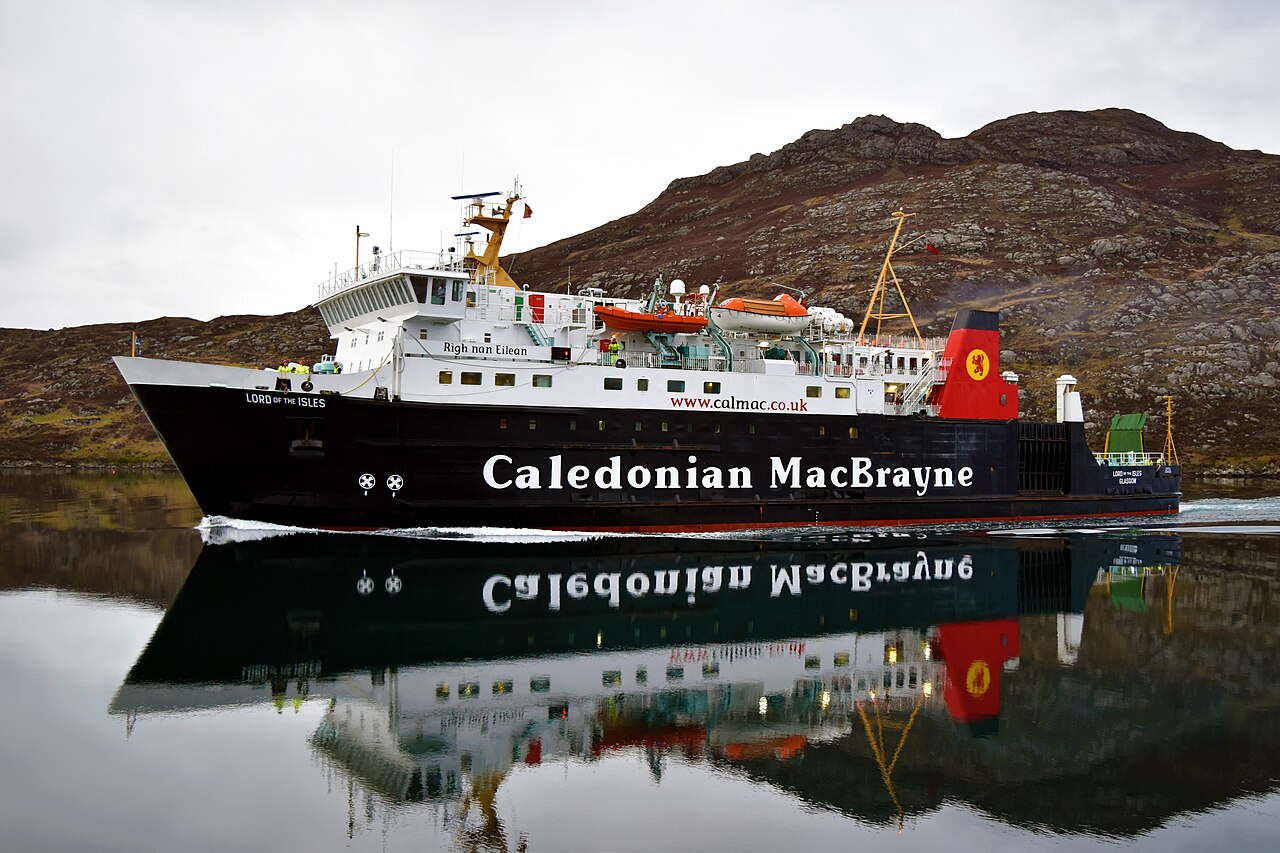
Caledonian Maritime Assets Ltd (CMAL) has launched a procurement process for the detailed design and build of a new passenger and vehicle ferry to replace MV Lord of the Isles on the Mallaig to Lochboisdale route.
The contract notice, published on Public Contracts Scotland on 1 April 2026, seeks a sole supplier for the shipyard detailed design and build of one RoPax vessel. The new ferry would replace MV Lord of the Isles, a Caledonian MacBrayne vessel that operates from Mallaig on Scotland’s west coast and is reportedly the most-travelled ship in the CalMac fleet.
The contract is expected to run for 34 months, with bids due by 8 May 2026 at noon. Selected candidates are expected to be invited to tender from 13 July 2026, and submitted tenders must remain valid until 31 March 2027. Up to six tenderers will be invited to proceed to the second stage of the restricted procurement process.
CMAL will appoint an on-site project team at the shipyard for the duration of the build to monitor progress and ensure the vessel meets contractual, technical, and regulatory requirements, including those set by the Maritime and Coastguard Agency (MCA).
The notice states that while mandatory community benefit requirements are not planned, bidders will be required to outline their approach to community benefits, with the winning bidder expected to agree a delivery plan as a condition of contract. CMAL noted it would welcome proposals involving apprenticeships and student outreach.
Image via Mn28, Wikimedia Commons.





The replacement of MV Lord of the Isles is more than a routine ferry procurement; it is a test of whether the UK is serious about maintaining a viable domestic shipbuilding industry.
The UK is an island nation whose economy, security and resilience depend on maritime capability. When taxpayer-funded vessels are built overseas purely on headline price, the wider economic and strategic value is lost. Domestic shipbuilding supports skilled employment, apprenticeships, and a national supply chain spanning steel, propulsion, electrical systems, and advanced marine engineering. A significant proportion of the contract value ultimately returns to the Treasury through taxation, local economic activity and retained skills.
Once lost, shipbuilding capability is extremely difficult to rebuild. Procurement decisions directly shape whether yards retain the capacity, workforce and confidence to invest in modernisation and innovation. A consistent pipeline of work allows UK yards to improve productivity, compete more effectively internationally, and support emerging technologies such as hybrid and low-emission propulsion.
There is also a strategic dimension. Commercial shipbuilding skills overlap with defence requirements including auxiliary vessels, logistics ships, repair capacity and surge capability in times of national emergency. Maintaining domestic capability is therefore part of national resilience, not simply an industrial preference.
Lifecycle carbon considerations should also be recognised. Transporting vessels long distances from overseas yards adds embedded emissions that are often overlooked when evaluating cost alone. A stronger domestic supply chain can reduce transport impacts and support greener production methods.
Public procurement has long-term consequences. Each overseas award weakens the domestic ecosystem, reducing the likelihood that UK yards will be competitive in future competitions. This creates a cycle of decline that becomes increasingly difficult to reverse.
If the UK wishes to retain meaningful maritime industrial capability, then publicly funded vessels such as the MV Lord of the Isles replacement represent an opportunity to support domestic skills, regional economies and national resilience while still delivering value for money over the lifetime of the vessel.
The question is not simply where one ferry is built, but whether the UK intends to remain a shipbuilding nation at all.
Totally agreed. We have allowed so much of our maritime design and build to atrophy. Must be remembered designers get old and retire and we probably need a one or two bodies that continue with knowledge those bases.
Taxation is heavy in the UK commercial world and the ability to pass on private businesses is under attack like never before under arrangements coming over several decades and particularly lately. This has more or less destroyed ship and boat building in the UK. With it goes equipment manufacture and design. There seems to be a profound ignorance in Government and Parliament from Fishing to Maritime Trade and Transport.
Which non UK ship yard is going to win?
Just order one from Korea or Poland. It will be built on time with no SNP interference.
Think, it could even be built by the hated English. What has happened to our country, when we used to work together?