

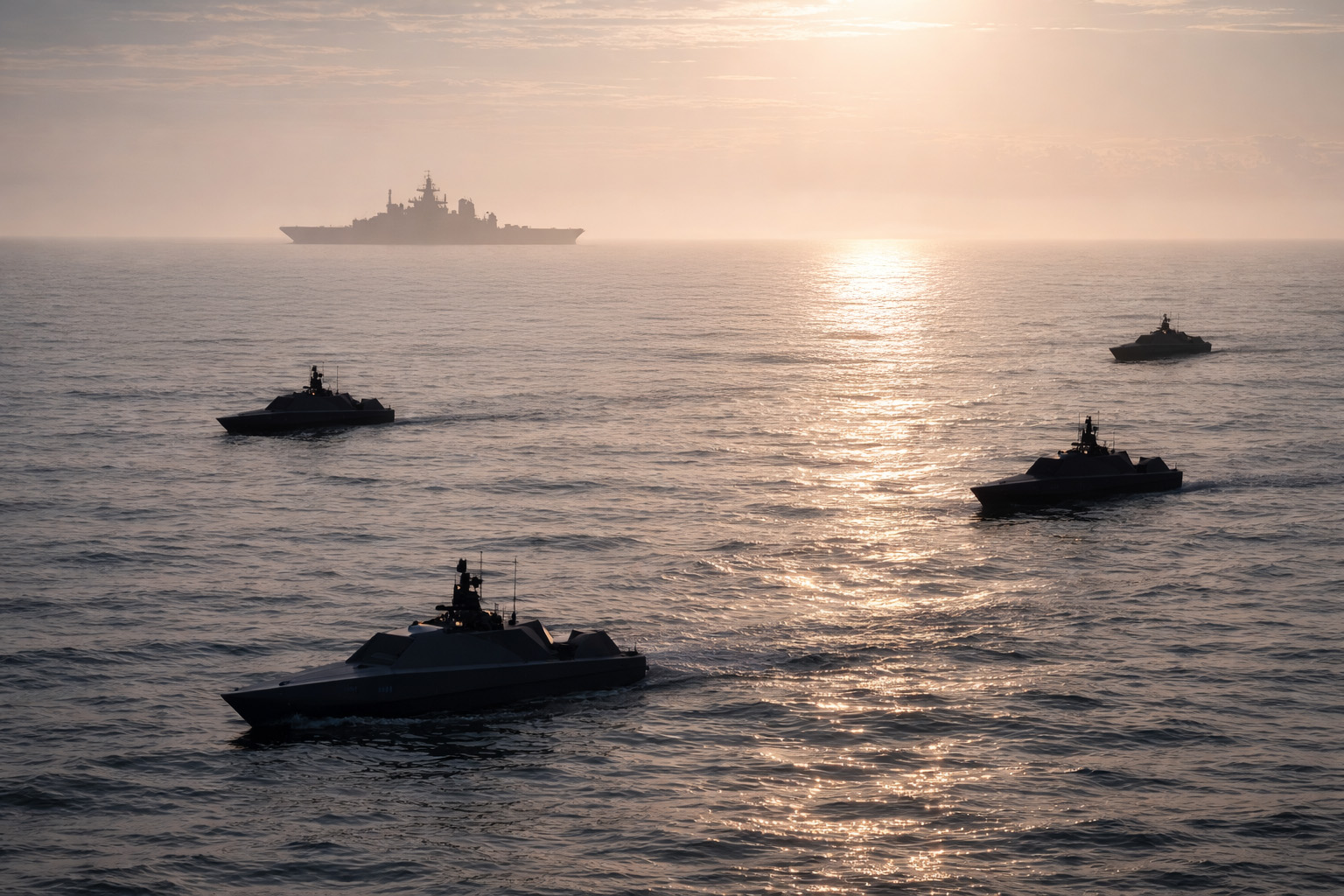
The Royal Navy’s move towards crewed and uncrewed teaming in anti-submarine warfare could reshape how operations are conducted, but speakers at UDT 2026 set out a series of practical challenges that still need to be worked through.
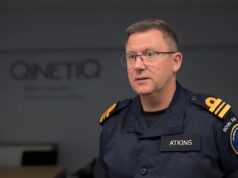
David Shutt of QinetiQ said the fundamentals of ASW remain unchanged, with multiple intelligence sources feeding into the kill chain. “That basic construct hasn’t changed, but what will change is the composition of that team,” he said, pointing to the growing role of uncrewed systems.
He added that these platforms are now moving beyond trials. “Advanced, uncrewed surface and subsurface vehicles are no longer experimental curiosities… they’re being positioned as an operational capability,” he said. The shift is being driven by manpower pressures, cost constraints, operational lessons from Ukraine and the pace of technological change. “Autonomy and remote operation can no longer be ignored.”
Shutt pointed to a clear direction of travel from the Royal Navy, noting that “by 2026 we will have sensors in the water… and within two years… autonomous escorts operating alongside crewed vessels.” He described programmes such as Atlantic Bastion as potentially transformative, comparing the scale of change to earlier shifts in naval warfare. “This is the potential to be an epoch defining change… comparable in scale to the advent of the submarine and the arrival of the aircraft carrier.”
At the core of this approach is what he described as “mass through disaggregation”, with multiple specialised platforms combining into a wider system. However, he was clear that ambition alone is not enough. “Hybrid ASW raises fundamental questions about training, tactics, command, control,” he said.
A central issue is data. Hybrid operations will generate large volumes of information, particularly from sonar systems. Andrew Martin of QinetiQ said this will need to be handled on the platform. “This will mean that the [uncrewed vehicle] must process that data on board using AI… then prioritise those targets and act on that in predetermined ways.” He suggested that many systems will operate as forward sensors. “The best role… is acting as some sort of mobile trip wire, reporting only when a contact of interest is noted.”
Communications remain a limiting factor. Shutt noted that while long-range remote control has been demonstrated, it introduces dependency on secure links. “Communications failure is always possible,” he said, adding that systems must be able to operate safely when links are lost. Martin pointed to the physical constraints involved. “Some of the broader control solutions… are going to naturally drop out due to the physics of communications.”
Different command models are being explored. One approach centres on remote control from distance, while another treats uncrewed systems as extensions of a crewed platform. “Uncrewed vehicles are treated as extensions of a crewed ship’s combat system,” Shutt said, describing a more local “loyal wingman” model.
Testing is expected to play a central role in resolving these questions. Shutt pointed to the need for structured experimentation before committing to procurement or doctrine. “Before we commit… the first step is going to need to be understanding,” he said, calling for paper studies, simulation and large-scale trials. He highlighted facilities such as the Hebrides range as critical for testing at scale.
Martin said concepts must prove themselves outside controlled environments. “All of these good ideas must function with a real marine environment… they’re going to have to be rigorously tested at sea.”
Security and vulnerability were also raised as concerns. Martin pointed to real-world examples where uncrewed systems have been lost or captured. “We really can’t be sure that we’ve got positive control… at all times,” he said, noting that loss of a platform could expose sensitive data, software and operational insight.
Alongside technical challenges, legal and doctrinal questions remain unresolved. Shutt highlighted the issue of self-defence in a hybrid fleet. “Can you realistically say that if an uncrewed vessel is being targeted, is that acting in self defence?” he asked, adding that current frameworks may not be sufficient.
On timelines, Shutt suggested early operational use is likely to start at a lower level of complexity. “I can see it more likely be something slightly lower tempo to start us off and ease into that,” he said, with high-end roles taking longer to mature.
The discussion made clear that translating the direction of travel into a reliable, scalable capability will depend on sustained testing, clearer doctrine and resolving fundamental questions around control, communications and law.


I like that in all of the AI header images the manned vessel always hovers menacingly on the horizon like a Soviet cruiser.
Also that it’s always sunset in AI land. Comes of it scraping social media, presumably?
Fire/damage control is also a constraint on the survivability of unmanned platforms. They will need to be relatively disposable by design.
The problem is I can see the crewed RN ships spending half their time rescuing drone ships..
You have the general issues that all ships that have been at sea for a while have.. and these are going to be complicated things a mass of computing power and sensors.. but beyond that you have the human interference issue and these poor drones will be interfered with..
After all it’s essentially set in stone that a little bit of none lethal bullying is all part of maritime power games.. Iceland had a great old time ramming RN frigates.. China does nasty things to other peoples boats for a past time.. I’m pretty sure Russia will have a great time accidentally running over RN drones with tankers or other random ships….
I agree, I think a smarter solution would be to have lean/ minimally manned platforms, with the option for unmanned operation, at least for the largest envisioned platforms.
That said, unless they propose to make them trimaran form, making small vessels manned will mean a pretty miserable time for the crews, with poor sea keeping, especially in the North Atlantic.