

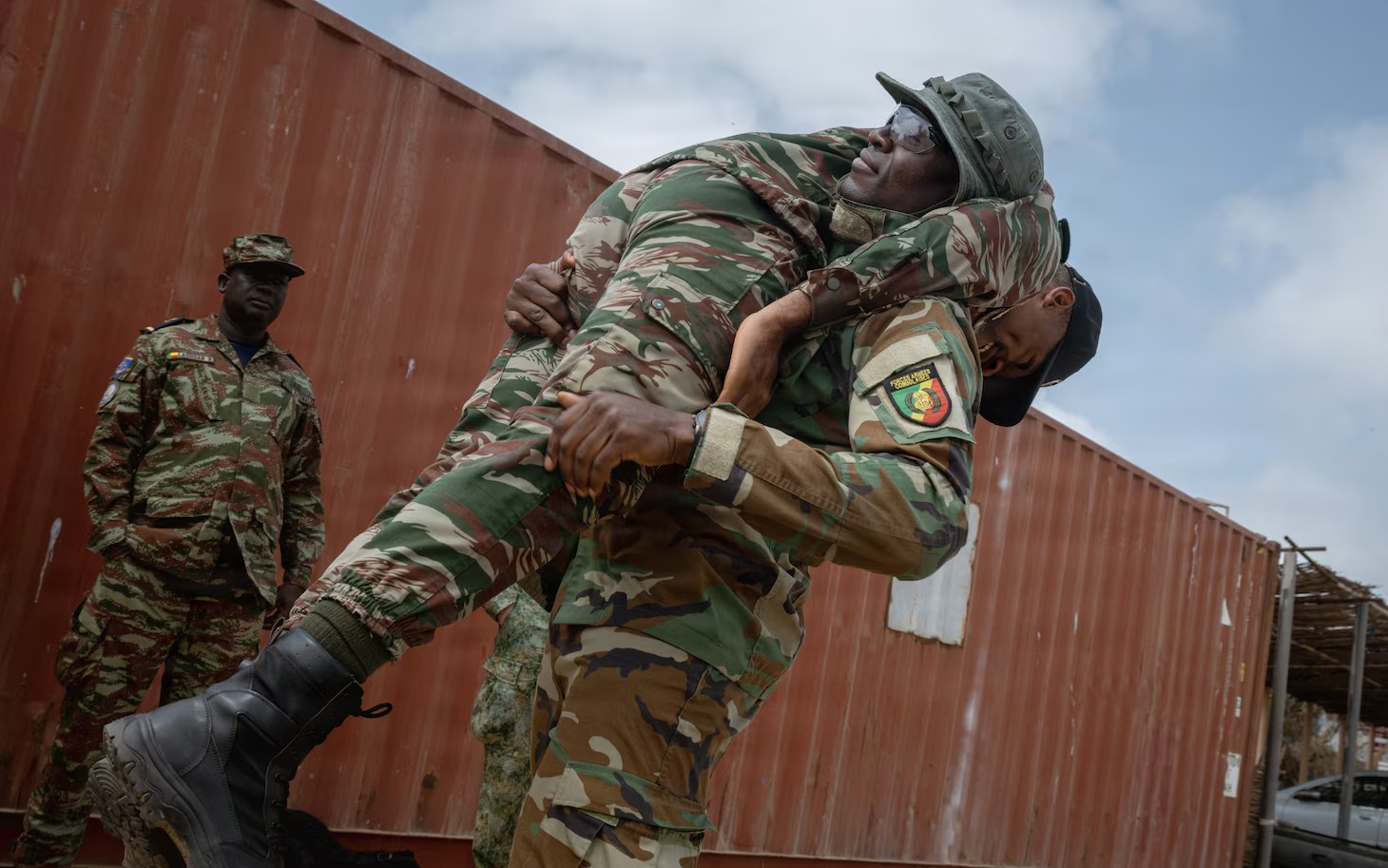
Naval forces from 17 nations conducted Visit, Board, Search, and Seizure training in Senegal as part of Exercise Obangame Express 2026, a multinational maritime security exercise coordinated by U.S. Africa Command and conducted by U.S. Sixth Fleet.
Led by Senegal’s Special Forces Marine unit, the training brought together boarding teams from across Africa, including 11 Gulf of Guinea countries. Drills progressed from classroom instruction through to full-mission boardings on simulated suspect vessels, following a crawl, walk, run methodology that moved from lectures to realistic at-sea scenarios involving role players. Teams trained in tactical ship entries, evidence handling, search procedures, and fisheries inspection.
Now in its 15th year, Obangame Express is one of three regional maritime exercises run by U.S. Sixth Fleet and supports both the Yaounde Code of Conduct and the Africa Partnership Station programme. In preparation for the exercise, U.S. Navy Seabees from Naval Mobile Construction Battalion 1 completed infrastructure work at Senegal Navy Bel Air Base in Dakar, where the VBSS training was held, including construction of a VBSS shoot house and improvements to a small arms range.
Rear Admiral Kelly Ward, commander of U.S. Sixth Fleet’s Task Force 66, pointed to the economic stakes underpinning the exercise. “More than half of African regional economies rely on safe and lawful use of the maritime environment. Obangame Express provides a venue for nations to work together and train in areas such as VBSS to ensure maritime security in the Gulf of Guinea,” he said.
The Gulf of Guinea is a significant chokepoint for African maritime commerce. The Centre for Strategic and International Studies has found that the region, which contains nearly 20 commercial seaports, accounts for 25 per cent of African maritime traffic. Illegal, unreported, and unregulated fishing poses a particular threat to local economies, with some estimates placing it at 65 percent of the legally reported catch.
Participating nations included Angola, Benin, Cameroon, Congo, Cote d’Ivoire, Ghana, Liberia, Nigeria, Sao Tome, Sierra Leone, Togo, Cabo Verde, the Democratic Republic of Congo, Gabon, Guinea Bissau, Equatorial Guinea, Senegal, Gambia, Guinea, the Republic of Congo, Belgium, Denmark, France, Italy, Portugal, Spain, the Netherlands, Brazil, Morocco, Tunisia, Mauritania, and the United States.


I’ve gained $17,240 only within four weeks by comfortably working part-time from home. Immediately when I had lost my last business, I was very troubled and thankfully I’ve located this project now in this way I’m in a position to receive thousand USD directly from home. Each individual certainly can do this easy work & make more greenbacks online by visiting
following website—.,.,.,.,.—>>> JobatHome1.Com
I get paid more than $120 to $130 per hour for working online. I heard about this job 3 months ago and after joining this i have earned easily $15k from this without having online working skills.
Here is I begun— http://www.giftpay7.vip