

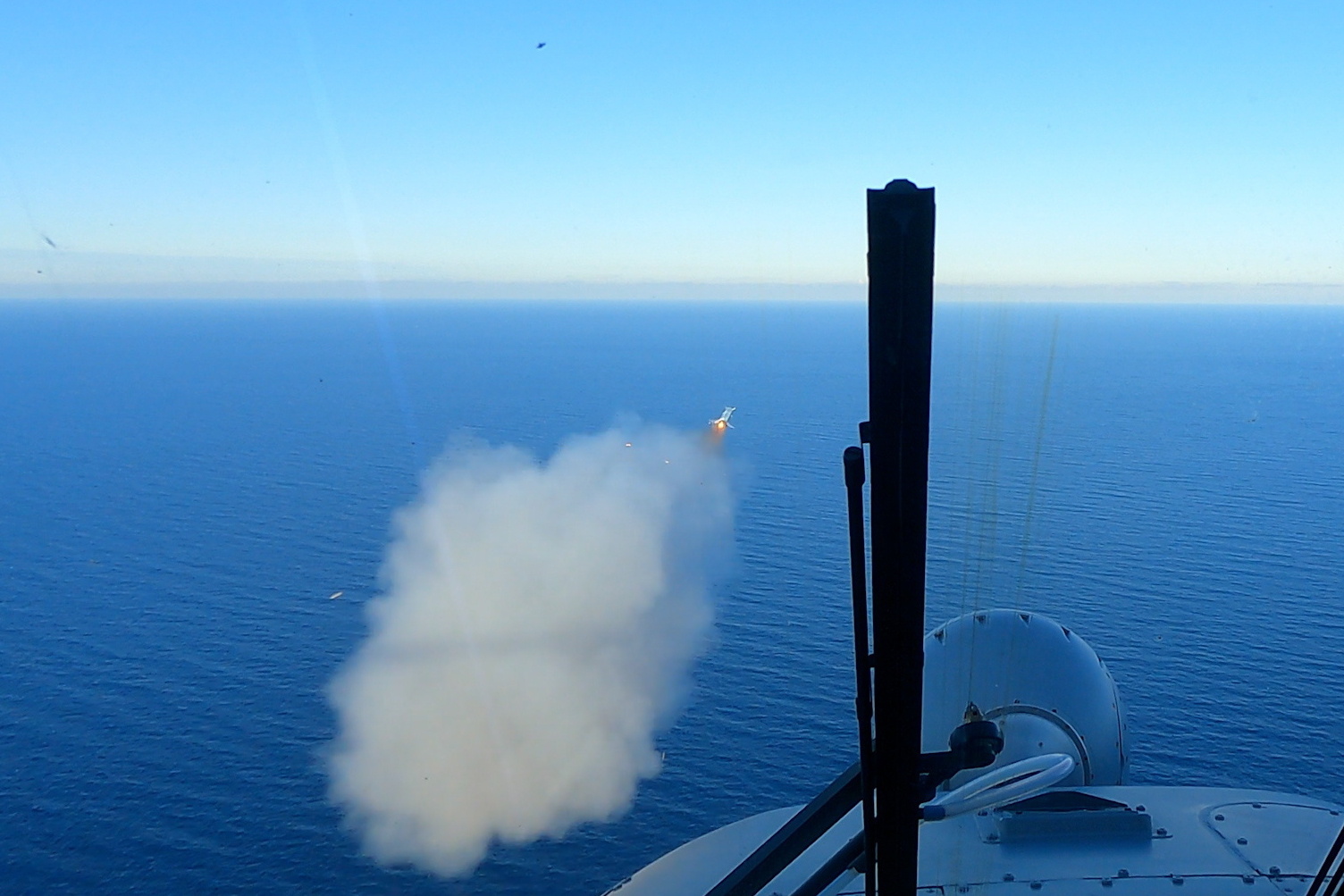
The Royal Navy has issued a prior information notice seeking industry input on the use of uncrewed aerial systems for maritime range clearance, as it looks to reduce its dependence on crewed aircraft for safety assurance during equipment trials, the UK Defence Journal understands.
The notice, published on 14 April 2026, sets out that the Royal Navy currently relies on crewed aerial platforms to ensure its maritime ranges are clear of military and civilian traffic before and during complex trials. Those trials require significant safety distances to be maintained, and if the crewed platforms supporting them are re-tasked for urgent operational requirements, the trials risk being delayed or reduced in scope.
The areas involved are considerable. The request for information indicates that the maximum range space requiring clearance could extend to 500 kilometres by 800 kilometres at its widest points, covering approximately 350,000 square kilometres. More routine operations would cover around 110,000 square kilometres across an area of roughly 300 by 400 kilometres.
The RFI is a market engagement exercise rather than a bidding opportunity, with the MOD seeking to build its understanding of available and emerging technologies before any formal procurement activity begins. Three specific outcomes are identified: developing the authority’s understanding of current and emerging market capabilities, aligning requirements with industry standards and processes, and enabling the development of a procurement strategy that delivers best value for money.
The notice does not commit to a follow-on contract, and the MOD has stated that no further discussions with industry are planned at this stage. Any future procurement would be advertised through the Defence Sourcing Portal and Contracts Finder in line with public procurement regulations.
Before live firing or high-energy trials can take place at sea, the surrounding area must be verified as clear of vessels and aircraft that could be endangered. Traditionally, this has required persistent crewed air coverage, which places demands on platforms and crews that may be needed elsewhere.



I’ve gained $17,240 only within four weeks by comfortably working part-time from home. Immediately when I had lost my last business, I was very troubled and thankfully I’ve located this project now in this way I’m in a position to receive thousand USD directly from home. Each individual certainly can do this easy work & make more greenbacks online by visiting
following website—.,.,.,.,.—>>> JobatHome1.Com