

The Director of GCHQ has warned that the risk of miscalculation between states is as high as she has seen across three decades in national security, telling an audience at Bletchley Park that the world now occupies “a space between peace and war”.
Anne Keast-Butler delivered the agency’s first Annual Lecture in the Fellowship Auditorium at Bletchley Park on Wednesday 27 May, the wartime home where British codebreakers worked during the Second World War. She noted that it is rare for the head of an intelligence agency to speak in public, framing the decision to do so as a response to what she described as a moment of consequence. “The risk of miscalculation is as high as I’ve ever seen it,” she said, pointing to an era of radical uncertainty, contested geopolitics and rapidly changing technology.
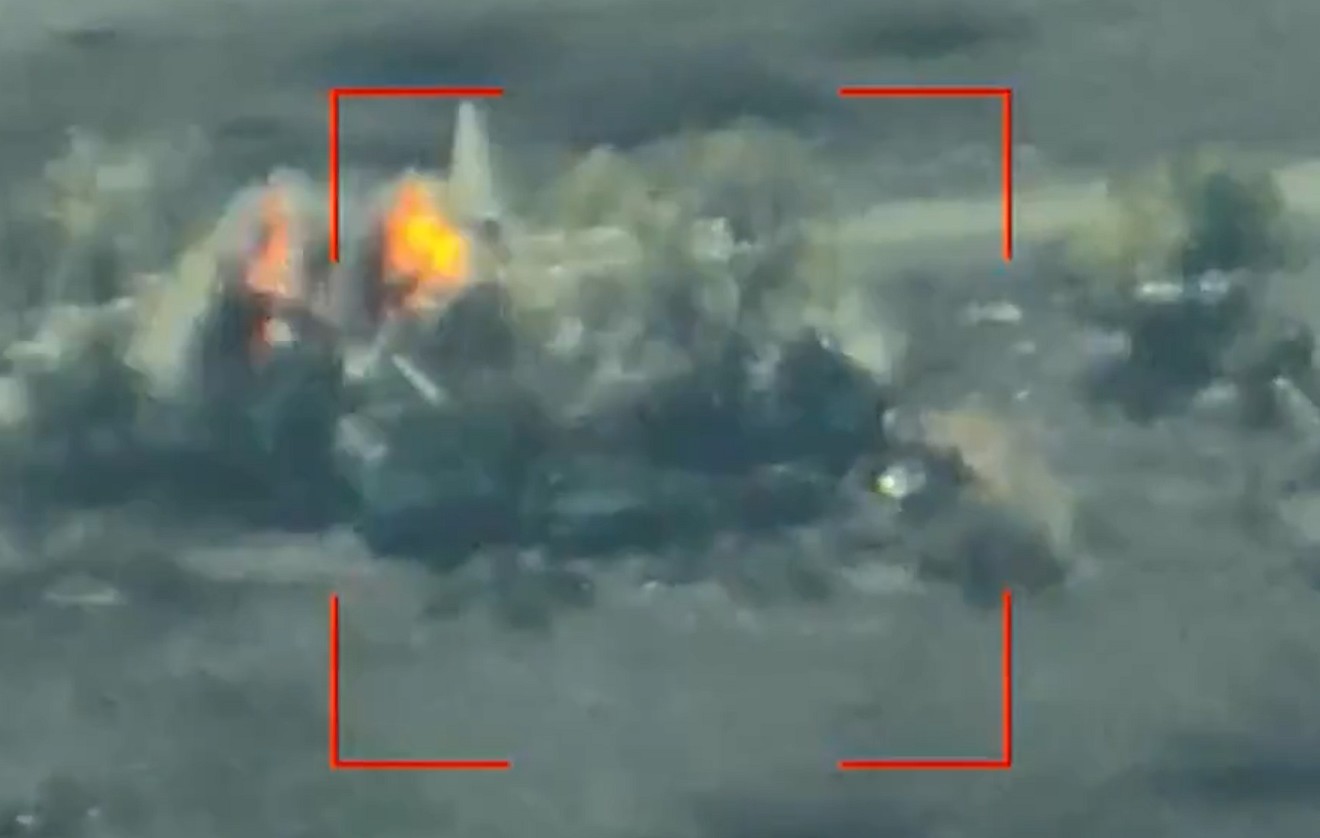
On Ukraine, Keast-Butler said new intelligence indicates almost half a million Russian soldiers have been killed since the start of the conflict, and that President Putin is “going backwards on the battlefield” as Britain maintains its support for Kyiv. The figure came as she set out a section on Russia, which she said is scaling up daily hybrid activity against the UK and Europe across a range from the seabed to cyberspace, targeting critical infrastructure, democratic processes, supply chains and public trust. She said GCHQ is working with intelligence and defence partners to degrade that threat, including by exposing Russian intent and underwater capabilities around British waters and by disrupting attempts to smuggle Western technology.
Much of the address centred on the pace of technological change. Keast-Butler said warfare is being reconfigured and becoming more data-driven, AI-enabled and automated, pointing to conflicts from Ukraine to Iran, and described China as a tech superpower with sophisticated cyber, intelligence and military capabilities. “Technology and data are no longer just tools; they are transformational forces,” she said, characterising data as a strategic asset whose value grows when paired with artificial intelligence. “Data is the lifeblood of our society, our economy, and our warfighting capability,” she added.
On cyber security, she pressed businesses to act without delay. “Cyber security is a critical priority for all businesses,” she said, adding that GCHQ experts are producing large volumes of advice but that “we need businesses to take immediate action now.” She described the security environment in stark terms, telling the audience that “the ground beneath our feet is shifting, and shifting fast.” According to the agency, GCHQ has developed over recent months a blueprint for a new national cyber defence capability intended to build agentic AI into machine-speed cyber defence.
Quantum technology featured prominently. Keast-Butler, a mathematician by background, said the timeline she had long assumed for operationalising quantum had shifted. According to the agency, quantum sensing is already in use, with work alongside academia and industry aimed at identifying the signatures of stealth, including the detection of missile launches. She warned that “once they are operational, quantum computers will be able to complete, in a matter of seconds, tasks that currently take years” — including defeating the encryption that protects today’s secrets — and repeated a call for businesses to migrate critical systems in line with timelines set by the National Cyber Security Centre.
She also addressed technology sovereignty, arguing it concerns the agency, ability and agility of nations to shape their own digital future rather than a requirement that everything be made domestically. “Sovereignty doesn’t have to mean ‘made in the UK’, so long as we carefully manage our supply chains, dependencies, and data,” she said. She traced GCHQ’s pioneering of public key cryptography in the 1970s, noting that the same mathematics secures online commerce, keeps fighter jets in the air and protects the nuclear deterrent.
Partnerships ran through the speech as a recurring theme, drawing on the example of Alastair Denniston, the first Director of GCHQ. She marked the 80th anniversary of the UKUSA intelligence-sharing partnership with the United States National Security Agency, described the Five Eyes as the agency’s most critical partnership and the one most feared by adversaries, and said strategic intelligence relationships with European partners continue to deepen, strengthening NATO. Drawing a contrast with Britain’s adversaries, whose partnerships she said intelligence shows to be strained and transactional, she put it plainly: “Our adversaries don’t do teamwork – we do.”
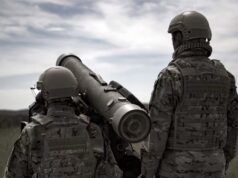
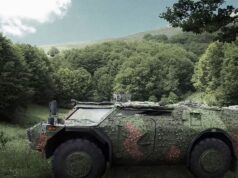

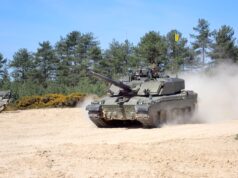



Starting to feel that Russia will start to collapse soon, very much like what happened to them in 1917. Ukraine’s drones are getting more lethal every day and Russia is running out of money and men after already running out of vehicles.
I think we will see a part of the Russian front probably in the south collapse just as we seen around Kursk before.
I’ve gained $17,240 only within four weeks by comfortably working part-time from home. Immediately when I had lost my last business, I was very troubled and thankfully I’ve located this project now in this way I’m in a position to receive thousand USD directly from home. Each individual certainly can do this easy work & make more greenbacks online by visiting
following website—.,.,.,.,.—>>> LIVEJOB1.COM
The trouble there Jim is an angry, vengeful Russian leader wrapped in extreme nationalist beliefs and a willingness to resort to nuclear nihilism rather than accept defeat.
Russia’s only hope is China and North Korea getting directly involved and how Belarus, Lithuania, Latvia and Estonia behave.
I just can’t see it, the North Koreans already got their asses handed to them, nothing in it for China and realistically any force China sent to Ukraine would have to be in secret force. It would probably get chewed up just as badly as the North Koreans did.
If China got directly involved then it’s basically declaring war on the European Union, it will be wrecked by sanctions and trade embargo’s for zero benefit.
The last thing China wants is Russian controlling Ukraine.
Rule out China. They know it would be economic suicide. They also know they need to rake in the coin while they can, they have a hard future coming up when their working population reaches retiring age and they feel the effects of the one child policy, we ourselves know the financial burden of an aging population. China cannot afford to bite the hands that feed it.
China does not think in electoral cycles or quarterly earnings reports. It thinks in decades. One of the West’s recurring mistakes is assuming Beijing measures success against the same timelines as Washington, London, or Paris. It doesn’t.
At the centre of China’s strategic thinking sits one objective above all others, national rejuvenation and the restoration of what it considers Chinese territorial integrity. For that reason, Taiwan remains the single issue over which Beijing would contemplate accepting significant economic pain. The Chinese leadership appears prepared to absorb years of economic disruption if it believes the long-term outcome secures a strategic objective that it regards as fundamental to China’s future status and legitimacy. (Brookings, The Long Game: China’s Grand Strategy to Displace American Order, 2021; Brookings, Thinking Through America’s Baseline Priorities on Taiwan, 2025).
That does not mean Beijing seeks war. Quite the opposite. The evidence suggests China’s preferred approach is to achieve its objectives through economic leverage, political influence, diplomatic pressure, cyber activity and incremental coercion, while avoiding a direct military confrontation with the United States and its allies. Military force remains an option, but not the preferred one. (Stimson Center, Economic Coercion from the People’s Republic of China, 2025; Atlantic Council, How Beijing Uses Inducements as a Tool of Economic Statecraft, 2024).
China’s approach to Europe reflects the same logic. Beijing gains far more from maintaining commercial relationships with Europe than from creating unnecessary hostility. A divided Western response to any Taiwan crisis would suit Chinese interests far better than a unified one. Economic engagement, investment and diplomacy therefore remain valuable strategic tools. How many times have Chinese diplomats denied something on TV only for a third country to provide the press with categorical proof that it was them?
Financially, China has spent years reducing its exposure to potential US economic coercion. This includes diversifying foreign reserves, expanding bilateral trade settlement in local currencies, building alternative payment mechanisms and promoting the international use of the renminbi. The objective is not necessarily to replace the dollar overnight, which remains dominant, but to reduce China’s vulnerability should economic sanctions ever accompany a major geopolitical crisis. (IMF, Dollar Dominance in the International Reserve System: An Update, 2024; Taylor, Challenging Dollar Dominance? The Geopolitical Dimensions of Renminbi Internationalisation, 2025). African nations have accepted the Chinese renminbiin aid, and/or payment for the last five years. Before that it was the US Dollar or nothing. The same is partially true of the oil States, Russia and until then Trump Coup, Venezuela.
The common Western assumption is that strategy is about predicting an opponent’s next move. Chinese strategic culture often appears focused on shaping the environment so that the desired outcome becomes increasingly difficult to prevent. In that respect, Beijing is not simply thinking about the next move on the chessboard. It is thinking about the position it wants to occupy when the game ends.
Whether that objective is achieved remains uncertain. What is clear is that China’s leadership sees time as an asset, not a constraint. Are Western governments prepared to compete on the same timescale? The answer is no. Its never past the next election cycle if we’re lucky.
What a waste of life. A combination of Russia insanity and Chinese technology is a worry. N. Korea gain insight on actual war. Threats still out there.
What a waste of life. A combination of Russia insanity and Chinese technology is a worry. N. Korea gained insight on actual war. Threats still out there.
Most of the world’s top economies (and many more smaller ones) are supporting Ukraine. Russia can’t outspend them. If it is losing troops and equipment at a greater rate while being unable to make major gains on the ground, then Russia is hurtling towards economic and military oblivion.
Such a shame…..all because one loon wanted to create a fantasy version of Russian history as his legacy….tragic that it has cost so many lives….may UKR win gracefully.
MRGA.
I don’t think Ukrainian’s will feel “graceful” towards Russia, maybe more “disgraceful”. They have the absolute moral right to rid their territory of Russian forces and then put up a tough frence to keep Russia at bay. Putin’s actions could get worse if he loses Crimea, has further diminishing oil revenues and curtailed influence in Iran with any imposed nuclear restrictions there. Others might too.
One consequence of this war that receives little attention is how Ukraine will view Russia once the shooting stops. Whether the war ends through a ceasefire, negotiated settlement or outright Russian defeat, Ukraine is unlikely to return to treating Russia as a neighbour. It will treat Russia as a permanent security threat for at least a generation.
Kyiv has learned the hard way that agreements, guarantees and diplomatic assurances alone are not enough. The US and UK let the Ukrainians down badly by disregarding the security teaty they signed Expect Ukraine to construct one of the most heavily defended borders in Europe. Deep defensive belts, anti-tank obstacles, extensive minefields where permitted, hardened positions, drone surveillance networks, long-range strike capabilities and a permanently mobilised reserve force will become part of everyday life. Much like South Korea’s relationship with North Korea, Ukraine’s future security policy will be built around deterrence, rapid mobilisation and the assumption that Russia will eventually try again.
The wider strategic picture extends beyond Ukraine. The United States has spent decades preventing the emergence of a hostile coalition capable of challenging its global influence. Washington’s objective is not simply to contain Russia, Iran, North Korea or China individually, but to prevent them from acting as a coherent bloc. Recent events have demonstrated the overwhelming reach of American military power. The rapid degradation of air defences, naval assets and strategic infrastructure by US forces and their allies has served as a reminder that America remains the world’s foremost military power. The message to adversaries is clear: geography no longer guarantees security.
Russia, Iran, North Korea and, to a lesser degree, China have increasingly cooperated because each sees the existing US-led international order as limiting their ambitions. North Korea has supplied troops, artillery and ammunition to support Russia’s war effort. Iran has supplied drones and military technology. China has provided critical economic support and dual-use goods while carefully avoiding direct military involvement. Their cooperation is based less on friendship and more on a shared interest in constraining American influence.
The calculation made by many of these states is that Western democracies are casualty-averse and lack the political will to sustain a large-scale conflict. History suggests that assumption can be dangerous. Democracies are often reluctant to enter wars, but once convinced that a threat is existential or unavoidable, they have repeatedly demonstrated a willingness to absorb significant costs to achieve decisive outcomes. The real question is not whether the West wishes to fight such a conflict. It is whether its adversaries eventually force Western leaders to conclude that they have no alternative.
Lets hope NATO/Western countries are hacking and performing similar computer hacking attacks on Russia/China/Iran and NK.
Just how many fridges does Russia have connected to the internet?
She’s right to refrence UKUSA, something some posters here are so willing to throw away in their loathing of one man and one country. GCHQ, and our military, would be hamstrung without it.
However, I was interested in that she framed her speaking in public as a rarity due to the actions of Russia? The serving Directors and the Director Generals of GCHQ and the Security Service have spoken publicly for years, C, the Director of the SIS not so much.
So many poorly informed people on other sites cannot believe the high Russian casualty figures stated by Head of GCHQ. I personally do.