

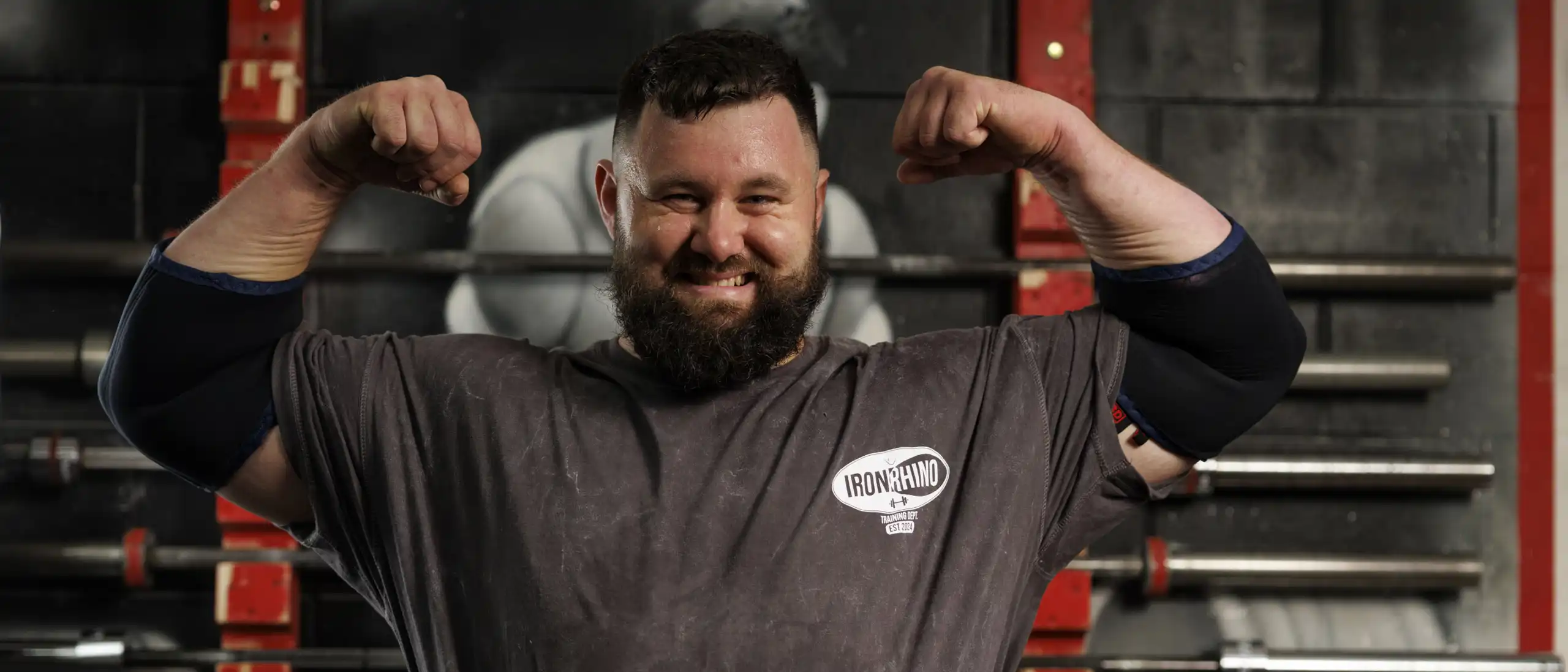
A serving British Army soldier has become the first member of the Armed Forces to compete at England’s Strongest Man, qualifying for one of the sport’s largest stages, the British Army says.
Corporal Rhys Calland, who serves with the Royal Electrical and Mechanical Engineers and is based in Somerset, secured his place at the Ultimate Strongman federation’s England’s Strongest Man 2026 event after a debut showing in the federation earlier in his progression. According to the Army, he placed third out of 17 competitors at that qualifying contest, finishing ahead of a field that included former national champions and international podium finishers.
Calland traces the start of the journey to a long-running familiarity with the sport and a growing restlessness with conventional gym work. “I always watched strongman on telly at Christmas as a child,” he said. “I knew the Army did it, and it was an option.” After a decade of similar training sessions, he wanted something different. “I got really bored of doing the same thing for 10 years,” he said. “When I tried strongman, I just loved everything about it.”
What began as a change of routine developed into a competitive record. Calland has won Devon’s Strongest Man twice, taken the Armed Forces Strongest Man title and finished first at the World Heavy Events Association World Championships, before earning his England’s place.
The step up in scale was considerable. “It was a bit strange,” he said. “Most grassroots strongman events happen in a car park with just a few people watching. This was a massive level up—3,500 people paid to come see me on the stage. I’d paid to watch these events before, so knowing I was now the person people had come to see and meet was very strange.”
Calland credited the recognition of strongman as an official Army sport with helping his rise. “It’s really important for the sport to grow. We’re getting more funding for kit and equipment,” he said, explaining that the backing had allowed him to train full time after being released from work, sometimes twice a day. He suggested he had reached the limit of what service competitions offered him. “I think I’ve outgrown the Army competitions,” he said. “That means I can give others coming up a chance to compete in those tri-service events and help pave the way for the next competitor.”






I’ve gained $17,240 only within four weeks by comfortably working part-time from home. Immediately when I had lost my last business, I was very troubled and thankfully I’ve located this project now in this way I’m in a position to receive thousand USD directly from home. Each individual certainly can do this easy work & make more greenbacks online by visiting
following website—.,.,.,.,.—>>> JobatHome1.Com
Somerset? REME?
Assume RNAS Yeovilton, 73 Aviation Company, 7 REME.